Showing posts with label anniversary. Show all posts

Thursday, 6 August 2020

Supermarine S5 replica project gets under way

Supermarine S5 replica project gets under way 

Staying with the 1930s aviation theme in this post we move from one end of the aeronautical speed spectrum to the other as we return to one of my most favourite aircraft of the period - the Supermarine Schneider Trophy racing aeroplanes.

I wrote about the Schneider Trophy in previous posts on the anniversaries of the final 1931 race and the Spitfire's 1936 maiden flight, as well as a detailed article for In Retrospect magazine.  I had intended to save this post specially for when I was to be at the mercy of the quacks again but that is still up in the air and as the original articles below date back to the beginning of the year I felt that, with the advent of this latest welcome news, it was about time I got down to blogging about this excellent project.

source - Pilot magazine

Supermarine: Call For Investors & Enthusiasts to Help Rebuild an Aviation Legend

As these articles explain, something else that hopefully will soon be up in the air (and which I am looking far more forward to!) is a full-size replica of the 1927 Schneider Trophy-winning British entry, the Supermarine S.5, thanks to the efforts of a team of aeronautical engineers and Schneider Trophy enthusiasts.  Leading the project is professional pilot Will Hosie, whose interest in the famous speed contest and the S.5 in particular is obviously a personal one seeing as his late father Bill once owned an earlier replica of that aircraft in the 1980s (and in which Bill Hosie sadly lost his life following a catastrophic crash off the coast of Falmouth, Cornwall, in May 1987).  This first replica - also full-size - first flew in 1975 and was badly damaged in a take-off crash seven years later in 1982, at which point it passed into the ownership of the Hosie family.


Participants and investors wanted for Supermarine S5 seaplane rebuild project 

Now the son Will Hosie and his team look well on the way to creating a new S.5 replica, with enough funding having come in for work to have begun on building the floats and drawings in place for the rest.  While there is still a long way to go, both in terms of construction and financing, the proposed timescale - first flight in 2023 - seems eminently achievable whilst the call for investors and sponsors is a sensible one and with any luck will inspire a good many well-placed individuals and organisations to get on board.  One hopes that certain museums, historical trusts et cetera will take an interest which could in turn filter down into schools and local workshops as has been seen with other similar projects.  The aim of displaying the finished aircraft at a total of 20 events (10 airshows and 10 static displays) around the world in time for the 100th anniversary of the 1927 Schneider Trophy is again an entirely laudable and realistic goal.  It is moreover extremely important that the story of the Schneider Trophy and the S.5's place within it is kept alive and propagated for future generations, both for the thrilling contest it was and its place in the history of the development of the Spitfire.  To be able to see once again an example of these incredible pieces of engineering in the air will be an amazing treat, especially since so few of the original Supermarine S-series seaplanes survived (and none in flying condition).

Supermarine S.4 G-EBLP
source - Air Racing History
The S.4 of 1925 was the first of Mitchell's revolutionary, streamlined monoplane designs to see the light of day.  Being such a radical departure from previous efforts only one example was produced, taking its place alongside a pair of less advanced Gloster III biplanes for the 1925 race in Baltimore, U.S.A. (having first raised the British and world seaplane speed records to 226 miles per hour during a test run at Southampton in September 1925).  Unfortunately during a subsequent test run at Baltimore's Bay Shore Park the pilot, Henri Biard, lost control at 200 feet after encountering heavy wing vibration and sideslipped into the water, wrecking the all-wood S.4 but managing to walk away with only two broken ribs.


Two years later and Mitchell and his team had taken what they'd learnt from the S.4 and created the S.5, three examples of which - serial numbers N219, N220 and N221 - were produced for the 1927 contest, which was to take place in Venice, Italy.  Only two - N219 and N220 - would take part in the race, with N220 flown by Flt. Lt. Sidney Webster winning at an average speed of 281.65mph and N219 piloted by Flt. Lt. O. E. Worsley coming second at an average of 273.07mph.  The two S.5's had wrested the Schneider Trophy from Italy and the next contest would take place at Calshot, Southampton, in 1929.


A year later in 1928, as part of the preparations for the 1929 race, Flt. Lt. Samuel 'Kink' Kinkead was selected to make an attempt on the world air speed record that had been set by the Italians during the '27 race.  On the 12th March 1928, flying the reserve N221, Kinkead was suddenly seen to nosedive at high speed straight into the Solent.  The aircraft was totally destroyed and 'Kink' was killed instantly.  Although the wreckage and the body were both recovered the cause of the crash has never been satisfactorily explained.

Distraught but undaunted the remaining members of the RAF High Speed Flight pushed ahead in readiness for the 1929 contest.  Mitchell and Supermarine produced the S.6, an advancement over the S.5 with its all-metal construction and new Rolls-Royce R engine, and two of these - N247 and N248 - were built for the race.


S.6 N247, piloted by Flt. Lt. Richard Waghorn, went on to win the 1929 event at an average speed of 328.63mph, with S.5 N219 finishing a creditable third in the hands of Flt. Lt. d'Arcy Greig (whose autobiography My Flying Years I can heartily recommend) and Britain was only one contest away from claiming the Schneider Trophy in perpetuity.

For the 1931 event, due to time constraints as a result of financial difficulties and a lack of political will, the two S.6s from the 1929 contest were redesigned with new floats, extra radiators and revised control surfaces and designated S.6A, while Mitchell worked on shoehorning in a more powerful version of the Rolls-Royce R engine into the existing airframe design which resulted in the building of two further examples, to be called the S.6B.

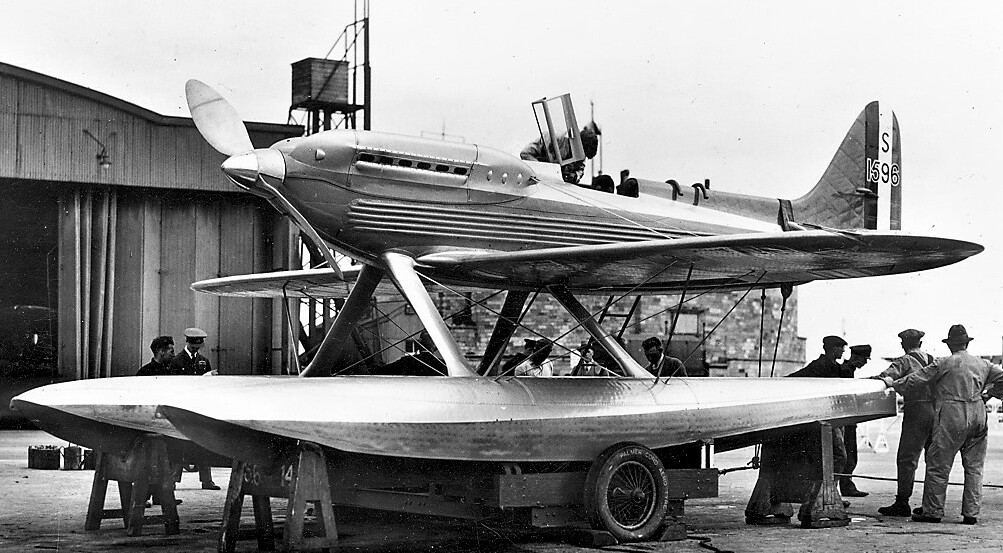
Supermarine S.6B S1596
source - Wikimedia Commons

Despite there being no competition for the 1931 race (all other nations having withdrawn for various reasons) the High Speed Flight were determined to put on a show for the capacity crowd lining the banks of the Solent and ensure that the world speed record - and thus the Schneider Trophy - would be held by Britain.  As such they threw everything they had into the contest - the two new S.6Bs S1595 and S1596, the S.6As N247 and N248, plus the surviving S.5s N219 and N220.  The S.5s by this time were used only for practice runs, with the plan being that S.6B S1595 would be the aircraft to fly the race and make the record attempt while the two older S.6As would be kept in reserve.  While training for the race was still underway S.6A N247 crashed on takeoff, killing the pilot Lt. G. L. Brinton, RN, leaving only N248 as the sole surviving S.6A.  Despite this setback the race went off as planned, Flt. Lt. John Boothman taking S.6B S1595 to a record-breaking 340.08mph on the 13th September as part of the final 1931 contest.  The other S.6B S1596 capsized and sank with Flt. Lt. George Stainforth at the controls during practice for the world speed record but both pilot and aircraft survived and two weeks later Stainforth, in S.6B S1595, raised the WSR yet again to 407.5mph.


Thus of the eight S-series seaplanes designed and built by R. J. Mitchell and Supermarine over the course of 6 years, by the end of 1931 three had been lost to accidents leaving only two S.5s, a single S.6A and both the S.6Bs extant.  Designed from the outset as high-performance racing aeroplanes intended for a specific, continually evolving contest their long-term survival was always going to be in question.  The highly-stressed Napier Lion and Rolls-Royce R engines required a complete strip-down and overhaul after every single run (literally a matter of hours) and the strains put on the airframe by the incredible speeds and high-g turns of the courses meant that keeping any of them in an airworthy condition beyond the absolute limit of their use would have been an extreme engineering and economic challenge.

S.6B S1595 on display at the Science Museum, London
source - Wikimedia Commons
As such only two Supermarine aircraft from that fantastic era of seaplane racing survive to this day, the fate of the others (including both the S.5s) being lost to the mists of time.  The winning S.6B S1595 was retired immediately after the 1931 race and donated to the London Science Museum, where it remains today in unrestored condition.  S.6A N248 was displayed at Southampton Royal Pier well into the 1960s (where it was actually misidentified as S.6B S1596) before being moved to the Solent Sky museum (previously the Southampton Hall of Aviation) in Southampton, where it has since been restored and now sits proudly among the exhibits - often being wheeled out for special events such as the Goodwood Revival.

S.6A N248 on display at Solent Sky, Southampton
source - Wikimedia Commons  

While normally one would be sad to see these two survivors hanging in museums rather than soaring through the sky as their maker intended, for the reasons mentioned above - not to mention their incredible rarity value - this is one instance where I am happy to just see them on static display.  It is for this reason as much as any that Mr Hosie's project is so important and, while it may not be able to create quite the same thrill of speed and excitement of the original 12-cylinder-engined thoroughbreds, it will be wonderful to see a representation of these marvellous aircraft take to the skies after almost 100 years and hopefully introduce a whole new generation to this exciting chapter in British aviation history.  I will be following the progress of this project extremely closely and very much look forward to seeing it come to fruition, when we will once again see an S.5 in the air and on the water.


Saturday, 5 March 2016

Spitfire flight over Southampton marks 80th anniversary


Spitfire flight over Southampton marks 80th anniversary

Can it really have been five years since I last wrote about the anniversary of the Supermarine Spitfire's first flight?!  Well, here we are again, and now even more unbelievably this beautiful and historic aircraft - perhaps the greatest aeroplane ever built - is an incredible 80 years old.

To celebrate this remarkable milestone two Spitfires have once again performed flypasts over the Solent on the Hampshire coastline, taking in all the sites that played a part in this fantastic machine's conception - the former Supermarine factory in Southampton where the Spitfire was designed and built, Southampton Aerodrome from which the prototype K5054 took off on that March day eight decades ago, and the grave of its creator, R.J. Mitchell.  


It would be going over old ground for me to tell (briefly) the story of the Spitfire's conception, so suffice it to say it's good to see this anniversary marked and the reverence in which this aircraft is still held.  One would have hoped for slightly more in the way of celebration perhaps, but maybe we'll have to wait for the 90th or 100th anniversaries to see something really special.  With luck we'll see these and many more; let's hope that the 50-odd airworthy examples will continue to be so for decades to come - the ultimate testament to this glorious piece of aviation design.

Now I'm off to watch First Of The Few!

Saturday, 23 May 2015

Photo of last wartime raid discovered

source

Photo of last wartime raid discovered 

With the 70th anniversary of VE Day still fresh in our minds from a fortnight ago (did anyone see the celebrations on the B.B.C. and particularly the veterans' march past the Prince of Wales - what about that old boy at the end who insisted on getting out of his wheelchair to shake hands with the Prince of Wales and the Duchess of Cornwall?!  What a chap!), it's easy to forget that the war was still raging in Europe almost right up until the moment of surrender on the 7th May.


Photograph discovered of 'last RAF bomb dropped on Germany'

This fact has been brought home again recently thanks in part to the discovery of a previously unseen photograph showing preparations for an RAF bombing raid on the German port of Kiel, with the date (written on the bomb, no less!) of the 2nd May 1945 - only 5 days before Germany's unconditional surrender.  Even more interestingly, this raid - by de Havilland Mosquitoes of 608 Squadron, based at Downham Market in Norfolk - has been confirmed as the last hostile operation undertaken by Bomber Command in the Second World War, so this photograph is most definitely an important historical document of the very last days of the conflict.


It was a fitting closure to aerial operations in the Second World War that Kiel was chosen as the target for this final raid (as it was feared that the remnants of the German Navy would make a last-minute dash for Norway, then still in Axis hands, from the town's large sea port) as it was also one of the very first targets to be bombed by the RAF back in September 1939 (as immortalised in the 1939 British propaganda film The Lion Has Wings, starring Merle Oberon and Ralph Richardson - from which the above clip is taken).

As is the way with newly-discovered photographs we marvel at the snapshot in time that they provide, which in this case is heightened by the knowledge that it was taken less than a week away from one of the defining events of the 20th century - the end of one of the world's bloodiest and all-encompassing wars.  An otherwise everyday wartime activity is thrown into stark relief by the fact that it turned out to be the last such action of the war and one wonders about the awareness of the men in the photo - what were their hopes and feelings on that last raid; did they know it would all be over in a matter of days?  We'll likely never know the answer to that question now since the original owner, pictured in the photo, passed away in 1979 (having, like so many of his generation, never talked about his experiences) but nevertheless it's welcome news that an historically-important image has been found and saved for the nation, fittingly in this the 70th anniversary year of the war's end.

Sunday, 10 August 2014

Now at work, rest and play

Golly gosh, I'd forgotten just how time-consuming a full working week can be!  Still, here we are again, what?  The first week of a new job is under my belt and now I've got some time to sit down and write a few lines of this and that - all that has been leading up to this week just gone.

The week previous - that is, two weeks ago now - I spent some time nosing around my local branches of Debenhams, Marks & Spencer and BHS hoping to score some bargain items for m'wardrobe in the summer sales.  I was not disappointed, either, as Debenhams' sale was in full swing (they don't seem to call it the Blue Cross Sale any more, unless they're saving that for Christmas/January?) and I picked up two smashing pairs of cotton trousers that will go well with the majority of my jackets for a casual summer look.  Most importantly, Debenhams' men's trousers go up to a 34" inside leg - perfect for the long of limb such as myself!

Maine New England Navy twill chinos, £12 from £20 at Debenhams
(**sold out**)

The navy blue is a nice, muted colour - giving off an almost workmanlike vibe - but the terracotta twill is my absolute favourite, adding a welcome and different dash of colour to my outfits.

Maine New England Terracotta twill chinos, £10 from £20 at
Debenhams

Marks and BHS had less on offer (and M&S wonders why its year-on-year clothing sales keep taking a battering - definitely a "could do better" on the men's clothing selection, at least) but I was still able to score this beautiful "Autograph" knitted silk tie for a frankly unbelievable £4 (it was actually still marked up at £7.50 on the ticket - I do like pleasant surprises!).

It actually goes quite well with the terracotta trews, don't you think?  It's wonderful to the touch, of course, and knots well too - something that's not always a given with knitted ties, I've found.

Saturday last found me in Rayleigh for the town's first ever Antique & Vintage Street Market, run by the same people who put on the local Runnymede Vintage, Antique and Retro Fairs that I have been to many times in the past and enjoyed, as has been mentioned on this very blog.  Alas I can't see this street market becoming a regular one as it was really very poorly done with barely half a dozen stalls in the high street (which had not been closed as I was expecting), largely selling stuff that would have better been described as bric-a-brac.  There were supposedly more stalls around the corner outside the local auction house (Stacey's, occasional star of Antiques Road Trip and Bargain Hunt) but we - mother, sister and I - we so disappointed we didn't bother with that but instead hit the charity shops.  There I was able to pick up a nice T.M. Lewin shirt for £3.50 and an interesting CD for £1.

Twenty-four songs from The Radio Rhythm Club, a name I'd never come across before but actually that of a B.B.C. programme broadcast during the Second World War.  The Radio Rhythm Sextet was led by a young Welsh clarinetist called Harry Parry(!) who greatly admired American bandleader Benny Goodman, to the point where he emulated him with his own group of top British instrumentalists of the time.  Sadly Harry Parry died in 1956 at the age of 44; The Radio Rhythm Club and Sextet seem to have been lost to the mists of time, since I can't seem to find out much about them.  The Benny Goodman influence is obvious (but just with a soupçon of British smoothness) and it maybe this overt similarity, plus changing musical tastes after the war, that ensured The Radio Rhythm's obscurity.

Still, after all that, I'm glad I bought the CD as it certainly does bubble along.  I do like the Benny Goodman sound anyway and was only recently thinking about finding some more 1940s music, so this ticks the boxes.  Have a Boogi to this:


What else has happened?  Oh yes, I marked the 100th anniversary of the start of the Great War on the 4th August with a single candle and the "lights out" motif, as did most of the country I think.  The B.B.C.'s coverage was rather good, I thought - slightly reserved rather than overdone and all the better for it.

This was the same candle that I burned (we were all given one) at my granddad's
funeral back in 1997. 
I'd never lit it since but it somehow seemed right to use it on the anniversary of WW1

Well, that's all for now, I think.  There's going to be a bit of disorder around here for a little while longer as I continue to settle back into a 5-day working week and get comfortable in the new job but as long as I can post at least once every weekend I'll be happy - and hopefully you, my readers, will be too!  I've already got posts planned featuring the two surviving Lancaster bombers flying together for the first time in 50 years, plus a 61-year-old woman driving a 110-year-old car across Australia!  In the meantime I do still enjoy reading your blogs when I get the chance - usually now a special treat after work! - and I hope you'll continue to stick with mine during this transition.

Saturday, 11 January 2014

My Great War reads for the 100th anniversary

When I wrote a couple of weeks ago about my latest book find just before Christmas, I mentioned that it was about something very pertinent to this year's centenary of the First World War (news and events relating to which have already begun to appear, so expect this blog to become heavy with them in the coming months!) - namely the collected early war letters of RNAS pilot Lieutenant Harold Rosher.  I added that it would become a welcome addition to my war library and stated my intention to read all the books in my collection that relate to World War One by the end of 2014.


Well, the other day, with the germ of an idea for a post in my mind, I got out all said books (including In The Royal Naval Air Service, 3rd row far right) and laid them out to take a picture of them for this blog.  I think I may have to revise my target!  The end of 2018 seems more realistic now I've reacquainted myself with the number books I have on the subject!

As you can see most of them focus on the aeronautical aspect of the Great War; no surprise really as that has always been my abiding area of interest.  In fact all but three are purely about aerial warfare.  True World War I Stories (2nd row from top, 3rd from left) is just that and was picked up from a library sale a few years ago for 50p.  Before Endeavours Fade by Rose E. B. Coombs (top, 3rd from left) was given to me by my stepfather several years back and is actually something of a guide book to the battlefields, detailing towns, landmarks and other locations that saw action as well as the innumerable memorials throughout Belgium and France.  Although now nearly 40 years old this book will doubtless be interesting and a still-useful guide if I should choose to visit the areas covered.

Once I realised just how many books I had, I got that nagging feeling that there were probably one or two more lying around somewhere that I'd forgotten about and such proved to be the case! 

Goodbye to All That is an autobiographical account of the the First World War (and the author's early pre-war life) by Robert Graves, the poet, scholar and author who served in the Royal Welsh Fusiliers and was good friends with Siegfried Sassoon.  I picked up this copy for a few pence in Homebase (yes, the DIY people - my local store has a small second-hand book concession by the tills!) a year or so ago and it has been sitting patiently in my "to read" pile.

The rest all focus on the RFC and/or the Deutsche Luftstreitkräfte (except In the Company of Eagles, a novel by Ernest K. Gann about a duel between French and German pilots) with no less than four devoted solely to Manfred von Richthofen.  These include his own [translated] memoirs and a fascinating in-depth record of his 80 career victories.

German War Birds is a splendid book from the 1930s, written by the mysteriously pseudonymous "Vigilant" (generally agreed to be one Claud W. Sykes and probably a serving RAF officer hence the name), details of some of the lesser-known German pilots of the Great War and is written in wonderfully charming Thirties style.  I picked it up in 2003 from the wonderful book stalls that can still be found underneath Waterloo Bridge.

Many of the other books are written by well-regarded aviation/military historians such as Peter Hart, Alan Clark and Norman Franks.  Then there are the famous wartime memoirs of Cecil Lewis (Sagittarius Rising) and Victor Yeates (Winged Victory), not to mention James McCudden's Flying Fury.  Finally there is, of course, Biggles - who nearly 20 years ago introduced me to the fascinating world of dogfights, biplanes and heroic flying that I would later go on to read so much more about.  The First World War stories fully deserve their place here, being inspired by true events and stories that the author W. E. Johns (himself a bomber pilot in the war) saw or heard.

Finally, as a bit of light relief, Practical Flying is a good read - it being a facsimile of the standard training manual given to pilots joining the RFC.  I doubt there'll ever be any call for me to fly a Sopwith Camel, but you never know!  I actually got it (and a real hip flask!) with the old PC simulator, Flying Corps, way back in the late '90s and am pleased to report that the old game still runs so I can at least take my bus up for a spin virtually if not in reality(!).  Incidentally I'm amazed to see how far computers and graphics have progressed - the modern equivalent of Flying Corps, Rise Of Flight, looks incredibly realistic and expansive.

Just as soon as I've finished reading my current tome, Waiting For Hitler, which is an equally enthralling series of accounts from the first year of the Second World War when the invasion of Britain looked likely, I shall begin working my way through these Great War books.  Don't be surprised if you don't hear from me for a while!  But no, in all seriousness, I really looking forward to doing this; in the centenary year of the start of the Great War it just seems the "right" way to go about commemorating the occasion.  I may even post a review or two up along the way.  Then there's my film collection too, I haven't even touched on that yet.  If that's not enough the Daily Telegraph is also marking the anniversary by making available online copies of every one of its newspapers from 1914 to 1918, each day for the next four years!

What have you got planned for the 100th anniversary and are there any more(!) books you would recommend I seek out?

Wednesday, 18 December 2013

A century of shirts - one hundred years of Hawes & Curtis


A gentleman's shirt is arguably a design classic - the bedrock of a chap's outfit, from which the tie hangs (or under which the cravat goes) and over which the jacket sits.  Over the decades collars may have lengthened, widened, shortened or changed styles in numerous other ways and colours come and gone but the crisp cotton shirt has by and large always remained a timeless garment.  No chap's wardrobe is complete without a good selection of shirts and mine is no exception, with a mixed line-up ranging from high street to Jermyn Street (sometimes via the high street...!).

Ah, Jermyn Street - the centre, the Savile Row of British shirtmaking.  The list of businesses occupying this famous street is a long and illustrious one, a chap's dream shopping destination.  One name in particular, however, has celebrated a noteworthy anniversary this year.

Hawes & Curtis, who currently occupy numbers 33-34 and 82 of Jermyn Street (as well as several more locations in London and around the country), have recently marked 100 years in business - their first shop having opened in 1913.

Established in that year by two experienced cutters, Ralph Hawes and Freddie Curtis, the original store was situated just around the corner from Jermyn Street in the equally-renowned Burlington Arcade.  This combination of proven skills and a favourable location proved immediately successful and the House of Hawes & Curtis' reputation was cemented practically from the off.  It received an even greater boost nine years later, in 1922, when no less a person than the Prince of Wales - later Edward VIII / the Duke of Windsor, without doubt one of the best-dressed chaps of the era and a gentleman's style icon to this day - visited the shop and left with a selection of suits, blazers, flannels, handkerchiefs and of course shirts.  So impressed was he that he became one of the company's most famous patrons and recommended them to many of his friends and relations including the future King George VI and Earl Mountbatten.  Hawes and Curtis in turn created the now-familiar spread collar, designed specifically to accommodate his ties and the knot he inspired - the Windsor.  Later, the Duke of Windsor awarded them a Royal Warrant and his coat of arms was added to the shop.

source
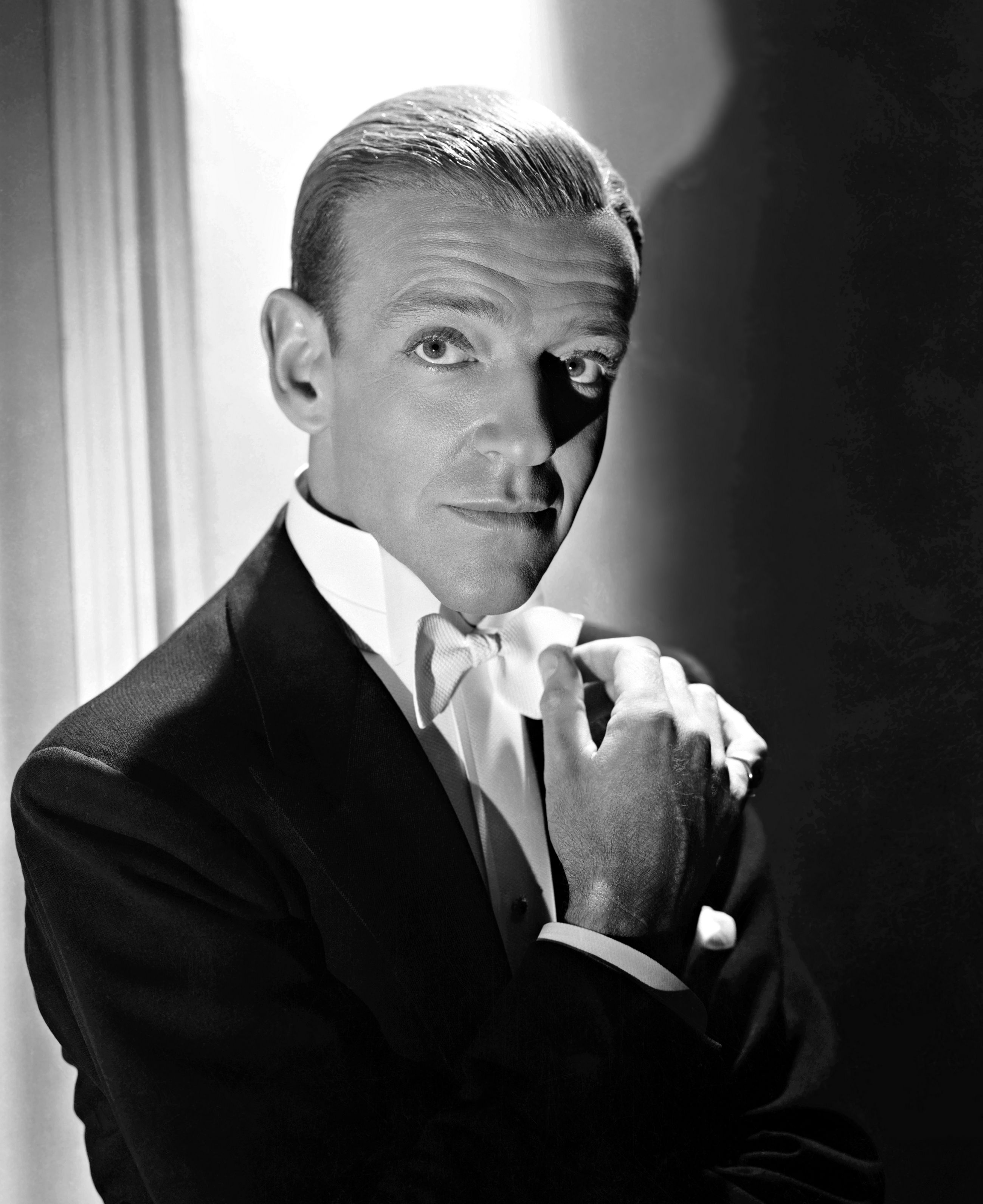
Other famous customers of the time read like a Who's Who of this blogger's favourite style icons.  Fred Astaire, well-known for buying his clothes from London's tailors, became a regular visitor after seeing H&C's new design of backless waistcoat (designed to be worn under a tailcoat) although the story goes that the garment was so popular he had to wait in line with everyone else!  No-one ever looked better in a pin-collar shirt, either.

 Cary Grant was another Golden Era Hollywood actor who bought his clothes from Hawes & Curtis, beginning at the rise of his career in the late 1930s, and who runs Astaire close in the shirt stakes.

Robert Donat's splendid hounds-tooth suit, which he wore in 1935's The 39 Steps, also came from H&C (as did the short-trousers replica that Hitch presented to Donat after he complained once too often about the real one being ruined through all that running about over the Scottish moors!).

source

To celebrate this milestone Hawes and Curtis have not one but two Collections in their formal shirt range that take inspiration from their rich heritage - the 100 Years Collection and the 1913 Collection.  Both feature various nods towards a century of shirt design with a good mix of traditional and modern styles and colours.  Hawes and Curtis were kind enough to provide me with an example to review as part of this post so, taking inspiration from the chaps above, I selected their Plain White Twill Slim Fit Limited Edition Tie Bar shirt from the 100 Years Collection.

Plain White Twill Slim Fit Limited Edition Tie Bar,
from Hawes & Curtis' 100 Years Collection, £39.50
(or 2 shirts for £60)
This is my second H&C shirt (the other a 2 ply 100's cotton from their Warwick tailored fit range - a beneficiary boutique find from a couple of years ago) and my first experience of the slim fit style (in the past I've tended to stick with the standard classic fit).  But the side darts are well put together and the cotton twill is up there with the best I've experienced.  The fit is - as promised - trim without being too pinched at the waist; slightly more defined but no less comfortable or easy to work with than the classic fit.  "1913-2013" labels integrated into the side hem gussets are a nice addition too.  H&C's "silk touch finish" is no gimmick either - it adds a pleasant sheen to the fabric and gives it a soft, light quality (theirs have a "put it on and forget" feeling I've not encountered elsewhere) similar to that found even on their two-fold cloths, although perhaps not quite so pronounced.  Certainly it is one of the easiest shirts to iron that I've ever owned!

The pin collar is well-defined and looks like it should be easy to maintain.  The bar is designed, as you probably know, to sit under the tie knot and so push it outwards thereby giving an extra dimension to your necktie.  It also, I think you'll agree, has a classically dapper 1920s/1930s look to it too!  I can see this working well with many an outfit (although be warned, chaps, it still better suits a thinner tie or smaller knot).  H&C are also to be commended for being rare among shirtmakers of my experience in also offering it in a colour/fabric other than white twill, namely a light blue herringbone.  The mother-of-pearl buttons are a nice touch (they really do look better than plain old plastic ones), sitting well with the fabric, and the entire garment is thoroughly in keeping with one's expectations of a Jermyn Street shirtmaker with so many years' experience.

Nowadays selling mainly shirts, but also other items of menswear including coats and jumpers, H&C's focus on this essential men's garment coupled with their 100 years in the trade certainly seems to have kept them in the upper echelon of shirtmakers (yet with comparatively reasonable prices).  Ladies need not feel left out either, for like many modern shirtmakers H&C also sell women's shirts (with their own 100 Years Collection, I might add!) and accessories.

Based on my experiences I see no reason why Hawes and Curtis shan't celebrate many more anniversaries and I doubt that this will be the last of their shirts to make it into my wardrobe.  On the whole, this is a company that should be on every chap's (and chapette's) radar, and here's to their next one hundred years!

*This was a sponsored post in collaboration with Hawes and Curtis*

Thursday, 8 November 2012

Steam train to return to London Underground; celebrations to mark 150 years

source
Steam train to return to London Underground

Back in October of 2011 I did a post about the renovation of the oldest extant London Underground railway carriage - Metropolitan Railway Carriage Number 353, originally constructed and in use from 1892.  Plans were well underway to restore 353 to its former 19th-century glory in time for 2013, the 150th anniversary of the London Underground system.  I wondered then just what form these celebrations might take and how 353 would fit into them and now 2 years later, with 2013 rapidly approaching, the events to mark this momentous milestone have been revealed.

London Underground celebrations to mark 150 years

What splendid events they sound, too!  Transport for London and the London Transport Museum have really pulled out all the stops to make these celebrations something to remember.  For not only has Carriage No. 353 been fully restored - an impressive and laudable event in itself - but it will actually run on the Underground on two dates in January as the start of a year-long commemoration. 

source
 
It gets even better.  Four additional coaches of 1898 vintage will also accompany 353 on these special excursions.  One of the oldest working electric locomotives, the 1922 Sarah Siddons, will be on hand to assist in the towing of these carriages.  "Assist" because... the work will be shared with one of the last surviving Underground steam trains - Metropolitan Railway Locomotive No. 1.  That's right - an 1898 steam engine is going to pull 19th-century carriages along a stretch of the London Underground! 

In pictures: Steam train to recreate London Tube journey

I'm sure it will be an amazing experience - a real time warp - for those who will win the ballot that the London Transport Museum has deemed necessary to decide who can purchase tickets for these historical journeys.  In any event it is an incredible way to mark 150 years of the world's first underground passenger railway and begins a whole year's worth of special events including: further heritage rail trips, books & poems, displays & exhibits, commemorative £2 coins, LU memorabilia and even a series of theatre events at the old Aldwych Underground station.  So even if you can't get to see (or like me can't afford to see) these oldest survivors there is bound to be something else to take your fancy and suit your pocket.  Well done to TfL/LTM and happy birthday to the London Underground!  

*Met. Locomotive No. 1, Sarah Siddons, Carriage No. 353 and the 1898 coaches will be travelling on the London Underground on the 13th and 20th January 2013, between Moorgate and Kensington (Olympia), Edgeware Road, Earl's Court and Baker Street.  See the London Transport Museum's website for times and ticket prices.*

Friday, 22 June 2012

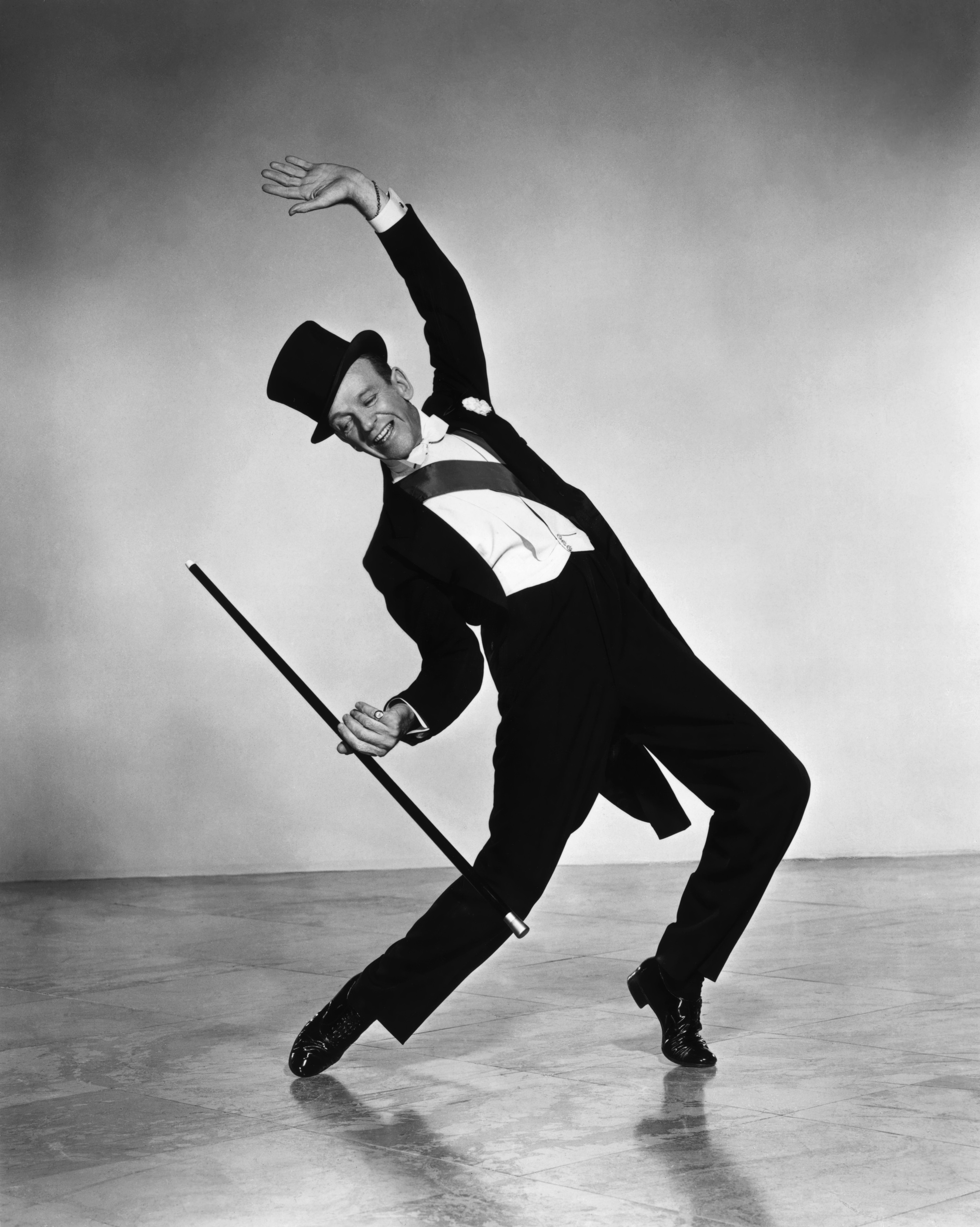
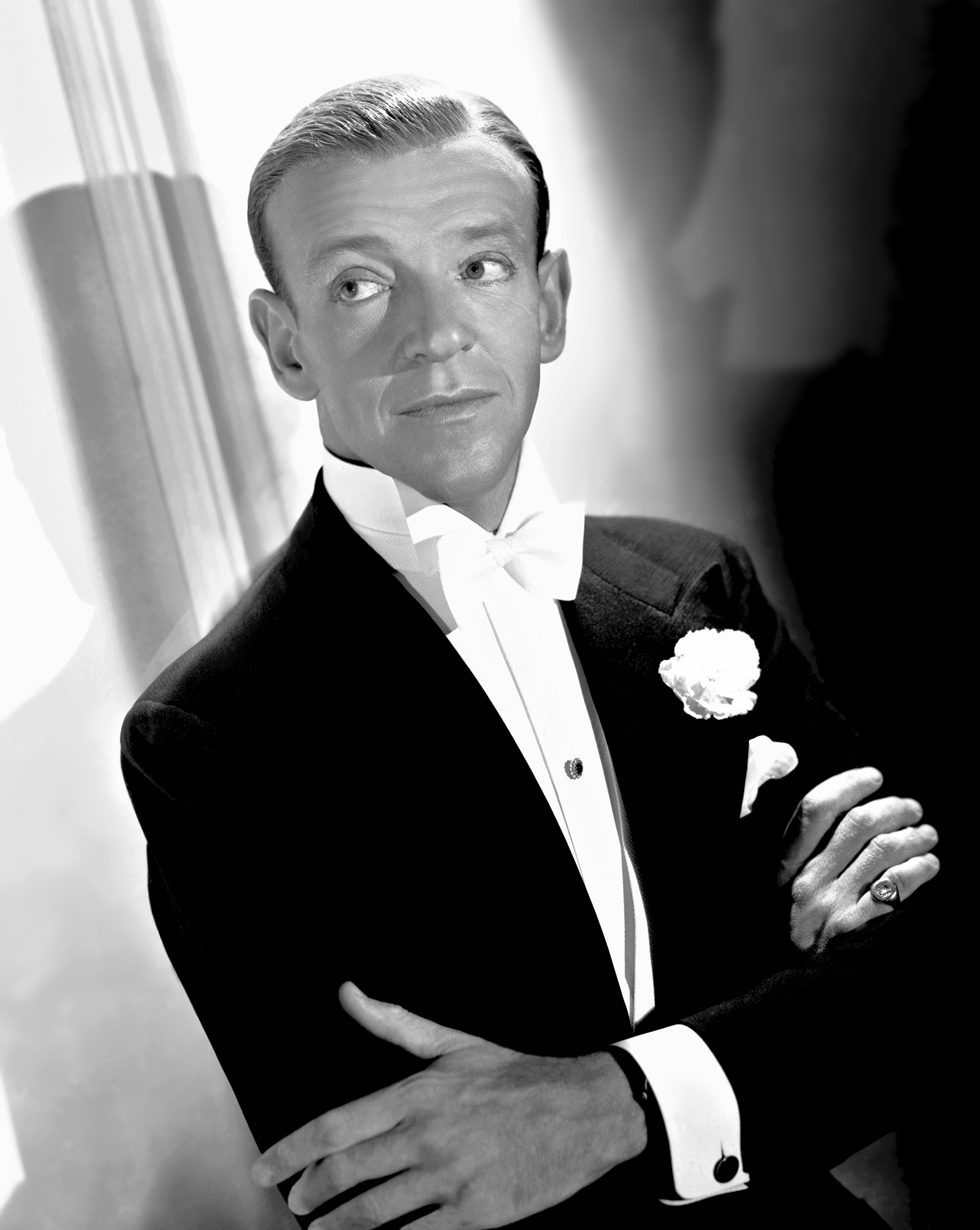
Fred Astaire in pictures: A master of song and dance

All images courtesy of Dr Macro
Fred Astaire in pictures: A master of song and dance

Today sees the 25th anniversary of the passing of the legendary Fred Astaire, who succumbed to pneumonia on this day in 1987 at the grand age of 88.

As my number one Style Icon I need little excuse to feature posts about the great man and this being the quarter-century since he left is reason enough to focus on him again.  The Daily Telegraph has done their own pictorial tribute and I intend to add to that with favourite images and clips of my own.


What can more can I add, though, to what I've said previously and to what others have said down the years?  There aren't enough superlatives in the world to do justice to Fred Astaire's dance skill, fashion and gentlemanliness.  Seeing him on screen is the nearest thing to seeing heaven on earth.  If I'm ever feeling down, or under the weather, I watch a Fred Astaire film and always feel better for it.  No other actor-dancer is such a joy to watch and admire.  He is like an æthereal being, floating from scene to scene, quite literally gliding around the floor and brightening the lives of everyone with whom he comes into contact.


Others may have come and gone, with Cary Grant running him close for "Best Dressed", but I'm in full agreement with those who say there has never been another like Astaire nor will be again.  There are once-in-a-lifetime performers and once-a-generation singers/dancers/actors but Fred Astaire was a true one-off, a perfect distillation of song, dance and action.


Twenty-five years seems almost meaningless for someone who has been immortalised on stage and screen (a happy thought has just occurred to me that, for nearly 4 years, Fred Astaire and I shared the same planet - a fact of time that scarcely seems creditable).  In fact, "immortal" is the very word.  Twenty-five, 250, 2500 - however many years pass I feel sure that the world will not forget the incomparable Fred Astaire and that we shall continue to celebrate him for as long as music and dance exists.

~~~~~~~~~~~~~~~~~~~~~~~~~~~~~~~~~~~~~~~~~~~~~~~~~~~~~~~~~~~~~
***Don't forget that today is also the last day you can enter my 150 Followers Giveaway.  The winner will be announced tomorrow so hurry, hurry, hurry!***

Wednesday, 6 June 2012

I went to London to see... the Jubilee (and the Queen - I wish!)

"What did you get up to over the Jubilee Weekend?" is the question on everyone's blog at the moment and it's a question I'm happy to answer as I had been thoroughly looking forward to the occasion and the chance to celebrate Her Majesty's remarkable achievement.

Congratulations, ma'am!

Being firmly in the Royalist camp, albeit in an understated fashion (no Union Jack waistcoats, giant flags and whatnot here), the bunting had been hung by Tuesday of the previous week and plans were tentatively being made.  As it happens they weren't really followed, but a fun time was had nonetheless.


On Saturday I went to the local Jubilee party in the nearby park, although it was advertised as simply an "Afternoon Fun Day" to cater for everyone no doubt.  I say "advertised", but a badly-handwritten fabric sheet draped over some railings (such that the top part was folded back over itself rendering the first line invisible) was the only real advertising the thing got (as far as I know) so it was a pleasant surprise to see it garner quite a crowd.

Considering the poor level of advance notice and the fact that the organisers were the same people whose "Victorian Christmas Fayre" consisted of two opposing Cats' Protection League and RSPCA raffle stands and a dilapidated cup-and-saucer ride all manned by people in jeans and fleeces I wasn't expecting much.  It turned out to be a bigger event (not difficult after the winter's "fayre") but still mainly featured lucky dip stalls with silly prizes such as giant inflatable hammers; also present were a couple of bouncy castles, the CPL offering free neutering(!) and some dance troupes jumping around to modern bass-heavy music.  All right for the children, no doubt, but little to keep me there so I took a turn around the rest of the park instead.

source

I had a half-formed plan in mind to head to London on the Sunday to try and catch a glimpse of the royal barge but a wall of grey accompanied by heavy rain as early as 11 o'clock dissuaded me.  I have nothing but admiration for those who braved the weather line the banks of the Thames and feel a bit silly for wimping out, but I resolved to go to Town on the Monday instead and contented myself with watching the proceedings on the television.  It was certainly a drier experience, although I began to believe that I would have seen more of interest had I actually gone to the City.  I'm glad to see that I wasn't alone in deploring the B.B.C's coverage.  I know they're having to cut costs, but honestly it was a bit of a shambles I thought.  What say you, who saw the broadcast?


So to the Tuesday, and I hopped on a train to the metropolis at 11:30.  I'd decided again to miss the crowds at St Paul's and instead take a leisurely stroll around all my old City haunts and just take in the Jubilee spirit.  My "stroll" ended up taking me from Fenchurch Street all the way to Waterloo Bridge, via Leadenhall Market and the Thames Path and with the odd stop to snap the near-complete Shard and the Tate Modern.


The Jubilee spirit was still very much in evidence, with lots of tourists, Union flags and families around the South Bank, obviously seeing some sights before waiting for the procession/heading to the Mall.  The giant picture of the Royal Family on the balcony of Buckingham Palace during the Silver Jubilee was still in place on the front of Sea Containers House and mightily impressive it was too.  It was lovely to see all the Union flags hanging from buildings and lamp posts.


I was pleased to be able to again peruse the second-hand book stalls beneath Waterloo Bridge that formed so integral a part of my lunchtimes at my old job and although I was tempted a few times nothing really called out to me so I headed back towards Fenchurch Street, this time via the Millennium Bridge and Cleary Gardens - one of the City's green spaces, the site of a Roman bath and vineyard, later a bomb-damaged area and now once again a vineyard-inspired terrace.

But for the sound of passing trains, you'd hardly think this was central London

"Fred Cleary 1905-1984, Tireless in his work to increase open space in the City"
The City itself was all but deserted, as it usually is on Sundays and bank holidays, but I did see some church service attendees around St Paul's (the bells of which were still pealing at 2 o'clock) wearing naval uniform, morning dress and tailcoat & frilled shirt, with their partners in their smart dresses and formal hats.

Speaking of smart dress - a little tip, chaps within striking distance of London.  Around the Cannon Street-Bow Lane-Cheapside triangle there were/are a large number of off-the-peg tailors - independents and chains such as T.M. Lewin - who were having closing down or summer sales with as much as 50% off.  Sadly they were closed, but surely there is a bargain or two to be had.  I may well go back and see, but for now that was the end of my Jubilee weekend.  I'm glad to see so many fellow British vintage bloggers celebrating in style, and look forward to reading yet more descriptions of Jubilee fun.

Thursday, 10 May 2012

Museum marks end of the trolleybus era


What Goes Around from David Doré on Vimeo.

Museum marks end of the trolleybus era

Fifty years ago this month the last trolleybus ran its final scheduled service in the capital before the type was withdrawn in favour of more modern buses such as the Routemaster.  Sixty years ago the last few trams disappeared from the City's streets.  To celebrate this double anniversary - and also to remember the trolleybuses that ran in the nearby towns of Ipswich and Southend - the East Anglia Transport Museum held a special two-day gala event to remember these forgotten forms of public transport.


Eight London Transport trolleybuses were on show at the museum - the most all together in one place since they went out of service - and it is fascinating to see how quiet and efficient they still are today.  Eventually undone by [then-cheap] diesel-powered buses that were not constrained by route-defining overhead wires or the risk of those same wires coming adrift, trolleybuses had faded into obscurity - in this country at least - by 1962 and had completely vanished from the country ten years later.  But at their height they were seen as the future of public transport - clean, fast, modern and the natural successor to the open trams that plied the same routes.

Those same trams were evolving too, and new enclosed models allowed them to stay in the capital for only ten years less than the trolleybuses.  In fact, trams could be said to have held on better than trolleybuses, for as well as the world-famous examples in Brighton new tram networks have been reintroduced in Croydon, Manchester, Sheffield, Nottingham, the West Midlands and (eventually) Edinburgh.

However while trolleybuses, like trams, have remained popular in Europe it is only now - in light of so much environmental concern - that they are being brought back to Britain.  A new 21st Century trolleybus is being planned for Leeds.  If it is successful other cities may follow suit.  As the title of the accompanying video so presciently states: what goes around... comes around.  Something we all know well, eh?


Sadly I was not able to attend the East Anglia Transport Museum for this particular celebration but I have been in the past, when I took these pictures.  The great thing about museum exhibits and vintage vehicles like these is - they don't date!  It was a thoroughly enjoyable visit at the time and has stayed in my memory ever since.  I am long due a return visit and I would thoroughly recommend it as a day out if you are ever in the area.  It's simply smashing to see so many people turn out to celebrate the classic tram and trolleybus, and to know there are still enthusiasts around to ensure these wonderful machines keep running.  Long may they continue, and perhaps we shall see these vehicles' spiritual successors in cities up and down the country in the future.

Monday, 7 May 2012

Hindenburg 75th anniversary gathers last witnesses to the airship


Hindenburg 75th anniversary gathers last witnesses to the airship

This year marked a particularly famous centenary of an historic transportation disaster - the sinking of the RMS Titanic - but it is also the anniversary of another well-known tragedy.  Seventy-five years ago yesterday, the airship LZ-129 Hindenburg exploded and crashed over Lakehurst, New Jersey, killing 36 people and effectively putting an end to the airship as a means of passenger travel.

The German airship Hindenburg was destroyed by fire in Lakehurst, NJ, 75 years ago

Just as with the Titanic, a memorial ceremony took place at Lakehurst but unlike the great ocean liner's demise there are still witnesses to the Hindenburg disaster alive to recollect the event and offer their own theories as to why the giant hydrogen-filled airship exploded (although we may never know the exact cause for certain). These memories provide a fascinating and oft-forgotten insight into that fateful day in history.


The Hindenburg should, however, be remembered not just for its fiery death - broadcast on newsreel around the world - but as a truly great wonder of the modern age.  Today's airships may have been relegated to observation and transport work for the military or short scenic flights and advertising, but they are by no means an extinct aircraft and one day in the not-so-distant future we may see their like gracing the skies more widely again.  In the meantime we look back and remember this colossus of the air and its untimely end in which 36 people lost their lives.

Sunday, 11 March 2012

Women pilots celebrate first English Channel flight


Women pilots celebrate first English Channel flight

Oddly enough I was thinking just the other day, after reading several blogs celebrating International Women's Day on the 8th, who my heroines are.  Then I remembered all the female pilots of the early 20th Century and the pioneering flights they undertook - a microcosm of women's general battle for equality.  Names like Amy Johnson, Amelia Earhart and Diana Barnato-Walker sprang to mind; now this commemoration and accompanying article from the B.B.C. adds another woman to that list - Harriet Quimby.

Even before she became the first woman in the United States to have a pilot's licence Harriet Quimby was already doing what was, at the time, still a very male-orientated job - journalism.  As a theatre critic for various San Franciscan and New York newspapers and later an author of several early Hollywood screenplays Quimby was obviously possessed of an imaginative and enquiring mind so perhaps it should come as little surprise that she became interested in aviation, particularly with her links to the media which was so enamoured with powered flight in the years following Kitty Hawk.

After learning to fly in 1910 Quimby continued to work in between aviating and even used the latter as an advertising gimmick when she appeared in a unique purple aviatrix outfit to promote a new soda drink.

On the 16th April 1912 Harriet Quimby performed another flying first by becoming the first woman to fly across the English Channel and it is the centenary of this feat that female pilots from around the world commemorated in Kent yesterday - as well as the wider-ranging Women of Aviation Worldwide Week - and which is reported in the accompanying article.

Sadly less than three months later aged only 37 Harriet Quimby was killed in a flying accident in Massachusetts when for some unknown reason her aeroplane suddenly pitched forward at 3,000 feet and threw Quimby and her passenger out.  With no parachutes at that time, there was no hope of survival.

It is only right therefore that this lady and her inspiring first flight is celebrated as part of the wider acknowledgement of the history of women in aviation and it is wonderful to see so many female pilots having turned up to commemorate both this remarkable event and worthy cause.  Here's to many more flying femmes and the memory of the first few aviatrices who paved the way.

Harriet Quimby in the Moisant monoplane in which she learned to fly

Saturday, 4 February 2012

Severn Valley Railway celebrates 150th anniversary

Severn Valley Railway celebrates 150th anniversary

A little article from the B.B.C. here marking 150 years since the opening of the Severn Valley line which ran from Kidderminster to Shrewsbury.

Today the line is home to the Severn Valley Railway, one of the most popular and frequently-travelled heritage lines in the country, with both steam and diesel-electric locomotives running between Kidderminster and Bridgnorth.  Both the railway and the nearby Kidderminster Railway Museum have been putting on events to celebrate this milestone and it looks like the SVR will continue to be around for many years to come.

After the Beeching Cuts of the early 1960s so many branch lines were closed, so it is wonderful to see one of them prove to be so successful today, attracting tourists and vintage/railway enthusiasts from near and far.


The work of the SVR and the Kidderminster Railway Museum in helping to keep these splendid trains running is to be applauded and the period detail displayed at the stations is delightful.  It is my hope that one day I shall be able to experience a journey on the line myself.  Until then, Happy Birthday SVR!

Wednesday, 14 September 2011

Seaplane flypast marks 1931 Schneider Trophy victory

Seaplane flypast marks 1931 Schneider Trophy victory

I touched upon the Schneider Trophy air races of the 1920s and early Thirties back in March when the Spitfire, the ultimate descendant of the Supermarine S-series seaplanes that took part in them, celebrated it's 75th anniversary.

Yesterday, however, marked the 80th anniversary of the last Schneider Trophy race which was held at Southampton Water in Hampshire and was won for the third time in succession by Great Britain.  This feat allowed the British team to keep the trophy for all time and signalled the end of the competition.  The Supermarine S.6B that won did so at a record-breaking speed of 379mph, later raising it again to 407mph and as has been said setting the template for the famous Spitfire fighter.  The original Schneider Trophy and the S.6B now both reside in the London Science Museum.

As many as half a million people crowded on to the beaches around the Solent to watch the 1931 race and what that must have been like one can only imagine.  That the idea behind the Schneider Trophy - of advancing the field of aeronautical engineering - was so widely embraced not only by the aircraft manufacturers but also by the general population of no less than 4 nations (Great Britain, France, Italy and the United States all took part) shows how much aviation enthralled people during that period.  I've featured it before but footage of the 1929 event bears reshowing; the roar of the Rolls-Royce and Napier engines, the sheer speed of the aircraft and the hundreds of thousands of spectators cheering them on is something that sadly may never be recaptured.


Today, as the accompanying article explains, two modern seaplanes (and the death of the seaplane has been greatly exaggerated, by the way!) have flown the same course as in 1931 by way of commemoration.  It seems a small act in comparison to the majesty of the original races and the important part they played in eventually ensuring the continued existence of this country, but at least they are being remembered in some fashion.  We may never be able to recreate the evocative images and thrills associated with the Schneider Trophy races but this certainly gives us a chance to look back and marvel at those magnificent men (pilots and designers) and their flying machines who went before.

Monday, 5 September 2011

Cord's grandson honours his work

Cord's grandson honours his work

This year marks the 75th anniversary of what, in my humble opinion, is the most beautifully-designed [American] car there has ever been - the 1936-37 Cord 810/812SC.

As always, there is a healthy fan-cum-drivers club in America today as well as a museum and it is the former which has this year organised its annual run around the Cord 810.  I also like the great idea of baseball-style cards being handed out to the local youths of Auburn, Indiana where the cars were originally produced.  It's an inspired way of connecting them with an important aspect of [their] motoring history, in a fun and tangible way.  Well done to Mr Hummel, and here's hoping the 2011 Auburn Cord Duesenberg reunion was a great success.


The Cord Corporation built it's first car in 1929 - the L-29.  This ground-breaking automobile had a front wheel drive layout at a time when every other car in the States was driven from the rear; indeed it was the first such car in America ever and with the exception of the later Cords fwd would not be seen again on a US car until the 1966 Oldsmobile Toronado. The L-29 was produced for 3 years until 1932 before a break of another 3 years whereupon the 810 arrived.
Founder of the Cord Corporation, Erret Lobban Cord, had already bought the Auburn Automobile Company and Duesenberg during 1925-26.  Until their untimely demise in 1937 Auburn, Cord and Duesenberg (under the design direction of Gordon M. Buehrig) produced some of arguably the best looking cars of the decade, such as the Auburn 851 Speedster and Duesenberg Model J (below).


The Cord 810 was another innovative design.  Front-wheel drive again, it was the first car anywhere in the world with retractable "pop-up" headlights (which were actually originally landing-lights from a light aircraft, and were operated by two hand cranks inside the car).  Other pioneering features included electrically-operated variable-speed windscreen wipers and a radio as standard (the latter offering not seen again for another 20 years).


The next year, 1937, saw the introduced of the supercharged 812, which would prove to be the last hurrah for E.L. Cord's empire.  No other car so perfectly captures the 1930s aesthetic of Art Deco/ Streamline Moderne and the glitz & glamour that such designs continue to evoke.  An example of the Cord 810 was later displayed in the New York Museum of Modern Art, surely forever answering the question "Can a car be art?".


*These two fine examples, below, are probably about as close as I'll ever get to having my own Cord 812SC and Auburn 851 Speedster ;-)*


Followers

Popular Posts