Showing posts with label Southend. Show all posts

Tuesday, 18 August 2020

Bus painted in pre-war 1930s livery in nostalgic tribute to Westcliff-on-sea Motor Services

source - FirstGroup / John Lidstone

Bus painted in pre-war 1930s livery in nostalgic tribute to Westcliff-on-sea Motor Services

Some local vintage news now in the form of the welcome return of some æsthetically-pleasing 1930s livery applied to one of our bus operator's vehicles as part of its celebration of the 100th anniversary of one of its predecessors.

FirstGroup's standard colours of white, blue and pink (known in some quarters as "Barbie" buses for obvious reasons!) have long been anathema to this blogger so any effort to bring back some of the more tasteful hues of bus companies past is definitely a good thing in my book.  In fact most modern bus firms' colourways from the last twenty years or so leave a lot to be desired compared to what has gone before, so it is to be hoped that First's foray into more tasteful heritage livery sets a trend that others will follow.

FirstGroup's "Barbie" livery (ugh!) in contrast to the much classier cream and red
of competitor Hedingham Omnibuses.
source - Wikimedia Commons

First Essex's original Westcliff-liveried Dennis Trident
source - Wikimedia Commons
This is in fact the second of First Essex's buses to have been repainted in the colours of Westcliff-on-sea Motor Services, which was the main private bus company in the Southend area from the 1910s up until 1954 (when it was bought out by Eastern National, which until then had operated only in the north of Essex), with an ex-London Transport 2002 Dennis Trident (above, and in the background of the first photo) also having been given the same treatment a few years ago and which can still be seen plying various routes around Southend as well.  Now it has been joined by this newer 2011 Volvo B9TL which as well as providing a nice bit of vintage-painted luxury (by First Essex's poor standards, at any rate - they're known around here as "WorstGroup" for a reason, unfortunately) along the region's routes will also be put into use as a "flagship bus" (it could use a few more of them, too) at events up and down the county, so I expect I shall see it and its older sibling at future bus rallies once they restart post-covid.

First Essex's latest Westcliff-liveried Volvo B9TL at Southend.  The bus in the
background is a competitor Arriva, proving that they could also do with looking
through their back catalogue for livery inspiration.
source - Busmopolitan

In any event, I am delighted to see a local bus company taking inspiration from the past and decorating its vehicles in the much more stylish colours of the 1930s.  While it has been acknowledged that the appearance of modern buses is far removed from the chrome and swooping lines that were prevalent in that period (more's the pity; someone needs to design a whole bus that harks back to those times, much like the New Routemaster only perhaps more successful - we can only wish!), I'd say First have been successful in applying the '30s livery of Westcliff Motor Services to the shape of these buses and it certainly makes them look a damned sight better to my eyes.  Now they just need to roll it out to the rest of the fleet - they could do worse than use Eastern National's colours of green and cream, for example.  What about it, First?

***Which historic liveries would you like to see reintroduced on buses?  Let me know in the comments below!*** 

Sunday, 13 September 2015

Bowls, bread & books

Well, here I am again with another month having flown by - a month that included my week's holiday to Eastbourne for my birthday.  Pictures of that will follow once I have prised the best photos from mother's mobile 'phone camera.  Suffice to say for now that I had a lovely time (despite a cold manifesting itself just before departure) and the south coast - and particularly the South Downs - are a lovely place for a short UK break.

Now to more recent events - yesterday's, to be precise, and a trip to Southend for a spot of lunch with mater and a rummage around the shops.  As well as tea and cake for elevenses at one of our usual haunts, The Remedy Tea Shop (as first mentioned in this post from last year), we went for lunch at a charming little café bistro that mum had discovered off the high street a few weeks ago with some friends - La Petite Petanque.  Originally the pavilion building of the local bowls club (hence the name) - and dating from at least the 1930s - it has now been transformed into a lovely little French-themed, vintage-style café.  The bowling green still exists so you can sit, secluded from the hustle and bustle of Southend proper, and enjoy watching the odd game of lawn bowls as you have lunch.  The interior is wonderfully French country chic (including the quaint facilities - labelled "mesdames" and "messieurs"!).  I honestly had no idea that this was in Southend (to be fair it is well tucked away, and you could well be forgiven for thinking it still a private club building)!

source
source
source
source

Unsurprisingly it's a very popular place, as it was on the Saturday we went.  Unfortunately we happened to choose a day when two of the three chefs were off (one with a stomach bug - but not from there, I should add!) so the poor third chef and all the waitresses were rushed off their feet.  As a result my meal - steak sandwich in toasted ciabatta bread - was not all that it could have been as the bread had been left too long in the toaster and had gone as hard as a rock.  Still, it would not put me off returning, and I would certainly recommend it to anyone visiting Southend (just make sure you check how many chefs are on before you order!).

I seem to be developing a bit of form when it comes to visiting vintage-style cafés in Southend and then making a find in the charity shops.  Last time it was a book from 1936 called Thrills of the Skyways costing £2, this time it was a book from 1936 called Film Pictorial Annual, costing £2.  If this happens any more I shall wonder what's going on!


This time around I was in the local branch of British Heart Foundation, not really expecting to find anything because with the best will in the world I've found BHF prices to be at the higher end of the charity shop spectrum (something I believe I'm not alone in amongst vintage bloggers?).  They're also one of the few who have a dedicated "collectors" section for older books (anything pre-1970, in my experience) which, while saving me time scanning along shelves of books does seem to make them feel that they can ask a higher price.  So I was pleasantly surprised to find this 79-year-old annual for only two pounds.  The price reflects its condition, though, since the spine is very weak and the whole book only just hanging together, but all the pages were there and in good nick.  The cover belies its journey through a couple of secondhand shops and BHF didn't exactly help its cause by sticking their price label on the front as well (I mean for crying out loud, would it be asking too much to stick it, or - here's an idea - write it in pencil! - on the inside page ) but the fact that it had already seen better days didn't bother me overly much.

Home with me it came, then, and I have to say having looked through it properly that it's a splendid old book - with lots of articles both on and by our favourite actors and actresses of the time.  Without further ado, here are my highlights:


It was lovely to see how it had obviously staying in the same family for at least a generation - passed from one auntie to the next!

There are dozens of signed studio portraits, some more well-known then others.  Here are some of the more familiar names:

Clark Gable & Loretta Young
Marlene Dietrich & William Powell
Ginger Rogers & Katherine Hepburn
Gary Cooper admires Jean Parker (and rightly so!)
Ronald Colman & Joan Crawford
Carole Lombard & Claudette Colbert

Then there are the articles - girls you'll love these, I reckon (although there's a lot for the chaps too, including an interesting piece by The 39 Steps actor Robert Donat)!

A portrait of Madeleine Carroll and Fay Wray's Guide to Hollywood

Carole Lombard's Introduction to Charm
"Exercise and Be Beautiful" says Helen Mack

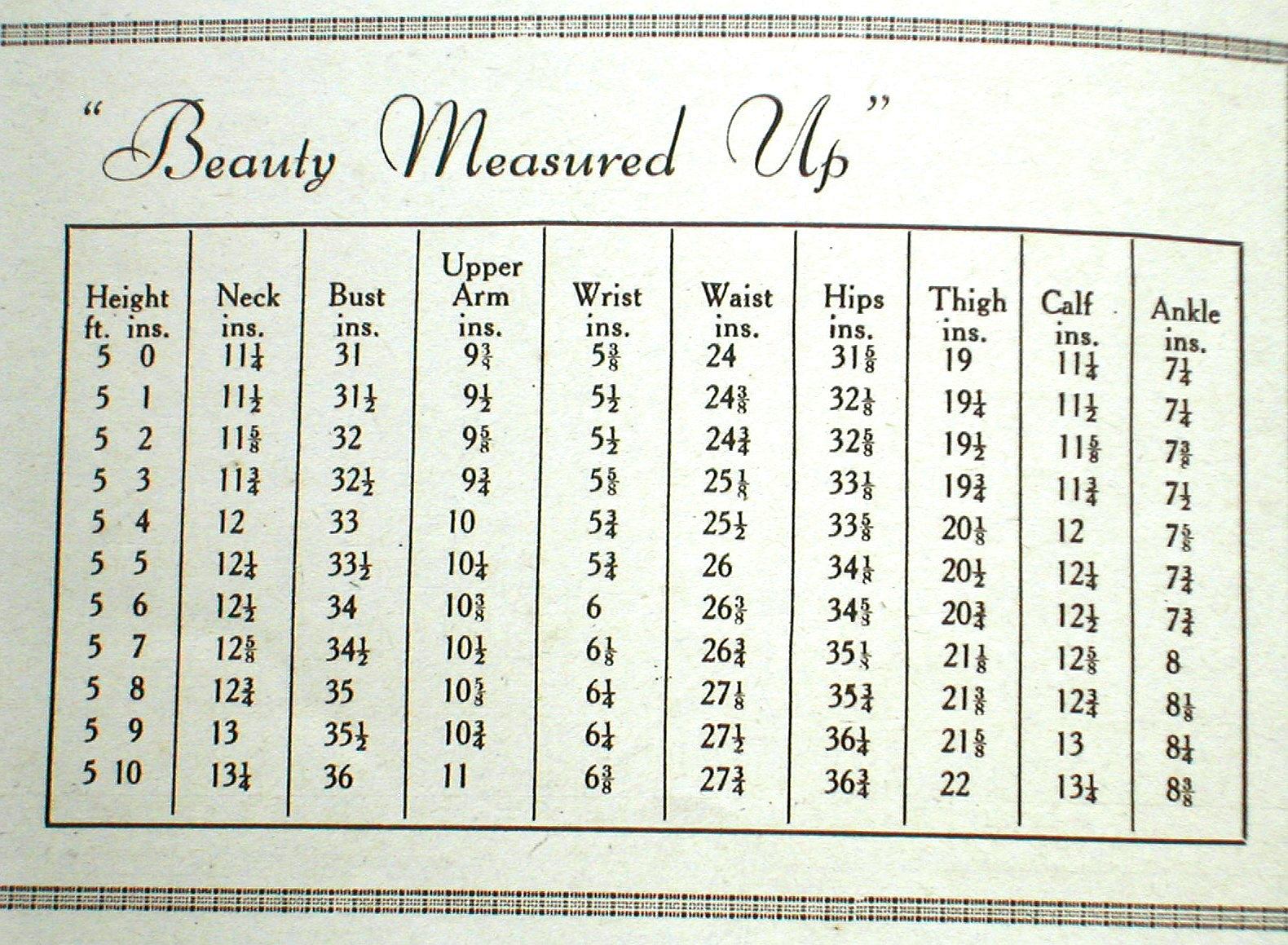
Girls, do you "measure up" to 1936 standards?

Five Stars to Follow to Smartness

Crawford Coiffures

Dramatize Your Beauty

The New Art of Make-up

See How They Grow

Hollywood IS Human

A very welcome addition to my ever-burgeoning library, then, and I hope you've enjoyed this flick through its pages.  Let me know if you like any of them in particular and - if I can find the time - maybe I'll put them on the blog in full.

I'm soon to start writing another article for In Retrospect magazine (issue 4 out now, get it while it's hot!), so it may be some time (probably another month...) before my next post - unless I can get those holiday snaps off mother - so until then:

Monday, 5 May 2014

Thirties thrills, tunes and tea

Last week was another busy one for me, culminating in a trip to my local seaside resort of Southend for a job interview followed by lunch and a trawl of the charity shops with mater.  Putting aside my career prospects I shall move right along to the post-interview portion of the day, the results of which will be far more exciting and interesting to you, I feel sure!

We began the afternoon with a late lunch; deciding that the the BHS cafe wasn't up to much ("horrendous", I believe mother described the food as looking) we came upon a hitherto-unknown-to-us bistro just opposite and what good fortune it was that we did, for we have now a new favourite refreshment stop in Southend.  The Remedy Tea Shop turned out to be a charming little tea room that had just recently sprung up in the high street and we both enjoyed some very nice sandwiches, paninis and - of course - tea!  The selection of the latter was impressively extensive (albeit wasted on Mum, who - used to plonking a teabag in a mug of boiling water - requested "plain old English [breakfast] please".  But I mustn't talk deprecatingly about her on here, she doesn't like it!).  I must admit my plan to test one of the less common blends backfired on me, however - the "Russian Caravan" Ceylon/Darjeeling/China mix leaning a little to much towards the Darjeeling for my tastes.  I should have stuck to the Assam I know and love!

source

The place was beautifully decorated and laid out in a manner that perfectly reflected its aim of being "a haven of tranquility" and really was like a traditional English tea room of old.  A well-judged mixture of tables and chairs, armchairs, cabinets and even a fireplace all added to the homely feel of the place.  Highly recommended!

After our enjoyable repast it was ho! for the charity shops.  Sadly for such a large town Southend has surprisingly few such shops - only two on the actual high street.  Fortunately my interview had taken me down one the many side roads that bisect the main thoroughfare and which had two further beneficiary boutiques (not to mention two more restaurants that will require further investigations, Bacchus and Old Hat - the latter of which looked to be just on the verge of opening a vintage shop opposite its main business).  Mother scored a £1 M&S summer shirt for my stepdad in the first store, but the main event was the large Havens Hospice a couple of doors further down.  Occupying fully two shop fronts, one of which was devoted solely to books (like a library, it was!) it was the kind of charity shop one could easily spend half the day in.  The day had almost been and gone by the time we got there, though, so we weren't able to make much of a dent in the place - very unfortunate considering that the other side of the shop had half a wall's worth of CDs, DVDs and... a dozen boxes of 78rpm records at 50p a disc!  As I rifled through the first two baskets I quickly divined that they must have been some old boy's life collection - a mixture of 1930s dance bands and classical compositions from what I could see.  Time was against us, though, so not being able to make a proper selection I went for the alternative - an 8 LP box set The Golden Age of British Dance Bands!


With the hour now well past 4 and both of us needing to get home, I paid the princely sum of £3 for the set and we hot-footed it out into the street - only for me to suddenly realise I'd left my umbrella inside.  Popping back in to grab it I decided to make my way back out through the book department (quicker to the street - honest!) only for something I'd somehow missed the first time to suddenly leap out at me:


How could I have overlooked this - and how would this not be coming home with me when it was priced at a faintly unbelievable £2?!  I fair snatched it off the shelf, dashed to the till (mother was pacing, tight-lipped, outside) and threw the money at the young lad behind the counter.

I didn't get a chance to look at the book more closely nor listen to the LPs until the weekend and I'm pleased to say I'm over the moon with two of the best scores I've had in a long while.  The book in particular is an absolute steal - I think it was wrongly marked by the shop as 1963 when it is quite clearly 1930s (although I do have a habit of mixing up the last two digits of a number when I'm in a hurry, so they may have got it right).  There's no date to be found in it anywhere, but references to "the late King" [George V] and the autogyro pioneer Juan de la Cierva would certainly point to 1936.


Thrills of the Skyways is a real "Boys' Own" affair, published by Dean - the same people who later (re)printed some of the "Biggles" books and although there are none with that name (nor indeed authors' details of any kind) there are several First World War stories in a similar vein and it would not surprise me in the least if W.E. Johns wrote one or two of the articles.

It's a wonderfully evocative book and takes its place as one of the jewels of my collection, up there with my 1933 Modern Boy magazine, 1929 Tit-bits Yearbook and 1938 Power & Speed almanac.  It's written in the positive, effervescent style so typical of one of our favourite decades and provides a fascinating insight into the history of aviation in the 1930s (albeit aimed at young boys - aren't we all young at heart, though?).  There are facts and pictures therein that even I knew nothing about.  I was amazed to see that a Cierva autogyro was fitted with floats and operated successfully from water, for example.  Some of the predictions for the future are grin-inducing too.  Where, I ask, are our floating island landing strips, hmmnn?!


Some predictions were less rosy, though, as the dark clouds of a prospective second war were already looming large judging by the article above.


I will thoroughly enjoy delving into this book while listening to (and converting to mp3!) over 120 of the best toe-tapping Thirties tunes and I can't wait to see (and hear) what further gems both these splendid finds impart.  And I may just have to go back again soon for some of those 78s!

Thursday, 17 October 2013

WWI airfield Stow Maries to be restored


Crikey, has it really been 4 weeks since my last post?  Between a little bit of work, a little bit of play and re-learning how to knit (yes, I've tentatively picked up the needles again after a near twenty-year gap - more on that later!) I've not had much chance to blog lately, for which I again apologise.  Now's the time to get going again, though, with this excellent article about a First World War airfield right here in my home county of Essex. 

WWI airfield Stow Maries to be restored

With the 100th anniversary of the start of the Great War less than a year away now, the wheels have already begun to be set in motion to mark this important centenary.  The B.B.C. has announced over 2,500 hours of related programming and the government has pledged £50,000,000 to remembrance commemorations, with commenters from every corner of the country discussing what should or shouldn't be done and how the money should be spent.  (Personally I'm delighted to see the Imperial War Museum London earmarked to get even more "massive" improvements and major events all around the country mooted too.  Not to mention the all-important educational aspect as well.  It all sounds good so far!)   

Stow Maries WWI aerodrome saved by £1.5m grant

RFC Stow Maries, c.1914
source
Already a small part of that £50m has been well spent saving an original First World War aerodrome in Stow Maries (near the town of Maldon in the mid-east of Essex) with the aim of restoring it to its 1916 condition in time for the commemorations.

One of only ten remaining from the total 250 RFC stations built during the war, Stow Maries is the most complete example in Britain with all of its buildings still intact - more than 24 in total, many with their original windows and other features still intact as you can see in the accompanying clip.  Built for one of the new Home Defence squadrons - otherwise known as "Zeppelin Busters" - to counter the new menace of aerial attacks by airships and Gotha bombers, Stow Maries was ideally placed to allow quick interception of zeppelins bound for London, Southend and northern towns.  Along with Suttons Farm (later RAF Hornchurch and from where Lt. William Leefe Robinson became the first pilot to shoot down a zeppelin on the 2nd-3rd September 1916),  Hainault Farm (RAF Fairlop), North Weald and Rochford aerodromes and also Joyce Green aerodrome in Kent, Stow Maries made up part of the London Air Defence Area.


Stories still abound of zeppelins bombing Southend and Purfleet, being spotted over Canvey Island and perhaps most famously being shot down in Billericay so it is wonderful to see this locally and nationally important historical site preserved and restored for future generations.  Already there is talk of using it as the base for some flying WW1 exhibits at future Southend airshows and the plan to have it as a place to teach the restoration skills needed to keep these aircraft airworthy is inspired.  I can't wait to see what else Stow Maries has in store!

By remaining unused (save for the occasional farm storage purposes) and overgrown from the end of the Second World War until only four or five years ago Stow Maries has managed to survive miraculously untouched.  It was on the market only a year ago with the very real risk of being redeveloped but it is now in the safe hands of aviation & history enthusiasts and successful businessmen, the Stow Maries Great War Aerodrome Trust and the Friends Of Stow Maries Aerodrome.  Thanks to the National Heritage Memorial Fund it is now in a position to begin realising its full potential as a fully restored First World War aerodrome, working museum and of course a lasting memorial to all the brave men (and women) who fought and served in the "war to end all wars".

Friday, 20 September 2013

Birthday tripper

So, I do believe I promised a little while ago an account of my doings on my birthday last month and now all the photos are gathered in here it finally is!  Actually this will be one of two posts, the other to feature The Main Present that I've been teasing you all with and which has just recently made it's completed appearance following some final adjustments in the skillful hands of mater - that's the only clue you'll get until the big reveal!  I could have lumped everything together in one post but it would have been very picture heavy and probably a bit of a snore after a while so here's the day out first, with the gift post to follow shortly.

My original plan had been to attend the Barrelhouse Stomp 1940s Weekend at Battlesbridge, as mentioned previously here, but as my health was (and still is) playing Lucky Dip with me come that weekend I didn't feel that I would do the event justice (and as it also turned out the local railway branch line that would normally have taken me there was closed for engineering work!) so I went with the consolation prize of a day trip to nearby Old Leigh on the Thames Estuary.

Leigh Creek and some of the fishing fleet, taken from the quay.

Old Leigh is a quaint little fishing village that sits on the banks of the Thames Estuary in Essex, a couple of miles west of Southend and roughly opposite the Isle of Grain in Kent.  While the main town of Leigh-on-sea has evolved into part of the London commuter belt, albeit still very much with a small seaside town flavour (although in recent years a little bit of "yuppyness" has crept in as evidenced by the types of some high street shops and, I'm afraid, prices in a few of the charities) and some lovely history, Old Leigh has remained very much as it was at the turn of the 20th century.  True it does play up its heritage a bit for the tourists these days but it is still a wonderful place to visit for us locals too and is best known for its seafood, which remains the village's prime industry (as you can probably tell from the first picture).  Cockles, winkles, crabs, all sorts of fish - it's all available at Old Leigh's many seafood merchants!

Very windy on the quayside!!

It was a lovely warm albeit sometimes cloudy Sunday in August when mater and I went there and more than a bit breezy at certain unprotected points!  The place was also heaving with people, quite the busiest I'd seen it in a while, as everyone made the most of the late summer weather.  We did two lengths of the old high street, taking in the splendid old fishermans' houses (many still private dwellings), the novelty shops, the two museums/galleries, and the many cafés, restaurants and fishmongers which litter the place (and all of which were packed!).  We eventually found ourselves back at Osborne's Café, which was busy (busier than in the photo below!) but still had a few seats free.  I had a couple of crab rolls (yummy!) and mother had a crab roll, a cheese & onion roll and some rollmops.  Rollmops, in case you're wondering, are pickled herrings wrapped around sliced onions/gherkins/olives etc.  Not so yummy in my opinion (!) - I like my herrings kippered personally ;).

source
After lunch we decided to burn it all off by walking from Old Leigh into Leigh-on-sea town centre, via the intimidatingly long and steep Church Hill.  Starting a little way above the shoreline it runs all the way up to Leigh Broadway (the high street).  In its present location it dates from 1838 and the church at the summit, St Clement's, can trace its construction back to the 1400s (although there is evidence of a church on the site from as early as 1248).

Church Hill runs for about 520ft and blimey, is it steep!  We stopped a few times, not only to rest but to take photographic advantage of the rewards such an old route provides!

This is actually someone's back gate!

Quite apart from the historic nature of the hill and its immediate surroundings, there are fantastic views of Leigh Marshes and the estuary to be had on the way up.  The people living on the terraces that branch off either side are lucky blighters and no mistake!

Just starting off...

The top at last!  Long way, isn't it?
At the top there are more rewards to be enjoyed in the form of Leigh Library Gardens on one side of the summit and the aforementioned St Clement's church on the other.  We got our breath back in the gardens before having a look around the churchyard.

The entrance to Leigh Library Gardens

You'll have to excuse the decidedly non-vintage sunglasses and drinks bottle!


St Clement's Church, Leigh-on-sea

By the time we reached Leigh-on-sea town centre proper the afternoon was fast drawing to an end and most of the shops were closing up, so we didn't bother perusing anywhere but instead made our way home.

All in all it was a smashing day out and a very nice way to spend my birthday weekend in the end.  [Old] Leigh has always been one of my favourite day trip destinations and I will no doubt return there again soon; if you're ever in the area I can certainly recommend visiting!

Friday, 11 May 2012

WWII fighter plane found preserved in the Sahara


WWII fighter plane found preserved in the Sahara

Hot on the heels of the twenty Spitfires discovered in Burma comes this equally remarkable, albeit far more bittersweet, story of a lone Curtiss P-40 Kittyhawk that has been found in the Sahara desert.

Despite having crash-landed on the sand 70 years ago the aircraft is apparently in very good condition overall, the result of laying undisturbed in the dry and rarefied atmosphere of the Sahara for the last seven decades.

An important machine to many air forces, particularly with the famous "Flying Tigers" of the Chinese Air Force in 1941-42 and the USAAF in the first months of the Pacific campaign (as well as with the RAAF & RNZAF later in the same theatre), the Kittyhawk (and earlier Tomahawk) was also used in large numbers by the RAF in North Africa as part of the Desert Air Force.  Considered superior to the Hurricane and early marks of Spitfire in the dusty, arid conditions of the desert the Kittyhawk was the main Allied fighter aircraft in the North African theatre for several months of 1941-42.


World War II RAF Kittyhawk fighter plane found in the Sahara Desert in Egypt

It was in one of these RAF Kittyhawks that Flight Sergeant Dennis Copping (a native of my nearby town of Southend) was flying on the 24th June 1942 when he got in to trouble - probably lost - and was forced to belly-land many miles from civilisation.  Now, 70 years after he and his aircraft were last seen, the discovery of his crashed aircraft, discarded parachute and wireless equipment tell the sad story of what happened to him.  It seems fairly certain that having failed to summon help by radio he made a futile attempt to reach the nearest settlement but succumbed to the harshness of the desert.

Now this chance discovery has set the historic aviation world a-twitter and work is already underway to return the Kittyhawk to the UK for it to be put on display at the RAF Museum in Hendon.  A search is also being carried out for the remains of Flt. Sgt. Copping and it is to be hoped that, if he is found, he will be repatriated along with his aircraft or at the very least given a proper military burial.  It would also be nice if his aeroplane - restored or not - were kept as a permanent memorial to the man.  Although I can understand the feelings of some who think it should be left where it is (particularly if F/S Copping isn't found) as a sort of war grave, the ever-present threat of trophy-hunters and scrap merchants makes such a course of action undesirable.

World War II fighter found in Egyptian desert

Whether or not the pilot is found the momentous discovery of this aircraft has at least answered the question of what became of him and his memory can be forever honoured by the display of his Kittyhawk, an important historical find on its own and a fine tribute to the man.

Thursday, 10 May 2012

Museum marks end of the trolleybus era


What Goes Around from David Doré on Vimeo.

Museum marks end of the trolleybus era

Fifty years ago this month the last trolleybus ran its final scheduled service in the capital before the type was withdrawn in favour of more modern buses such as the Routemaster.  Sixty years ago the last few trams disappeared from the City's streets.  To celebrate this double anniversary - and also to remember the trolleybuses that ran in the nearby towns of Ipswich and Southend - the East Anglia Transport Museum held a special two-day gala event to remember these forgotten forms of public transport.


Eight London Transport trolleybuses were on show at the museum - the most all together in one place since they went out of service - and it is fascinating to see how quiet and efficient they still are today.  Eventually undone by [then-cheap] diesel-powered buses that were not constrained by route-defining overhead wires or the risk of those same wires coming adrift, trolleybuses had faded into obscurity - in this country at least - by 1962 and had completely vanished from the country ten years later.  But at their height they were seen as the future of public transport - clean, fast, modern and the natural successor to the open trams that plied the same routes.

Those same trams were evolving too, and new enclosed models allowed them to stay in the capital for only ten years less than the trolleybuses.  In fact, trams could be said to have held on better than trolleybuses, for as well as the world-famous examples in Brighton new tram networks have been reintroduced in Croydon, Manchester, Sheffield, Nottingham, the West Midlands and (eventually) Edinburgh.

However while trolleybuses, like trams, have remained popular in Europe it is only now - in light of so much environmental concern - that they are being brought back to Britain.  A new 21st Century trolleybus is being planned for Leeds.  If it is successful other cities may follow suit.  As the title of the accompanying video so presciently states: what goes around... comes around.  Something we all know well, eh?


Sadly I was not able to attend the East Anglia Transport Museum for this particular celebration but I have been in the past, when I took these pictures.  The great thing about museum exhibits and vintage vehicles like these is - they don't date!  It was a thoroughly enjoyable visit at the time and has stayed in my memory ever since.  I am long due a return visit and I would thoroughly recommend it as a day out if you are ever in the area.  It's simply smashing to see so many people turn out to celebrate the classic tram and trolleybus, and to know there are still enthusiasts around to ensure these wonderful machines keep running.  Long may they continue, and perhaps we shall see these vehicles' spiritual successors in cities up and down the country in the future.

Friday, 11 March 2011

Steam on the c2c line...and beyond

Permission to say "Hurrah!!"
Steam on the c2c line...and beyond

This is my local railway line!  One of the departure stations is my local railway station!!  One of the destinations (Winchester) is my ancestral home city, where I have always wanted to visit!!!  This was playing on my iPod when I was first reading the article (!!!!): 


This is more than serendipity; it's almost spooky!  I simply MUST try to get a ticket!!

Followers

Popular Posts