Showing posts with label 1920s. Show all posts

Monday, 4 March 2024

Alvis resurrects 1920s Grand Prix racing car


Alvis resurrects 1920s Grand Prix racing car

Nearly 14 years ago now (yikes, where on earth has the time gone?!) I reported on the then-new owners of the classic British motoring manufacturer Alvis and their simply wonderful scheme to put some of their vintage models back into [limited] series production at their workshop in Kenilworth, Warwickshire - including the stunning 1935 Bertelli Sports Coupé and 1938 Lancefield Concealed Hood in addition to the original Vanden Plas.  Since that time Alvis have also broadened out into some of their post-war models such as the Park Ward Drophead Coupé and the Graber Coupé/Cabriolet but for their most recent project (a definite one-off this time) they have returned to their pre-war motorsport days thanks to the remarkable rediscovery of a truly unique, much-storied racing car that very nearly ended up on a scrapheap - the 1927 Alvis Grand Prix.

With driver George Duller in the cockpit, Number 2 Alvis is readied
for the 1927 Junior Car Club 200 Miles race at Brooklands

The Alvis GP caused a stir right from the start thanks to its then-innovative mechanical layout, being front-wheel drive at a time when almost all cars, both for road and racing, were driven from the rear.  But this was not its most notable technical advance - the front axle, instead of being the solid variety (that is, connecting the wheels with a rigid beam), was composed of four independently-mounted elliptical leaf springs allowing for an equally remarkable eight-cylinder, 1.5-litre supercharged engine to be placed lengthways behind the gearbox thus giving the car an unusual (for the time) long-nosed appearance.

Alvises Numbers 1 & 2 (bottom centre), their distinctive low-slung stance and
long bonnets contrasting noticeably with the other cars', head off at the start of the
1927 JCC 200 Miles at Brooklands, October 1927

Two cars were produced with the intention of both being entered in eligible events of the period, however the advanced engine in particular suffered from reliability issues right from the beginning.  After both failed to make the start of the 1927 British Grand Prix at Brooklands on the 1st October, they took part in the 1927 Junior Car Club 200 Miles race at the same track two weeks later; both cars qualified well - the Number 2 car lapping in excess of 120mph in the hands of experienced racer George Duller to start second, while the similarly proficient Maurice Harvey would be third on the grid in car Number 1.  Initially setting an impressive pace (Number 2 being in the lead at the start before dropping back to third due to a spark plug change) both cars experienced crippling mechanical failures, with Duller having to retire with a shattered conrod (below, now on display at Alvis' in-house museum) on the 52nd lap.


Having removed the engine to diagnose the problem back at the factory, Alvis kept Number 2 in storage for over 10 years, never to be reunited with its original powerplant.  In the late 1930s they decided to cut their losses and sell the car to Coventry-based scrap merchants Roach Brothers, with the firm instruction that it had to be broken up and not sold on.  Thankfully someone at Roach Bros. completely ignored this order and sold the car intact to Bill Pitcher, a motorcycle dealer and Alvis enthusiast from Rugby.  Pitcher's intention was to convert the car to rear-wheel drive - he sourced a 1929 Alvis TT or Le Mans engine and gearbox for the purpose but ended up having to sell the car on in the mid-'50s following the failure of his business.  Another FWD Alvis enthusiast, Nic Davies, picked up the reins and toured the world with the GP before embarking on a full-scale restoration project in 1990.  It took until 2003 for the car to be in a condition to run under its own power for the first time in nearly three-quarters of a century; three years after that it was acquired by current owner of Alvis Alan Stote and Tony Cox, an authority on FWD Alvises.


It has taken a further 17 years, with many an advance in CAD and manufacturing techniques to help along the way, but now I am delighted to see that Alvis GP Number 2 has been fully restored to 1927 racing trim - including a newly-built period-correct engine and gearbox!  Rightly taking pride of place among Alvis's already exceptional collection of original and recreated cars, the GP was publicly revealed at the Automobile Council in Chiba City, Japan in April 2023 with the intention being to have it fully completed and running at Brooklands in time for its 100th birthday in 2027.  All the more reason, I think, to start planning my long-overdue return to that great race track.  A hearty well done to everyone involved in this mammoth project and I hope to see it in the metal in a few years time!

With its designer Captain G. T. Smith-Clarke in 1927 (left) and fully-restored
today (right)

Sunday, 25 February 2024

Cierva C.4 Autogiro Replica Flies in Spain

Hello.  Yes, it's me again, begging forgiveness once more for allowing six months to elapse between posts!  I have been a bad blogger and there is no excuse.  I could blame my new forum for taking up more of my time than I anticipated, or just life getting in the way, but I shan't because we all have different calls upon our time and I dare say I could have made more space for this dear old blog.  Anyway, we'll cast a veil over all that, I think, and get back to the fun business of writing about interesting vintage-themed news (and goodness knows we need that more than ever, I should think).  Something that should be even easier for me now having recently splashed out on a new PC (the laptop was all very well and has provided sterling service for the last seven years, but there is still something to be said for a desktop setup especially when writing like this) - there can really be no excuse for not posting more often now (he says)! 

Without further ado, then, I'll take us back to the beginning of 2023 for this first story about a machine close to my heart - the autogiro. 

Cierva C.4 Autogiro Replica Flies in Spain


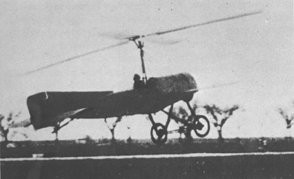
Last year marked the centenary of the first flight of the autogiro, the brainchild of Spanish engineer Juan de la Cierva and the precursor to all modern helicopters.  After several abortive designs his C.4 autogiro made a controlled ascent at the Getafe aerodrome near Madrid on the 17th January 1923 in the hands of experienced test pilot Captain Alejandro Gómez Spencer.  

source - Wikipedia 
Cierva autogiros would go on to be developed throughout the '20s and '30s, regularly being touted as the next big advance in aviation before reaching something of a technological dead-end by the start of the Second World War, after which advancements in vertical take-off heralded the beginning of the helicopter and relegated the autogiro to that of a light, leisure aircraft (now known as the gyrocopter).  You can read more about the history of Cierva autogiros in this article I wrote for In Retrospect magazine a few years back.

Now, however, I'm delighted to see that a group of Spanish aviation enthusiasts have put the finishing touches to a full-scale flying replica of that first C.4, the maiden flight of which took place once again at Getafe aerodrome (where it will be operated by the Club de Ultraligeros Getafe) back in April 2023 - a fitting tribute to Juan de la Cierva, Captain Gomez and the history not only of the autogiro but of early Spanish aviation in general.  What a wonderful sight it is to see one of these fantastic machines take to the air once more!

Saturday, 24 June 2023

Nostalgic telegram service is proving popular in Leamington and Warwick


Nostalgic telegram service is proving popular in Leamington and Warwick

The last of my backlog of posts from 2021 features another piece of "obsolete" technology that is anything but, especially in Warwickshire it seems - the humble telegram.  And no, I don't mean the instant messaging app (about which I know little other than that it is an instant messaging app).  Long one of my favourite forms of archaic communication (as an aficionado of analogue machinery and typewriters especially, how could it not be?) reports of the telegram's demise - to paraphrase Mark Twain - have been grossly exaggerated, as I hope this post will go on to show.

While it is true that here in the U.K. British Telecom ceased offering traditional telegrams in the 1980s, as did Western Union in America, there are still several private companies and individuals in both these countries and dozens of others around the world striving to keep alive the romance and connectedness of a simpler age - albeit mainly now in the role of "greetings telegrams".

source - Wikimedia Commons

Telegrams Online is the oldest of the three such entities known to the author here in the U.K. (not including the chap in this lead article, to whom we shall come later), emerging out of the ashes of British Telecom's operation.  Although BT stopped providing standard telegraphy services in the Eighties, it continued to offer "telemessaging" - the ability to dictate a message to an operator over the 'phone, which was then transcribed and sent as a regular telegram - right up until 2003.  Only then did BT finally pull the plug, with Telegrams Online manfully (and womanfully) stepping up to fill the void.  Their website is delightfully old-school, looking like it hasn't been updated in those twenty years, but still appears fully functional (although I haven't gone through the whole process, so cannot speak authoritatively on that point - nor can I confirm the prices).  In any event, I am delighted to see that they still exist and hope that Telegrams Online will continue to provide telegrams to those who require them for the next 20 years and beyond.   

source - Wikimedia Commons
Going for almost as long as Telegrams Online, Imperial Telegrams has to my knowledge been in business since at least 2006.  Originally running their own website they have more recently moved under the Not On The High Street umbrella but this does not seem to have affected the quality of their offerings, which are very much of the "special occasion" variety and by far the most authentically vintage of those I have encountered.  For Imperial Telegrams go to the extra effort of printing the words on to individual strips of paper before sticking them to the telegram, just as would have been the case in its heyday (such as this 1962 message to scientist Francis Crick, above), as well as using genuine pre-decimal stamps on the hand-written envelope!  Quite the personalised service and very reasonable for what it is, considering the price of some generic greetings cards these days.         

The last of the UK-based "online" telegram providers that I am aware of is The Telegram Office, a relative new-comer to the scene having only been established in 2015.  Operating in a similar vein to Imperial Telegrams, The Telegram Office provides a selection of different templates for one to personalise albeit not to the same extent.  Nevertheless the effect is still a realistic one and the price is even more affordable although perhaps reflective of the more limited options available.

Official telegram services still exist in North America, I understand, provided by the company which took over from Western Union following its bankruptcy in 1991 - iTelegram.  Trading also as Telegrams Canada it offers a similar facility in that country and, indeed, to over 180 other countries around the world.  Very much the more traditional, basic telegram, it is still heartening to see that such an old-fashioned means of communication continues to have an important place in the world.

source - picryl

There is, of course, one other way you can send telegrams for a fraction of the cost of the aforementioned options - you can create one yourself!  It is far easier and less onerous than you might imagine, ironically thanks in part to its modern usurper - the Internet.  This admittedly wonderful invention has allowed like-minded individuals to upload various templates of different telegram designs that can be printed and in some cases edited on one's computer. 

source - Open Clipart/ j4p4n
Chief among these, perhaps somewhat surprisingly, are fans of American science fiction writer H. P. Lovecraft.  In particular it seems they enjoy role-playing and table-top games around the subject of his Cthulhu mythos; because of the period in which the stories were written/set, telegrams play an important part - hence why the H. P. Lovecraft Historical Society and the Mount Cthulhu gaming site provide excellent examples of telegram papers from both sides of the Atlantic.  Fully downloadable and in some cases editable they provide the perfect starting point for the creation of your own telegrams!  If Lovecraft is a bit too esoteric for your tastes, templates can also be found throughout t'web on various creative commons sites like Wikimedia and Open Clipart.  To add the finishing touch websites like 1001 Free Fonts offer a smorgasbord of suitable fonts in their Typewriter and Retro sections, in addition to those on the Lovecraft sites.


You need not bother with the latter however if, like me, you own one (or more!) actual working typewriters - in which case what's stopping you from just printing off a template and tapping out a message in the approved manner?!  This is clearly what occurred to Russell Peake of Warwickshire in the height of lockdown when, inspired by original telegrams kept by his own family and with everyone needing just that little extra bit of personal contact, he acquired a typewriter and a bicycle to start Spa Telegram.  As the newspaper reports of the time explain, the venture was set up partly to provide a still-important social interaction for the people of Warwick and Leamington Spa but also to raise money for Guide Dogs for the Blind.  Both laudable aims for which I congratulate Mr Peake and am very happy to see are continuing nearly three years later - for Spa Telegrams is still going strong.  By the look of things typewritten and hand-delivered telegrams are even now flying around the Warwickshire area (and on request by post further afield) - a testament to the enduring appeal of this personal, unpretentious form of communication in an otherwise digital world.    

***Have you sent or received a telegram recently?  Do you know of any other providers that I have missed?  Let me know in the comments!***

Saturday, 17 June 2023

How One Photographer Gets All Of Her Inspiration From The '30s


A nice little article now, the last of my 2020 drafts and a pleasing showcase of a fellow vintage aficionado from Brooklyn who lives a full 1930s life with her partner.  

As the accompanying video also explains, Rose Callahan has not only embraced the Thirties lifestyle and fashions but has also incorporated it into her work as a professional photographer and author.  One can clearly see both her enthusiasm for the era and its fashions and the way in which her photography is imbued with the same degree of passion.  That she as found in her husband Kelly Bray someone so in tune with her own interests and way of life is really lovely to see and much of what she says regarding the appeal of the interwar years, including the clothing and general style of the period, once again strikes a chord with this blogger (and I suspect, a good many other vintagistas).  Their books on the subject of dandies sound most intriguing and I have a feeling I must look them up with a view to adding them to my library!  In the meantime I wish Rose and Kelly continued success with their way of life and journalistic endeavours, both of which I think it safe to say are a welcome addition to the international vintage scene.

Friday, 24 March 2023

Bessie Coleman, pioneering pilot, now has her own Barbie


Well, this is something I never thought I'd be blogging about.  Not that I'm an expert on such things as dolls, you understand (although while we're at it, who else remember Sindy?).  Anyway, this is more a case of the subject within a subject being of interest (hopefully!) to my readers, with the news that Mattel, maker of the Barbie doll, has honoured one of the pioneers of early aviation with the latest addition to their range.

source - Wikimedia Commons

The aviatrix in question is Elizabeth "Bessie" Coleman, who made history in 1921 when she became the first black person to obtain an international pilot's licence.  Her story is one that frankly deserves more recognition and I can only hope that this acknowledgement by Mattel goes some way towards achieving that.  

Born in Atlanta, Texas in 1892 Bessie Coleman seemed all set to follow in her parents' footsteps as a cotton picker.  However from an early age she proved to be an academic student, fond of reading and a whizz at maths, such that she was given a scholarship by the local Baptist church that eventually enabled her to attend what is now the Langston University in Oklahoma.  The money did not last, though, and she was only able to complete a single term before she was forced to return to Texas.

source - Wikimedia Commons/NASA
At the age of 23 Bessie found herself living in Chicago with her brothers, working as a manicurist in a local barbershop.  It was here that she was first exposed to the wonders of early flight, listening to the stories returning air force pilots would tell whilst getting a trim.  Inspired by these thrilling stories she took a second job in a chili restaurant to help pay for flying lessons, despite neither black people nor women being allowed to join flying schools.  Fortunately she was able to gain support from the editor of a Chicago-based African-American newspaper, Robert S. Abbott of the Chicago Defender, and prominent African-American banker Jesse Binga, who between them helped publicise and pay for her flying lessons.  To get over the hurdle of the U.S. flying school bans it was recommended that Coleman travel to France, where there were no such restrictions.  In an early example of her strong-minded and intellectual nature, she immediately attended a French language school in Chicago and having learnt the language promptly left the United States for Europe.  Arriving in Paris at the end of November 1920 she spent the next 6 months learning to fly before finally achieving what no black woman had done before - obtaining a pilot's licence.  Determined to be the best flyer she could, Bessie continued to take flying lessons under the tutelage of an unnamed ex-WW1 French ace before returning to America in September 1921.

Bessie and a Pathé cameraman during a visit to Berlin in 1925
source - New York Public Library

Despite widespread media attention in America at her achievement, Bessie was quick to realise that if she were to make a living as a civilian pilot in her home country then barnstorming was pretty much the only way to go.  Again showing remarkable prudence Coleman, still having found no-one in the U.S. willing to teach her the advanced flying skills she would need, returned to France to undertake further lessons.  Touring Europe she met famous Dutch aircraft designer Anthony Fokker and visited his factory in Germany where she was given more training by the chief test pilot.  Now fully versed in all aspects of advanced flight, she once again returned to the U.S.A. where, billed as "Queen Bess", she wowed crowds around the country in various Curtiss JN-4 "Jenny" biplanes - earning her the well-deserved title of "The World's Greatest Woman Flier".  Resolute in her desire to perform the most difficult stunts and understandably vocal in promoting African-American aviation she toured the country for the next 4 years giving lectures and exhibition flights.  During a visit to Orlando, Florida she befriended a local vicar and his wife, who all but adopted her as a daughter; remaining in Orlando Bessie opened her own beauty parlour with the aim of making enough money to buy her own aeroplane.  

Bessie and one of her Curtiss JN-4's, c.1922
source - Wikimedia Commons

In April 1926 this she finally did, purchasing another Curtiss JN-4 in Dallas, Texas.  Sadly, however, it was this aircraft that would be her downfall.  Bessie was in Jacksonville, Florida, at the time of the purchase so the aeroplane was flown back from Dallas by her 24-year-old mechanic and publicity agent William D. Wills.  He was reportedly forced to land three times along the journey due to the terrible condition the aircraft had been kept in by its previous owner.  Despite its obviously dangerous shortcomings and against all the advice of friends and relatives, Bessie went up (as a passenger) in the Jenny with Wills on the 30th April 1926 to practice for a parachute jump she intended to perform the following day.  At 3,000ft the aircraft suddenly went into an uncontrollable dive and spun into the ground.  Bessie was thrown from the cockpit and sadly died on the ground; Wills was also killed instantly when the Jenny impacted the ground and exploded.  Detailed examination of the wreckage subsequently revealed a wrench for maintaining the engine had been left in the machine, causing the controls to jam.


Bessie Coleman's tragically early death at the age of 34 was, despite her undoubted fame, largely ignored by all but the African-American press.  In spite of this, over ten thousand mourners turned out for her funeral in Chicago and over the many years following she was honoured with several roads, schools and other public buildings being named after her, to say nothing of various museum exhibits, commemorative stamps etc.

Now can be added to that list a Barbie doll designed in her image (I have to admit not seeing much of a likeness, although as I said at the top of this post dolls are not really my metier), with a snappy-looking aviatrix get-up featuring flying suit, boots and initialled cap.  It is splendid to see such a previously-overlooked trailblazer of (black) women's aviation marked in this way and I commend Mattel for choosing to highlight this historically important woman.  If it can also encourage young girls of any colour to take an interest in STEM (Science, Technology, Engineering & Mathematics) Learning and aviation in particular, then so much the better.

Monday, 9 November 2020

Fog!

A recent combination of cold nights and mild, damp mornings in this corner of Britain led to one of my favourite weather conditions manifesting itself over the weekend and served as a welcome reminder of why autumn is the season I enjoy most - fog!  From Friday through to Sunday there were varying degrees of pea-soupiness as the days progressed, with a particularly fine and atmospheric curtain of thick fog occurring first thing in the morning and materialising again in the evening, with wisps of mist lasting well into the day (and sometimes still in evidence even now).

source - imgur
I do love me a bit of fog (in case you hadn't guessed) and got terribly excited when glancing out of the window on Saturday night to see - well, not much really beyond a wall of dim white haze but the realisation that this was the first proper ground cloud of autumn practically made my day.  It's all I can do to stop myself from going out into it for a walk and sometimes I do give in to the temptation to venture forth and embrace the murkiness.  There's just something about fog and mist that really gets in amongst me - the way in envelops everything and gives it an eerie, otherworldly appearance that no other weather can replicate; the manner in which it is inextricably linked to this time of year, when the ground is covered with fallen leaves and the trees become gaunt, shadowy figures thrusting their branches out from the brume.  People and cars appear and disappear almost out of nowhere (in the case of cars sometimes unnecessarily so if the driver hasn't deigned to put on any lights - one of my few frustrations related to foggy conditions) and places one knows and recognises in clear conditions become strange and unfamiliar, all thanks to the interaction of cold and warm, moist air/ ground.


Women wear "smog masks" in London on the 17th
November 1953
source - The Guardian
Of course fog has not always had a harmless, inoffensive air (ahem!) about it, especially when it mixes with air pollution brought about by car fumes and the like to create the dreaded smog, much of which plagued many parts of Britain right up to the 1960s (as the above footage shows) - the most famous being the Great Smog of London during 1952 and 1953 which resulted in over 4,000 deaths and 100,000 people suffering from respiratory illnesses as a direct result.  Thankfully things have moved on in the subsequent 68 years and we are now able to go out in the fog without having to worry about catching a respiratory disease - at least not from that source!  In other respects however we are seeing a repeat of events from nearly seventy years ago, with masks once again being very much a necessity in all weathers.

A smoggy Ludgate Hill, London, captured in November 1922
source - The Guardian

But we're not here to dwell on the past horrors of smog but rather the joyful ghostliness of natural fog and what better way to celebrate it and the coming of autumn than with a selection of songs from my favourite era, the 1920s and '30s, all of which reference that most vaporous form of weather.  


We start in 1927 with a recording composed by the famous American cornetist and piano player Bix Beiderbecke who is on fine form in this 9th September 1927 New York performance where we find ourselves In A Mist.


Skiping forward to 1929 and the great Duke Ellington & his Cotton Club Orchestra perform a tune that is particularly evocative of a hazy dawn breaking over the rural farm on a brisk autumnal day - Misty Mornin', recorded here on the 3rd May 1929.  Ellington first cut this haunting melody on the 22nd November 1928 and would go on to make several different versions over the years so I am sure this will not be the last time it appears on this blog in one form or another.


The most famous fog-based song from the Thirties is of course George and Ira Gerswhin's A Foggy Day, which will forever be linked with the incomparable Fred Astaire and his consummate performance of it in the 1937 film A Damsel In Distress.  Having featured that recording back when I last did a fog-derived post in 2010(!) I thought I would feature another version of it this time by the British dance band leader Geraldo (real name Gerald Bright) and his Orchestra, with vocalist Cyril Grantham doing a good job with the lyrics in this recording made some time in 1938.  


We finish with this 1934 recording of Lost In A Fog, another standard of the day that was recorded by various different artists including Cassino Simpson, Coleman Hawkins and The Dorsey Brothers.  On this occasion however we hear it sung by well-known American singer and band leader Rudy Vallée, in a version that reached Number 4 in the U.S. charts in that year.

A beautiful shot of a fog-covered Richmond Bridge, London
source - Pinterest

Well that's it for this mist-enshrouded post - I hope you've enjoyed reading my thoughts on this most mesmerising of meteorological conditions, or at the very least had your toes tapping along to the accompanying musical miasma.  Is it foggy where you are?  Let me know what the weather's doing where you are and what your favourite type is in the comments below!

Saturday, 31 October 2020

Scary Words, Scary Tune

With this blog very much back up and running again I think it's time for another selection of topical tunes to celebrate that especially spooky time of year - All Hallow's Eve!  In fact, looking back at this blog's post history it seems to have been a frankly astonishing (and almost unacceptable) 8 years since I last did a Hallowe'en-themed entry, so let's put that to rights right now with the following five frightening refrains from the terrifying Twenties and thrilling Thirties.     


We kick off with British bandleader Jack Hylton & His Orchestra and their 1929 recording Bogey Wail.  One of four sides the band cut on the very un-Hallowe'en date of the 13th February 1929 it features a common motif of the time in the form of the Bogeyman, the æthereal monster hiding under the bed/ in the cupboard and which has scared the pants off generations of children around the world for centuries.  This particular recently-uploaded video features some very well done period-style animation which just adds to the overall eeriness of the song.  


Jumping forward eight years and something slightly different but no less scary is lurking in the cupboard in this next tune, consummately performed by another great of the British dance band era, Nat Gonella & His Georgians.  The Skeleton In The Cupboard was originally recorded a year earlier by Louis Armstrong and His Orchestra for the 1936 Bing Crosby film Pennies From Heaven.  The title song rightly went on to become a jazz standard, subsequently recorded by multiple artists over the years, but in the process left the likes of The Skeleton In The Cupboard slightly forgotten - an oversight I'm happy to try to rectify by including Nat Gonella's bouncy version here. 


From Bogeymen to skeletons to zombies next in this 1934 recording by the now obscure American dance band leader Gene Kardos.  With his orchestra Kardos actively recorded from 1931 until 1938 (with vocalists including Dick Robertson and Bea Wain) at which point he "retired" and went to work for the New York City postal department(!) while at the same time performing in a small Hungarian restaurant in the Manhattan suburb of Yorkville.  Cut on the 26th June 1934, Zombie is an early example of the term appearing in musical form and was allegedly inspired by the pre-Code 1932 Bela Lugosi horror film White Zombie.  


Another forgotten American band leader features in this next song from 1930, written, composed and performed by Wayne King and His Orchestra.  Known at the height of his fame from 1931 to 1940 as "the Waltz King" after his most favoured variety of jazz he slowly faded into obscurity after the early 1960s and although he continued to perform at various venues around America right up to the 1980s he had by then, like Gene Kardos, gone into "early retirement" from the music scene and in between appearances ran a cattle farm and car rental business from his Savanna, Illinois home.  Swamp Ghosts is a wonderfully typical example of early 1930s creepy jazz, helped along in this video by some fittingly ghostly images!


For the final tune in this post we return to Britain and another top band leader of the 1930s, Roy Fox and His Orchestra, with their 1934 offering The House Is Haunted.  Sung by the equally-noted (and brilliantly named!) British vocalist Denny Dennis it is actually really more of a romantic ballad, as the lyrics suggest, but teamed with some superbly spine-chilling footage from the 1922 film Nosferatu it earns its place here as a suitably supernatural offering.

source - Wikipædia
Well there we have it then - five spooktacular songs from the 1920s and '30s to hopefully help your Hallowe'en go with a swing.  I hope you all have as enjoyable an All Hallow's Eve as it's possible to have in these trying times - do let me know what you have planned or what you got up to in the comments.  Noseferatu happens to be my favoured choice for the Partington-Plans' 2020 Hallowe'en showing although it's facing some stiff competition this year, with my fiancée pushing for Pride And Prejudice And Zombies (I'm still not sure myself...) or the 2019 animated remake of The Addams Family.  Maybe we'll end up doing a triple-bill, we'll have to see...

Tuesday, 27 October 2020

Couple restores antique sewing machine to make face masks

Back when we were still going through the first wave of Covid, but still pertinent today, come these two strikingly similar news items from either side of the Atlantic featuring the use of antique machinery in the fight against the spread of coronavirus.  In each case this involves the manufacture of homemade face masks - albeit with a vintage twist (of course!) in the form of traditional sewing machines being pressed into service to make them.  The stories are almost identical in fact, the only real differences being the geography and the fact that the second effort also benefits a local charity, with both even including the same machine - the ubiquitous 1920s-30s Singer.


To begin with the first article we head over the Pond to the town of Arvada in Colorado where Giselle Williams, the owner of a local business hit like so many by the pandemic, has taken advantage of a long-forgotten family heirloom and her husband's technical restoration abilities - not to mention his own sewing skills! - to produce face masks for not only the local community but for people around the world.  This previously dormant piece of equipment is nothing other than her great-great-grandmother's 1922 Singer Model 66 sewing machine, which until Covid struck had been languishing in the Williams' loft.  Now thanks to Mr Williams it has been given a new lease of life; dusted down, re-oiled and even fitted with an electric motor as so many old Singers subsequently were (like much old technology they were designed to be repaired and upgraded rather than thrown away and replaced) it is performing sterling service helping to make upwards of thirty masks a day alongside a more modern Juki machine.

source - CNN.com
This is truly a heart-warming story in every respect - from the rediscovery of the century-old machine and its refurbishment by the husband, to his imparting the sewing skills he learnt from his own grandmother to his wife and the opportunity it has given both of them to provide a much-appreciated service to those near and far who have need of it, not to mention the chance to reconnect to their ancestors through a machine both of them would have used.  I'm very pleased to see them make such a success of the project and so be able to continue their business in an important new direction and I wish them well in their vintage-inspired endeavour!  

Back over in England now for the second equally heart-warming and remarkably parallel article, this time featuring two retired friends in Shropshire working together to provide face masks to local general stores in Wolverhampton, Bridgnorth and Telford with all proceeds from sales going to the Midlands Air Ambulance charity.  And just as with the Colorado business it is all being done with the aid of a near 100-year-old Singer sewing machine, in this case a 1934 Singer Model 127(?) that belonged to the mother of one of the ladies and which far from supplementing a more modern model actually ended up replacing the newer machine after it was unable to cope with the pace of production!  Now having far exceeded their original target of both face masks and charitable donations these two indomitable ladies are well on their way to continuing to churn out handmade masks for the local community, with the local air ambulance still standing to benefit.  Their sewing machine shows no signs of stopping either and with plans for Hallowe'en- and Christmas-inspired designs literally on the table this is another pop-up concern that seems destined for ongoing success and rightly so.  

Both these stories are a welcome reminder that old technology can still have its uses - sometimes over newer advancements and sometimes in partnership with them - especially in trying times such as these when it behoves us to all pull together and make good use of what equipment we have at our disposal.  I know for a fact that these two accounts are not rare occurrences, as my own mother has also been hard at work at her machine making masks for friends and family.  Until several years ago she also had a Singer of similar vintage to the Mmes. Harrison and Warrilow, which Dad had converted to electric pedal power, but alas it became to heavy and bulky for her to use comfortably so it was sent on to pastures new and replaced with a modern machine.  Judging by these two stories, however, I wouldn't be the least surprised if it is still out there somewhere working away happily - perhaps even helping to make a face mask or two!

Tuesday, 20 October 2020

Stop, Look, Listen... And Take Heed!


The excellent nostalgia TV channel Talking Pictures TV, about which I blogged previously on the occasion of its 5th birthday, very often as mentioned shows short archive documentary films and amateur cinefilm - usually between 10 and 30 minutes' duration - in association with the likes of the Imperial War Museum and the British Film Institute.  Recently it has started broadcasting some quaint motoring-related shorts from the 1940s and '50s, some linked to the forthcoming 100th anniversary of the original Austin 7 motor car which was first introduced in 1922 (and which I can hardly believe will shortly be celebrating its centenary, having also blogged about it on the occasion of its 90th birthday).  One that particularly caught my fancy and which has [partly, along with Mim's recent review of a TPTV-aired feature 80,000 Suspects over on Crinoline Robot] inspired this post is the captivating and entertaining (in more ways than one) road safety film from 1947 entitled It Happened Today.

While in places it hasn't dated well (especially Patrick Holt's narration, which has suffered somewhat from 70 years of change and the many pastiches from the likes of comedians such as Harry Enfield) this just adds to its overall charm in my book and it remains a fascinating early example of its type.  One particularly interesting area it focuses on is the then still-new concept of the unsignalised pedestrian crossing, complete with Belisha beacons but yet to feature the now-familiar black-and-white stripes that gave rise to its more common alternative name - the zebra crossing.  

A Belisha Beacon crossing at the corner of Whitehall  and Horse Guards Avenue, 
London, December 1938.
source - Flickr / Leonard Bentley

First introduced in 1935, Belishas were the brainchild of - and were named after - Leslie Hore-Belisha, the Minister for Transport from 1934 to 1937 who was a staunch advocate of improved road safety especially after he was nearly run over on Camden High Street shortly after his appointment.  Part of his Road Traffic Act 1934, which also included the creation of the 30mph urban speed limit, the first official driving test and a comprehensive updating of the Highway Code, the beacons were added to existing "uncontrolled crossings" that had until that point only been demarked by reflective metal studs set into the road.  The distinctive flashing orange globes set atop a black-and-white painted pole, along with the new speed limit and driving test, went a long way to lowering the number of fatalities on Britain's roads from 1934's high of nearly 7,500 (along with 231,000 injuries).  It was not until 1949, however, two years after It Happened Today was made, that the matching stripes were first added to the road surface giving rise to the zebra crossing name that they still bear today (and which was allegedly coined by a young James Callaghan - then a junior transport minister - when he viewed an early prototype at the Transport Research Laboratory in Berkshire).  Now the next big advance looks to be intelligent light-up crossings with warnings built into the kerb to try to catch the attention of the smartphone-addled.   

source - The World of Playing Cards

source - The World of
 Playing Cards
So well-received were the beacons that, in addition to quickly receiving Belisha's name, such was their novelty value they started something of a craze for related ephemera - including an eponymous card game based along the lines of Rummy.  Made by the well-known playing card manufacturer Pepys, the cards feature delightful images of various British landmarks and towns from London to Oban as well as pictures depicting the safe (and not so safe!) use of the road, along with examples of the road signs in use at the time (and which are fully deserving of their own blog post) and different coloured numbers - the idea being to collect sets of either of the latter.  As something of a Pepys collector myself, Belisha (my example's on the left) was one of the first of their games I picked up (from eBay a couple of years ago) and it has proved to be a thoroughly enjoyable and popular diversion (see what I did there?).  The game was updated in 1955 with the addition of an extra level of cards, updated images and new road signs.  Released as Round Britain it nevertheless retains much of the charm of Belisha, although the revised rules and new cards do make it slightly less fun to play (needless to say an example still graces my collection!).


Various road safety films similar to It Happened Today would continue to be made throughout the 1940s and '50s.  Then in 1953 came the character of Tufty Fluffytail, an anthropomorphic red squirrel created by one Elsie Mills as a way of imparting road safety advice to young children in an accessible and understandable way.  This led to the creation of the Tufty Club in 1961, designed to promulgate road and pedestrian safety among the under-5s through simple books and, later, public information films (narrated by the great Bernard Cribbins).  Such was its success that at its peak there were almost 25,000 Tufty Clubs throughout Britain with over 2 million members and the scheme lasted well into the 1980s, outliving several other programmes.


One of those programmes was the "Kerb Drill", which ran concurrently with the likes of the Tufty Club and other road safety policies.  Even Batman got in on the act during one of his rare breaks from fighting crime in Gotham City, as this recently-discovered footage from 1966 proves.


The 1970s saw the introduction of arguably the most well-known and long-lived road safety initiative - the Green Cross Code.  Featuring noted Bristolian Dave Prowse (who would later go on to greater fame as the body of Darth Vader in Star Wars) as the Green Cross Man this series debuted in 1975 and ran for nearly 20 years until the early 1990s (with a brief revival, complete with a then 80 year old Prowse, in 2014) scaring the bejesus out of a generation of dungaree-wearing kids by suddenly appearing out of nowhere, sometimes accompanied by an unnamed robot sidekick, looking very stern and shouty.  While the Green Cross Code Man was eventually retired, the Code itself lives on, although various subsequent attempts to instil road sense in youngsters have, erm, perhaps not been quite so successful.   


So there we have it then - a brief history of road safety from the 1930s to the 1990s (a bit late period-wise for this blog perhaps, but then all things Nineties are considered "vintage" now apparently) inspired by a splendid piece of 1940s film work.  Looking back at these innumerable road safety initiatives and the many dangers still very much inherent on the roads - not helped by modern technology and with 15-19 year olds having among the highest death rates due to traffic accidents - some new safety programmes inspired by the past seem called for.  One could easily see another update of Belisha, with current signs and new pictures, being just the thing to teach the youth of today how to stay safe on the roads.  Hmmn, maybe another lock-down project... 

***It Happened Today is also available to view for free on the BFIplayer*** 

Monday, 7 September 2020

Long-lost Universal Pictures film found after almost 100 years


The First Degree: Long-lost Universal Pictures film found after almost 100 years

Back in June I reported on the [re]discovery of a misattributed Spanish-language film that had been gathering dust on the shelves of Spain's national film archives for nearly half a century and which had only just been properly identified thanks in part to lock-down giving the archivists an opportunity to have a thorough look through their store of uncatalogued footage.  I ended that blog post expressing the hope that this would not be the only lost film to be unearthed as a result of the lock-down and I am delighted to say that that expectation has been fulfilled with this latest news of the finding of a previously-thought lost 1923 American drama called The First Degree.

source - IMDb

In what seems to be a recurring pattern in the rediscovery of lost films, this copy of The First Degree had originally been located several years previously (albeit "only" 14 years in this case) in a collection of largely unrelated factual films that came out of Peoria, Illinois.  Rescued from potential destruction by the Chicago Film Archives it then languished on their shelves in an unmarked box for over a decade before Covid-19 allowed curators the time to go back through their unclassified movie reels and successfully identify it as one of the Library of Congress's "Lost U.S. Silent Feature Films 1912-1929".

source - Wikipædia
Once again then we see the remarkable incidence of extremely fragile 35mm film stock surviving all sorts of prospective obliteration, to be eventually saved almost a century later - and partly as a result of a worldwide pandemic.  It is frankly incredible that any "lost" films from this period have survived at all (especially those from Universal, which shockingly destroyed all of its silent film negatives in 1948); particularly feature films such as this one with five or more reels - very often one or more are either missing or too far gone to save leading to sadly incomplete restorations.

I am glad to say that this is not the case with The First Degree, however, with all five reels remaining intact and salvageable (despite their near-incineration at the hands of a hot water cylinder).  Already they have all been transferred to digital format and judging by what little footage has been so far released it looks to have been a complete success with the images appearing clean, bright and crisp - a testament to the archivists' skills and a sobering reminder that only pure luck meant it was not a lot worse.

source - IMDb
The result is a valuable addition to the history of U.S. cinema and a fascinating snapshot of the American Midwest in the 1920s.  It is also interesting to note that this well-received courtroom drama had as its director someone who was more used to working with Buster Keaton (and would much later direct a couple of Laurel & Hardy features), but this seems not to have detrimentally affected the film - quite the opposite in fact as contemporary reviews were overwhelmingly positive.  In this respect this film's salvation is even more welcome given that it will allow silent movie buffs and commentators the rare chance to see an atypical example of the director Edward Sedgwick's work.

I for one certainly look forward to seeing the finished article when conditions allow and am heartened at the news and manner of this discovery.  More importantly the optimism it engenders regarding the possibility of similar finds being unearthed in the future is increasingly palpable.  I certainly feel confident in ending this post with the thought that this will definitely not be the last time we read about a "lost" film being rediscovered - whether due to covid restrictions or not.

Friday, 28 August 2020

Back on the road with Bertie Wooster and Captain Hastings

By far and away the most popular post ever published on Eclectic Ephemera was my study of the cars driven by two of our favourite fictional (alas!) chaps - Bertie Wooster and Captain Hastings.  Originally composed in June 2014 it has to date racked up a frankly astonishing 19,516 views and continues to attract comments more than six years after publication.  Clearly it has proved popular with both Wodehouse and Hastings fans the world over and it has been some recent comments from a few of the former that has inspired me to revisit the topic once again.

In my original post I focussed on the shared automotive tastes of Messrs. Wooster and Hastings in the form of the two interconnected marques of Aston Martin (Bertie) and Lagonda (Hastings).  At the time I mentioned that neither character's motor was specified in the books and while that may be true in the case of Captain Hastings ("The Cases of Captain Hastings" - now there's an idea for some fanfic!) it was subsequently pointed out to me that Wodehouse did name-check two makes of car in a couple of his Jeeves books so it struck me as the perfect opportunity to make another post out of the fact and to set the record straight.  (I was also corrected in the matter of the car Plum was pictured in outside a friend's home in Norfolk in 1928, which I had initially [mis]identified as a Morris Oxford Bullnose but which in fact was an AC 12hp Tourer.)

Wodehouse in his AC 12hp Tourer (NOT a Morris Bullnose), outside Hunstanton
Hall, Norfolk in 1928.

Bertie Wooster's Sunbeam

I did say in my initial post that "to my certain knowledge" P. G. Wodehouse never referenced the car Bertie drives and only has him allude to "the old two-seater" or "sports model"; this was I admit based on a brief and slightly hazy recollection of all the Jeeves stories I had read over the years and even then there was a nagging doubt in the back of my mind that somewhere there was a reference to a specific model but short of going back through the whole collected works - a not unpleasant undertaking to be sure but rather a big job for a simple blog post! - I wasn't sure how I was going to go about identifying it.

Thanks however to a comment on the original post from an anonymous Wodehousian a couple of months ago my information was updated and memory jogged so that I was reminded that in the short story "Bertie Changes His Mind" (from the book Carry On, Jeeves) the character of Peggy Mainwairing, a schoolgirl Bertie and Jeeves give a lift to, asks of our hero "What's your car? A Sunbeam, isn't it?".  While no further detail is given either in this or later stories Wodehouse scholars have alighted on the 1925 Sunbeam 20/60 Sports as being the most likely candidate and I can certainly understand why (1925 being the year of Carry On, Jeeves' publication for one thing).

source - ClassicCarsForSale

One could easily see Bertie and Jeeves pootling along in such a car as this - the 20/60 being marketed against the equivalent 20hp Rolls-Royce of the period; available in a number of different bodystyles built by either Sunbeam or various coachbuilders on a standard chassis (as was the practice of the time), the Sports model was offered as a two-seater (with a separate dickey seat in the back) and looks every inch the spiffy vehicle that would have appealed to a chap like Wooster.

source - V&P Classic Cars
The history of the Sunbeam cars is a rather convoluted one and would easily fill an entire blog post alone.  Suffice to say that, like so many early 20th century car companies, Sunbeams roots can be found in late 19th century bicycle manufacture - in this case the creation of Wolverhampton businessman and engineer John Marston.  A keen cyclist, in the 1870s he branched out from manufacturing tinplate into making his own bicycles with the name "Sunbeam" being suggested by his wife Ellen.  As with many Victorian entrepreneurs Marston wanted his machines to of the highest quality and Sunbeam Cycles were soon widely regarded as among the best available, a reputation it held on to until bicycle production ceased in 1936.  The company began making motorcars around 1901-1902 but then in 1905 the business was split up, with the newly-formed Sunbeam Motor Car Company Ltd taking over car production while Sunbeam Cycles continued in the ownership of Marston (with motorcycle production lasting until 1956).

Louis Coatalen in his Sunbeam Nautilus, Brooklands 1910
source - Wikimedia Commons
In the years prior to the Great War the Sunbeam Motor Company grew to become a serious contender in the luxury car market, rivalling the likes of Rolls-Royce, Bentley and Daimler.  Under the auspices of French automotive engineer Louis Coatalen, who joined the company in 1909 as chief designer, Sunbeam branched out into motor racing and Land Speed Record cars; during the First World War it also produced aero engines and commercial vehicles (the latter continuing until the mid-1960s and encompassing buses, trams, trolleybuses and even milk floats!).   Following the war's end Sunbeam merged with two competitors, Darracq and Talbot but each would continue as separate entities.  The 1920s were Sunbeam's heyday with its luxury limousines and sports models like the 20/60 proving popular with the well-heeled set of the time.  The 20/60 was produced from 1924 to 1932 in various bodystyles ranging from large 6-seater limousines, through 4-seater open tourers to rarer examples like this drophead coupe - only three of which still exist, including this one currently for sale (and you know what they say - if you have to ask the price...).

source - ClassicCarsForSale

Sunbeam struggled to survive the Depression of the Thirties; in 1934 after a string of financial losses the company was sold to the Rootes Group, one of the first massive automotive conglomerates which already counted Hillman, Humber and Singer among its brands.  Seeing the way the market was going Rootes repositioned Sunbeam as more of an everyman's car, combining it with the Talbot nameplate to create Sunbeam-Talbot, a situation that lasted until the mid-1950s when the Talbot name was dropped and Sunbeam began making sports cars such as the Alpine and Tiger.

source - V&P Classic Cars
Sadly the decline of Sunbeam began shortly thereafter in the 1960s; over the following 20 years the company was sold to Chrysler Europe (who reintroduced the Talbot sub-brand), before being passed on to Peugeot who eventually pulled the plug on both brands in 1981.  But it is Sunbeam's glory days of the 1920s that we are concerned with here and this 20/60 Super Sports DHC from the middle of that decade is fully deserving of Bertie's attention.

Bertie Wooster's "Widgeon"

The only other car to get a name check in the Jeeves books is in Thank You, Jeeves, where Bertie is noted as driving a "Widgeon Seven".  This is definitely a fictitious vehicle (and nothing to do with his friend and fellow Drones Club member Freddie Widgeon) but is most likely to be based on the Austin 7, that brand's ubiquitous small runabout.  I won't go into the history of the Austin brand here (I've already gone on long enough about Sunbeam) and it is unclear why Plum felt it necessary to change the name (if indeed that's what he did) unless he thought - as has been suggested by Wodehouse scholars - that an Austin was somewhat beneath the likes of the moneyed Bertie.  While this may be true of the standard saloon and convertible models, again - like many cars of its time - the Seven was available in a multitude of bodystyles and its cheap asking price and simple, lightweight mechanicals made it popular as an everyday racer with a number being produced in quite sporty designs.  It's entirely possible that one of these could have appealed to Bertie and this may be what Wodehouse was thinking of when he was writing Thank You, Jeeves.

1933 Austin 7 Nippy 2-Seater Sport
source - Wikimedia Commons 

The most sporting of the Sevens were the two-seater Sports models with such wonderful pre-war names like Nippy (Brum, anyone?), Speedy, Brooklands and Ulster - the latter two taken from those models' many successes at the Ards racing circuit in Northern Ireland and at Brooklands in Surrey - and once again one can readily imagine Bertie and Jeeves whizzing along the country roads of England or around the back roads of Mayfair in just such a car.

1925 Austin Seven Super Sports
source - Car and Classic

Surviving examples of Austin 7 Sports variants are also thin on the ground these days; although perhaps not quite so rare as the Sunbeam, with prices starting at around £25,000 for a decent rebuild replica (a modern-build body on an original chassis) rising to £40k for an original Brooklands.  Definitely the best way into owning a set of Wooster wheels considering the prices of Sunbeams and Aston Martins!

source - Pinterest
Captain Hastings' "Elisio Freccia"

Right, on to Captain Hastings and his "other" car now (don't worry, we're nearly at the end!).  Our hero had always been very faithful to his beloved Lagonda so it came as something of a surprise to learn that in The Adventure of the Italian Nobleman he was seriously considering exchanging it for an "Elisio Freccia"!  "Considering" is the right term, too, seeing as he seemed to spend the first half of the episode vacillating over writing the cheque ("I've got it marked in my diary.  It says 'decide about car.'").

Once again the "Elisio Freccia" is a made-up vehicle and not a real make or model, but the car it is based on is certainly one of the most beautiful and rarefied Italian sports cars of the interwar period - the 1935 Alfa Romeo 8C 2900.

1936 Alfa Romeo 8C 2900A Spider
source - Ultimatecarpage.com 

source - IMCDb / Auto Motor Klassiek
The 8C traces its lineage back to the 2300 model of 1931, which was a pure-bred racing car designed for the famous Italian road race the Mille Miglia.  A few two-seaters were produced for sale to the public, as well as single seater Grand Prix types (known as P3 Monopostos) which were entered in the 1932 Italian GP.  In the following years the model was refined as the 2600 in 1933 and subsequently the 2900 in 1935, which is precisely when Captain Hastings comes in as the 8C 2900A was first shown and advertised for sale at the 1935 London Motor Show.  I can just see the good Captain being in attendance and having his eye drawn by this racy Italian beauty, albeit as the fictional "Elisio Freccia".  I can understand his reluctance to part with the cheque, though, seeing as the asking price for an Alfa Romeo 2300 in 1931 was over £1,000 (£70k in today's money).  Having said that he'd be even less likely to spend out on one today - a 1937 8C 2900B selling for a breathtaking $4 million back in 1999, the result of only 33 such models ever having been produced.


In the event, though, our favourite chap ends up keeping his trusty Lagonda after stuffing "his" Elisio Freccia into the villain's Vauxhall (have no fear, though - no priceless classic cars were injured in the making of this film, a jerry-built mock-up being used for the final crash scene) following what has to be the greatest chase scene in the history of film.  Never mind Bullitt, Ronin and all the rest, Hastings' heroics has everything - a flock of geese, broken crockery, a charabanc full of old ladies, not to mention his fantastic finishing move!

"You SWINE!  That's for Miss Lemon!"
source - Pinterest

So there we have it, then - our two top chaps and three more of their favourite voitures.  I hope you've enjoyed reading this post as much as I have writing it (if you've made it this far); it's even given me an idea for a series of blog posts based around the cars of fictional detectives and literary characters (bearing in mind how well - or not! - I get on with series posts), continuing with Margery Allingham's Albert Campion and Dorothy L. Sayers' Lord Peter Wimsey.  Until then we can carry on delighting in the supreme Thirties motoring that these two splendid coves continue to afford us.
Followers

Popular Posts