A web log, an æthereal scrap-book if you will, with a somewhat vintage flavour. News items, occurrences, experiences, thoughts and opinions related to Victoriana through to Fifties Americana can all be found here.
It seems suitably fitting on this Remembrance Day to feature this fascinating article detailing the remarkable discovery of a tiny First World War relic that has defied the ravages of time to be unearthed by chance in a French field a century on.
This is the frankly incredible story of a small metal capsule, as used to send messages by carrier pigeon and no larger than a cigarette end, being found by a couple out walking in the French countryside back in September. Having remained undiscovered for over 100 years it had against all odds survived in the mud of eastern France where it fell until, as with many remnants of the Great War, the movement and turning over of the earth revealed it to some people of today who happened by. The miraculousness doesn't end there, however, for preserved within the miniscule container, which continued to protect it from ten decades of decay, is the original message sent off via carrier pigeon by an unknown German soldier.
That this little slip of paper has managed to survive for so long is nothing short of extraordinary and despite being understandably extremely fragile and barely legible it still offers a fascinating insight into the activities of a small section of the German Army during the era of the Great War. Sent from the town of Ingersheim - at the time part of Germany but now in the Alsace region of France - it details for the benefit of an unnamed staff officer the movements of "Platoon Plotthof", which seemed to be advancing and retreating under heavy fire in an area referred to as "Fechtwald". So faint is some of the writing that unfortunately the precise date cannot be determined, with only the 16th July being clear while the year is still up for debate - either 1910 or 1916. While on the face of it 1916 would seem the more likely - being in the middle of the war when German troops would have been engaged in battle - the curator of the museum to which the couple took their find, M. Jardy from the Linge Museum in nearby Orbey, is inclined more towards the 1910 date. On consideration I can understand why since Ingersheim was within German territory at the time and reference is made in the message to a parade ground, which suggests that it was sent as a part of some military training manoeuvres. Even so that is a striking fact in itself, since it adds to the knowledge that Germany was practising for war years before it finally broke out (and indeed as any student of military history will know, with its Schlieffen Plan Germany had been prepared for another conflict with France for decades - practically since the end of the Franco-Prussian War of 1870, in fact).
This noteworthy find has proved to be a timely yet sombre reminder during this period of remembrance of the build-up to "the war to end all wars" and the sacrifices made in the four years of bloody battles that ensued over one hundred years ago. It also gives one to wonder just what other interesting artefacts are still lying beneath the mud of France waiting to be rediscovered in a similar manner. In the meantime I remain astounded by this particular discovery and delighted that it has found its way to a local museum dedicated to remembering the fallen from both sides in battles both near and far and hope that it can be preserved for the benefit of generations to come.
For this post I thought I would do something a bit different and publish a little essay I first wrote nearly 17 years ago, on the 23rd November 2003. Done purely for my own personal enjoyment (long before I became aware of such a thing as blogging) and to keep my writing - and handwriting, it originally having been handwritten - skills from college honed, it was one of two pieces I composed for a planned series based on people I considered my heroes and which features as its subject one of my abiding interests - aerial warfare in the First World War. I'm on a particular kick in that direction at the moment and as it happens to be close to the 103rd anniversary of this chap's death on the 23rd September 1917 I thought it would be quite apposite to give it the light of day here (and possibly continue the series in future). So without further ado I give you:
Leutnant Werner Voss (German Air Service), 13th April 1897 - 23rd September 1917
To some people, my choosing as a hero a man responsible for shooting down so many aircraft and sending many gallant Allied pilots to their deaths during the First World War may be seen as odd and unpatriotic. However I hold many Allied fighter pilots in equally high regard; [Lanoe] Hawker, [Louis] Strange, [James] McCudden, [Arthur] Rhys-Davids and [Albert] Ball to name but a few. In fact, I have the greatest respect and admiration for all the pilots of both air services, British and German, who took part in those early aerial combats. Voss’s story in particular, though, is the stuff of legend.
I do not intend to go into great detail regarding Voss's military career, but merely give a brief résumé of his war service up until the awe-inspiring dogfight in which he died.
Voss was only sixteen when the war began in 1914, but he managed to join the German cavalry (Uhlans) and saw action against the Russians on the Eastern Front (later earning him the nickname "The Krefeld Hussar"). The Eastern Front was a notoriously tough battlefield (though not nearly as hellish as the Western Front) being a snow-covered frozen wasteland, with no trench system to speak of; attack and counter-attack alike being constantly made by either side's cavalry. For a 16-year-old to be mixed up in this kind of warfare is quite impressive.
In 1915 Voss transferred to the German air service, no doubt attracted by the newness and excitement surrounding this emerging type of warfare. Like many of his peers he began by flying in two-seat reconnaissance aircraft, before becoming a scout pilot and joining [Oswald] Boelcke's Jasta 2 in November 1916. This squadron was a breeding ground for hero aces; aside from Boelcke, Manfred von Richthofen was also present, and soon befriended the young Voss.
By April 1917 Voss had shot down 28 Allied aircraft, a feat that earned him the coveted Pour le Merité (also known as the Blue Max), an award also gained by Richthofen. At the latter's personal request, Voss was given command of his own squadron, Jasta 10, in July; Jasta 10 being part of Richthofen's much larger Jagdgeschwader, or "Flying Circus". All of this while he was still only 19.
His rate of scoring slowed at this point as the pressures of command were felt by him, but he soon received a boost in the form of the latest type of fighter aircraft, the Fokker D.R.1 triplane, which began to replace the ageing Albatros and Pfalz machines. Voss's, in fact, was one of only two pre-production models, delivered to him in August. Richthofen, who now also flew the new Fokker, found it slow and difficult to fly, but Voss revelled in its amazing manoeuvrability and fantastic rate of climb.
This differing opinion regarding the Triplane helps to show the different personalities and temperaments of von Richthofen and Voss, despite their friendship. Von Richthofen's dislike of the new aircraft probably stems from his tactics, that of the hunter – cunning and analytical; hit and run, don't take on what you can't handle and make the enemy fight on your terms, not theirs. Voss's methods were markedly different. Like the British aces Albert Ball and Arthur Rhys-Davids, Voss would attack regardless of the odds. He was a great believer in breaking up formations of enemy aircraft; fighting at close quarters so that the pilots would be more concerned about the risk of colliding with, or shooting down, one of their own rather than the silver-grey Triplane of Voss. His style of fighting played to the strengths of his aircraft, that of manoeuvrability and climb rate. Voss's attitude was gung-ho, atypical and the opposite of von Richthofen's. Who is the better fighter pilot is a matter of opinion; each had their strengths and weaknesses. Voss's tactics, however, stir the imagination more.
It was these tactics that enabled him to pile on another 20 kills by the end of September 1917, bringing his total score to forty-eight, a mere 13 less than von Richthofen. Indeed, von Richthofen called him "my most redoubtable competitor" – high praise from Germany’s top-scoring ace of World War One.
Voss was due to go on leave on the 23rd of September, but was desperate to reach the half-century before he did so. He flew a patrol in the morning, when he shot down his 48th victim. Some pilots were fearful of flying when they had leave imminent, believing it to be tempting Fate and therefore bad luck. Voss evidently did not believe this, for he took off again that evening, a little after 6 o'clock, in his Fokker Triplane with two Pfalz DIII scouts for company. There was a great deal of aerial activity that evening, with several British squadrons flying. It was the rearmost flight of one of these, 60 Squadron flying the fearsome SE5a, which first spotted Voss's formation. This flight included two up-and-coming aces, Captain Robert Chidlaw-Roberts and Lieutenant Harold Hamersley. Avoiding the two Pfalz they dived in to attack Voss, whose amazing aerobatic skills now became apparent. Manoeuvring free of the attack, Voss turned the tables, firing on the two SEs and scoring hits. As he drove the enemy back towards the lines, Voss's antics attracted two flights of the well-documented 56 Squadron, also flying SE5as. With Captain James McCudden leading and Lieutenant Arthur Rhys-Davids also in attendance they tore down after Voss at close to 200mph.
Voss was not unaware of the danger, so he turned to face it. Flying at McCudden, firing as he came, he scored several hits before he flashed past. The British pilots, unable to understand what had just happened, swung round to get after him, only to find that Voss had also turned and was coming back at them. Firing once more, he scored several good hits on Keith Muspratt’s machine, irreparably damaging the engine and forcing him to land.
By this time Voss was by himself, the Pfalz pilots having departed. He too could have left at any time, the climb rate of his Fokker being superior to that of the SEs'. He elected to stay and fight on, confident in his ability to out-manoeuvre his antagonists. Whilst some people may put this down to typical German arrogance, I rather think it was an act of the greatest bravery and selflessness to take on such overwhelming odds. Said Bowman after the fight, "that left him in the middle of six of us, which did not appear to deter him in the slightest."
Time and again the British pilots were forced onto the defensive by Voss's tactics; another SE5a was forced to retire, a write-off, thereby giving Voss a claim of 50 aircraft destroyed. Slowly but surely, however, the fight was drifting westwards, towards the Allied lines. At this point, a red-nosed Albatros joined the fight, and eleven more enemy scouts were seen at high altitude, but six Spads and four Sopwith Camels were keeping them otherwise engaged. McCudden was afforded a brief chance for another attack, but as he did so Voss had already lined up and was firing in return. Another SE attacked at the same moment as McCudden, yet Voss was able to manoeuvre free from both attacks. Arthur Rhys-Davids persistently tried to dive into attack Voss, yet each time the Triplane dodged his bullets. After one such occurrence Voss appeared at a broadside position to another SE pilot, Flight Commander G. H. Bowman. Bowman tried to press home his attack, but in an outstanding move Voss applied full rudder, slewing sideways and firing on Bowman, much to his amazement. This manoeuvre, however, took up much of Voss's concentration. Enough, in fact, for him not to notice that Rhys-Davids had managed to get on to his tail. For a distance of thirty yards Rhys-Davids emptied an entire drum of ammunition into the Triplane, fatally wounding its pilot. "Oh", said Rhys-Davids after the event, "if only I could have brought him down alive!"
Every pilot who faced Voss that day held him in the highest esteem. Bowman wrote, "It was not until later that we actually heard that it was Voss in the Triplane. Our elation was not nearly so great as you would imagine." McCudden's diary entry says it all, and is in many ways a fitting epitaph:
"As long as I live I shall never forget my admiration for that German pilot, who single-handed fought seven of us for 10minutes. His flying was wonderful, his courage magnificent,and in my opinion he was the bravest German airman whomit has been my privilege to see fight."
With the 70th anniversary of VE Day still fresh in our minds from a fortnight ago (did anyone see the celebrations on the B.B.C. and particularly the veterans' march past the Prince of Wales - what about that old boy at the end who insisted on getting out of his wheelchair to shake hands with the Prince of Wales and the Duchess of Cornwall?! What a chap!), it's easy to forget that the war was still raging in Europe almost right up until the moment of surrender on the 7th May.
This fact has been brought home again recently thanks in part to the discovery of a previously unseen photograph showing preparations for an RAF bombing raid on the German port of Kiel, with the date (written on the bomb, no less!) of the 2nd May 1945 - only 5 days before Germany's unconditional surrender. Even more interestingly, this raid - by de Havilland Mosquitoes of 608 Squadron, based at Downham Market in Norfolk - has been confirmed as the last hostile operation undertaken by Bomber Command in the Second World War, so this photograph is most definitely an important historical document of the very last days of the conflict.
It was a fitting closure to aerial operations in the Second World War that Kiel was chosen as the target for this final raid (as it was feared that the remnants of the German Navy would make a last-minute dash for Norway, then still in Axis hands, from the town's large sea port) as it was also one of the very first targets to be bombed by the RAF back in September 1939 (as immortalised in the 1939 British propaganda film The Lion Has Wings, starring Merle Oberon and Ralph Richardson - from which the above clip is taken).
As is the way with newly-discovered photographs we marvel at the snapshot in time that they provide, which in this case is heightened by the knowledge that it was taken less than a week away from one of the defining events of the 20th century - the end of one of the world's bloodiest and all-encompassing wars. An otherwise everyday wartime activity is thrown into stark relief by the fact that it turned out to be the last such action of the war and one wonders about the awareness of the men in the photo - what were their hopes and feelings on that last raid; did they know it would all be over in a matter of days? We'll likely never know the answer to that question now since the original owner, pictured in the photo, passed away in 1979 (having, like so many of his generation, never talked about his experiences) but nevertheless it's welcome news that an historically-important image has been found and saved for the nation, fittingly in this the 70th anniversary year of the war's end.
As an unashamed fan of the "Biggles" stories by W. E. Johns (some of them splendid snapshots of the Great War from a serving pilot's [1930s] perspective - and not just for young boys!) and with a burgeoning library of First World War-themed books leaning disproportionally towards the aerial aspect of the conflict, the thrilling tales that have come to light in these two articles perhaps come as little surprise to me but are still nonetheless as amusing and amazing as any I have read before.
Some of the things that went on over the skies of France and Belgium throughout the war were deeply astonishing if the accounts in the various books in my collection are anything to go by. Johns himself was at pains to point out that aerial warfare during the Great War really was "stranger than fiction" and some of the stories he touches upon in the preface of his very first Biggles book The Camels Are Coming - not to mention some of the true-to-life adventures our hero gets caught up in - really do defy belief. Therefore to read about the real-life experiences of Major Robert Loraine is to be reminded that they are no exaggeration and that war-flying one hundred years ago was genuinely hair-raising stuff!
The fact that Robert Loraine can be credited with a number of aeronautical "firsts" also drives home the fact that these men were truly at the beginning of a new technology, learning as they went and doing things that no human being had ever done before. Loraine himself was flying across the Irish Sea barely seven years after the Wright brothers had travelled a few hundred feet on that first ever powered flight at Kitty Hawk. The technological advancement of the aeroplane - still only a decade old at the start of the war - during the four years of fighting is astounding to the modern observer, for whom aircraft design has changed substantially little in the last 50 years (and it's such a shame that war is a catalyst for progress!).
Loraine was ahead of the charge by all accounts, though, and it is heartening to see that his pioneering achievements all came before the war and were peaceful in nature. We also now know who to thank for the term "joystick", although it still isn't clear how the word came to be derived (and there are still other claims for the origin of this word). His war service, as already mentioned, was hugely heroic too and I'm glad to see he came out of it all right - and on to the London stage (& screen) of all places!
The second series of recollections, committed to paper some forty years after they occurred (just weeks before the outbreak of hostilities) but unseen until now, read even more like the most humorous "Biggles" stories. A very cheeky chappie, the wonderfully-named Eric Gordon England sounded!
One can only wonder what the Kaiser must have thought on that day in early June 1914, upon seeing a British aeroplane diving down towards his yacht before pulling up and over a passing zeppelin! Nothing complimentary, I should think!
The relaxed feelings of peacefulness and prosperity that so characterised the "golden summer" of 1914 in England can be readily felt through this story, I think. Not only by the actions of Gordon England in so comprehensively teasing the Germans both in the air and on the ground but also the sheer fact that Britain was still keen to provide aircraft to what would in barely a month's time be its most hated enemy. (I don't know if those of you in the UK managed to catch the excellent three-part drama 37 Days on B.B.C. Two earlier this year but to my mind that did a fantastic job of showing how quickly and ridiculously the whole run-up to war unfolded.)
The unearthing of these kinds of fantastic tales is one of the best aspects of the increased interest in the First World War as a result of the centenary. They serve to remind us of the human acts of courage and good old-fashioned derring-do that took place amid the carnage and decimation of 1914-18 and it is as excellent as ever to see them rediscovered for a new generation. Now I'm off to re-read some of my Biggles books, and maybe some more new accounts by the real airmen who inspired his creation!
I expect many of my readers who are based in the U.K. will have been following this story as I have (and I'm sure overseas readers will be interested to hear about this project too), but only now do I feel justified in posting about it since it has (finally!) ended in practically complete success.
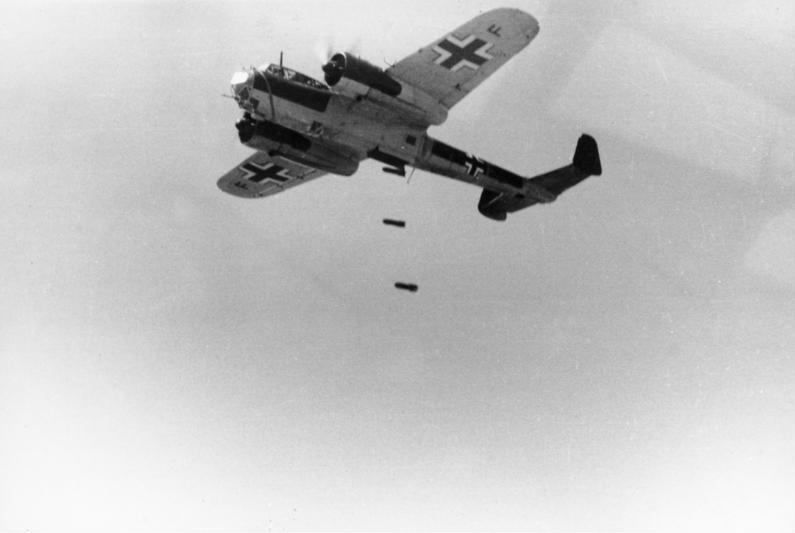
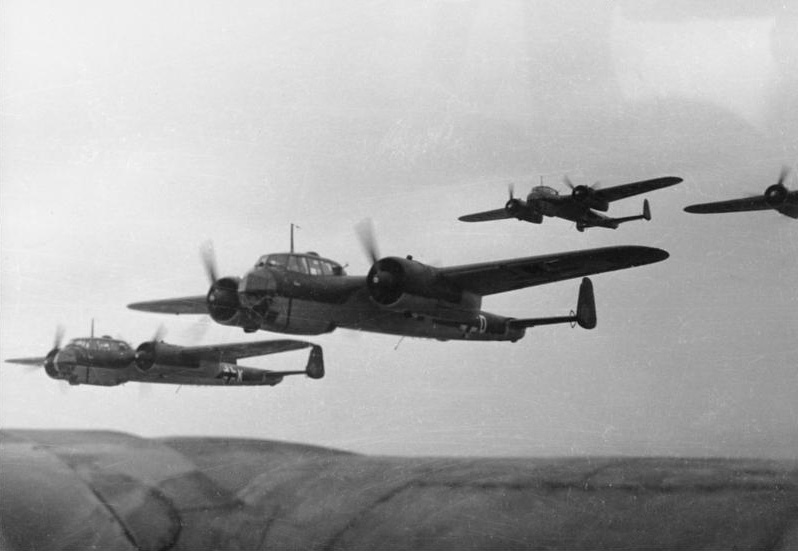
I can hardly believe that it has been nearly 3 years since I featured on this blog the news that the only known intact example of a Second World War German Dornier 17 bomber had been discovered resting in shallow water off the Kent coast. In that time numerous dives had been made to study the wreck and devise a way to raise it from the Goodwin Sands - a plan that was put into action (as originally envisaged) last month.
Alas the English Channel was not keen to relinquish its grasp of this aeroplane and it has taken until now - over a month from the anticipated salvage date - for it to finally see daylight for the first time in 70 years. It has been a remarkable feat of engineering - not to mention patience! - to bring this aircraft out of the sea in as near as dammit one piece and one that very nearly looked like not coming off at all. Thankfully all the time and money invested in this endeavour looks to have been worth it as the world's only extant Do17 airframe begins its new journey to the RAF Museum at Cosford, where it will undergo extensive restoration over the next two years and then eventually form a suitable counterpoint in the Battle of Britain exhibit at the Hendon museum. Quite what form this will take I'm not sure, as I had thought the original plan was to keep it pretty much as it was found and the museum website talks about "conserving" it, but maybe they feel a full restoration is possible and desirable. No doubt we shall see come 2015! I shall look forward to continuing to follow Dornier 17 5K+AR's story over the next two years and hope to see it, in whatever form, at the RAF Museum in the future.
Once again just as I bemoan the lack of blogworthy articles in the world along comes another humdinger of a story, this time courtesy of German magazine Der Spiegel.
It's amazing to think that in this day and age, with cities well established, historical buildings documented and preserved, and redevelopment frequently moving apace it is still possible for significant structures to lie dormant and forgotten for decades. Berlin has seen more than its fair share of tumult in recent history, however - not least its near-destruction in the Second World War, swiftly followed by partition almost immediately afterwards which left half of the city to be rebuilt under Communist supervision - so perhaps it should not be too surprising that discoveries such as this are still being made over 20 years after the fall of the Berlin Wall.
This particular find is especially remarkable because it involves a relic from Berlin's pre-war years - an original Weimar Cabaret theatre! Somehow it has managed to survive the vagaries of time, hidden by newer buildings, to be unearthed four years ago by a local property developer. My goodness, if those walls could talk I bet they'd have some tales to tell! Beautiful-looking walls they must have been too with their painted images, vaulted ceilings and stone columns. From what little history has been pieced together it seems to have been an entertainment venue from its construction in 1905 up until the Nazi Party took power in 1933. One can just imagine the parties and cabaret acts that must have gone on there at the height of the Weimar era:
Since its 1920s heyday it declined to the point where it was being used as an impromptu rubbish tip but now thanks to its rediscovery by an enterprising Berlin businessman it is on the verge of being given a new lease of life. Somewhat regrettably it has become impractical for it to be returned to its entertainment roots, although currently part of it is being used to house an art exhibition and it looks like there's a chance that aspect may be able to be kept permanently. No Max Raabe & Palast Orchester then, pity.
Nevertheless it is planned to restore many of the original features that existed and which can still be seen throughout the main part of the building, which may also be given over to [temporary] accommodation as well as a gallery. As always it is splendid to see an important piece of (in this case Berlin's) architectural history rediscovered and given the care and treatment it needs to bring it into the 21st century while still preserving its unique qualities as a tie to its past. Ausgezeichnet!
More details here of the rare Second World War German bomber that was discovered in remarkably complete condition beneath the shifting sands off the south coast of England back in September.
I posted about that initial find at the time and since then things seemed to have moved forward somewhat; a clearer picture of the state of the wreck is emerging and appears to confirm the original impression that it is by and large intact, missing only the parts that one might expect from an aircraft that has been on the seabed for the past 70 years after a forced water landing.
I'm pleased to see a place has already been earmarked for it in a new Battle of Britain display, less so that it has already become an attraction for unscrupulous souvenir hunters - let us hope that the monies required to raise the aircraft are quickly accrued and the thoughtless vandals found and prosecuted before too much damage, either natural or man-made, is done. I also understand the thinking, now that it has been fully explained, behind keeping it very much as it is rather than fully restoring it. By leaving it absolutely original it will save a lot of money, stop it from becoming little more than a reproduction and certainly add to its story!
All in all a one-of-a-kind, historically valuable aeroplane is on the verge of seeing the light of day for the first time in seven decades and will hopefully take its place alongside the remaining extant players of the Battle of Britain for us all to appreciate.
It suddenly occurred to me that, stored away somewhere, I had an old Airfix model of the aeroplane in question. So having temporarily liberated it from its sadly currently moth-balled box, I present my own example of the Dornier Do-17Z.
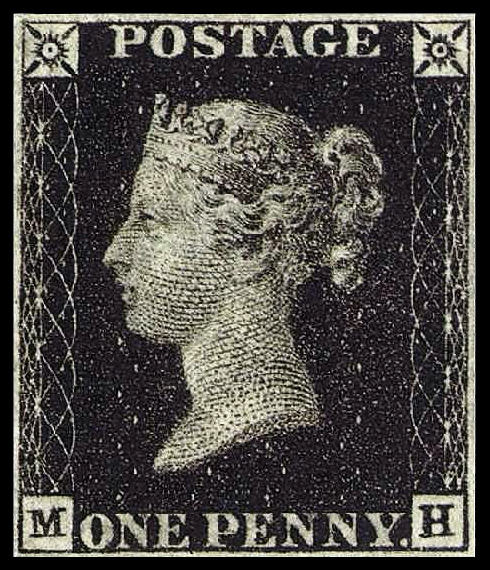
Two postage stamp stories in one day is a pleasant surprise for us philatelists but to avoid overwhelming you, dear readers, with two consecutive posts on the same subject I shall condense them down into one.
This main story is fascinating, and not just from a collectors point of view. Granted, her collection sounds fantastic and is certainly one of the best I have come across in my time; the cultural value of the letters, as well as the stamps themselves, must be immense. However it also seems that, by all accounts, Lady Mairi was an incredible character and I'm surprised not to have heard of her before this either in philatelic circles or elsewhere. She certainly lead an eventful life and sounds like the most positive definition of an eccentric.
It seems almost a pity to see such a remarkable collection - literally of a lifetime - broken up but the sheer variety, condition and rarity of so many of the items means this was always likely to happen. At least they will go towards enhancing the collections of others and be assured of a safe future
Not the Royal Mail's new postage pricing strategy, but a bizarre stamp (or should that be sta...?) from 19th Century Germany, which got round a supply problem by being cut in half before being issued(!). Such an oddity was bound to be of some value in itself, but a short production period (and likely little used because of the actual shortage of stamps) has led to a great amount of money changing hands for this example. This is yet another intriguing historical facet of postage stamps that keeps me interested in the pasttime and once again we see rarity value and a bidding war between collectors push the price up. I would not be in the least bit surprised if the new owner hails from the same area where this stamp was first issued. I hope he enjoys it!
Some more rare stamp news now, this time featuring the enduring film star Audrey Hepburn.
Once again this shows how good can come out of an unfortunate circumstance. I can readily understand why the son of Miss Hepburn was uneasy about the doctoring of the image used on the stamps and the subsequent destruction of all but a few sheets has quite naturally meant that the price for such items remains high. That Mr Ferrer has allowed the one set in his ownership to be auctioned for children's charities shows generosity of spirit and means that this small mistake and subsequent disagreement has ended up benefiting children the world over.
Of course the philatelic world is better off too, as interest in such rare stamps continues to prove. The auction of this one-time contentious stamp design must surely mean that there is no more ill-will regarding the original oversight by the Deutsche Post and it will also mean that if any further examples come up for sale a better knowledge of the existence and number of the stamps should prove useful.
As it is in this case a collector acquires a rare piece, a charity benefits and everyone gets to feel good about themselves, which is all one can ask, really.
An amazing find here, of the kind that is worthy of preservation. We hear a lot, particularly in this Battle of Britain/Blitz 70th Anniversary year, about the 'planes of the RAF and the gallant men who flew them and quite rightly so. What we don't see so much of are examples of the opposite number's equipment and the insight and understanding it can provide into the wider scale of the air war.
So the discovery of this Dornier Do17 bomber (nicknamed "The Flying Pencil" because of its slender fuselage) under the sands off the south coast of England is a welcome one, all the more so because it appears to be in such remarkably good condition all told (with air still in the tyres, no less!) and is able to be raised and restored without too much difficulty. From there it will soon be on display at the RAF Museum in Hendon, where it should serve as a rare example of the type of aircraft British pilots were fighting on a daily basis in the skies of 1940 Britain.
If I ever go back to Germany for a holiday (having last been around 2001) I shall certainly try and make a point of staying in this hotel. It looks every inch the petrolhead's dream lodgings! OK, some of the rooms are not quite to my taste (I never was one for too much Americana) but of course the place must cater for all motoristas' preferences. They have a wide range of choices, if nothing else. I think the above picture is my favourite car-themed room (I love the feet sticking out from underneath the Moggie Minor!).
However, having a penchant for Bauhaus, Zeppelins and the 1920s in general, I would have to say that my favourite room from the pictures I have seen is the Tower's Zeppelin Suite (above). This kind of style done right is really appealing to me; I love the contrast of the white against the dark wood floor, the geometric furniture and, of course, the Zeppelin pic! "Super toll!", as our German friends might say.