A web log, an æthereal scrap-book if you will, with a somewhat vintage flavour. News items, occurrences, experiences, thoughts and opinions related to Victoriana through to Fifties Americana can all be found here.
With the BLM movement still very much at the forefront of people's minds these two interestingly linked articles are a welcome and timely reminder of the sacrifices made by black men and women for the cause of freedom in the many battles fought by the Commonwealth countries in support of the British war effort, in this case the stories of two Jamaicans who left their Caribbean home to fight in the First World War.
William Robinson Clarke, c.1914 source - Wikipædia
The first report is of particular appeal inasmuch as it tells the story of an RFC sergeant pilot, William Robinson Clarke, who at the age of only 19 and out of his own pocket sailed to England to enlist in the Royal Flying Corps - in the process becoming what is thought to be the first black pilot to serve in that branch of the service. Originally employed as a driver he retrained as a reconnaissance pilot in late 1916 and in April of 1917 was posted to No. 4 Squadron, based at Abeele in Belgium and operating the R.E.8. The story of his time in the RFC is a fascinating one and I was pleased to note that he survived his run-in with five German scout aircraft and despite being wounded in the back made a full recovery - albeit subsequently only able to work as a mechanic - returning to Jamaica after the war to take up a building trade and eventually becoming the president of Jamaican branch of the Royal Air Force Association before passing away at the age of 86 in 1981.
Now his story has come fittingly into the limelight again thanks to the recent auctioning of his original RFC I.D. bracelet at - in of further interest to me personally - a local Kent auction. Just what the link to Ashford is, or the reasons behind the sale, is not made clear. It may just be that the owner had decided to sell and was based nearby, with the auctioneers being specialists in militaria. Even so, their initial valuation of the bracelet seemed almost disgracefully low even by the conservative standards of most auction houses, so I am delighted to see that it sold for a much more respectable figure (over 30 times the estimate, in fact) and I hope whoever bought it appreciates it for the remarkable piece of black British military history that it represents (as I'm sure they must do to have paid such a sum for it). I for one am grateful for it making the news as it has introduced me to the enthralling story of yet another World War One airman, as well has hopefully perpetuating his name and deeds far beyond the sphere of military or Jamaican historians.
The second article is of equal interest - and perhaps of even greater importance as it potentially has the scope to rewrite accepted First World War history that currently has Walter Tull as being the first black commissioned officer to serve in the British Army during the conflict.
This is the story of another young Jamaican soldier, Euan Lucie-Smith, who enlisted in the Jamaica Artillery Militia in 1911 before shipping to England on the outbreak of war three years later to serve as a Second Lieutenant in the Royal Warwickshire Regiment (a full three years before Walter Tull was gazetted into the Middlesex Regiment with the same rank). Arriving in France in March, 1915 Lucie-Smith was sadly killed in action on the Western Front barely a month later on the 25th April at the age of 25.
His story may also have remained forgotten had it not been for the chance discovery online of his memorial plaque (issued to the next-of-kin of all fallen soldiers in the First World War) by a military historian, James Carver. Now it has been unearthed thanks to Mr Carver's efforts and, as well as adding an important record to the annals of black British martial history also has the tantalising possibility of completely revising it. While it is regrettable to note how the plaque had languished, seemingly overlooked, for so long I am pleased to see its importance recognised and hope that when it comes up for auction next month it receives as much value and appreciation as William Robinson Clarke's I.D. bracelet.
Both of these stories are very poignant reminders of just how strong a pull the "mother country" had over its outlying colonies - in the First World War and in other conflicts before and since - and the strong urge and desire of their young men to leave their homes and travel thousands of miles to join up and "do their bit". They are incredibly relevant and apposite at this time of racial inequality and it is to be hoped that both accounts will take their rightful places in the history books as a result of these finds, which I trust will be suitably respected and preserved for future generations.
For this post I thought I would do something a bit different and publish a little essay I first wrote nearly 17 years ago, on the 23rd November 2003. Done purely for my own personal enjoyment (long before I became aware of such a thing as blogging) and to keep my writing - and handwriting, it originally having been handwritten - skills from college honed, it was one of two pieces I composed for a planned series based on people I considered my heroes and which features as its subject one of my abiding interests - aerial warfare in the First World War. I'm on a particular kick in that direction at the moment and as it happens to be close to the 103rd anniversary of this chap's death on the 23rd September 1917 I thought it would be quite apposite to give it the light of day here (and possibly continue the series in future). So without further ado I give you:
Leutnant Werner Voss (German Air Service), 13th April 1897 - 23rd September 1917
To some people, my choosing as a hero a man responsible for shooting down so many aircraft and sending many gallant Allied pilots to their deaths during the First World War may be seen as odd and unpatriotic. However I hold many Allied fighter pilots in equally high regard; [Lanoe] Hawker, [Louis] Strange, [James] McCudden, [Arthur] Rhys-Davids and [Albert] Ball to name but a few. In fact, I have the greatest respect and admiration for all the pilots of both air services, British and German, who took part in those early aerial combats. Voss’s story in particular, though, is the stuff of legend.
I do not intend to go into great detail regarding Voss's military career, but merely give a brief résumé of his war service up until the awe-inspiring dogfight in which he died.
Voss was only sixteen when the war began in 1914, but he managed to join the German cavalry (Uhlans) and saw action against the Russians on the Eastern Front (later earning him the nickname "The Krefeld Hussar"). The Eastern Front was a notoriously tough battlefield (though not nearly as hellish as the Western Front) being a snow-covered frozen wasteland, with no trench system to speak of; attack and counter-attack alike being constantly made by either side's cavalry. For a 16-year-old to be mixed up in this kind of warfare is quite impressive.
In 1915 Voss transferred to the German air service, no doubt attracted by the newness and excitement surrounding this emerging type of warfare. Like many of his peers he began by flying in two-seat reconnaissance aircraft, before becoming a scout pilot and joining [Oswald] Boelcke's Jasta 2 in November 1916. This squadron was a breeding ground for hero aces; aside from Boelcke, Manfred von Richthofen was also present, and soon befriended the young Voss.
By April 1917 Voss had shot down 28 Allied aircraft, a feat that earned him the coveted Pour le Merité (also known as the Blue Max), an award also gained by Richthofen. At the latter's personal request, Voss was given command of his own squadron, Jasta 10, in July; Jasta 10 being part of Richthofen's much larger Jagdgeschwader, or "Flying Circus". All of this while he was still only 19.
His rate of scoring slowed at this point as the pressures of command were felt by him, but he soon received a boost in the form of the latest type of fighter aircraft, the Fokker D.R.1 triplane, which began to replace the ageing Albatros and Pfalz machines. Voss's, in fact, was one of only two pre-production models, delivered to him in August. Richthofen, who now also flew the new Fokker, found it slow and difficult to fly, but Voss revelled in its amazing manoeuvrability and fantastic rate of climb.
This differing opinion regarding the Triplane helps to show the different personalities and temperaments of von Richthofen and Voss, despite their friendship. Von Richthofen's dislike of the new aircraft probably stems from his tactics, that of the hunter – cunning and analytical; hit and run, don't take on what you can't handle and make the enemy fight on your terms, not theirs. Voss's methods were markedly different. Like the British aces Albert Ball and Arthur Rhys-Davids, Voss would attack regardless of the odds. He was a great believer in breaking up formations of enemy aircraft; fighting at close quarters so that the pilots would be more concerned about the risk of colliding with, or shooting down, one of their own rather than the silver-grey Triplane of Voss. His style of fighting played to the strengths of his aircraft, that of manoeuvrability and climb rate. Voss's attitude was gung-ho, atypical and the opposite of von Richthofen's. Who is the better fighter pilot is a matter of opinion; each had their strengths and weaknesses. Voss's tactics, however, stir the imagination more.
It was these tactics that enabled him to pile on another 20 kills by the end of September 1917, bringing his total score to forty-eight, a mere 13 less than von Richthofen. Indeed, von Richthofen called him "my most redoubtable competitor" – high praise from Germany’s top-scoring ace of World War One.
Voss was due to go on leave on the 23rd of September, but was desperate to reach the half-century before he did so. He flew a patrol in the morning, when he shot down his 48th victim. Some pilots were fearful of flying when they had leave imminent, believing it to be tempting Fate and therefore bad luck. Voss evidently did not believe this, for he took off again that evening, a little after 6 o'clock, in his Fokker Triplane with two Pfalz DIII scouts for company. There was a great deal of aerial activity that evening, with several British squadrons flying. It was the rearmost flight of one of these, 60 Squadron flying the fearsome SE5a, which first spotted Voss's formation. This flight included two up-and-coming aces, Captain Robert Chidlaw-Roberts and Lieutenant Harold Hamersley. Avoiding the two Pfalz they dived in to attack Voss, whose amazing aerobatic skills now became apparent. Manoeuvring free of the attack, Voss turned the tables, firing on the two SEs and scoring hits. As he drove the enemy back towards the lines, Voss's antics attracted two flights of the well-documented 56 Squadron, also flying SE5as. With Captain James McCudden leading and Lieutenant Arthur Rhys-Davids also in attendance they tore down after Voss at close to 200mph.
Voss was not unaware of the danger, so he turned to face it. Flying at McCudden, firing as he came, he scored several hits before he flashed past. The British pilots, unable to understand what had just happened, swung round to get after him, only to find that Voss had also turned and was coming back at them. Firing once more, he scored several good hits on Keith Muspratt’s machine, irreparably damaging the engine and forcing him to land.
By this time Voss was by himself, the Pfalz pilots having departed. He too could have left at any time, the climb rate of his Fokker being superior to that of the SEs'. He elected to stay and fight on, confident in his ability to out-manoeuvre his antagonists. Whilst some people may put this down to typical German arrogance, I rather think it was an act of the greatest bravery and selflessness to take on such overwhelming odds. Said Bowman after the fight, "that left him in the middle of six of us, which did not appear to deter him in the slightest."
Time and again the British pilots were forced onto the defensive by Voss's tactics; another SE5a was forced to retire, a write-off, thereby giving Voss a claim of 50 aircraft destroyed. Slowly but surely, however, the fight was drifting westwards, towards the Allied lines. At this point, a red-nosed Albatros joined the fight, and eleven more enemy scouts were seen at high altitude, but six Spads and four Sopwith Camels were keeping them otherwise engaged. McCudden was afforded a brief chance for another attack, but as he did so Voss had already lined up and was firing in return. Another SE attacked at the same moment as McCudden, yet Voss was able to manoeuvre free from both attacks. Arthur Rhys-Davids persistently tried to dive into attack Voss, yet each time the Triplane dodged his bullets. After one such occurrence Voss appeared at a broadside position to another SE pilot, Flight Commander G. H. Bowman. Bowman tried to press home his attack, but in an outstanding move Voss applied full rudder, slewing sideways and firing on Bowman, much to his amazement. This manoeuvre, however, took up much of Voss's concentration. Enough, in fact, for him not to notice that Rhys-Davids had managed to get on to his tail. For a distance of thirty yards Rhys-Davids emptied an entire drum of ammunition into the Triplane, fatally wounding its pilot. "Oh", said Rhys-Davids after the event, "if only I could have brought him down alive!"
Every pilot who faced Voss that day held him in the highest esteem. Bowman wrote, "It was not until later that we actually heard that it was Voss in the Triplane. Our elation was not nearly so great as you would imagine." McCudden's diary entry says it all, and is in many ways a fitting epitaph:
"As long as I live I shall never forget my admiration for that German pilot, who single-handed fought seven of us for 10minutes. His flying was wonderful, his courage magnificent,and in my opinion he was the bravest German airman whomit has been my privilege to see fight."
Since 2009 there has been a special Armed Forces Day in Britain, with events held around the country to honour the men and women of the British armed forces past and present. While not an official national holiday it certainly seems to have become an annual event, observed nationwide usually in the last week of June (to coincide with the anniversary of the first ever Victoria Cross).
Chances are there's an event or three near you (if you're UK-based), be it a simple town centre march-past or a weekend of packed commemorations. Both of the above are occurring locally to me this weekend (28th/29th) but it is an earlier experience that will form the basis for this post today.
One of the biggest events - THE biggest, in fact, according the promotional material - in Essex took place last weekend at my local showground, Barleylands in Billericay. I first became aware of the event as long ago as February, when the tickets began going on sale, and bought my entry there and then. (This didn't stop TicketWeb and/or the Royal Mail trying to thwart me by losing my ticket - cue much frantic 'phone-calling in the week leading up to it and the last-minute sending of a replacement e-Ticket... only to find they were being sold on the gate after all!). One thing in particular had ensured my attendance - the Great War Display Team would be making an appearance (OK, so the Spitfire and Hurricane attracted me too, of course)!
Three fields to the east of the car park were nothing to write
home about. The field to the south and the green marker were
the places to be.
Come the day itself I availed myself of the free bus service and found myself at the Barleylands ground shortly after 11'o'clock. I really had no idea what to expect from the day, having never been to an Armed Forces Day event before, but I kept my hopes suppressed following my previous less-than-positive experience a couple of years ago. As it turned out it was probably for the best, for the overall layout could best be described as your standard funfair with a bit of militaria tacked on. In one corner of a field there was a very interesting display of military vehicles - of which more momentarily. But then one had to walk through three fields of the usual merry-go-rounds, shooting galleries and ice cream vans, past a music stage empty and audience-less save for a fat man in jeans and a short-sleeved shirt who was belting out (admittedly in good voice) 1950s Rock'n'Roll numbers, just to get to the display area - which was encircled by innumerable burger vans (which at £4 for the cheapest burger-in-a-bun were a prime example of playing to a captive audience) and sunglasses sales tents.
I did a couple of circuits just to make sure I didn't miss anything, stopped for a cup of tea and my own lunch and then headed back to the first field where I - very happily as it turned out - spent the rest of the day. Why happily? Well, that one field was worth the £10 price of admission in my book.
To start with, there was a Spitfire sitting bang in the middle of it! Although only a static replica (built over 20 years by a father and son team, using an old airframe and various parts) it was still beautiful to behold. It was possible to get quite close to it (for £2 one could look - but not sit - inside the cockpit) and having not been so near a Spit for quite some time I'd forgotten just how big an aircraft it is.
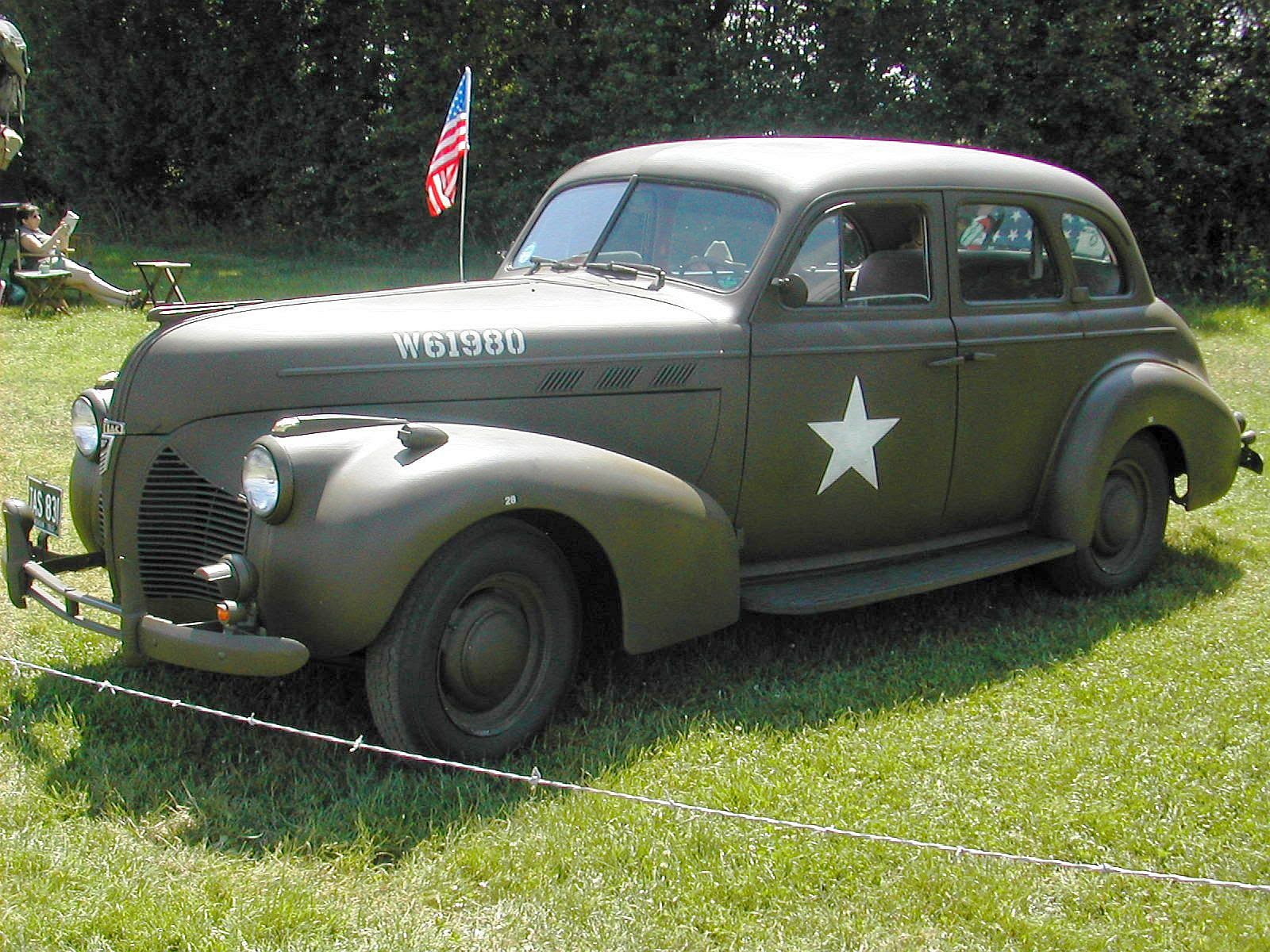
Around the perimeter of this field (and the small adjacent one) were the majority of the military vehicles (and armed forces', associations' and charities' stands). Two of the more interesting vehicles were a 1942 Cadillac staff car and 1950s Austin Champ jeep.
At one end was a group of Second World War re-enactors, representing the 2nd Battalion Essex Regiment and complete with Jeep and tents, while at the other end was the fascinating display of the Great War Society. Despite having only enough room for two pitches their re-enactment was striking in its simplicity and gave a good idea of conditions for, in this case, an RFC officer and a cavalry veterinarian. The RFC johnnie was done up to the nines splendidly - complete with swagger stick, a beautiful pipe (with equally lovely-smelling tobacco) wind-up gramophone playing music hall numbers and a framed photo of Lady Edith!
Who parked that German staff car there?!
He recognised in me a fellow Chap (I think it might have been my cravat!) and we had a good long chat (he both in and out of character!) about the re-enactment scene, the centenary and my particular interest in the period and late 19th/early 20th century socio-cultural history in general. If you're reading this, Trevor, good show!
The cavalry vet also had a few handsome displays on show in the form of three pack mules, representing the equine aspect of the First World War. These three imposing beasts happily stood for being stroked and petted and were really quite beautiful animals. When you think of mules you might think of little donkeys and suchlike, but these three fellows were proper American-bred - such as the type that was used in the Great War to carry and pull all manner of things from provisions to artillery pieces - and stood an impressive 15-16 hands high! Very docile they were, though, and one in particular was only too pleased to pose.
Turn, aaand... smile for the camera!
At around 1:30pm the Hurricane suddenly appeared, announcing its arrival by roaring overhead. Here I found myself in a fortunate position, quite literally, away from the crowds and main display area on the perimeter of the public area - and right next to the field over which the Hurri was flying! I was one of maybe only half a dozen people who found this sweet spot and it was like having your own personal airshow! Even with my ancient, worse-than-a-smartphone digital camera I was able to get some half-decent shots, although they don't show the wonderful proximity of this and later displays.
Suitably buoyed I hung around the same patch of grass sitting and enjoying the glorious June weather (and ruing not having brought a fold-up chair - the lack of seating except around the main display area being another nuisance) until 2:30, when looking to the eastern horizon this stirring sight met my gaze:
What happened for the next twenty minutes I won't forget in a hurry. The last time I saw First World War 'planes (replicas) in the air was nearly 20 years ago, at the nearby North Weald Aerodrome with my dad, when there were only two or three airworthy examples. Back then they flew so high and far away that it was really impossible to make them out clearly, let alone get a sense of speed and immediacy. Added to that they did a mock bombing raid that meant they were hundreds of yards the other side of the 'drome. Well, there were no such problems this time!
British and American SE5as
Sopwith Triplane
Junkers CL.1
Fokker and Sopwith Triplanes
BE2c and Sopwith Triplane
I literally didn't know where to look next. The Great War Display Team (for 'twas they) put on one hell of a show. They must have choreographed it with military precision but it all looked so "natural" that my heart was in my mouth more than once. It was likely the closest I'll ever get to seeing a proper dogfight. I must have taken over 100 photos in those twenty minutes and it was a struggle to pick out which ones to feature in this post. Considering I was just pointing and shooting with a fifteen year old 5x zoom camera I'm delighted how few of them I had to delete (I must admit to being a trifle embarrassed when I noticed nearby two young teenage girls both with proper professional-looking zoom lens cameras - oh for the day when I can afford a new box brownie!).
What with them and the GWS my existing passion for the Great War - and particularly the air war - was enhanced even more and I've now made it my mission to get to the original Stow Maries WWI aerodrome in mid-Essex, the restoration of which I wrote about in an earlier blog post and at which the Great War Display Team sometimes appears. Perhaps an August birthday treat...?
The afternoon was topped off in style at 4'o'clock when the Spitfire turned up and proceeded to wheel and bank over our heads for the next 15 minutes. By that time I was aching, suntanned and a bit hungry so as the Spit disappeared to the west I hopped back on the bus and was home in time for tea, feeling well satisfied with the day and with renewed appreciation of the armed forces from all eras.
**Are you going to an Armed Forces Day event this weekend? Let me know in the comments below and I'll look forward to reading any subsequent posts!**
Regular readers of this blog will know that among the many aspects of socio-cultural history that interest me World War I looms large - and in particular the aerial warfare of that period. I make no secret of my continued enjoyment of the Biggles series of books nor that my Great War library is heavily stacked in the favour of aeronautics. Posts about this and other aspects of the First World War are therefore naturally littered throughout this blog - and long may that continue!
It'll continue right now, in fact, with another tale of selfless heroism in the skies above the trenches and the current attempts to honour one of the airmen involved. The story of Flight Sergeant Thomas Mottershead was brought to my attention recently by one of the people involved in getting him recognised and I'm glad, since it has made me aware of another brave pilot and a further fascinating and poignant episode in that four-year conflict.
Thomas Mottershead hailed from Widnes (then in Lancashire, now part of Cheshire), where he was born on the 11th January 1890 at number 6 Vine Street. By the beginning of 1914 things were looking very rosy for 24-year-old Tom Mottershead who, like many young men of his generation at the end of the Edwardian era, was a fit and athletic chap who played football for his local league side and was also a Bible reader at his local parish church. In February he married a young girl from nearby Birkenhead named Lillian Bree, the two of them setting up their own home in Widnes. A keen engineer, educated at the local technical school and apprenticed at Widnes' main employer the United Alkali Company, Mottershead had begun working at the Birkenhead shipyards in the summer of 1914 before moving to Portsmouth Naval Dockyard in August. With war declared on the 4th Mottershead enlisted six days later on the 10th, immediately joining the fledgling Royal Flying Corps as an air mechanic.
By June of 1916 Mottershead had been promoted to sergeant, returned to England for pilot training and awarded his "wings". In July 1916 he was sent to 25 Squadron, based at Auchel in northern France and flying FE2b fighter-bombers, where he took part in the Battle of the Somme. By October he had been made Acting Flight Sergeant and moved to 20 Squadron, piloting FE2ds.
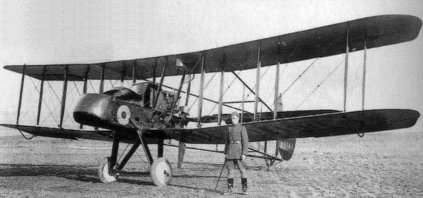
The FE2-series of aircraft were what is known as "pusher" types - that is, the engine was mounted at the back, pushing the aeroplane along. This was the British answer to the problem of firing a machine-gun forwards without hitting the propellor, a problem which had long ago been solved by the Germans with their Fokker "synchronisation gear" but which took us a little longer to perfect. With the engine behind the pilot/observer and a "bathtub"-style cockpit, a wide field of fire was possible - except, of course, towards the rear! Observers and pilots of FEs were able to fire back over the top wing, but it was a very precarious undertaking (and don't forget the pilot would most likely be throwing the machine all over the place at the same time!). Pilots would take some small crumb of comfort in the thought that any bullets coming from behind would (hopefully!) be stopped by the engine and not them.
Although reportedly a somewhat cumbersome and unwieldy aeroplane to fly, the FE's weight was an advantage inasmuch as the airframe could take a fair bit of punishment. Its layout was put to good use in the event of attack by hostile fighters; pilots would form what was known as a "defensive circle", flying round in an aerial "follow-my-leader" - all the while trying to get closer to the Allied lines and safety. In this way each aircraft covered the rear blind spot of the next, making attack very difficult.
By the beginning of 1917, when Flt. Sgt. Mottershead - recently awarded the Distinguished Conduct Medal - had returned from Christmas leave, the FE was completely outclassed by German fighters. Nevertheless the FE2ds that he flew at 25 Squadron continued to see service until the middle of the year, when they were largely replaced by the Bristol F2.b Fighter, with the earlier FE2b variant actually surviving until the end of the war as a night bomber.
One of the other flaws of the FE's design was the location of the fuel tank: directly underneath the pilot's seat. It was this that was to prove fatal for Thomas Mottershead when, on the morning of Sunday 7th January 1917 he took off Clairmarais with his observer Lieutenant William E. Gower on a contact patrol (observing and reporting troop movements). They were attacked by a Leutnant Walter Göttsch from Jasta 8, flying the far more manoeuvrable Albatros fighter. Göttsch quickly scored hits on Mottershead's FE2d, including puncturing the fuel tank. In spite of frantic signals from Gower, Mottershead was not able to turn off the fuel feed quickly enough and the petrol tank burst into flames. It was every pilot's worst nightmare and despite his observer's best efforts with a fire extinguisher Mottershead was quickly engulfed in flames. Even in the middle of all this he did his best to try to land the aircraft safely behind Allied lines. Unfortunately the undercarriage had been damaged and collapsed on landing causing the aeroplane to flip over ("turn turtle"), throwing Gower clear but trapping Mottershead beneath the wreckage of the cockpit. Nearby British troops were able to save the unconscious Gower and, eventually, Mottershead too - who, amazingly, was still conscious. Removed to the nearest Casualty Clearing Station he sadly succumbed to his wounds five days later on the 12th. He was buried the following day at Ballieul Cemetery, "...one of the bravest men who had ever fallen in war..." according to the words of his commanding officer.
Exactly one month later, Mottershead was posthumously awarded the highest military honour in the British Armed Forces - the Victoria Cross. His widow accepted the medal from King George V in Hyde Park on the 7th June 1917, in the company of Lt. Gower. Flight Sergeant Thomas Mottershead has the distinction of being the only non-commissioned officer (i.e. an enlisted man, a corporal, sergeant etc.) in the Royal Flying Corps to have received a VC during the war.
Now a local committee of interested parties has set up an appeal fund to help properly honour Thomas Mottershead and all those who fought and died in the Great War. In an admirable display of civic pride they hope to be able to erect a statue of the pilot in Widnes' Victoria Park in time for the centenary of his death, in January 2017. Local government and business are involved and as the supporters quite rightly point out, it is important that the sacrifices of men like Tom Mottershead are remembered - especially in this centenary year of the war's beginning - and someone with as unique a record as he certainly deserves to be commemorated. The website contains a wealth of information - I wish them the best of luck with their appeal and feel sure we will be reading of the statue's unveiling in a little less than 3 years' time.
As an unashamed fan of the "Biggles" stories by W. E. Johns (some of them splendid snapshots of the Great War from a serving pilot's [1930s] perspective - and not just for young boys!) and with a burgeoning library of First World War-themed books leaning disproportionally towards the aerial aspect of the conflict, the thrilling tales that have come to light in these two articles perhaps come as little surprise to me but are still nonetheless as amusing and amazing as any I have read before.
Some of the things that went on over the skies of France and Belgium throughout the war were deeply astonishing if the accounts in the various books in my collection are anything to go by. Johns himself was at pains to point out that aerial warfare during the Great War really was "stranger than fiction" and some of the stories he touches upon in the preface of his very first Biggles book The Camels Are Coming - not to mention some of the true-to-life adventures our hero gets caught up in - really do defy belief. Therefore to read about the real-life experiences of Major Robert Loraine is to be reminded that they are no exaggeration and that war-flying one hundred years ago was genuinely hair-raising stuff!
The fact that Robert Loraine can be credited with a number of aeronautical "firsts" also drives home the fact that these men were truly at the beginning of a new technology, learning as they went and doing things that no human being had ever done before. Loraine himself was flying across the Irish Sea barely seven years after the Wright brothers had travelled a few hundred feet on that first ever powered flight at Kitty Hawk. The technological advancement of the aeroplane - still only a decade old at the start of the war - during the four years of fighting is astounding to the modern observer, for whom aircraft design has changed substantially little in the last 50 years (and it's such a shame that war is a catalyst for progress!).
Loraine was ahead of the charge by all accounts, though, and it is heartening to see that his pioneering achievements all came before the war and were peaceful in nature. We also now know who to thank for the term "joystick", although it still isn't clear how the word came to be derived (and there are still other claims for the origin of this word). His war service, as already mentioned, was hugely heroic too and I'm glad to see he came out of it all right - and on to the London stage (& screen) of all places!
The second series of recollections, committed to paper some forty years after they occurred (just weeks before the outbreak of hostilities) but unseen until now, read even more like the most humorous "Biggles" stories. A very cheeky chappie, the wonderfully-named Eric Gordon England sounded!
One can only wonder what the Kaiser must have thought on that day in early June 1914, upon seeing a British aeroplane diving down towards his yacht before pulling up and over a passing zeppelin! Nothing complimentary, I should think!
The relaxed feelings of peacefulness and prosperity that so characterised the "golden summer" of 1914 in England can be readily felt through this story, I think. Not only by the actions of Gordon England in so comprehensively teasing the Germans both in the air and on the ground but also the sheer fact that Britain was still keen to provide aircraft to what would in barely a month's time be its most hated enemy. (I don't know if those of you in the UK managed to catch the excellent three-part drama 37 Days on B.B.C. Two earlier this year but to my mind that did a fantastic job of showing how quickly and ridiculously the whole run-up to war unfolded.)
The unearthing of these kinds of fantastic tales is one of the best aspects of the increased interest in the First World War as a result of the centenary. They serve to remind us of the human acts of courage and good old-fashioned derring-do that took place amid the carnage and decimation of 1914-18 and it is as excellent as ever to see them rediscovered for a new generation. Now I'm off to re-read some of my Biggles books, and maybe some more new accounts by the real airmen who inspired his creation!
When I wrote a couple of weeks ago about my latest book find just before Christmas, I mentioned that it was about something very pertinent to this year's centenary of the First World War (news and events relating to which have already begun to appear, so expect this blog to become heavy with them in the coming months!) - namely the collected early war letters of RNAS pilot Lieutenant Harold Rosher. I added that it would become a welcome addition to my war library and stated my intention to read all the books in my collection that relate to World War One by the end of 2014.
Well, the other day, with the germ of an idea for a post in my mind, I got out all said books (including In The Royal Naval Air Service, 3rd row far right) and laid them out to take a picture of them for this blog. I think I may have to revise my target! The end of 2018 seems more realistic now I've reacquainted myself with the number books I have on the subject!
As you can see most of them focus on the aeronautical aspect of the Great War; no surprise really as that has always been my abiding area of interest. In fact all but three are purely about aerial warfare. True World War I Stories (2nd row from top, 3rd from left) is just that and was picked up from a library sale a few years ago for 50p. Before Endeavours Fade by Rose E. B. Coombs (top, 3rd from left) was given to me by my stepfather several years back and is actually something of a guide book to the battlefields, detailing towns, landmarks and other locations that saw action as well as the innumerable memorials throughout Belgium and France. Although now nearly 40 years old this book will doubtless be interesting and a still-useful guide if I should choose to visit the areas covered.
Once I realised just how many books I had, I got that nagging feeling that there were probably one or two more lying around somewhere that I'd forgotten about and such proved to be the case!
Goodbye to All That is an autobiographical account of the the First World War (and the author's early pre-war life) by Robert Graves, the poet, scholar and author who served in the Royal Welsh Fusiliers and was good friends with Siegfried Sassoon. I picked up this copy for a few pence in Homebase (yes, the DIY people - my local store has a small second-hand book concession by the tills!) a year or so ago and it has been sitting patiently in my "to read" pile.
The rest all focus on the RFC and/or the Deutsche Luftstreitkräfte (except In the Company of Eagles, a novel by Ernest K. Gann about a duel between French and German pilots) with no less than four devoted solely to Manfred von Richthofen. These include his own [translated] memoirs and a fascinating in-depth record of his 80 career victories.
German War Birds is a splendid book from the 1930s, written by the mysteriously pseudonymous "Vigilant" (generally agreed to be one Claud W. Sykes and probably a serving RAF officer hence the name), details of some of the lesser-known German pilots of the Great War and is written in wonderfully charming Thirties style. I picked it up in 2003 from the wonderful book stalls that can still be found underneath Waterloo Bridge.
Many of the other books are written by well-regarded aviation/military historians such as Peter Hart, Alan Clark and Norman Franks. Then there are the famous wartime memoirs of Cecil Lewis (Sagittarius Rising) and Victor Yeates (Winged Victory), not to mention James McCudden's Flying Fury. Finally there is, of course, Biggles - who nearly 20 years ago introduced me to the fascinating world of dogfights, biplanes and heroic flying that I would later go on to read so much more about. The First World War stories fully deserve their place here, being inspired by true events and stories that the author W. E. Johns (himself a bomber pilot in the war) saw or heard.
Finally, as a bit of light relief, Practical Flying is a good read - it being a facsimile of the standard training manual given to pilots joining the RFC. I doubt there'll ever be any call for me to fly a Sopwith Camel, but you never know! I actually got it (and a real hip flask!) with the old PC simulator, Flying Corps, way back in the late '90s and am pleased to report that the old game still runs so I can at least take my bus up for a spin virtually if not in reality(!). Incidentally I'm amazed to see how far computers and graphics have progressed - the modern equivalent of Flying Corps, Rise Of Flight, looks incredibly realistic and expansive.
Just as soon as I've finished reading my current tome, Waiting For Hitler, which is an equally enthralling series of accounts from the first year of the Second World War when the invasion of Britain looked likely, I shall begin working my way through these Great War books. Don't be surprised if you don't hear from me for a while! But no, in all seriousness, I really looking forward to doing this; in the centenary year of the start of the Great War it just seems the "right" way to go about commemorating the occasion. I may even post a review or two up along the way. Then there's my film collection too, I haven't even touched on that yet. If that's not enough the Daily Telegraph is also marking the anniversary by making available online copies of every one of its newspapers from 1914 to 1918, each day for the next four years!
What have you got planned for the 100th anniversary and are there any more(!) books you would recommend I seek out?
Crikey, has it really been 4 weeks since my last post? Between a little bit of work, a little bit of play and re-learning how to knit (yes, I've tentatively picked up the needles again after a near twenty-year gap - more on that later!) I've not had much chance to blog lately, for which I again apologise. Now's the time to get going again, though, with this excellent article about a First World War airfield right here in my home county of Essex.
With the 100th anniversary of the start of the Great War less than a year away now, the wheels have already begun to be set in motion to mark this important centenary. The B.B.C. has announced over 2,500 hours of related programming and the government has pledged £50,000,000 to remembrance commemorations, with commenters from every corner of the country discussing what should or shouldn't be done and how the money should be spent. (Personally I'm delighted to see the Imperial War Museum London earmarked to get even more "massive" improvements and major events all around the country mooted too. Not to mention the all-important educational aspect as well. It all sounds good so far!)
Already a small part of that £50m has been well spent saving an original First World War aerodrome in Stow Maries (near the town of Maldon in the mid-east of Essex) with the aim of restoring it to its 1916 condition in time for the commemorations.
One of only ten remaining from the total 250 RFC stations built during the war, Stow Maries is the most complete example in Britain with all of its buildings still intact - more than 24 in total, many with their original windows and other features still intact as you can see in the accompanying clip. Built for one of the new Home Defence squadrons - otherwise known as "Zeppelin Busters" - to counter the new menace of aerial attacks by airships and Gotha bombers, Stow Maries was ideally placed to allow quick interception of zeppelins bound for London, Southend and northern towns. Along with Suttons Farm (later RAF Hornchurch and from where Lt. William Leefe Robinson became the first pilot to shoot down a zeppelin on the 2nd-3rd September 1916), Hainault Farm (RAF Fairlop), North Weald and Rochford aerodromes and also Joyce Green aerodrome in Kent, Stow Maries made up part of the London Air Defence Area.
Stories still abound of zeppelins bombing Southend and Purfleet, being spotted over Canvey Island and perhaps most famously being shot down in Billericay so it is wonderful to see this locally and nationally important historical site preserved and restored for future generations. Already there is talk of using it as the base for some flying WW1 exhibits at future Southend airshows and the plan to have it as a place to teach the restoration skills needed to keep these aircraft airworthy is inspired. I can't wait to see what else Stow Maries has in store!
By remaining unused (save for the occasional farm storage purposes) and overgrown from the end of the Second World War until only four or five years ago Stow Maries has managed to survive miraculously untouched. It was on the market only a year ago with the very real risk of being redeveloped but it is now in the safe hands of aviation & history enthusiasts and successful businessmen, the Stow Maries Great War Aerodrome Trust and the Friends Of Stow Maries Aerodrome. Thanks to the National Heritage Memorial Fund it is now in a position to begin realising its full potential as a fully restored First World War aerodrome, working museum and of course a lasting memorial to all the brave men (and women) who fought and served in the "war to end all wars".