A web log, an æthereal scrap-book if you will, with a somewhat vintage flavour. News items, occurrences, experiences, thoughts and opinions related to Victoriana through to Fifties Americana can all be found here.
Huzzah! We've finally made it in to 2024 (just!) with this latest item of news, featuring a modern aviation pacesetter and someone who will certainly go on to do great things in the industry - 21-year-old female pilot Ellie Carter.
Miss Carter first made the headlines four years ago when, on her 17th birthday, she became Britain's youngest-ever licensed woman pilot. Flying has obviously been in her blood for much longer, though, judging by the story related in the accompanying articles about her run-in with the USAF authorities at the age of nine(!) not to mention her subsequent aeronautical experiences that led to her record-breaking qualification.
Now another record is set to be broken by this committed aviatrix, as I am delighted to see that she has been chosen to be the first person - and the first-ever woman - to fly a newly-completed [replica] of a workhorse aircraft of the First World War, the Sopwith 1½-Strutter, built over the last 23 years by a team of enthusiasts in East Lothian. Even better the B.B.C. have approached her with the intention of making a documentary about her life and this ground-breaking flight, which is due to be aired later this year. Definitely something I will be looking out for in the schedules!
source - Picryl French-built Sopwith 1½-Strutter at Air Service Production Centre No. 2, Romorantin Aerodrome, France, 1918
As ever with this type of young, dedicated individual it is wonderful to see the obvious, palpable enthusiasm for her chosen calling and her clear desire to make a life's career out of aviation. At the same time her down-to-earth (if you'll pardon the expression!) attitude is equally admirable and, in conjunction with her degree in Aeronautics & Astronautics (which if she hasn't already achieved at the time of writing, I'm sure she will!) will keep her in good stead as a worthy ambassador for women and young girls in aviation and STEM (science, technology, engineering and mathematics) in general. She reminds me very much of another lady pilot (about whom I have also previously blogged), Tracey Curtis-Taylor; I am sure that Ellie Carter will follow a similar path and that this will not be the last time she appears on these pages, or in the annals of aviation history. To borrow an expression familiar to those original 1½-Strutter pilots - "soft landings and no dud engines!"
Well, this is something I never thought I'd be blogging about. Not that I'm an expert on such things as dolls, you understand (although while we're at it, who else remember Sindy?). Anyway, this is more a case of the subject within a subject being of interest (hopefully!) to my readers, with the news that Mattel, maker of the Barbie doll, has honoured one of the pioneers of early aviation with the latest addition to their range.
The aviatrix in question is Elizabeth "Bessie" Coleman, who made history in 1921 when she became the first black person to obtain an international pilot's licence. Her story is one that frankly deserves more recognition and I can only hope that this acknowledgement by Mattel goes some way towards achieving that.
Born in Atlanta, Texas in 1892 Bessie Coleman seemed all set to follow in her parents' footsteps as a cotton picker. However from an early age she proved to be an academic student, fond of reading and a whizz at maths, such that she was given a scholarship by the local Baptist church that eventually enabled her to attend what is now the Langston University in Oklahoma. The money did not last, though, and she was only able to complete a single term before she was forced to return to Texas.
At the age of 23 Bessie found herself living in Chicago with her brothers, working as a manicurist in a local barbershop. It was here that she was first exposed to the wonders of early flight, listening to the stories returning air force pilots would tell whilst getting a trim. Inspired by these thrilling stories she took a second job in a chili restaurant to help pay for flying lessons, despite neither black people nor women being allowed to join flying schools. Fortunately she was able to gain support from the editor of a Chicago-based African-American newspaper, Robert S. Abbott of the Chicago Defender, and prominent African-American banker Jesse Binga, who between them helped publicise and pay for her flying lessons. To get over the hurdle of the U.S. flying school bans it was recommended that Coleman travel to France, where there were no such restrictions. In an early example of her strong-minded and intellectual nature, she immediately attended a French language school in Chicago and having learnt the language promptly left the United States for Europe. Arriving in Paris at the end of November 1920 she spent the next 6 months learning to fly before finally achieving what no black woman had done before - obtaining a pilot's licence. Determined to be the best flyer she could, Bessie continued to take flying lessons under the tutelage of an unnamed ex-WW1 French ace before returning to America in September 1921.
Despite widespread media attention in America at her achievement, Bessie was quick to realise that if she were to make a living as a civilian pilot in her home country then barnstorming was pretty much the only way to go. Again showing remarkable prudence Coleman, still having found no-one in the U.S. willing to teach her the advanced flying skills she would need, returned to France to undertake further lessons. Touring Europe she met famous Dutch aircraft designer Anthony Fokker and visited his factory in Germany where she was given more training by the chief test pilot. Now fully versed in all aspects of advanced flight, she once again returned to the U.S.A. where, billed as "Queen Bess", she wowed crowds around the country in various Curtiss JN-4 "Jenny" biplanes - earning her the well-deserved title of "The World's Greatest Woman Flier". Resolute in her desire to perform the most difficult stunts and understandably vocal in promoting African-American aviation she toured the country for the next 4 years giving lectures and exhibition flights. During a visit to Orlando, Florida she befriended a local vicar and his wife, who all but adopted her as a daughter; remaining in Orlando Bessie opened her own beauty parlour with the aim of making enough money to buy her own aeroplane.
In April 1926 this she finally did, purchasing another Curtiss JN-4 in Dallas, Texas. Sadly, however, it was this aircraft that would be her downfall. Bessie was in Jacksonville, Florida, at the time of the purchase so the aeroplane was flown back from Dallas by her 24-year-old mechanic and publicity agent William D. Wills. He was reportedly forced to land three times along the journey due to the terrible condition the aircraft had been kept in by its previous owner. Despite its obviously dangerous shortcomings and against all the advice of friends and relatives, Bessie went up (as a passenger) in the Jenny with Wills on the 30th April 1926 to practice for a parachute jump she intended to perform the following day. At 3,000ft the aircraft suddenly went into an uncontrollable dive and spun into the ground. Bessie was thrown from the cockpit and sadly died on the ground; Wills was also killed instantly when the Jenny impacted the ground and exploded. Detailed examination of the wreckage subsequently revealed a wrench for maintaining the engine had been left in the machine, causing the controls to jam.
Bessie Coleman's tragically early death at the age of 34 was, despite her undoubted fame, largely ignored by all but the African-American press. In spite of this, over ten thousand mourners turned out for her funeral in Chicago and over the many years following she was honoured with several roads, schools and other public buildings being named after her, to say nothing of various museum exhibits, commemorative stamps etc.
Now can be added to that list a Barbie doll designed in her image (I have to admit not seeing much of a likeness, although as I said at the top of this post dolls are not really my metier), with a snappy-looking aviatrix get-up featuring flying suit, boots and initialled cap. It is splendid to see such a previously-overlooked trailblazer of (black) women's aviation marked in this way and I commend Mattel for choosing to highlight this historically important woman. If it can also encourage young girls of any colour to take an interest in STEM (Science, Technology, Engineering & Mathematics) Learning and aviation in particular, then so much the better.
"Time flies like an arrow; fruit flies like a banana" (as the late, great Sir Terry Wogan once said) and once again time has indeed flown by - like an arrow, if not like a banana - since my last post on here. You can't keep a good blogger down, though, so here I am again with a news item from last month featuring a wonderful lady adventurer who this blogger greatly admires.
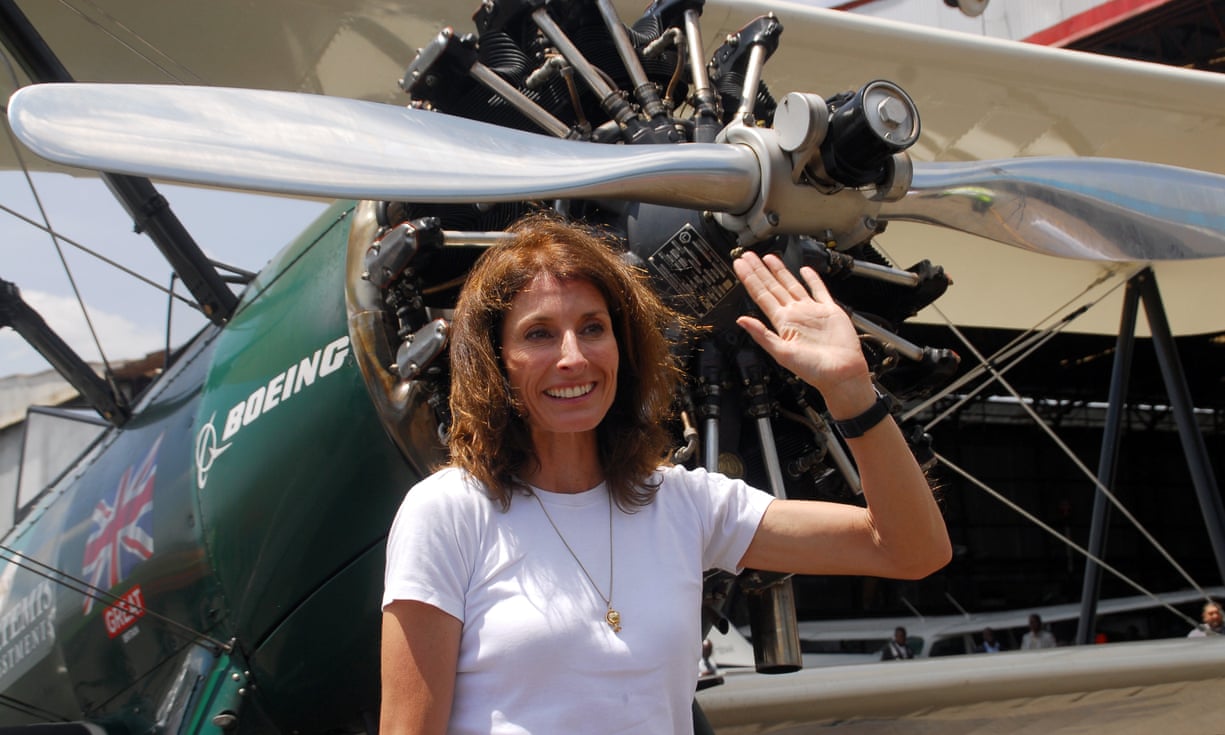
I've featured the adventures of modern-day aviatrix Tracey Curtis-Taylor on this blog before, specifically when she set out a couple of years ago in her 1942 Boeing Stearman biplane to retrace the route taken by the pioneer female pilot Lady Mary Heath from England to Cape Town, South Africa in 1928. That journey was subsequently made into a B.B.C. documentary and jolly fascinating it was too.
Towards the end of last year Ms Curtis-Taylor undertook a new challenge - to follow the same route Amy Johnson took on her famous England-Australia flight of 1930. In the same Stearman biplane as before Ms Curtis-Taylor took off from Farnborough in Hampshire in October to make the 14,000-mile journey across Europe, the Middle East, India, South-East Asia and Australia, just as Amy Johnson had done more than 80 years previously.
As the above article explains, Ms Curtis-Taylor landed at Sydney airport on the 9th January, thereby completing this massive trek and following in the slipstream of one of her inspirations and a proper heroine. Tracey Curtis-Taylor is both of these as well, not only for her remarkable recreations of historic endurance flights but also for helping to keep the memory of these early aviatrices alive today, not to mention her involvement in encouraging more young women into the field of mechanical engineering.
Tracey Curtis-Taylor mentions "not wanting to stop [flying]" in the above clip and the good news is she that she isn't intending to any time soon. That report briefly mentions the shipping of her aeroplane to Seattle for Boeing's centenary celebrations next year, but before that Ms Curtis-Taylor has stated her intention to fly her biplane across the breadth of the United States as her next adventure and I for one can't wait to follow her progress on this new feat of endurance, continuing to emulate the pioneer women pilots of the early 20th century. Congratulations, Ms Curtis-Taylor, and the best of luck on your next endeavour!
**Further good news in relation to this story is that the B.B.C. will be broadcasting another documentary later this year following Tracey Curtis-Taylor's England-Australia flight. No details have been released as yet but expect it to be shown on one of the main B.B.C. channels some time in the Spring.**
This month's post focuses on the the fascinating B.B.C. article (linked above) regarding one of Britain's most obscure and long-forgotten aviatrices - Constance Leathart.
The Beeb has gone into some detail about this remarkable lady in their article for the regional Inside Out programme, so I do not intend to repeat all of it again here. Suffice to say it appears that Miss Leathart was every inch a most indomitable woman, at a time when women needed such spiritedness in order to break into the male-dominated world of early aviation.
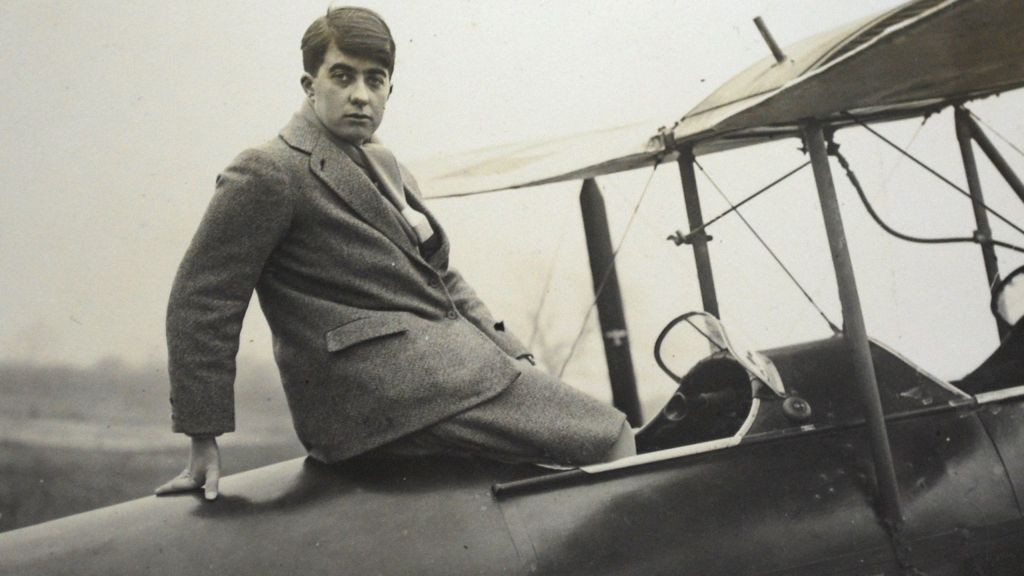
Her appearance in the majority of the surviving photographs of her shows this plainly; usually sporting a short side-parted haircut and often wearing shirt, tie and tweeds she could easily pass for a man. This allowed her to embark on many fantastic-sounding aviation adventures, from air races to long distance flights (not to mention repairing aeroplanes on the side!), culminating in being one of the first women to sign up for the Air Transport Auxiliary during World War Two. Even then her adventurousness continued unabated - as it would if you were able to fly myriad military aircraft, particularly the Spitfire!
Behind the exciting lifestyle and the overturning of gender stereotypes, though, seems to me to be a very sad portrait of a lonely outsider. Leathart herself admits to dressing in the masculine style in order to try to please her father, who had wanted a boy child. To see her self-deprecating notes on her own photographs is heartrending; her exclusion from most ATA publicity shots on the grounds of her not being of the "pin-up" style is equally saddening (and in the photo featured in the accompanying article of Miss Leathart standing with the rest of the ATA women one can even sense there a difference and an element of exclusion - whether on Leathart's part or not we may never know).
Her spirit of adventure still not sated, following her war service she became a UN Special Representative to the Greek island of Icaria - helping to provide food and medical supplies by air. She eventually had to give up flying in 1958 and retired to a farmhouse in her native North-East, where she spent her time caring for rescued donkeys. She never married and, when she passed away in 1993, in a final display of tragic seclusiveness requested to be buried in an unmarked grave (thankfully her friends disregarded this and marked her resting place with a stone from her outside swimming pool).
Although it's splendid to see Constance Leathart's life be recognised, I do feel she (and the other aviatrices of her time) are worthy of whole programmes to themselves. Hopefully one day we shall see even greater recognition of these pioneering female pilots.
On a related note I'm thrilled and delighted to see that modern-day aviatrix Tracey Curtis-Taylor, who presented the B.B.C. report on Miss Leathart (and whose recreation of Lady Mary Heath's 1928 Cape Town-Goodwood flight I blogged about two years ago) is currently recreating Amy Johnson's epic 1930 flight from England to Australia. By now somewhere over the Middle East and on her way to India, Ms Curtis-Taylor aims to land her vintage 1942 Boeing Stearman biplane in Sydney some time early in 2016, before shipping the aircraft to the west coast of the USA to continue across that continent and so make it a genuine round-the-world trip!
I heartily commend Ms Curtis-Taylor for striving to keep the memory of these early aviatrices alive through her own flying adventures and I admire her greatly for both this and the courage and drive it must take to undertake such expeditions. Those of you in the U.K. (or with access to B.B.C. output) may remember that a documentary of Ms Curtis-Taylor's South African flight was broadcast shortly after its completion and I'm pleased to see that discussions are underway to produce a further series of programmes covering the Australian and American flights (and beyond!) for airing in the first half of 2016. Until then I'm sure you will join me in wishing Ms Curtis-Taylor continuing good luck as she makes her way to Australia. Soft landings and no dud engines!
I remember first reading about this lady's aeronautical attempt last month during the coverage of the Goodwood Revival and I planned then to make a post out of it but then time moved on, work got in the way and the story was half-forgotten. Now, with barely a week to go until its hopefully successful conclusion I can finally manage to feature it on here.
Really this is the story of two remarkable women - Mary, Lady Heath (born Sophie Peirce-Evans), a pioneering aviatrix whose name had sadly been lost to obscurity and Tracey Curtis-Taylor, the accomplished modern-day female pilot inspired by her forbear.
Lady Mary Heath (or Sophie Peirce-Evans) is a name that by rights should be up there with Amy Johnson, Amelia Earhart and Diana Barnato-Walker in the list of famous women aviators. The first woman to gain a commercial pilot's licence, the first woman to jump out of an aeroplane by parachute and the first person to fly a light aircraft solo from England to South Africa, a world altitude record-holder of the time - and she's practically unheard of today. She looks to have been a most fascinating personality, glamorously photographed in fur coats atop the wing of her 'plane or dancing the night away in sumptuous ball gowns even while part-way through her record-breaking Africa flight, where she also took the time to hike around the savannah. Even putting aside her feats in the air she sounds a remarkable woman - a university graduate, athlete, mechanically-minded and an ambulance driver during the Great War. She truly was a trailblazer in all walks of life and her early death at only 42 is made only more tragic as a result.
Tracey Curtis-Taylor seems every inch the 21st-century incarnation of Lady Mary (and other early aviatrices) and her career before this event is just as remarkable, if still somewhat constrained by what regrettably remains a male-dominated industry even now. However her role as an air show display pilot - currently at the excellent Shuttleworth Collection in Bedfordshire - and this attempt to recreate Lady Mary's 1928 Cape Town - Goodwood flight is a worthy and thrilling way to honour the memory of this forgotten female flier.
Not only is Ms Curtis-Taylor using a comparable aircraft in her 1942 Boeing Stearman but she has to contend with the same sort of endurance conditions Lady Mary would have faced 85 years ago, including variable weather and complex geopolitical borders. Her journey looks to be as exciting and challenging as it would have been in 1928 and I have no doubt that she will overcome all obstacles and finish the course, just as Lady Mary did. Here's to them both, and to Brooklands in a week's time! (Hopefully I'll be able to post an update).
A documentary film of Tracey Curtis-Taylor's extraordinary journey, A Woman In Africa, which will feature glorious African scenery and in-air footage of the flight is scheduled for release next year and if it can bring the name of Lady Mary Heath - and Tracey Curtis-Taylor - into the public consciousness, boost British tourism and show everyone what women in 'planes can do then so much the better!
Many online news sources both here and in America were abuzz a little over a week ago with the latest possibility in the ongoing search for wreckage or other evidence of pioneer aviatrix Amelia Earhart's Lockheed Electra, which vanished seemingly without a trace during her (and navigator Fred Noonan's) attempted around-the-world flight on the 2nd July 1937.
Amelia Earhart's remarkable achievements and the rightful fame they earned her have meant that her name continues to resonate throughout history and her mysterious disappearance somewhere between Australia and the Hawaiian islands 76 years ago has ensured that she - and her ultimate fate - is still discussed to this day.
What happened to Earhart, Noonan and their aircraft on that day in 1937 has been the subject of innumerable theories - conspiratorial or otherwise - over the years. The prevailing theory is that they missed their refuelling stop of Howland Island - a mere speck in the Pacific Ocean less than one square mile in size, ran out of fuel and crashed either into the sea or on one of the eight atolls and coral reefs that make up the nearby Phoenix Islands group.
If they ditched in the open sea it is very likely that anything in the way of mechanical or human remains will ever be found, particularly as in some areas - even close to the islands - the water reaches a depth of 23,000ft. However since around 2007 one group of aviation researchers, The International Group for Historic Aircraft Recovery, have been actively investigating the theory that Earhart and Noonan made it to (or close to) Nikumaroro (also known as Gardner Island) where they may even have survived for several weeks before perishing.
In those six years TIGHAR have made several fascinating but ultimately inconclusive discoveries on or around Nikumararo, including tools and metalwork that may have come from the Electra, clothing and products associated with Amelia Earhart (for example a 1930s shoe similar to ones seen in photos of her and period face cream for pale, freckled complexions) and possible human bones.
Now sonar scans of the waters surrounding the island have thrown up an unidentified mass a few hundred feet down, which does not appear to conform to any known wreck or coral formation. Could this be part of the Lockheed Electra, which Earhart managed to land on or near the reef? That is the question that this latest discovery poses and which TIGHAR hopes to answer in the coming weeks. I for one will be very keen to hear what they find. In the meantime, as this investigation and the interest surrounding it proves, the story of Amelia Earhart and her untimely disappearance continues to intrigue and beguile nearly eight decades on.
Oddly enough I was thinking just the other day, after reading several blogs celebrating International Women's Day on the 8th, who my heroines are. Then I remembered all the female pilots of the early 20th Century and the pioneering flights they undertook - a microcosm of women's general battle for equality. Names like Amy Johnson, Amelia Earhart and Diana Barnato-Walker sprang to mind; now this commemoration and accompanying article from the B.B.C. adds another woman to that list - Harriet Quimby.
Even before she became the first woman in the United States to have a pilot's licence Harriet Quimby was already doing what was, at the time, still a very male-orientated job - journalism. As a theatre critic for various San Franciscan and New York newspapers and later an author of several early Hollywood screenplays Quimby was obviously possessed of an imaginative and enquiring mind so perhaps it should come as little surprise that she became interested in aviation, particularly with her links to the media which was so enamoured with powered flight in the years following Kitty Hawk.
After learning to fly in 1910 Quimby continued to work in between aviating and even used the latter as an advertising gimmick when she appeared in a unique purple aviatrix outfit to promote a new soda drink.
On the 16th April 1912 Harriet Quimby performed another flying first by becoming the first woman to fly across the English Channel and it is the centenary of this feat that female pilots from around the world commemorated in Kent yesterday - as well as the wider-ranging Women of Aviation Worldwide Week - and which is reported in the accompanying article.
Sadly less than three months later aged only 37 Harriet Quimby was killed in a flying accident in Massachusetts when for some unknown reason her aeroplane suddenly pitched forward at 3,000 feet and threw Quimby and her passenger out. With no parachutes at that time, there was no hope of survival.
It is only right therefore that this lady and her inspiring first flight is celebrated as part of the wider acknowledgement of the history of women in aviation and it is wonderful to see so many female pilots having turned up to commemorate both this remarkable event and worthy cause. Here's to many more flying femmes and the memory of the first few aviatrices who paved the way.
Harriet Quimby in the Moisant monoplane in which she learned to fly
Proving that anything men can do women can do equally as well, if not better, this second aviation story of the week focuses on the pioneer aviatrices of the United States.
In an amazing story that risked being lost in the mists of time, this new documentary looks at the 20 women including Amelia Earhart who undertook a nine-day flight across continental America in 1929, in what was the first all-female cross-country air race.
The accompanying article gives us a delightful taste of what went on during those 9 days and seventeen stop-overs and the details of this new documentary certainly sounds fascinating - a pity then that it looks to be confined to the US/Region 1 for it covers what was indeed a pivotal moment in the aviation history not of America but also the wider world and so really deserves a wider audience. If it wasn't for this film producer stumbling across the story it might have remained untold for another 80 years!
As it is the story of this event has been saved for another generation, and for us to marvel at the sheer guts and determination of these early aviatrices - particularly in the face of attitudes to women at that time.