Sunday, 17 March 2013
1930s Art Deco cinema saved by the community
Regal Cinema in Melton Mowbray reopens following closure
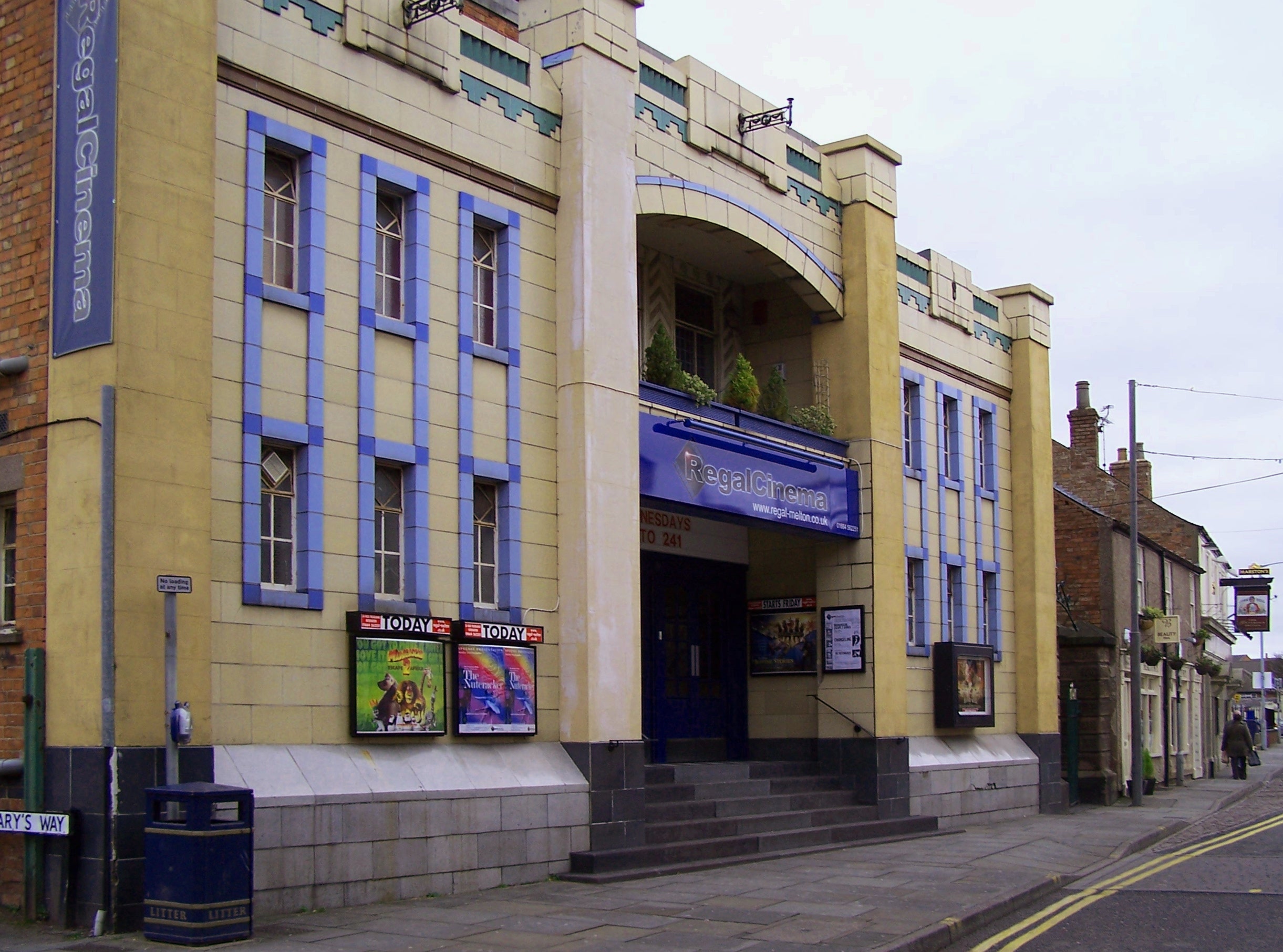
Another story of an historic building saved now, although this one keeps its original purpose - as a cinema. Not only does it remain a film theatre, it also retains its original 1930s Art Deco features both inside and out! With so many Thirties cinemas succumbing to the wrecker's ball, or else being turned into bingo halls and the like, it's wonderful to see one survive in this way.
Nicknamed "the finest cinema in England" the Regal Melton Mowbray now more than lives up to that moniker thanks the hard work and investment of the local community and owners past and present. All of them have obviously appreciated the striking Art Deco facade and the general history of the building and I'm pleased to see that this has been added to on the inside with many existing fittings refurbished and sympathetic additions put in elsewhere.
From facing bankruptcy and closure to now reopening in its full glory this latest episode in the history of the Regal Cinema has rightly been described as a "whirlwind" but one that has resulted in a gem of a building being saved by the local community, its function preserved for the town's future enjoyment. A hearty "well done" to everyone involved - it's great to see what can be achieved when local people pull together. It is certainly is a splendid cinema you've got there, Melton Mowbray - I'm rather jealous!
Thursday, 19 July 2012
Riders of the lost Art
I've had the idea for this post buzzing around my head for some time now, having come across several motorbikes I really like the look of (and think you would too) - both real and imaginary. Time to get them off my mind and into this blog!
![]() |
| Dad's last classic 'bike, a 1960 AJS. Sold in 1997, sadly. |
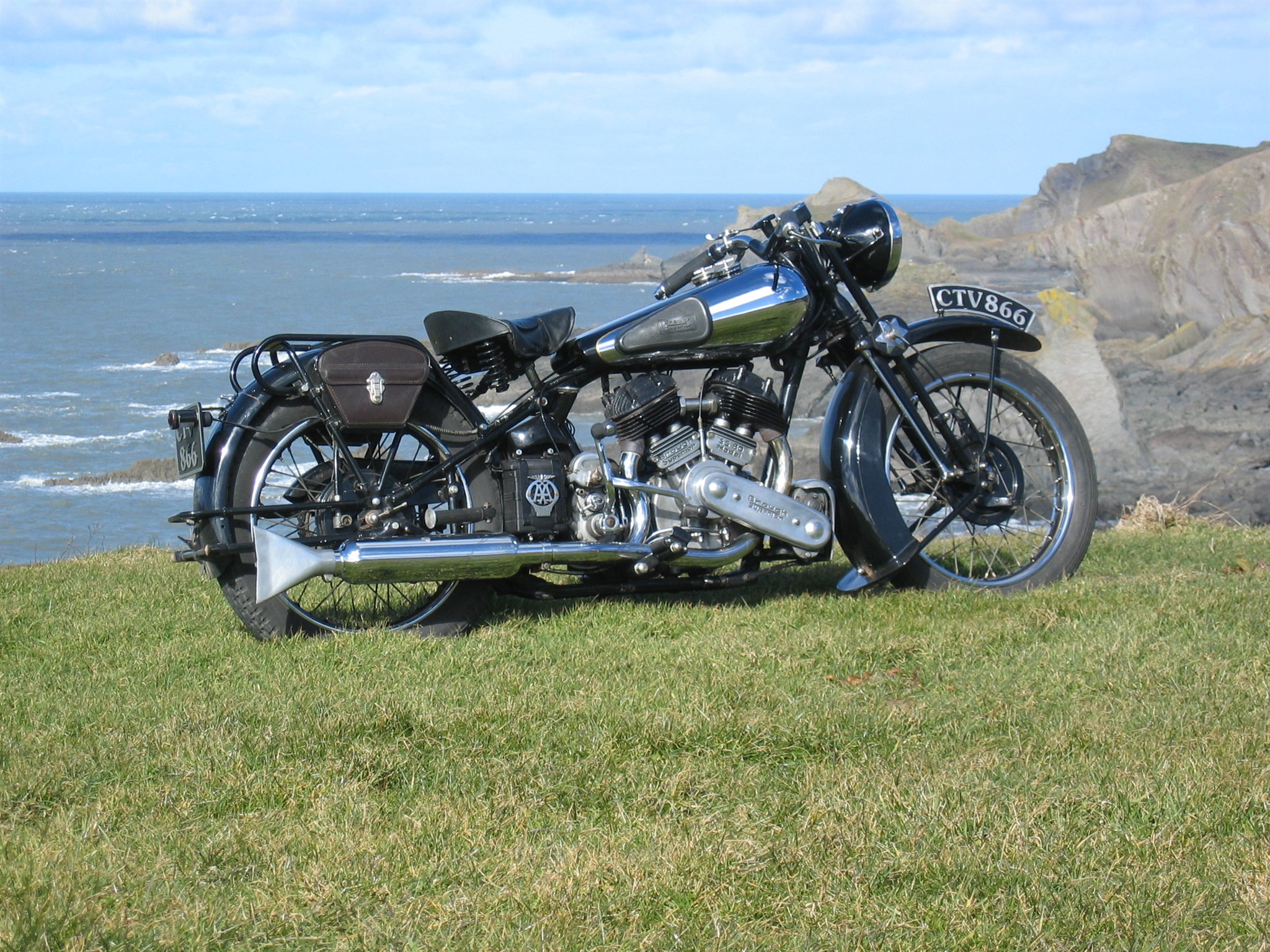
Motorcycles aren't really my area of expertise (I prefer my vehicles to have at least 3 wheels under them!); they come more within the purview of my father, who's been riding the things since the 1960s. Being mechanical objects I have a passing interest in them but with these modern 'bikes I couldn't tell a Honda from a Hayabusa. I much prefer motorbikes from the first half of the 20th century (naturally!), particularly the classic-styled British makes of which there were so many - Ariel, BSA, Matchless, Royal Enfield, Rudge and Vincent to name but a few. Not to mention "the Rolls-Royce of motorcycles" - the Brough Superior (T. E. Lawrence's motorbike of choice and the type on which he met his death). | source |
It is still possible to find some vintage-style motorcycles among the mass of plastic-clad, sport-position superbikes if you look hard enough. These examples in particular take my fancy:
Triumph Thruxton
| source |
Triumph is a justly famous name in British motoring history, dating back to 1902, and today Triumph Motorcyles Limited is the largest remaining UK motorbike manufacturer (although its present incarnation only really dates back to 1983 when the original Triumph company went into receivership and the rights to the name were bought by British entrepreneur John Bloor). Their range of 'bikes is impressive but are generally sporting and look to the future (Tiger, Speed, Street, Daytona, Sprint and Trophy), the immediate past (Bonneville and Scrambler) or across the Pond to the cruiser style of America (America, Rocket III, Speedmaster and Thunderbird). Only one model really stands out to me and that is - the Thruxton. Unashamedly retro its style harks back to the café racers of the 1960s - just the sort of 'bike my dad would have coveted, I should think. One of the classic designs from the end of an era.
Royal Enfield
A classic British motorcycle manufacturer as mentioned previously, Royal Enfield lives on - in India. Originally an offshoot of the British Royal Enfield company, who set up an Indian operation in Madras during the 1950s (originally to supply the Indian police), Royal Enfield (India) has been in business ever since outlasting even its parent company (which closed its doors in 1971). Now thanks to various investments Royal Enfields are once again available to buy in Britain. Some models have hardly altered in style since their British heyday, and my picks would be the Bullet Classic Chrome (also available in Battle Green and Desert Sand for the Army re-enactors amongst you!) or the Bullet Electra Deluxe
| Royal Enfield Bullet Classic Chrome |
| Royal Enfield Battle Green Bullet Classic (also in Desert Sand Beige) |
| Royal Enfield Electra DL |
Indian Chief Classic
From one sort of Indian motorcycle to another now. While Harley-Davidson is arguably the most well-known of the American cruisers, their modern offerings have always seemed a trifle too "butch" (for want of a better word) for my taste and it can't be denied that the 'bikes tend to conjure up images of Hell's Angels and the like. (Born to be Mild, that's me!).
| source |
No, for me it has to be that other great American motorcycle manufacturer - Indian. The equal of Harley-Davidson for the first half of the 20th century, Indian's fortunes declined and the original company went bankrupt in 1953. Numerous abortive attempts to resurrect the brand were made between then and 2006, when a new Indian Motorcycle Company was formed (oddly enough with the help of a London-based private equity firm but since 2011 under American ownership). Early days, then, but judging by the look of their current 3-bike range I think they should do well. I certainly hope so! The Indian Chief Classic is definitely my favourite. I can't resist wheel spats (but draw the line at the tasselled saddle and bags of the Vintage and Dark Horse models)!
Orphiro
Never heard of them? Neither had I until I did this post. Dutch firm Orphiro looks to be a very interesting company; one to keep an eye on. Their prototype electric motorcycle embodies an ethos I have spoken warmly about in the past - the merging of vintage design with modern practices. With this remarkably well-fashioned cruiser-style 'bike Ophiro makes electric motorcycling look incredibly attractive. Hopefully the technology will prove to be a match for the design, but for now - I like it a lot!
| source |
So from the current motorcycles that would sit in my dream garage I'll now turn to some of the beautiful and unusual designs that existed during my favourite decades.
1929 Majestic
| Image by Paul d’Orléans, courtesy of Bike |
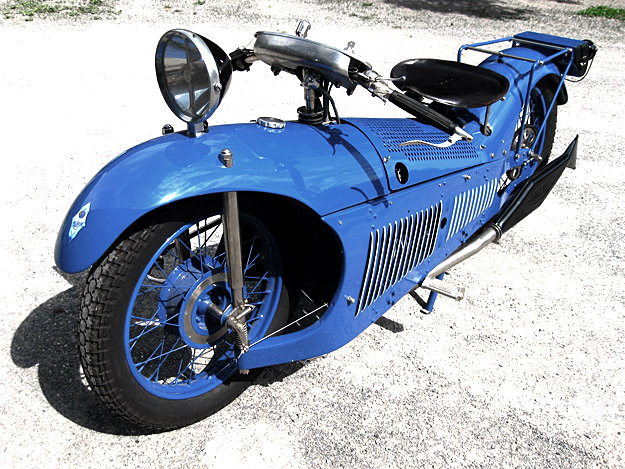
Without a doubt one of the most beautiful examples of the Art Deco æsthetic ever applied to a motorcycle the 1929 Majestic could only ever have come from the country that first brought us that wonderful design movement - France. Incredibly advanced for its time, with a riding position more akin to modern sports 'bikes, the Majestic is one of the earliest examples of motorcycle streamlining.
1934 BMW R7
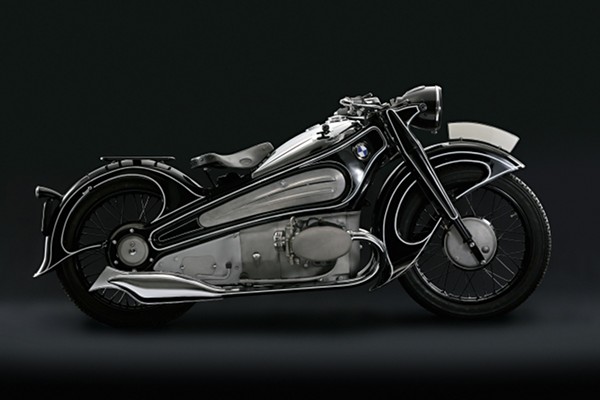
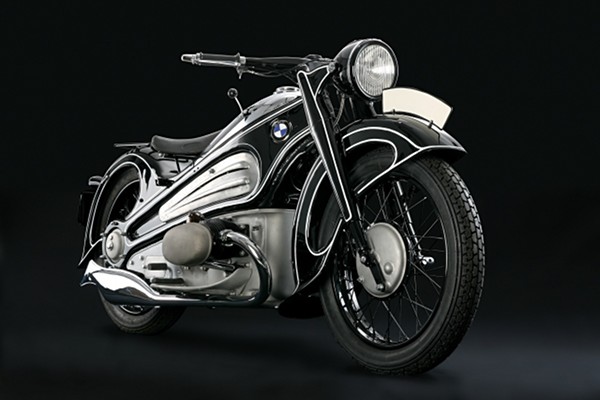
BMW have been making motorcycles for longer than it has been making cars, starting production of two-wheelers in 1923 (five years before their first car). Today BMW Motorrad is a hugely successful arm of the Bavarian company and during the 1930s BMW motorbikes were the equal of many of the British makes. The 1934 R7 was a prototype intended to show the future mechanical and design direction BMW's 'bikes were going to take. Foreshadowing the "all-in-one" body design that was to become the norm in future decades and with many highly-advanced features the R7 made liberal use of the Art Deco style, a style that was perfectly suited to this fast, modern motorcycle.
| source |
Only the one prototype was ever produced, however, due to the prohibitive costs which Depression-hit BMW could not afford. This brutally gorgeous one-off was cannibalised of its parts for production BMWs with the remaining 70% packed away in a crate. It was not until 2005 that it was uncovered, in shockingly bad condition (rust had taken hold of much of it exacerbated by the battery which had split open and left corroded acid all over the place).
| source |
Fortunately BMW knew the historical value of the R7 and with help of BMW Archives, who still held the original drawings and blueprints, their specialists were able to painstakingly rebuild and restore the R7. The result, which took 3 years of hard work, you can see here.
1936 Henderson
| source |
A one-off custom build that looks like it would be at home in a pulp story, this amazing motorcycle started life as a standard 1930 Henderson (another American motorbike maker, from 1912-31) before it was mind-blowingly altered by an O. Ray Courtney in 1936. It has been restored by Frank Westfall out of Syracuse, New York. Who if you ask me is a very lucky man to have such a lovely - and completely, if somewhat unwieldily useable - machine. If the Majestic was the beginning of Art Deco streamlining on motorbikes, the Henderson is surely the last word.
| source |
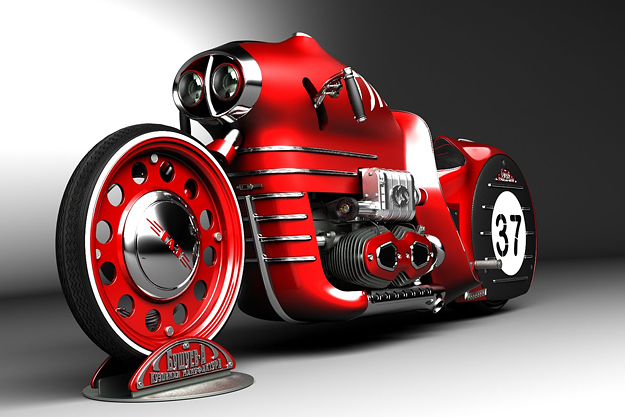
Finally, having waxed lyrical on a subject mechanical again (funny how these sort of posts end up more like essays!), I leave you with a few examples of motorcycles from the imagination. Steampunk and Dieselpunk designs that exist on paper, or as static displays, and which may well not even function as a motorbike were they to be produced but which nevertheless amaze and astound in equal measure.
| source |
Russian artist Mikhail Smolyanov has designed a whole glut of Steampunk and retrofuturistic motorbikes. To do them all justice would be impossible (and at least double the length of this post - "oh no!", I hear you cry) so I shall direct you to The Retronaut who covered them last year and suggest you have a look at Mikhail's blog if you like what you see.
![]() |
| source |
In a similar vein to Mikhail Smolyanov's Black Widow design, Harley-Davidsons have been customised in the Steampunk æsthetic, like the one above.
All in all, I think I'm going to need a bigger garage!

Monday, 5 September 2011
Cord's grandson honours his work
This year marks the 75th anniversary of what, in my humble opinion, is the most beautifully-designed [American] car there has ever been - the 1936-37 Cord 810/812SC.
As always, there is a healthy fan-cum-drivers club in America today as well as a museum and it is the former which has this year organised its annual run around the Cord 810. I also like the great idea of baseball-style cards being handed out to the local youths of Auburn, Indiana where the cars were originally produced. It's an inspired way of connecting them with an important aspect of [their] motoring history, in a fun and tangible way. Well done to Mr Hummel, and here's hoping the 2011 Auburn Cord Duesenberg reunion was a great success.
The Cord Corporation built it's first car in 1929 - the L-29. This ground-breaking automobile had a front wheel drive layout at a time when every other car in the States was driven from the rear; indeed it was the first such car in America ever and with the exception of the later Cords fwd would not be seen again on a US car until the 1966 Oldsmobile Toronado. The L-29 was produced for 3 years until 1932 before a break of another 3 years whereupon the 810 arrived.
Founder of the Cord Corporation, Erret Lobban Cord, had already bought the Auburn Automobile Company and Duesenberg during 1925-26. Until their untimely demise in 1937 Auburn, Cord and Duesenberg (under the design direction of Gordon M. Buehrig) produced some of arguably the best looking cars of the decade, such as the Auburn 851 Speedster and Duesenberg Model J (below).
The Cord 810 was another innovative design. Front-wheel drive again, it was the first car anywhere in the world with retractable "pop-up" headlights (which were actually originally landing-lights from a light aircraft, and were operated by two hand cranks inside the car). Other pioneering features included electrically-operated variable-speed windscreen wipers and a radio as standard (the latter offering not seen again for another 20 years).
The next year, 1937, saw the introduced of the supercharged 812, which would prove to be the last hurrah for E.L. Cord's empire. No other car so perfectly captures the 1930s aesthetic of Art Deco/ Streamline Moderne and the glitz & glamour that such designs continue to evoke. An example of the Cord 810 was later displayed in the New York Museum of Modern Art, surely forever answering the question "Can a car be art?".
Monday, 21 February 2011
'Rocketeer Adventures' miniseries prepares for lift-off
For fans of pulp comics The Rocketeer is a familiar and worthy addition to the genre and its illustrator, the late Dave Stevens, a highly regarded artist and writer who is much missed.
Unlike The Shadow, The Phantom, Doc Savage, Buck Rogers or Flash Gordon The Rocketeer came in late to the pulp fiction party, having been created by Stevens in 1982. However with its great 1930s setting and proper pulp feel to the stories (heavily influenced by the Rocketmen serials of the 1950s, which I've mentioned previously, as well as pin-up models of the time such as Bettie Page, the likes of whom Stevens enjoyed drawing too) it quickly earned its place in the pantheon of comic book superheroes.
I love the 1930s Art Deco vibe that Stevens was able to capture so well; the stories are classic examples of good old-fashioned derring-do, there's a pretty girl, dastardly villains and plenty of flying both with and without aeroplanes. For me, the Rocketeer has everything!
Rocketeer stories continued to appear throughout the remainder of the 1980s and 1990s and even led to a live-action Disney feature film in 1991 (which I have also mentioned previously is one of my all-time favourite films). Sadly the film was not a great success and no further Rocketeeer stories were produced after 1995. Even more tragically Dave Stevens died from leukemia in 2008, seemingly putting paid to any new Rocketeer adventures.
It was with great delight, therefore, when I heard recently that the copyright holder IDW Publishing had approached several of Dave Stevens' peers with the view of having them pen some new stories, illustrated in a style sympathetic to Stevens' original artwork.
A new series of 1930s-style comic book adventures seems almost too good to be true, but this article confirms it - soon there will be more exciting adventures of the Rocketeer to thrill and amaze us. I can hardly wait!
Saturday, 19 February 2011
Brighton Belle Pullman returns
Happy news for those of us who are fans of 1930s-style Art Deco luxury travel (even if we may never be able to afford it ourselves!) with this report from the B.B.C. detailing the plan to restore the famous Brighton Belle Pullman engine that first ran almost 80 years ago.
Although not a steam engine it deserves an honourable mention, and certainly preservation, for being the first example of an all-electric Pullman service anywhere in the world when it began travelling up and down the Southern Railway in 1934. The carriages are the last word in beautifully opulent Thirties design and many of them have since found their way onto the current Venice-Simplon Orient Express service (above).
Sadly upon the service's closure in 1972 the engine cars were allowed to go to ruin (left) until a special preservation trust was set up in 2008 with the intention of restoring the service to its former glory. Work apparently started in 2009 and the intention is that 5 engine cars will be completely renovated over the coming years, with one maybe running in time for the 2012 Olympics!
The Brighton Belle was a watershed in the history of locomotion as well as a shining example of 1930s luxury and travel ethos. It's great to see an effort being made to put these delightful pioneers back onto the tracks. I wish the Trust every success and hope that one day I, and many others, may be lucky enough to travel on one of their Pullman services.
Monday, 14 February 2011
Vintage look for Jersey Airport
This is a rare event - a building being redesigned to look the way it did when it first opened. The fact that the building in question is Jersey Airport's Art Deco 1937 terminal makes it even more of a welcome occasion.
With the bulky and ugly Seventies additions removed the geometric lines of the arrivals building will once again be visible for all to see and appreciate, hopefully for a long time to come thanks to the planning authority arranging for listed status.
Jersey may be one of the smaller airports in the grand scheme of things and so be more readily able to accommodate such a change (not to mention lucky to have the original building still standing) but it is still a great triumph for a beautiful design style, applied to such a commercial building. If only more airports could look like this, travelling might not be such an unpleasant experience. In fact I feel a trip to Jersey coming on right now!
Thursday, 30 December 2010
A World's Fair look into the future
This originally came to my attention last week just after I had posted my "last blog before Christmas", so I held it back until now. It seems more fitting to do a post about retro-futurism as the new year looms, anyway.
We mostly look back now at these visions of the future with a mixture of derision and regret. By applying Thirties Modernism to conjure up an idea of the future as it then was these fairs created buildings, machines and furniture in a style that appeals to us vintage fans today. Streamlining, geometric lines, dark woods mixed with metals and giant domes and spires makes what we have today look cheap and staid by comparison and leaves us wondering - why couldn't it be like that now? On the other hand the idea of a smoking robot housekeeper is a rather far-fetched bit of silliness. Still, this is what retro-futurism is all about - to us, some aspects of the present haven't turned out as well as forefathers envisioned they would, so we look back and marvel at some of the designs and inventions that people 70 or 80 years ago thought we would be using today.
It remains in a sense a snapshot of the period for, although this was a glimpse into the future, it was done using the styles of the time so it is only the past's idea of another age (confused yet?). However you choose to look at it though there's no denying that they were amazing yet sadly unfulfilled flights of fancy.
Tuesday, 30 November 2010
Historic wooden car floated at auction
Historic wooden car floated at auctionWood has long been used as part of automobile manufacturing, although these days it tends to be reserved for the dashboards of higher-end luxury cars. The exceptions to this rule are the likes of Morgan, who still use ash wood as part of the frame in their cars, Rolls-Royce - whose Phantom Drophead Coupe has teak decking as part of the roof-covering mechanism - and the bizarre Splinter concept from a couple of years ago. It's all a long way from the old Morris Minor Traveller of the 1960s, isn't it?
Long before that, though, wood was being used in abundance in car design. Wood was plentiful, surprisingly strong yet able to be made into various shapes and in any number of sizes. The nautical look was also popular in the first three decades of the twentieth century as car makers tried to create a link between the then-luxuries of motoring and sailing. Sea-faring terms like "boat-tail" and "skiff" were applied to vehicular offerings, such as this ultra-rare (only 5 made) 1914 Rolls-Royce Silver Ghost Labourdette.
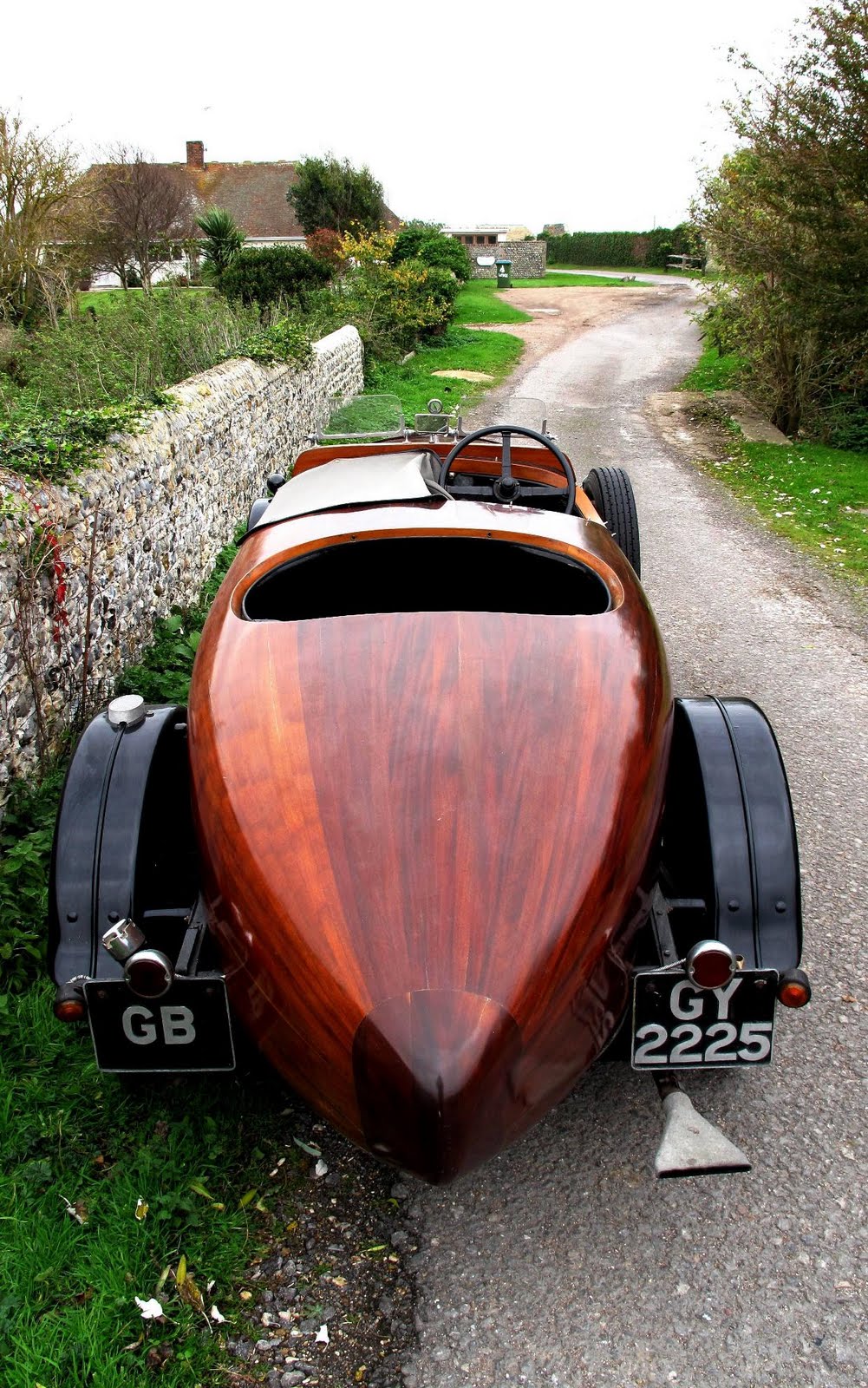
The car that features in this article, a 1932 Talbot, was originally just another normal saloon of standard Thirties design and didn't actually acquire its magnificently-built wooden body until the 1960s. Happily the chap who owned it obviously appreciated the Art Deco design of the period and found himself an immensely talented boat-builder to perform the actual transformation. What resulted is a unique piece of automotive design - even the likes of that Rolls skiff still used metal forward of the windscreen, whereas this Talbot's body is wood from the grille to the tail-light.

I find it hard to believe that such a beautifully skilled piece of construction is only estimated to make between £20,000 and £30,000 at auction (says the man who would struggle to afford a tenth of that right now!) and I wouldn't be at all surprised to see it easily exceed the higher figure. Whoever ends up buying it, I hope he enjoys varnishing!
Saturday, 9 October 2010
First Queen Elizabeth liner seen in archive film
I've always had a hankering to go on a transatlantic ocean journey on a luxury liner, in such a fashion as was popular during the inter-war years. Art Deco staterooms, dressing for dinner, the Captain's table, dancing to live music, deck chairs and ship-board games - who wouldn't rather that than 10 hours crammed into a winged tube 30,000ft up?
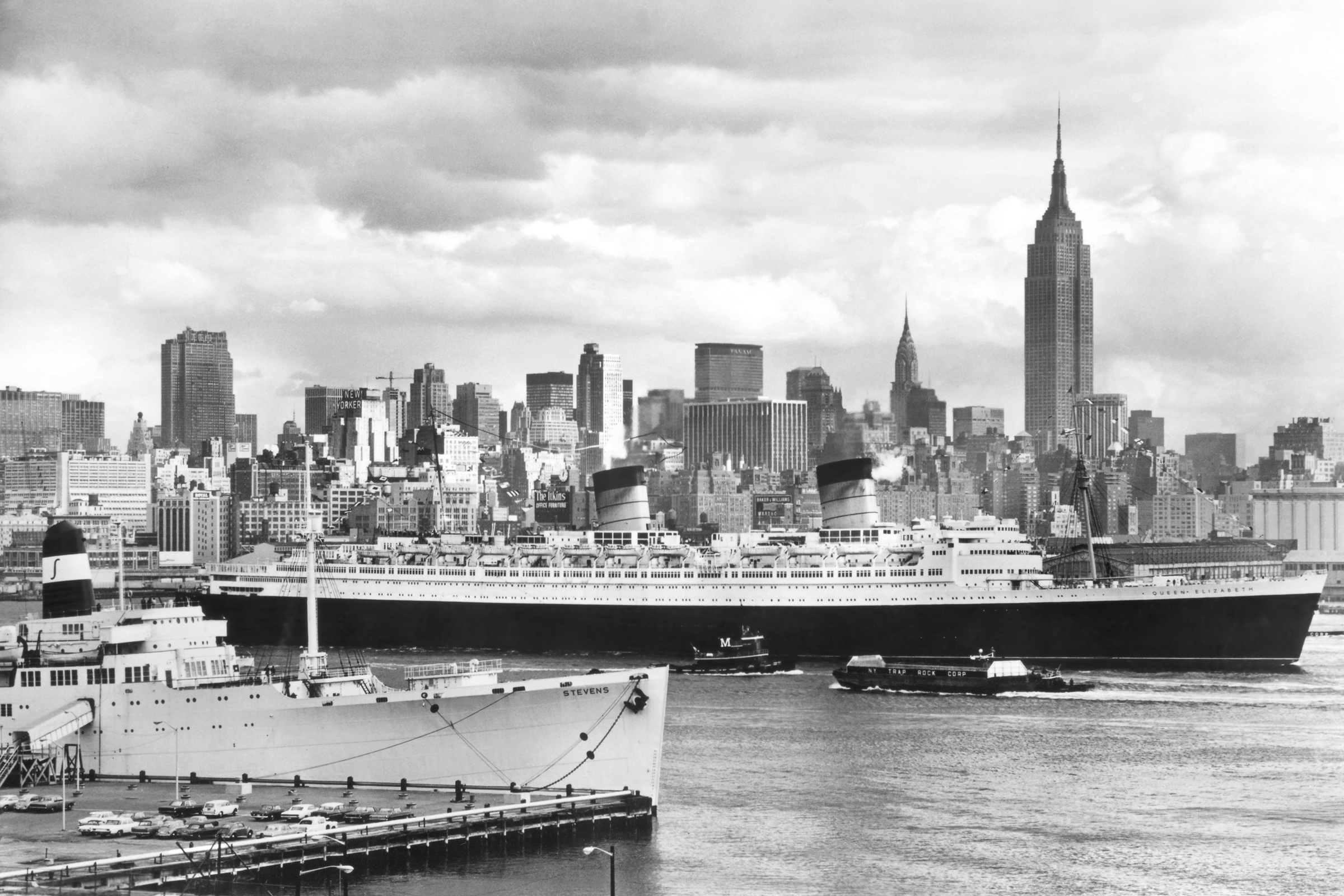
So it has been with great interest that I have been following the development of Cunard's latest ship MS Queen Elizabeth. As part of the celebrations surrounding the completion and naming of this new liner, the BBC has unearthed some old Pathé film of the original RMS Queen Elizabeth, from her naming ceremony in 1938 through to her sad demise in Hong Kong harbour in 1972.
Wednesday, 9 June 2010
Panoz Introduces the Abruzzi at Le Mans
This is the new Abruzzi "Spirit of Le Mans" sports car from the American company Panoz. As well as being an interesting and newsworthy article in its own right it also allows me to talk about another aspect of it that has rather bothered me. This might turn into a rant, but anyway here goes. If you make it to the end, well done, and thanks for sticking with it.
Since it was unveiled at the La Sarthe circuit yesterday the overwhelming response on other blogs, general car forums and comment pages of the Internet has, as far as I can make out, been almost entirely negative. I seem to be in a minority of one in really liking this car. The main bone of contention appears to be the design, particularly of the front. Now, I appreciate that style, beauty etc. is subjective, that one man's meat is another man's poison and all that. People are free to find things attractive or not as they please, and tell others accordingly. What I dislike, and what appears to be the case in the majority of critiques so far, is the vitriolic fervour in which people have attacked this car, disparaged and dismissed it, without having said why they don't like it.
Let me go on record here: I like the Panoz Abruzzi. There, I said it. Now, however, I am going to do what no-one else seems to have done and qualify that statement.
I really like this car for a number of reasons. First, it is different. It is not your usual run-of-the-mill Porsche, Ferrari or Lamborghini. In this world of dull conglomerates, mediocre products and amorphous designs something as extreme as this should be welcomed and admired as a refreshing break from the norm. Even if I were not taken by the design of this car I would still appreciate it as a unique departure from the supercar template and respect the company for having the courage to make it. It has been my experience that the very fact alone of something being different from what people expect and are used to seeing is excuse enough to condemn it with no further consideration. It is an almost knee-jerk reaction by beigist people who have been brought up to accept the uninspiring designs foisted upon us by faceless corporations.
This leads me on to another point - people seem to have lost that wonderful British trait of supporting the underdog. They have been blinded by the commercial glare of the big, popular brands. The selfish attitude dominates. Nowadays it is all to easy for people to attack the little man, the Davids of this world, to say that it is not worth supporting the smaller concerns, that there is no point and no chance of success. Well I don't agree - I still root for the underdog and I'm proud to defend and cheer on companies like Panoz who wish to plough their own furrow.
Back to the design and to me there is a strong retro-futurist element in the look of this car and even perhaps a hint of Art Deco, which appeals to me greatly. Some of the [slightly] more constructive comments I've read often compare it to the early Batmobiles and to an extent I agree. That is another one of the reasons why I like it so much. It also reminds me of some of the "Cars of the Future" concepts that the big American companies put out in the late 1940s and early 1950s. Except in this case it is no concept but a fully production-ready car, albeit in tiny numbers. In their rush to censure this car many people have also overlooked the technical aspects. The fact that it is made of recyclable material that is nevertheless still as strong and adaptable as carbon fibre, or that that front end goes some way to aiding the remarkable cooling processes employed by this car. Once again people betray their superficial ideals by ignoring these factors and rush into making cheap shots at the car's looks.
Well, that's about all I have to say on that. I think the fact that this has been my longest post so far goes some way to explaining how strongly I feel about this sort of thing and I hope you have found it interesting too, dear reader.
Followers
Popular Posts
-
I rather fancy it's time for another Captain Hastings/Style Icon post, but this time with a twist! I think that, by way of a change, I ...
-
The starting of a new job seems to have coincided with a bit of a downturn in vintage news (not to mention my third cold in as many months!)...
-
Supermarine S5 replica project gets under way Staying with the 1930s aviation theme in this post we move from one end of the aeronautical...
-
Classic car firm Morgan building new three-wheeler after gap of 60 years Morgan is by far and away my favourite motor manufacturer so it was...
-
Second in the style icon stakes after Fred Astaire must surely be Mr Archie Leach - a.k.a Cary Grant. All images courtesy of Doctor Macr...
-
Model of new Routemaster London bus unveiled A few months ago I blogged the news that the winning design for the new London Routemaster b...
-
Rare photographs of comedian Stan Laurel are auctioned I make no secret of my love for the films of Laurel & Hardy, so it was with great...
-
Coming to you a week later than intended (sorry about that!), the third of the Film Friday: Gangsters series - Howard Hughes gritty prod...
-
Vintage Rolls-Royces honour Spirit of Ecstasy by itnnews Another car manufacturer, another anniversary. This time it is the renowned lu...
-
source - Wikimedia Commons / Hurtan-club.de Shop Makes Modern Jeep Wranglers Look Like Weird 1930s Off-Roaders Well, as I sit out in the dap...