Showing posts with label Curtiss. Show all posts

Friday, 24 March 2023

Bessie Coleman, pioneering pilot, now has her own Barbie


Well, this is something I never thought I'd be blogging about.  Not that I'm an expert on such things as dolls, you understand (although while we're at it, who else remember Sindy?).  Anyway, this is more a case of the subject within a subject being of interest (hopefully!) to my readers, with the news that Mattel, maker of the Barbie doll, has honoured one of the pioneers of early aviation with the latest addition to their range.

source - Wikimedia Commons

The aviatrix in question is Elizabeth "Bessie" Coleman, who made history in 1921 when she became the first black person to obtain an international pilot's licence.  Her story is one that frankly deserves more recognition and I can only hope that this acknowledgement by Mattel goes some way towards achieving that.  

Born in Atlanta, Texas in 1892 Bessie Coleman seemed all set to follow in her parents' footsteps as a cotton picker.  However from an early age she proved to be an academic student, fond of reading and a whizz at maths, such that she was given a scholarship by the local Baptist church that eventually enabled her to attend what is now the Langston University in Oklahoma.  The money did not last, though, and she was only able to complete a single term before she was forced to return to Texas.

source - Wikimedia Commons/NASA
At the age of 23 Bessie found herself living in Chicago with her brothers, working as a manicurist in a local barbershop.  It was here that she was first exposed to the wonders of early flight, listening to the stories returning air force pilots would tell whilst getting a trim.  Inspired by these thrilling stories she took a second job in a chili restaurant to help pay for flying lessons, despite neither black people nor women being allowed to join flying schools.  Fortunately she was able to gain support from the editor of a Chicago-based African-American newspaper, Robert S. Abbott of the Chicago Defender, and prominent African-American banker Jesse Binga, who between them helped publicise and pay for her flying lessons.  To get over the hurdle of the U.S. flying school bans it was recommended that Coleman travel to France, where there were no such restrictions.  In an early example of her strong-minded and intellectual nature, she immediately attended a French language school in Chicago and having learnt the language promptly left the United States for Europe.  Arriving in Paris at the end of November 1920 she spent the next 6 months learning to fly before finally achieving what no black woman had done before - obtaining a pilot's licence.  Determined to be the best flyer she could, Bessie continued to take flying lessons under the tutelage of an unnamed ex-WW1 French ace before returning to America in September 1921.

Bessie and a Pathé cameraman during a visit to Berlin in 1925
source - New York Public Library

Despite widespread media attention in America at her achievement, Bessie was quick to realise that if she were to make a living as a civilian pilot in her home country then barnstorming was pretty much the only way to go.  Again showing remarkable prudence Coleman, still having found no-one in the U.S. willing to teach her the advanced flying skills she would need, returned to France to undertake further lessons.  Touring Europe she met famous Dutch aircraft designer Anthony Fokker and visited his factory in Germany where she was given more training by the chief test pilot.  Now fully versed in all aspects of advanced flight, she once again returned to the U.S.A. where, billed as "Queen Bess", she wowed crowds around the country in various Curtiss JN-4 "Jenny" biplanes - earning her the well-deserved title of "The World's Greatest Woman Flier".  Resolute in her desire to perform the most difficult stunts and understandably vocal in promoting African-American aviation she toured the country for the next 4 years giving lectures and exhibition flights.  During a visit to Orlando, Florida she befriended a local vicar and his wife, who all but adopted her as a daughter; remaining in Orlando Bessie opened her own beauty parlour with the aim of making enough money to buy her own aeroplane.  

Bessie and one of her Curtiss JN-4's, c.1922
source - Wikimedia Commons

In April 1926 this she finally did, purchasing another Curtiss JN-4 in Dallas, Texas.  Sadly, however, it was this aircraft that would be her downfall.  Bessie was in Jacksonville, Florida, at the time of the purchase so the aeroplane was flown back from Dallas by her 24-year-old mechanic and publicity agent William D. Wills.  He was reportedly forced to land three times along the journey due to the terrible condition the aircraft had been kept in by its previous owner.  Despite its obviously dangerous shortcomings and against all the advice of friends and relatives, Bessie went up (as a passenger) in the Jenny with Wills on the 30th April 1926 to practice for a parachute jump she intended to perform the following day.  At 3,000ft the aircraft suddenly went into an uncontrollable dive and spun into the ground.  Bessie was thrown from the cockpit and sadly died on the ground; Wills was also killed instantly when the Jenny impacted the ground and exploded.  Detailed examination of the wreckage subsequently revealed a wrench for maintaining the engine had been left in the machine, causing the controls to jam.


Bessie Coleman's tragically early death at the age of 34 was, despite her undoubted fame, largely ignored by all but the African-American press.  In spite of this, over ten thousand mourners turned out for her funeral in Chicago and over the many years following she was honoured with several roads, schools and other public buildings being named after her, to say nothing of various museum exhibits, commemorative stamps etc.

Now can be added to that list a Barbie doll designed in her image (I have to admit not seeing much of a likeness, although as I said at the top of this post dolls are not really my metier), with a snappy-looking aviatrix get-up featuring flying suit, boots and initialled cap.  It is splendid to see such a previously-overlooked trailblazer of (black) women's aviation marked in this way and I commend Mattel for choosing to highlight this historically important woman.  If it can also encourage young girls of any colour to take an interest in STEM (Science, Technology, Engineering & Mathematics) Learning and aviation in particular, then so much the better.

Wednesday, 29 January 2014

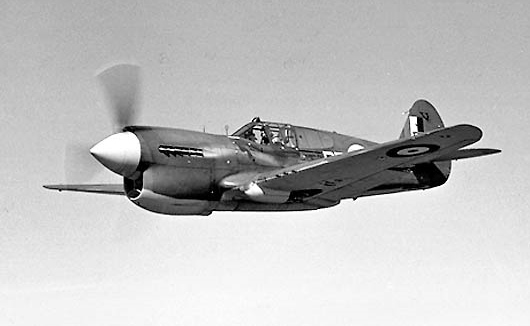
'Flyboys' soar with vintage P-40 Warhawk

source

'Flyboys' soar with vintage P-40 Warhawk 

From the isles of Kent to the hills and plains of San Diego, California now, where a fighter 'plane from a different war has also recently undergone restoration.  In this case it is a 1943 Curtiss P-40E Warhawk that has been rebuilt practically from scratch by the skilled workers and enthusiasts at the San Diego-based restoration company Flyboys Aeroworks.

There's more than just one facet to this story, however.  Not only has an important piece of historical machinery (and a dashed good fighter aircraft to boot) been restored to prime condition, an airframe previously given up to the icy conditions of the Alaskan Aleutian Islands has managed to be salvaged and used as a starting point to bring this particular example back to life.

The team at Flyboys Aeroworks are not your usual retired volunteers, either.  Many of them are apprentice engineering students from the nearby San Diego Mirimar College, putting their knowledge and skills to good use on this project and others like it.  All seem to have an interest in this era, however, and it is splendid to see this manifested in their work. 

Although this particular P-40 is destined for static display at the National WWII Museum in New Orleans the skills needed to restore it are essential for the maintenance and future reconstruction of airworthy examples.  It's also great to read that original 1940s blueprints and equipment were used in the restoration of this P-40.

source

Flyboys Aeroworks to Unveil Newly Restored P-40 Curtiss Warhawk Commissioned by The National WWII Museum in New Orleans

I'm preaching to the converted here but I can't say enough how important it is, for the continued remembrance of our favourite eras, that new and young generations learn the skills needed to keep all aspects of the past alive (and that includes the very skills themselves).  It is people like those at Flyboys, or - as also recently reported - at the Severn Valley Railway's forthcoming Heritage Skills Training Academy, who help to maintain these ageing machines and ensure that they can continue performing at the events we all enjoy (rather than just becoming museum relics, or words and pictures on a page).  I'm sure you'll all agree with me when I say we owe them (and those training them) a debt of gratitude and I hope we shall see many more similar setups in the future (and here's wishing Flyboys the best of luck with their next project). 

I would go so far as to say it is almost a duty for those of us with an interest in fast-receding eras to involve ourselves as best we can in helping to ensure those times aren't forgotten, and where possible pass on our enthusiasm to those young minds interested in and receptive to finding out more about the past.  I'm not usually one for New Year resolutions (and with the first month gone already, I'm a little late!) but these two articles have inspired me to try to get to more museums and events this year - maybe even volunteer where I can - and hopefully do a bit more to keep the spirit of bygone ages alive.

Friday, 11 May 2012

WWII fighter plane found preserved in the Sahara


WWII fighter plane found preserved in the Sahara

Hot on the heels of the twenty Spitfires discovered in Burma comes this equally remarkable, albeit far more bittersweet, story of a lone Curtiss P-40 Kittyhawk that has been found in the Sahara desert.

Despite having crash-landed on the sand 70 years ago the aircraft is apparently in very good condition overall, the result of laying undisturbed in the dry and rarefied atmosphere of the Sahara for the last seven decades.

An important machine to many air forces, particularly with the famous "Flying Tigers" of the Chinese Air Force in 1941-42 and the USAAF in the first months of the Pacific campaign (as well as with the RAAF & RNZAF later in the same theatre), the Kittyhawk (and earlier Tomahawk) was also used in large numbers by the RAF in North Africa as part of the Desert Air Force.  Considered superior to the Hurricane and early marks of Spitfire in the dusty, arid conditions of the desert the Kittyhawk was the main Allied fighter aircraft in the North African theatre for several months of 1941-42.


World War II RAF Kittyhawk fighter plane found in the Sahara Desert in Egypt

It was in one of these RAF Kittyhawks that Flight Sergeant Dennis Copping (a native of my nearby town of Southend) was flying on the 24th June 1942 when he got in to trouble - probably lost - and was forced to belly-land many miles from civilisation.  Now, 70 years after he and his aircraft were last seen, the discovery of his crashed aircraft, discarded parachute and wireless equipment tell the sad story of what happened to him.  It seems fairly certain that having failed to summon help by radio he made a futile attempt to reach the nearest settlement but succumbed to the harshness of the desert.

Now this chance discovery has set the historic aviation world a-twitter and work is already underway to return the Kittyhawk to the UK for it to be put on display at the RAF Museum in Hendon.  A search is also being carried out for the remains of Flt. Sgt. Copping and it is to be hoped that, if he is found, he will be repatriated along with his aircraft or at the very least given a proper military burial.  It would also be nice if his aeroplane - restored or not - were kept as a permanent memorial to the man.  Although I can understand the feelings of some who think it should be left where it is (particularly if F/S Copping isn't found) as a sort of war grave, the ever-present threat of trophy-hunters and scrap merchants makes such a course of action undesirable.

World War II fighter found in Egyptian desert

Whether or not the pilot is found the momentous discovery of this aircraft has at least answered the question of what became of him and his memory can be forever honoured by the display of his Kittyhawk, an important historical find on its own and a fine tribute to the man.

Thursday, 5 January 2012

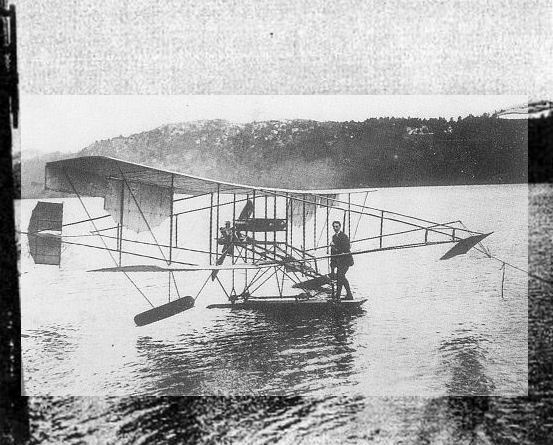
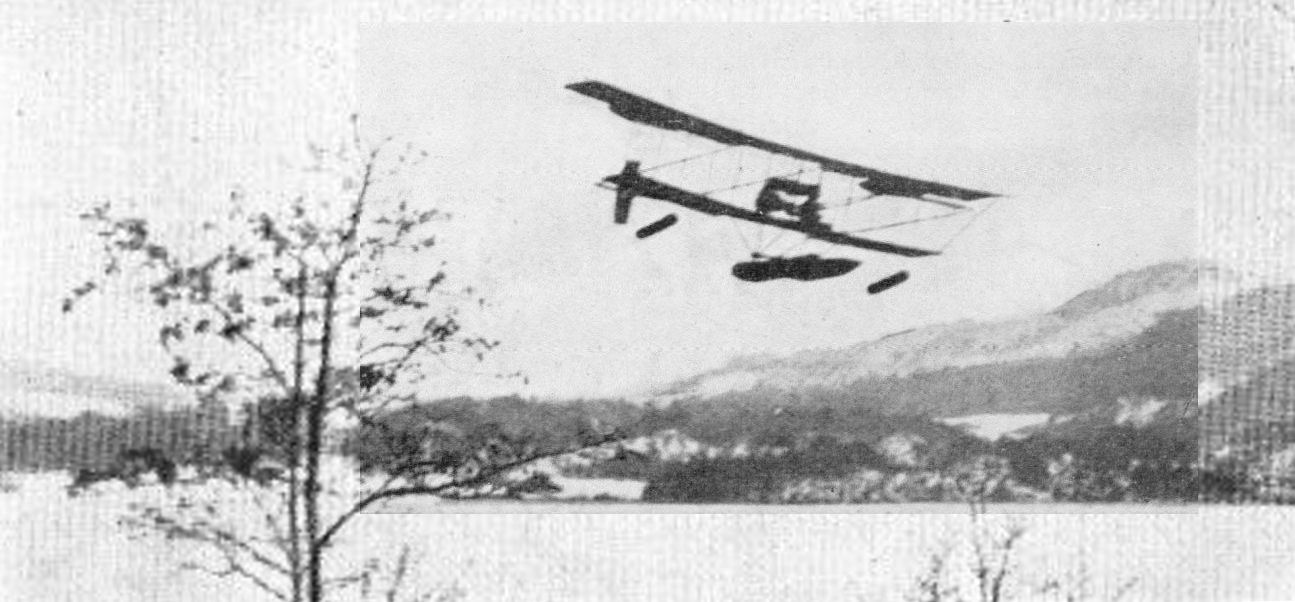
Britain's first seaplane to fly again as enthusiasts make replica of Waterbird

Images courtesy of flyingmachines.ru
Britain's first seaplane to fly again as enthusiasts make replica of Waterbird

I have "Richard Hannay" of the excellent blog Electric Edwardians to thank for making me aware of this fantastic article.  His site is a wonderful resource of pictures and information about the buildings, machines and related occurrences during the 1910s.

One hundred years ago, less than a decade after the Wright Brothers' first flight at Kitty Hawk, British aviation pioneers A. V. Roe (later to become Avro, creator of the Lancaster and Vulcan bombers amongst others) became the first company in the United Kingdom to successfully build and fly a seaplane - the A. V. Roe Curtiss-type "Waterbird".


Now I'm very pleased to see that local aviation enthusiasts have not only marked the centenary of the first flight at Lake Windermere on the 25th November 1911, but also intend to build a replica of the Waterbird and actually fly it!  To see such an important landmark in British aviation remembered in this fashion is splendid and everyone involved is to be congratulated - I hope the necessary funds to finish the aircraft are forthcoming.  It is indeed a good thing that this early trailblazing flight is not forgotten and is appreciated by a new generation and what better way to ensure that than with a working, flying example of the machine.  It would be a wonderful sight to see the Waterbird take to the skies - and the water - again, a century after its first foray across Windermere.  Best of luck, chaps!

Followers

Popular Posts