Showing posts with label charity shop. Show all posts

Sunday, 11 June 2023

Of Aristocrats and Good Companions (plus other "types" of news)


I wrote the above typecast back at the beginning of April, which shows just how much life intervened that I am only just now able to get round to posting it here!  Those 78s will have to wait for another day, I think, as instead I intend to focus on the aforementioned Empire Aristocrat - as well as a couple of more recent arrivals.  Sprinkled around them will also be some more typewriter-related news stories that I hope will be of interest.

Let's have a closer look at this first little typer that I bagged at the beginning of the year from a local garden/ antiques centre.  I clocked it almost as soon as we went in (my typer-sense is now well-honed enough to spot even the smallest of machines sitting among the usual vintage/ antique fare!) even though its case was in place and therefore the machine itself not visible.  It may have been the £20 price tag that piqued my interest further and on removing the lid I felt it more than justified the sum.  A quick Google seemed to confirm it so after a brief test (as always seems to be the case in these instances) I passed over the lolly and returned home a happy chap.  As mentioned I've found it a lovely little thing, with just one or two little foibles since discovered (such as a slightly recalcitrant spacebar) that I hope to iron out with practice over the coming year.

To show how behind I am with the posting of interesting articles, this one has been sitting in my drafts since February 2021 (and that's not even the oldest one - there are some going back to 2020 that I need to get round to posting!).  Still, the subject suits this post and I am sure the young fellow mentioned in it is still repairing typewriters in the Tamarac, FL area and continuing to plough his own furrow as an "old soul at heart".  Here we see again a phrase I'm sure we're all more than familiar with and which no doubt has been directed at ourselves more than once, along with the feeling (whether through our own emotions and actions or ascribed to us by others) of somehow being a reincarnation or just "born in the wrong time".  In any event, this has led to (the by now) 20-year-old Patton Horton already being a de facto professional typewriter repairman judging by this news item.  To take on a 100-year-old Oliver 9 as one of your first jobs shows a great deal of promise and kudos must also go to the Our Backyard Museum (which looks well worth a visit!) for having the faith and open-mindedness to let the plucky lad take on the challenge of fixing it.  I hope he makes a success of what is obviously a passionate hobby for him and that he continues to find pleasure and enlightenment in the vintage lifestyle that he has chosen to pursue. 

A 1952 Remington Quiet-Riter, similar to one owned by Maximilian Wein
source - Flickr/mpclemens


The future maintenance of typewriters (plus early PCs and laptops) in Lansdale, Pennsylvania seems assured if this next article is anything to go by, featuring another teenager who has been bitten by the typewriter bug and looks to have the skills necessary to ensure their survival.  It is splendid to read of Max Wein's enthusiasm for his hobby - which I am sure, as he says, will become a lifetime's interest - his appreciation of its tangible link to times past and how he manages to successfully integrate it into his schooling.  Stories like this continue to show that typewriters, not to mention early computers, still have a purpose and can be used as they were intended.  I salute young Mr Wein and wish him well as he starts his journey into the world of typewriters and related "obsolete" technology.


Type-ins are still going strong across the Pond - or at least in Albuquerque, NM, where the brilliantly-named ABQwerty Type Writer Society holds regular events at a local library according to this article.  One of the founder members, Joe Van Cleave (a well-known name in the typosphere, I believe), is the main subject of the piece and once again it is clear that we are dealing with a true typewriter enthusiast.  A splendid collection of typers adorns Mr Van Cleave's home and judging from things he has been a driving force behind the local type-ins and the resurgence of typewriters and typecasting on the Internet in general.  Long may he continue to be so and I look forward to hearing more of his influence, both in New Mexico and further afield, as we are sure to do.

We're I ever to attend a type-in in the UK (and believe me, if I knew of any within striking distance I would be off like a shot) I would now be somewhat spoilt for choice of which machine(s) to take along, as my collection of portable typewriters has doubled in this year alone thanks not only to the Aristocrat but also two more that both came into my possession within days of each other.  That they are both the same model would, I fear, be something only really understood by true collectors(!), although the lay-person should notice some differences as well.

To start at the beginning I have always been what I call an "Imperial Man", inasmuch as I tend to focus my attention (so far!) on typewriters manufactured by Imperial Typewriters Ltd. of Leicester.  I suppose this is because the first typer I encountered was the 1956 Model 66 that Dad brought home from work one day when the company was going to throw it out as being "beyond economical repair".  It has always been a part of my life and started me on the road to being... well, I suppose a collector(!), so Imperials have always been my first passion.  That they are sturdy, well-made British machines (even the portables!) that epitomise the style and mechanical design of their 1930s heyday merely adds to their appeal for me.  Thus is my affection for British-made Imperials of the 1930s-50s.  However, with space even in a 3-bedroom house at a premium and my strength not up to hefting weighty desktop models about, my focus recently switched to the portables and in particular the "Good Companion" models of the '30s & '40s.  Having done some research I established that, over the years from its introduction in 1932 to its final iteration in 1957, the original Model No. 1 went through several changes during its lifetime.  Clearly one could go overboard collecting versions from every single year and easily fill one's home with Good Companions and nothing else, so I decided early on to keep it simple and get an early model with white keys and a later one with black keys.  I bided my time and kept my eyes peeled at local vintage fairs and on eBay.  On the latter I missed out on several examples (as one does) but my hopes remained buoyant and one day two weeks ago my perseverance paid off and a deal was struck on eBay for a black-keyed No. 1 in good condition, complete with some original accessories including cleaning brush, oil can, cleaning fluid bottle (empty), ribbon tin (with a "dead" ribbon!) and leather carry pouch (so dry and cracked I feared for it, however liberal applications of lanolin and leather restoring cream have managed to bring some life back to it).  The machine itself seems to be in working order but in need of a good clean and what service my little knowledge can provide.  New ribbons have also been procured and await fitting.

You'll notice I put "ribbons".  Well not two days after I had sealed the deal for the first one (and before it had even arrived), the very second one I was after crossed my path in one of those serendipitous events that sometimes makes you wonder about a Higher Power.  On a fleeting weekend outing to Rochester, Mrs P-P and I were returning to the car when we passed a charity shop that we had clocked at the beginning of our visit.  A lovely, typical old chazza that is now sadly becoming all too rare (an Aladdin's Cave-cum-Tardis of items - that now tend to be the preserve of specific vintage emporia - slung all over the place) its siren call made us want to stop in even though our parking ticket was on the point of expiration.  And there, just inside the door and partly hidden behind some wooden packing cases and a fencing mask (so as to discourage [little ]people from playing with it, so the lady behind the till informed me (and a not unreasonable idea as I'm sure many collectors will know), was an early-model No. 1 with white keys!).  Following a quick request to test it out (and the removal of the aforementioned impediments) and an equally quick zoom around the rest of the shop to check it out and have a think, the decision was made, money changed hands, the wife ran off to get the car and my quest was complete.  Two 1930s Imperial Good Companion No. 1s - one with black keys and one with white - were mine!

If anything the second one - a 1933 example according to its serial number - is in even better condition than the first (undated as no serial no. is visible - a common occurrence on some later examples I understand - but I would guess at late '30s, maybe 1939-ish).  It could still use a freshen-up and definitely a new ribbon but, regardless of their conditions, the fact that I can now tick off this particular typewriting wish (and perhaps shift my focus to other portables!) makes me a very happy chappie and I am very much looking forward to putting them to use.  Watch this space!  (Although I won't be using them on my lap any time soon, I can promise you that - they still weigh a flippin' ton!)            
  

"Why can't I feel my legs...?"
My own collection of typers now numbers a total of six - the Imperial 66, the two Good Companions, the Empire Aristocrat, the Litton-Imperial 200n and the Corona Model 3 (not to mention my wife's two desktops - types unknown - that are apparently still somewhere in the loft at my in-laws!) - so I still have some way to go to match Mr Van Cleave.  We both have a looooong way to go, though, to catch up with Mr Everett Henderson of Austin, TX, the subject of this next item and who has over 100 machines and counting in his collection.  As with Joe Van Cleave and his fellow Albuquerquian collectors so has Mr Henderson helped to set up a series of local type-ins with a like-minded friend under the title of Austin Typewriter, Ink group.  That same desire to share the tangible, mechanical experience of using a typewriter is equally as evident in Texas as it is in New Mexico and it pleases me no end to know that there is another enthusiastic restorer and fellow collectors out there connecting with each other, both physically and virtually, to help keep the enjoyment of typewriters alive.


The final typewriter-related news in this now-gargantuan post (and then, you'll be pleased to know, I shall probably disappear again for another couple of months) takes the form of this recent video report from the Irish Times detailing the work of typewriter restorer Leo Molloy.  There's really nothing I can add to what he says, so I'll just sign off by leaving the last words - words that we typosphereans know so well - to Mr Molloy. 

Sunday, 26 April 2020

Tom Hanks donates typewriter to bullied 8-year-old boy named Corona

source

Tom Hanks writes to boy called Corona who said he was bullied

Here's another good news story to come out of the current crisis and further proof that actor Tom Hanks is an all-round top chap.

A collector of typewriters since 1979, Mr Hanks and his wife Rita Wilson were among the early high-profile individuals to be affected while travelling in Australia last month.  Such is Mr Hanks' passion for typewriters that he took one of his portables with him - a rather aptly-named one as it turned out!

Tom Hanks pens heartfelt letter to bullied Australian boy named Corona 

source
Now that same typewriter is back in Australia after Mr Hanks received a charming letter from an eight-year-old boy whose shared name with the disease du jour was sadly causing him problems at school.  What turned into a delightful correspondence ended with Mr Hanks sending the young lad the typewriter in question with the request to learn how to use it "to write [to] me back".  I'll wager that's something little Corona never expected! 

The incident also serves to highlight the problems that can be encountered by people and organisations whose name falls foul of topical events.  "Corona", as Mr Hanks points out, means "crown" (or "wreath") in Latin and until this year was most likely used in reference to the rings of material around the sun which resemble a crown (and indeed its use in "coronavirus" is because under a microscope the Covid-19 virus also has wreath-like projections that give the appearance of a solar corona).  Unfortunately it is this latter use that is on everyone's lips at the moment, so for people like Corona DeVries it is understandably causing them some grief.  Hopefully this will be only a temporary issue, however, and once this is all over we - and especially young Corona - can reclaim the word and not have it forever tarnished by this ghastly virus.

source
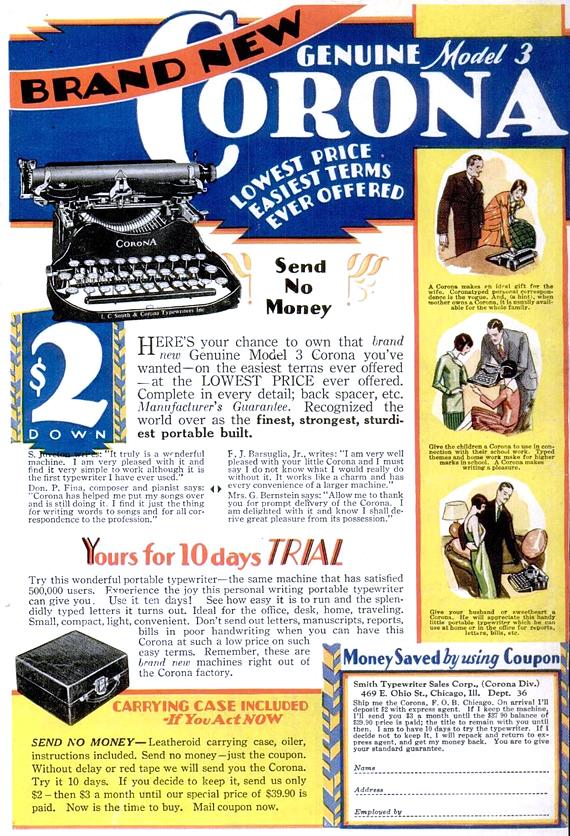
This is no doubt just as true for the makers of the Corona typewriter, for the company that produced it is still trading as Smith Corona albeit now as a manufacturer of barcode labels.  It can trace its origins back to the Smith Premier Typewriting Company, which was established in New York in 1886 by the wonderfully-named brothers Lyman, Wilbert, Monroe and Hurlbut Smith.  Over the following 30 years the business went through several iterations as it bought out or merged with other typewriter manufacturers including the Union Typewriter Company and the Rose Typewriter Company (renamed by Smith Bros. as the Standard Typewriter Company).  In 1914 the company introduced its first portable Corona model and so successful did it become that Standard was again renamed to the Corona Typewriter Company, focussing solely on portable typewriters while L.C. Smith & Bros. continued to produce office models.  Smith-Corona continued to be a major player in the typewriter market - being among the first to introduce electric typewriters in the 1950s - right up until 2005 when it finally gave in to progress and stopped typewriter production.

This has all served to remind me of my most recent typewriter acquisition, which is - you've guessed it - a Corona!  I say "recent", it was actually over a year ago in March 2019 when, passing the window of my local charity shop I espied a topping-looking Corona Special portable in pride of place in a display case.  The condition was immaculate - clearly it had been professionally restored - but the price was barely a third of what I'd seen lesser examples go for on eBay.  It was rightly attracting much comment from other passing shoppers (one of the volunteers later said "I knew it wouldn't hang around for long") but unfortunately I was unable to get at it straight away as work kept coinciding with the shop's opening hours.  I was eventually able to duck in early one afternoon and convinced them to hold it for me for a week while I went to get the money and arranged to pick it up on the Saturday.  I am therefore now also the proud owner of a 1920s Corona [Special] (I haven't been able to identify the exact year as I can't find the serial number, which has possibly been obliterated by the restoration).

The case has seen better days but no less than one would expect from something nearly
100 years old - in fact to still have the case at all is quite remarkable! 

It doesn't look much like a typewriter in the above photos, does it?  "How does it work", I hear you ask?  Well, take it out of the case...


Still looks a bit odd, doesn't it?  Well, see how the carriage is held over the keyboard by the two arms?  Lift the carriage up and it pivots over and onto the typebars, whilst the keyboard rises up from underneath.  Hey presto!


A very clever piece of machinery and one I am immensely proud to own.  Sadly I haven't had a chance to use it in anger yet - life getting in the way as ever, plus it needs a new ribbon and the spools seem unwilling to move even when fully loosened.  Hopefully I'll be able to get it up and running soon and then, perhaps, a typecast will be in order!


To return finally to the original article, Robert Messenger over at the oz.Typewriter blog has also covered this story with some splendid pictures of the two Coronas together(!) that I have not seen elsewhere.  It is all in all a lovely story that shows those involved in the best light and has (hopefully) created a new typewriter aficionado in Corona DeVries.  In any event it will doubtless be something he will remember and treasure for a long time and with luck will help him forget his troubles with small-minded bullies.  Once again it is a case of typewriters (with the help of Tom Hanks) to the rescue!

Sunday, 13 September 2015

Bowls, bread & books

Well, here I am again with another month having flown by - a month that included my week's holiday to Eastbourne for my birthday.  Pictures of that will follow once I have prised the best photos from mother's mobile 'phone camera.  Suffice to say for now that I had a lovely time (despite a cold manifesting itself just before departure) and the south coast - and particularly the South Downs - are a lovely place for a short UK break.

Now to more recent events - yesterday's, to be precise, and a trip to Southend for a spot of lunch with mater and a rummage around the shops.  As well as tea and cake for elevenses at one of our usual haunts, The Remedy Tea Shop (as first mentioned in this post from last year), we went for lunch at a charming little café bistro that mum had discovered off the high street a few weeks ago with some friends - La Petite Petanque.  Originally the pavilion building of the local bowls club (hence the name) - and dating from at least the 1930s - it has now been transformed into a lovely little French-themed, vintage-style café.  The bowling green still exists so you can sit, secluded from the hustle and bustle of Southend proper, and enjoy watching the odd game of lawn bowls as you have lunch.  The interior is wonderfully French country chic (including the quaint facilities - labelled "mesdames" and "messieurs"!).  I honestly had no idea that this was in Southend (to be fair it is well tucked away, and you could well be forgiven for thinking it still a private club building)!

source
source
source
source

Unsurprisingly it's a very popular place, as it was on the Saturday we went.  Unfortunately we happened to choose a day when two of the three chefs were off (one with a stomach bug - but not from there, I should add!) so the poor third chef and all the waitresses were rushed off their feet.  As a result my meal - steak sandwich in toasted ciabatta bread - was not all that it could have been as the bread had been left too long in the toaster and had gone as hard as a rock.  Still, it would not put me off returning, and I would certainly recommend it to anyone visiting Southend (just make sure you check how many chefs are on before you order!).

I seem to be developing a bit of form when it comes to visiting vintage-style cafés in Southend and then making a find in the charity shops.  Last time it was a book from 1936 called Thrills of the Skyways costing £2, this time it was a book from 1936 called Film Pictorial Annual, costing £2.  If this happens any more I shall wonder what's going on!


This time around I was in the local branch of British Heart Foundation, not really expecting to find anything because with the best will in the world I've found BHF prices to be at the higher end of the charity shop spectrum (something I believe I'm not alone in amongst vintage bloggers?).  They're also one of the few who have a dedicated "collectors" section for older books (anything pre-1970, in my experience) which, while saving me time scanning along shelves of books does seem to make them feel that they can ask a higher price.  So I was pleasantly surprised to find this 79-year-old annual for only two pounds.  The price reflects its condition, though, since the spine is very weak and the whole book only just hanging together, but all the pages were there and in good nick.  The cover belies its journey through a couple of secondhand shops and BHF didn't exactly help its cause by sticking their price label on the front as well (I mean for crying out loud, would it be asking too much to stick it, or - here's an idea - write it in pencil! - on the inside page ) but the fact that it had already seen better days didn't bother me overly much.

Home with me it came, then, and I have to say having looked through it properly that it's a splendid old book - with lots of articles both on and by our favourite actors and actresses of the time.  Without further ado, here are my highlights:


It was lovely to see how it had obviously staying in the same family for at least a generation - passed from one auntie to the next!

There are dozens of signed studio portraits, some more well-known then others.  Here are some of the more familiar names:

Clark Gable & Loretta Young
Marlene Dietrich & William Powell
Ginger Rogers & Katherine Hepburn
Gary Cooper admires Jean Parker (and rightly so!)
Ronald Colman & Joan Crawford
Carole Lombard & Claudette Colbert

Then there are the articles - girls you'll love these, I reckon (although there's a lot for the chaps too, including an interesting piece by The 39 Steps actor Robert Donat)!

A portrait of Madeleine Carroll and Fay Wray's Guide to Hollywood

Carole Lombard's Introduction to Charm
"Exercise and Be Beautiful" says Helen Mack

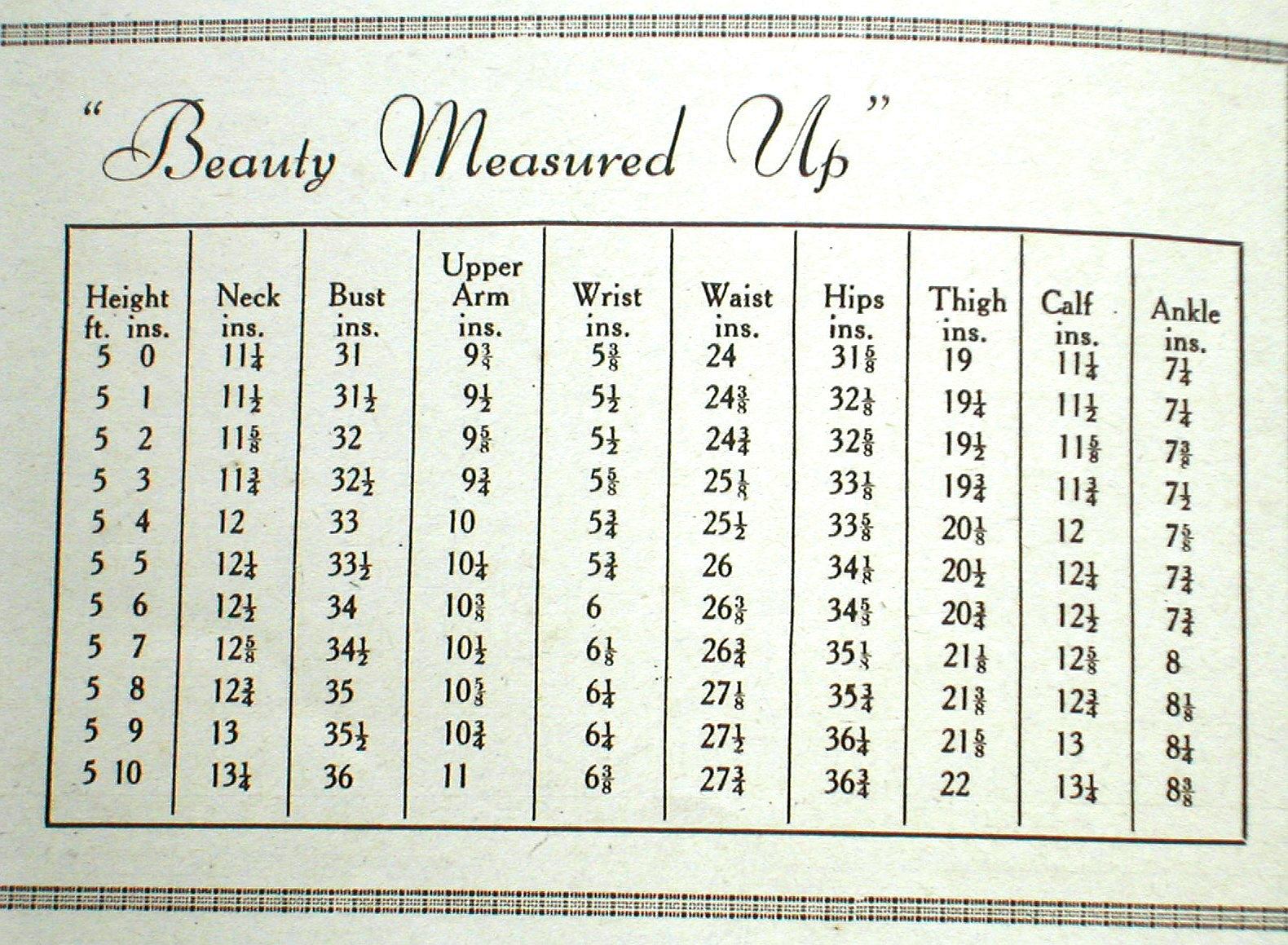
Girls, do you "measure up" to 1936 standards?

Five Stars to Follow to Smartness

Crawford Coiffures

Dramatize Your Beauty

The New Art of Make-up

See How They Grow

Hollywood IS Human

A very welcome addition to my ever-burgeoning library, then, and I hope you've enjoyed this flick through its pages.  Let me know if you like any of them in particular and - if I can find the time - maybe I'll put them on the blog in full.

I'm soon to start writing another article for In Retrospect magazine (issue 4 out now, get it while it's hot!), so it may be some time (probably another month...) before my next post - unless I can get those holiday snaps off mother - so until then:

Monday, 4 May 2015

The Strange Case of the Strikingly Similar Silk Ties; plus a chance to be well-heeled

Well hello, everyone!  Sorry I've been a bit quiet this weekend; as I said I had a couple of posts lined up but I felt quite run down last week so I ended up spending the whole May Day weekend at my parents', recharging my batteries.  A very relaxing three days were spent lounging in the garden, doing the charity shops in Leigh and popping into the local bi-monthly vintage fair (not much resulting for me, sadly, although the latter had a couple of good stalls with some nice jackets and waistcoats at decent - for these days - prices so I've noted the seller's details with an eye to checking out her own shop in the future).

It was in The Children's Society shop that I found my only score of the weekend, a Marks & Spencer St Michael brand silk tie in what I felt was a pleasing '90s-does-'50s pattern.  It didn't ring any other bells so I paid the 99p and thought no more about it.  When I got back to the folks' place I put it next to the two or three ties I'd bought with me from home and it was only then that I noticed something remarkable about this new one compared to one of the others.  See if you can spot what it is... (cue eerie music)

New tie, right, versus old tie, left

I couldn't believe it - no wonder I liked it so much, I already had one very much like it!  But not exactly the same, you'll notice.  The first tie I'd bought from a charity shop at least ten, if not fifteen, years ago and was originally from well-known men's outfitters Burton.  Now to the best of my knowledge M&S has never owned Burton, although I'm sure they've had Burton concession shops within their larger stores - either way I can only assume that through a strange quirk of fate they've ended up using the same pattern.  Perhaps it was a popular design?  Strange for me to have come into possession of them both over the space of 10+ years, though!


Now, moving on to the second part of this post - "ooh, how is he going to be well-heeled?", I hear you wonder.  Well, this was not a chance for me to be well-heeled but it is a chance for you, ladies!

I'm not often given to advertising on this blog, especially vintage-style ladieswear because obviously I don't have such things.  But mother does!  Shoes, to be precise, in a spiffingly attractive brogue heel design.  Alas, despite being in her size (UK 5½, EU 39) they no longer fit her comfortably so she is reluctantly getting rid of them.  "Oh, the girls who read your blog would like these, will you mention them on there?", I was asked, and I was happy to oblige!  Egads, I'd have had 'em if I was a 5½ and looked good in heels! 

source

Mater's just put them on Ebay today, so they're fresh from the wardrobe.  The main details (on the listing but I'll repeat them here):  produced in Italy for Jones the Bootmaker, so really well-made (the soles still look to have a lot of life left in them, and the overall quality's top notch); 3-tone brogue design (two shades of tan/light brown - mum's put the dark colour as black, I wouldn't swear to it not being dark chocolate brown but it's hard to judge); 2½-inch heel.

Mother's described them as "vintage style" and we can both see them really suiting a 1930s, '40s or '50s bookish look - perhaps with a tweed suit/skirt, maybe?  So if you're a size 5½ why not high yourself over to the E of Bay for a look?  They deserve to go to a good home!

Right, enough hawking.  I hope to return ere long with stories featuring Spitfires, Mosquitoes and steam trains.  In the meantime I hope you all had a splendid May Day holiday and I look forward to catching up with all your posts!

Monday, 5 May 2014

Thirties thrills, tunes and tea

Last week was another busy one for me, culminating in a trip to my local seaside resort of Southend for a job interview followed by lunch and a trawl of the charity shops with mater.  Putting aside my career prospects I shall move right along to the post-interview portion of the day, the results of which will be far more exciting and interesting to you, I feel sure!

We began the afternoon with a late lunch; deciding that the the BHS cafe wasn't up to much ("horrendous", I believe mother described the food as looking) we came upon a hitherto-unknown-to-us bistro just opposite and what good fortune it was that we did, for we have now a new favourite refreshment stop in Southend.  The Remedy Tea Shop turned out to be a charming little tea room that had just recently sprung up in the high street and we both enjoyed some very nice sandwiches, paninis and - of course - tea!  The selection of the latter was impressively extensive (albeit wasted on Mum, who - used to plonking a teabag in a mug of boiling water - requested "plain old English [breakfast] please".  But I mustn't talk deprecatingly about her on here, she doesn't like it!).  I must admit my plan to test one of the less common blends backfired on me, however - the "Russian Caravan" Ceylon/Darjeeling/China mix leaning a little to much towards the Darjeeling for my tastes.  I should have stuck to the Assam I know and love!

source

The place was beautifully decorated and laid out in a manner that perfectly reflected its aim of being "a haven of tranquility" and really was like a traditional English tea room of old.  A well-judged mixture of tables and chairs, armchairs, cabinets and even a fireplace all added to the homely feel of the place.  Highly recommended!

After our enjoyable repast it was ho! for the charity shops.  Sadly for such a large town Southend has surprisingly few such shops - only two on the actual high street.  Fortunately my interview had taken me down one the many side roads that bisect the main thoroughfare and which had two further beneficiary boutiques (not to mention two more restaurants that will require further investigations, Bacchus and Old Hat - the latter of which looked to be just on the verge of opening a vintage shop opposite its main business).  Mother scored a £1 M&S summer shirt for my stepdad in the first store, but the main event was the large Havens Hospice a couple of doors further down.  Occupying fully two shop fronts, one of which was devoted solely to books (like a library, it was!) it was the kind of charity shop one could easily spend half the day in.  The day had almost been and gone by the time we got there, though, so we weren't able to make much of a dent in the place - very unfortunate considering that the other side of the shop had half a wall's worth of CDs, DVDs and... a dozen boxes of 78rpm records at 50p a disc!  As I rifled through the first two baskets I quickly divined that they must have been some old boy's life collection - a mixture of 1930s dance bands and classical compositions from what I could see.  Time was against us, though, so not being able to make a proper selection I went for the alternative - an 8 LP box set The Golden Age of British Dance Bands!


With the hour now well past 4 and both of us needing to get home, I paid the princely sum of £3 for the set and we hot-footed it out into the street - only for me to suddenly realise I'd left my umbrella inside.  Popping back in to grab it I decided to make my way back out through the book department (quicker to the street - honest!) only for something I'd somehow missed the first time to suddenly leap out at me:


How could I have overlooked this - and how would this not be coming home with me when it was priced at a faintly unbelievable £2?!  I fair snatched it off the shelf, dashed to the till (mother was pacing, tight-lipped, outside) and threw the money at the young lad behind the counter.

I didn't get a chance to look at the book more closely nor listen to the LPs until the weekend and I'm pleased to say I'm over the moon with two of the best scores I've had in a long while.  The book in particular is an absolute steal - I think it was wrongly marked by the shop as 1963 when it is quite clearly 1930s (although I do have a habit of mixing up the last two digits of a number when I'm in a hurry, so they may have got it right).  There's no date to be found in it anywhere, but references to "the late King" [George V] and the autogyro pioneer Juan de la Cierva would certainly point to 1936.


Thrills of the Skyways is a real "Boys' Own" affair, published by Dean - the same people who later (re)printed some of the "Biggles" books and although there are none with that name (nor indeed authors' details of any kind) there are several First World War stories in a similar vein and it would not surprise me in the least if W.E. Johns wrote one or two of the articles.

It's a wonderfully evocative book and takes its place as one of the jewels of my collection, up there with my 1933 Modern Boy magazine, 1929 Tit-bits Yearbook and 1938 Power & Speed almanac.  It's written in the positive, effervescent style so typical of one of our favourite decades and provides a fascinating insight into the history of aviation in the 1930s (albeit aimed at young boys - aren't we all young at heart, though?).  There are facts and pictures therein that even I knew nothing about.  I was amazed to see that a Cierva autogyro was fitted with floats and operated successfully from water, for example.  Some of the predictions for the future are grin-inducing too.  Where, I ask, are our floating island landing strips, hmmnn?!


Some predictions were less rosy, though, as the dark clouds of a prospective second war were already looming large judging by the article above.


I will thoroughly enjoy delving into this book while listening to (and converting to mp3!) over 120 of the best toe-tapping Thirties tunes and I can't wait to see (and hear) what further gems both these splendid finds impart.  And I may just have to go back again soon for some of those 78s!

Followers

Popular Posts