Showing posts with label RAF Museum. Show all posts

Wednesday, 28 February 2024

Jersey veteran pilot flies WW2 plane for 101st birthday present


A heart-warming story from April 2023 now, featuring remarkable WWII RAF veteran Bernard Gardiner who, for his 101st birthday, took a flight - and what's more after nearly 80 years, the controls! - of the world's only two-seater Hawker Hurricane.

As well as being a well-deserved and very apt gift for Mr Gardiner's milestone this was also something of a "thank you" not only for his admirable service during the war but also his role as a patron of the Hawker Typhoon Preservation Group, a charity set up in 2016 with the aim of returning an example of another of Hawker's famous Second World War aircraft - the Typhoon fighter-bomber - to airworthy status.


The Typhoon, which first flew in February 1940 and entered service in 1941, was intended to be the replacement for the Hurricane and was initially deployed as a pure fighter to counteract the German Focke-Wulf 190 which was outclassing almost everything the Allies could put up against it.  Although it proved to be the equal of the Fw190, especially at low level, some early structural design flaws held it back and it was subsequently switched to the roles of low level ground attack and interception.  Armed initially with six .303in machine guns, then later four 20mm cannons, the Typhoon was also able to carry up to 2,000lbs in bombs or eight wing-mounted rockets making it a formidable foe against German armour and reinforced positions.  The Typhoon continued in this multi-role function for the remainder of the war, finally being retired in October 1945.  Prior to that however, in September 1942, it begat the Tempest - a development of the original Typhoon design (indeed early examples were referred to as the Typhoon II) that was intended to be more of a true fighter aircraft than the Typhoon (or "Tiffie" as it was affectionately known).  The Tempest would go on to become one of the most powerful piston-engined aircraft of the war - at low level the fastest single-seat propellor-driven aircraft of the time, so fast that it was easily able to deal with V1 flying bombs and even Messerschmitt's jet-powered 262.  

Flight Lieutenant Walter Dring, commander of "B" Flight, No. 183 Squadron RAF,
with his Typhoon Mark IB, R8884 "HF-L", in a dispersal at Gatwick, Sussex.
source - IWM

Unlike the Tempest, of which there is one airworthy survivor (which made its maiden flight only last October following seven years of restoration) and at least three around the world currently undergoing restoration to flying condition, there is currently only one extant (static) example of a Typhoon - MN235, which over the last few years has been on display at the Smithsonian National Air & Space Museum in Washington D.C.,  the RAF Museum at Hendon, the Canada Aviation & Space Museum in Ottawa and - at the moment - the RAF Museum London.  All that will hopefully change soon, though, thanks to the hard work of Hawker Typhoon Preservation Group which is aiming to restore Typhoon MkIB RB396 to airworthy condition so that people can see this remarkable (and, in relation to the Spitfire or Hurricane, somewhat forgotten) Second World War aeroplane take to the skies again in honour of those, like Bernard Gardiner, who flew them.  After a pause of a couple of years due to the pandemic work has restarted and continues apace; with luck and thanks to the HTPG we (and hopefully Mr Gardiner!) may yet see a Tiffie in the air once more.

Tuesday, 11 June 2013

WWII Dornier bomber raised from English Channel


WWII Dornier bomber raised from English Channel

I expect many of my readers who are based in the U.K. will have been following this story as I have (and I'm sure overseas readers will be interested to hear about this project too), but only now do I feel justified in posting about it since it has (finally!) ended in practically complete success.

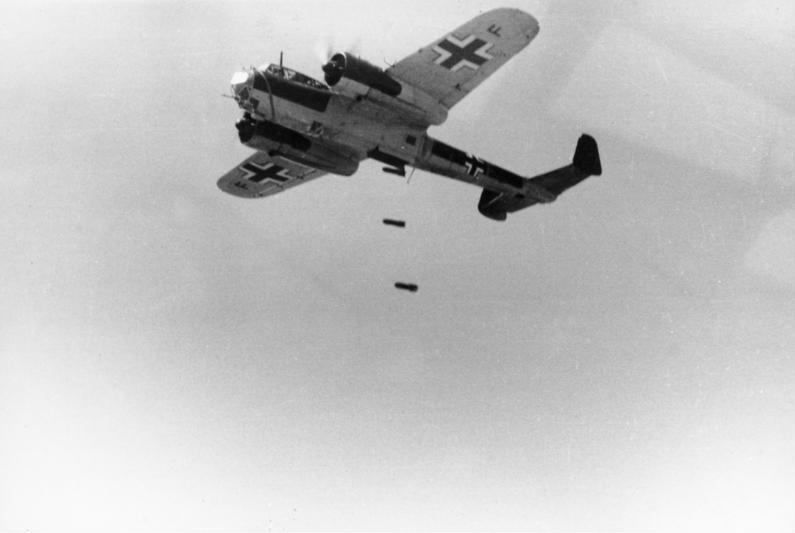
I can hardly believe that it has been nearly 3 years since I featured on this blog the news that the only known intact example of a Second World War German Dornier 17 bomber had been discovered resting in shallow water off the Kent coast.  In that time numerous dives had been made to study the wreck and devise a way to raise it from the Goodwin Sands - a plan that was put into action (as originally envisaged) last month.

Dornier 17: Salvaging a rare WWII plane from the seabed

source
Alas the English Channel was not keen to relinquish its grasp of this aeroplane and it has taken until now - over a month from the anticipated salvage date - for it to finally see daylight for the first time in 70 years.  It has been a remarkable feat of engineering - not to mention patience! - to bring this aircraft out of the sea in as near as dammit one piece and one that very nearly looked like not coming off at all.  Thankfully all the time and money invested in this endeavour looks to have been worth it as the world's only extant Do17 airframe begins its new journey to the RAF Museum at Cosford, where it will undergo extensive restoration over the next two years and then eventually form a suitable counterpoint in the Battle of Britain exhibit at the Hendon museum.  Quite what form this will take I'm not sure, as I had thought the original plan was to keep it pretty much as it was found and the museum website talks about "conserving" it, but maybe they feel a full restoration is possible and desirable.  No doubt we shall see come 2015!  I shall look forward to continuing to follow Dornier 17 5K+AR's story over the next two years and hope to see it, in whatever form, at the RAF Museum in the future.

Friday, 11 May 2012

WWII fighter plane found preserved in the Sahara


WWII fighter plane found preserved in the Sahara

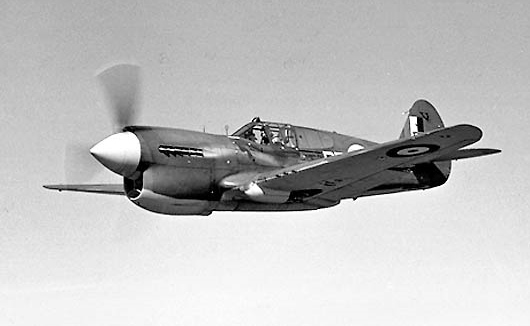
Hot on the heels of the twenty Spitfires discovered in Burma comes this equally remarkable, albeit far more bittersweet, story of a lone Curtiss P-40 Kittyhawk that has been found in the Sahara desert.

Despite having crash-landed on the sand 70 years ago the aircraft is apparently in very good condition overall, the result of laying undisturbed in the dry and rarefied atmosphere of the Sahara for the last seven decades.

An important machine to many air forces, particularly with the famous "Flying Tigers" of the Chinese Air Force in 1941-42 and the USAAF in the first months of the Pacific campaign (as well as with the RAAF & RNZAF later in the same theatre), the Kittyhawk (and earlier Tomahawk) was also used in large numbers by the RAF in North Africa as part of the Desert Air Force.  Considered superior to the Hurricane and early marks of Spitfire in the dusty, arid conditions of the desert the Kittyhawk was the main Allied fighter aircraft in the North African theatre for several months of 1941-42.


World War II RAF Kittyhawk fighter plane found in the Sahara Desert in Egypt

It was in one of these RAF Kittyhawks that Flight Sergeant Dennis Copping (a native of my nearby town of Southend) was flying on the 24th June 1942 when he got in to trouble - probably lost - and was forced to belly-land many miles from civilisation.  Now, 70 years after he and his aircraft were last seen, the discovery of his crashed aircraft, discarded parachute and wireless equipment tell the sad story of what happened to him.  It seems fairly certain that having failed to summon help by radio he made a futile attempt to reach the nearest settlement but succumbed to the harshness of the desert.

Now this chance discovery has set the historic aviation world a-twitter and work is already underway to return the Kittyhawk to the UK for it to be put on display at the RAF Museum in Hendon.  A search is also being carried out for the remains of Flt. Sgt. Copping and it is to be hoped that, if he is found, he will be repatriated along with his aircraft or at the very least given a proper military burial.  It would also be nice if his aeroplane - restored or not - were kept as a permanent memorial to the man.  Although I can understand the feelings of some who think it should be left where it is (particularly if F/S Copping isn't found) as a sort of war grave, the ever-present threat of trophy-hunters and scrap merchants makes such a course of action undesirable.

World War II fighter found in Egyptian desert

Whether or not the pilot is found the momentous discovery of this aircraft has at least answered the question of what became of him and his memory can be forever honoured by the display of his Kittyhawk, an important historical find on its own and a fine tribute to the man.

Followers

Popular Posts