Showing posts with label auction. Show all posts

Monday, 26 October 2020

Black WW1 pilot's ID bracelet smashes estimate at Kent auction


With the BLM movement still very much at the forefront of people's minds these two interestingly linked articles are a welcome and timely reminder of the sacrifices made by black men and women for the cause of freedom in the many battles fought by the Commonwealth countries in support of the British war effort, in this case the stories of two Jamaicans who left their Caribbean home to fight in the First World War. 

William Robinson Clarke, c.1914
source - Wikipædia
The first report is of particular appeal inasmuch as it tells the story of an RFC sergeant pilot, William Robinson Clarke, who at the age of only 19 and out of his own pocket sailed to England to enlist in the Royal Flying Corps - in the process becoming what is thought to be the first black pilot to serve in that branch of the service.  Originally employed as a driver he retrained as a reconnaissance pilot in late 1916 and in April of 1917 was posted to No. 4 Squadron, based at Abeele in Belgium and operating the R.E.8.  The story of his time in the RFC is a fascinating one and I was pleased to note that he survived his run-in with five German scout aircraft and despite being wounded in the back made a full recovery - albeit subsequently only able to work as a mechanic - returning to Jamaica after the war to take up a building trade and eventually becoming the president of Jamaican branch of the Royal Air Force Association before passing away at the age of 86 in 1981.

source - B.B.C. News

Now his story has come fittingly into the limelight again thanks to the recent auctioning of his original RFC I.D. bracelet at - in of further interest to me personally - a local Kent auction.  Just what the link to Ashford is, or the reasons behind the sale, is not made clear.  It may just be that the owner had decided to sell and was based nearby, with the auctioneers being specialists in militaria.  Even so, their initial valuation of the bracelet seemed almost disgracefully low even by the conservative standards of most auction houses, so I am delighted to see that it sold for a much more respectable figure (over 30 times the estimate, in fact) and I hope whoever bought it appreciates it for the remarkable piece of black British military history that it represents (as I'm sure they must do to have paid such a sum for it).  I for one am grateful for it making the news as it has introduced me to the enthralling story of yet another World War One airman, as well has hopefully perpetuating his name and deeds far beyond the sphere of military or Jamaican historians.


The second article is of equal interest - and perhaps of even greater importance as it potentially has the scope to rewrite accepted First World War history that currently has Walter Tull as being the first black commissioned officer to serve in the British Army during the conflict.

2nd Lt. Euan Lucie-Smith, Royal Warwickshire Regiment
source - Eastbourne Herald

This is the story of another young Jamaican soldier, Euan Lucie-Smith, who enlisted in the Jamaica Artillery Militia in 1911 before shipping to England on the outbreak of war three years later to serve as a Second Lieutenant in the Royal Warwickshire Regiment (a full three years before Walter Tull was gazetted into the Middlesex Regiment with the same rank).  Arriving in France in March, 1915 Lucie-Smith was sadly killed in action on the Western Front barely a month later on the 25th April at the age of 25. 

source - Eastbourne Herald
His story may also have remained forgotten had it not been for the chance discovery online of his memorial plaque (issued to the next-of-kin of all fallen soldiers in the First World War) by a military historian, James Carver.  Now it has been unearthed thanks to Mr Carver's efforts and, as well as adding an important record to the annals of black British martial history also has the tantalising possibility of completely revising it.  While it is regrettable to note how the plaque had languished, seemingly overlooked, for so long I am pleased to see its importance recognised and hope that when it comes up for auction next month it receives as much value and appreciation as William Robinson Clarke's I.D. bracelet.

Both of these stories are very poignant reminders of just how strong a pull the "mother country" had over its outlying colonies - in the First World War and in other conflicts before and since - and the strong urge and desire of their young men to leave their homes and travel thousands of miles to join up and "do their bit".  They are incredibly relevant and apposite at this time of racial inequality and it is to be hoped that both accounts will take their rightful places in the history books as a result of these finds, which I trust will be suitably respected and preserved for future generations.

Sunday, 19 April 2015

Aston Martin LM19 Ulster car to be auctioned

source

Aston Martin LM19 Ulster car to be auctioned

Back in June 2014 - although it doesn't seem that long ago! - I wrote a blog post about two of our favourite [fictional] chaps and the cars that link them together (on film at least): Bertie Wooster's Aston Martin and Captain Hastings' Lagonda.

I thoroughly enjoyed penning that post, as pre-war Astons and Lagondas rank among my top motors and its always a pleasure to see them appear on screen in the hands of two top chaps.  I'm delighted therefore to get another chance to shine a light on a 1930s Aston Martin, with a very special example due to go under the hammer at the Goodwood Festival of Speed in June.

source

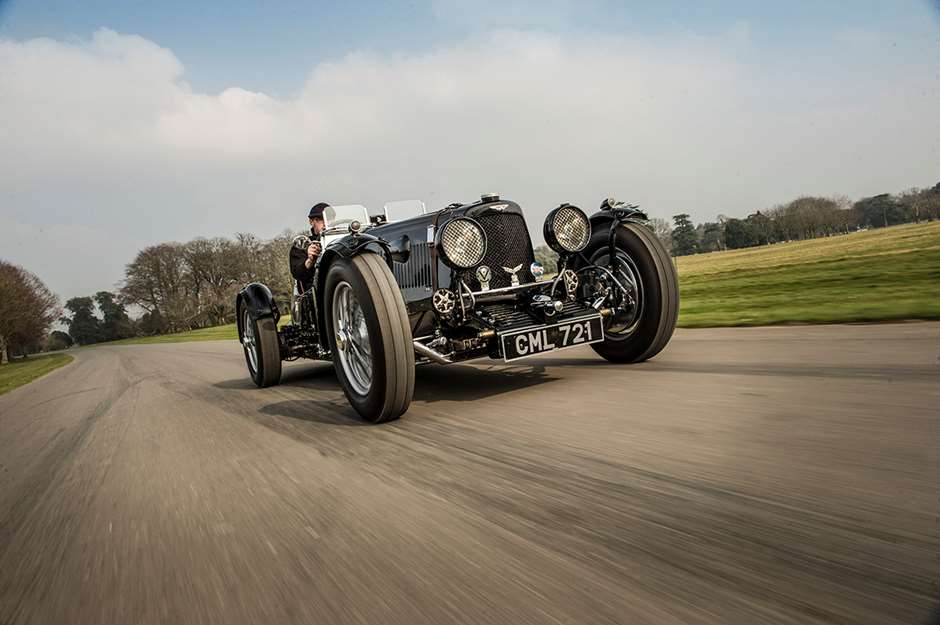
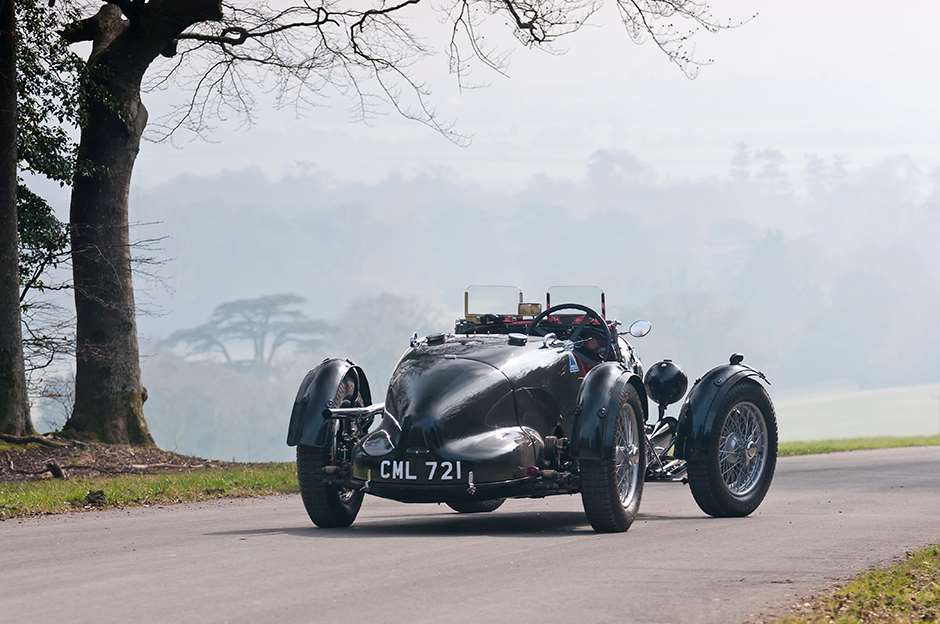
The Aston Martin LM Ulster was based on the 1928 1½-litre International model (as used by Bertie Wooster in the 1990s Granada TV series) and designed by Aston Martin's co-owner at the time, Italian-born engineer A.C. "Bert" Bertelli, with the sole aim of racing in the famous Le Mans endurance (hence the LM moniker) race.  LM1 and LM2 were promptly entered in to the 1928 event but in the end neither car made it to the finish.  In the following years Aston Martin continued to refine the LM-series - producing a total of 21 such models - with success finally coming in the 1933 race when one car finished top of its class and the other in fifth place, the company's best result at the time.

source

As well as Le Mans, the LM Astons also competed at myriad other endurance races around Europe and this included the Ards TT (Tourist Trophy), a 400-mile race around the streets of Dundonald, Newtownards and Comber in County Down, Northern Ireland.  It was first run in 1928, proving ideal for Aston Martin to do some more on-the-job testing of its new LM cars, and in 1934 they had their greatest success at the Ards circuit - whereupon the "Ulster" suffix was added to the model name.

source

Now one of the few remaining Aston Martin LM Ulsters is due to come up for sale at the Goodwood Festival of Speed in June.  This particular example - LM19 - was one of the three at the 1935 Le Mans (where it held the class lead for a time before crashing out after 9 hours; sister car LM20 would go on to finish in third place) and would go on to race in the Ards TT and Mille Miglia in the same year - making it a rare entrant in all three "blue riband" race events of the era.  A year later it was driven in the 1936 French Grand Prix by famous British racing driver Dick Seaman and, quite amazingly, has been raced in one event or another every year since (excluding 1939-45) with its last appearance on track at a Vintage Sports Car Club race meeting in April 2014.  With such a sporting pedigree as that it is perhaps not surprising that this car, widely regarded as one of the best examples of pre-war British sports car production (and by Bertelli himself as "the best car[s] I ever built"), is expected to beat the record for the highest price ever paid for a pre-war Aston Martin (which was set at last year's Goodwood Fos auction when another LM went for over £1.4million - in turn beating the £1.3million paid for another Ulster in 2013) with an estimate of between £1,600,000 and £2,000,000.  I doubt even Bertie Wooster could afford that!

source

Although the B.B.C. article suggests that the new owner (whoever s/he may be) won't race this rare and valuable car I'd like to think that they would enter it in a few events at the VSCC, Goodwood and the like, where those of us with petrol in our veins and a love of vintage motor cars can see this beautiful and historic machine doing what it was designed to do while providing a thrilling and emotive link to the heyday of pre-war motor-racing.  Let's come back in June and see what it went for, eh?

Tuesday, 4 December 2012

Daring World War II pilot's medals auctioned

Bristol Beaufighter, 1943
source

Daring World War II pilot's medals auctioned

 "A real 'Boy's Own' hero" is how the pilot at the centre of this story has been described and never was a truer word spoken!

In fact the recent auction of the late Wing Commander Ken Gatward's World War II medals seems almost incidental to the history of how they were earned, as part of an operation that could have come straight out of a Biggles book.

The RAF pilot who dropped the Tricolor on occupied Paris 

Only now, nearly 15 years after his passing and with the selling of his decorations, have the full details of the story come to light - and what a story! Although in the grand scheme of the war probably a minor mission (however deemed, somewhat redundantly, "unsafe") its morale value was obviously considered enough to make it worthwhile, as it did indeed turn out to be. In fact minor this action was not, requiring incredible flying skills, accuracy and above all bravery - to fly down the Champs-Élysée in enemy-occupied Paris at ridiculously low level and drop a French flag on the Arc de Triomphe, then shoot up Gestapo HQ. I can still hardly credit it, even several days after first reading about it! Fantastic is the only word for it.


Daring World War II pilot Ken Gatward's medals auctioned for £41,000

It should come as little surprise, then, that Wing Cdr Gatward's medals and associated souvenirs far exceeded the initial £8,000 pre-auction estimate when they were sold last week - eventually making five times as much!  While it is something of a shame that the medals weren't passed on to one of Mr Gatward's family (perhaps there were no close relations) or a museum (unless the buyer was such - no mention is made of it) the fact that it sold for so much more than the estimate hopefully proves that the new owner, whoever he is, recognises the value in how they were earned.

source
For the rest of us there is the delight in having read, after 70 years, the amazing exploits of Wing Cdr Gatward (and the extra bonus fact from my point of view of him being a local Essex lad!) that are truly in the best traditions of the service and prove truth really is stranger than fiction.  Biggles would have been proud!

Tuesday, 13 November 2012

WWII toy aeroplane bought in Bristol fetches £10,000

WWII toy aeroplane bought in Bristol fetches £10,000

From the West Country comes this story featuring a dashing tinplate toy which, thanks to its rarity value, has recently made £10,000 at auction.  It's certainly a splendid model, but I'd rather pay 9/6 for it myself...

One of only 3 known to exist in the particular camouflage paintwork, this model monoplane has a potentially bittersweet story attached to it.  Its mint condition, including its original box marked with the name of the Bristol shop that sold it (and which still exists today as a sporting goods store), proves that it has had little use and so enhances its value.  However the accompanying newspaper in which the toy was wrapped features an ominous headline - a bombing raid on Bristol - that possibly hints at why the model had never been played with.

The story behind this little tinplate may never be fully known but it adds in its own small way to the history of Bristol and the family business from where it was bought.  It sounds as though it is taking pride of place in some collector's display; let's hope its past history is just as appreciated and, more importantly, remembered.

Sunday, 4 November 2012

'Oldest Vauxhall' auctioned by Bonhams for £94,000

© GM Company

'Oldest Vauxhall' auctioned by Bonhams for £94,000

Here's an interesting article now about the successful sale by Bonhams auction house of an important part of British motoring history - the oldest surviving Vauxhall motor car.

Vauxhall Motors started life in 1857 as Alex Wilson and Company, a marine engine and pump manufacturer started by Scotsman Alexander Wilson in the borough of Vauxhall, London.  In 1897 the company changed its name to Vauxhall Iron Works and six years later built its first motorised carriage (above).  Work on improving the design continued and in 1907 the business relocated to Luton, Bedfordshire, where its headquarters remain to this day.

Vauxhall Motors Limited, as it was from then on known, gained swift success thanks in no small part to its chief designer Laurence Pomeroy, who had only joined the company in 1906 aged 22 but so impressed the management when he covered for the holidaying original design chief that he was given the job himself barely a year later.  Pomeroy would go on to design what are considered the two best pre-war Vauxhalls and the engine that powered them.

The 1908 Vauxhall A-type was a 3-litre, 20hp car that proved to be a great success and leagues ahead of the competition at the time.  In hill-climb trials it completed courses over 30 seconds faster than any other car and was the first vehicle of its class from anywhere in the world to exceed 100mph at the Brooklands race circuit, also posting class-leading fuel economy figures.  It could cruise at 46-55mph, remarkable speeds for the age.

© GM Company

Within 2 years the A-Type (which remained in production until 1915) had been used as the basis for the new C10-Type with an extra 20hp extracted from the engine and a selection of body styles available.  After one was entered in the 1910 1200-mile Motor Trials, which were named in honour of a Prussian Royal, the car became forever known as the Vauxhall Prince Henry.
In the following years further refinements and updates were made on the basic C10-type.  In 1913 the engine was increased to 4½ litres and 98hp, giving rise to the 30/98 model.  A version of this with a lower-powered engine of 4 litres and 60hp became the D-type, much used during the Great War as staff cars.

© GM Company

After the First World War production of the 30/98 was restarted and continued as the E-type, with a more powerful 4.2-litre 115hp variant - the OE-type - joining it in 1923.  Things were looking rosy for Vauxhall until 1925, when a huge corporate behemoth - even then - loomed large on the horizon.  America's General Motors had taken an interest in the company and in 1925 bought Vauxhall Motors Ltd. for $2½million (about $26½million, or £16½million in today's money).

On that day in 1925 the Vauxhall company changed irrevocably.  What is rarely known these days is that prior to 1925 Vauxhall was considered the contemporary of high-end marques such as Bentley, Napier and Daimler.  All that changed following its acquisition by GM, who relaunched Vauxhall so that its products competed with the mass-market, everyman cars.  Models started to appear based on Chevrolets and when GM bought German marque Opel in 1929 the designs of that company too.  In the ensuing 87 years Vauxhall, Opel, Chevrolet (and Australia's Holden, absorbed by GM in 1931) have grown ever more intertwined to the point where almost all of their models today are based on the same single design and often differ only in the badge on the grille.  The last truly 100% Vauxhall-designed car, the Viva, ceased production in 1979.

© GM Company

The sale of this rare early Vauxhall is noteworthy, then, for not only being the earliest known extant example, sold publicly for the first time since it was new, but also coming from a time when Vauxhall was a very different company to what we know now.  It has had a very interesting life by the sounds of it and it is good to see it still appreciated enough to command such a high purchase price.  Vauxhall Motors has been through some turbulent times in its 109-year history but this car (or one very much like it) was there at the beginning.

Monday, 22 October 2012

Motorbike from 1920s sells for £67,000 at auction

source

Motorbike from 1920s sells for £67,000 at auction

October seems to be the month for record-breaking vehicles and now it is the turn of vintage motorcycles to step (or should that be roll?) into the limelight.  Not one but two pre-war motorbikes - both very special in their respective ways - were sold yesterday by Bonhams as part of a larger auction and they are each jolly nice and remarkable vehicles.


The record-breaker of the pair is the 1929 Grindlay-Peerless "Hundred Model" above.  Called a replica it strikes me as more of a limited run - very limited, in fact, being one of maybe only five or six built to celebrate C.W.G. "Bill" Lacey's successful attempt to become the first Englishman to travel 100 miles in an hour.  Being only one of two left in the world it was perhaps destined to command a high price, and so it has proved.


‘Barn Find’ Brough Superior Up For Auction At Bonhams

source
The second 'bike (actually the first to be reported in the press, but not widely hence I struggled to find this article) is a Brough Superior SS-80, notable not only for being manufactured by what is widely regarded as the finest motorcycle maker of the inter-war period (and the preferred choice of T.E. Lawrence ["of Arabia"]) but for being a veritable "barn find" untouched for 80 years.  Owned by the same family since new (1925) this SS-80 hasn't been used since 1930 and is in an amazing condition and complete with reams of paperwork.

source

This was actually one of two Brough Superior SS-80s in the auction, the second being a mint model once owned by the founder of the Vintage Motor Cycle Club.  It is a beautiful example of how the unrestored model would have looked in the late 1920s, yet oddly enough both fetched nearly the same money - £63,100 and £68,300 respectively. They are both splendid machines despite their vast difference in condition, however, and I hope the new owners continue to enjoy, cherish and - in the case of the original-condition one, if they so wish, restore - them for many years to come. 

source

Monday, 2 July 2012

Goodwood Festival of Speed: Vintage Bentley sells for £5 million


Goodwood Festival of Speed: Vintage Bentley sells for £5 million

At the beginning of March I blogged about an upcoming automobile auction at the Goodwood Festival of Speed in which an historic 1929 Bentley 4½-litre "Blower" built and raced by my personal hero Sir Henry 'Tim' Birkin was expected to become the most expensive Bentley ever sold.  Well I can report that not only did it succeed, at £5,000,000, in smashing the previous record of £2,800,000 paid for the 1929 Speed Six Bentley "Old Number 2", but it also becomes the most expensive British car sold at auction.  I hope whoever bought it values it for more than just the money he paid for it and that it can be kept in Britain and shown for generations to come.

All images courtesy of Supercars.net

Bonhams have produced a wonderful video of the Bentley, found at the top of this post, that perfectly captures the majesty of this magnificent race car and the heroism of the man who created and drove it to record speeds.  It is all the more welcome since so little footage exists of 'Tim' Birkin himself.  His autobiography Full Throttle is, as I have said before and will say again, well worth hunting down.


The sale of this significant racer at the world-renowned Goodwood Festival of Speed marks a high point in the British motor racing schedule - with the Grand Prix at Silverstone pending and of course the Revival back at Goodwood in September.  The latter I hope one day to be able to attend - the ultimate Mecca for a vintage motoring enthusiast!


I'm given to wonder what 'Tim' Birkin would have made of today's motor racing scene.  He was vociferously scathing about Brooklands, a fact which he devotes a large portion of his autobiography to, but only due to unswerving patriotism.  (The chapters he devotes to England's racing woes of the time is a masterclass in apologetic criticism).  We look at [what's left of] Brooklands today relishing and marvelling at what went on there 80+ years ago but as Birkin makes clear by the early 1930s it was no longer suitable for the cars that were raced on it.  Birkin deplored the lack of a more modern track (so I think he would be pleased with the proliferation of race circuits today - a legacy of the Second World War, many of them evolving from disused airfields) and, as the Thirties progressed, a British car with which to race - Bentley having withdrawn from all forms of motorsport upon their acquisition by Rolls-Royce in 1931.  His own career reached a nadir in 1931 when he was forced to drive an Alfa Romeo in order to win at Le Mans, an achievement made all the more bitter when he received a congratulatory telegram from Mussolini claiming it "a win for Italy".


I think 'Tim' would have been happy, if a little bemused, to see his beloved "Brooklands Battleship" still running and still creating such a thrill today, at such an incredible price.  It is truly a piece of British history and if it helps to keep the marque Bentley, and 'Tim' Birkin's fantastic achievements, in the public's consciousness (or at least this member of the public's consciousness!) then it is worth every penny.

Tuesday, 20 March 2012

The world's biggest collection of airship memorabilia goes on sale

source

The world's biggest collection of airship memorabilia goes on sale

Some Zeppelin news now, featuring the largest selection of airship memorabilia valued at potentially £1,000,000 and which is due to be sold off in four auctions over the coming eight months.

Rare Zeppelin items for auction for the first time

The result of 40 years of collecting by a Jersey businessman who had intended to set up an airship museum but who through a combination of old age and other business commitments never managed to, the collection contains many hundreds of photographs, some of which are reproduced here.


These pictures (and the above footage from Youtube, which I make no apology for including every time I blog about airships) give a fantastic idea of the sheer majestic size of the Zeppelins and the wonderful sense of occasion they would have provided.  Not only in seeing them at ground level, from within, in flight and - sadly - at war but also the views they provided to the lucky passengers privileged enough to fly in them.  Never was the advantage of all-round vision as afforded by a gondola more perfectly illustrated than in a number of these photos.

source

Comprised quite literally of tons of Zeppelin-related artefacts the collection would have made a wonderful museum, all the more so considering the seller had even bought one of the massive hangars at Cardington Aerodrome in Bedfordshire (home of the British airship industry and the ill-fated R.101) to store it all in and in which he had intended to base his extensive display.  What a gem it would have been - a real counterpart to the Zeppelin Museum in Friedrichshafen, Germany.  Sadly it was not to be and now this incredible collection is about to be broken up.  At least the profits will be given to charity, which is a good thing.  One can only hope that the pieces find their way to the Zeppelin Museum or to collectors who will equally appreciate it and, who knows, maybe even use it to help open up a British airship museum in the future.

One of the Cardington airship hangers

Friday, 2 March 2012

1929 Bentley 4½ Litre Supercharged set to be the most expensive Bentley ever

Image courtesy of Supercars.net
1929 Bentley 4½ Litre Supercharged set to be the most expensive Bentley ever

One of the cars driven by a true hero of mine (and not just as a racing driver) is due to go to auction at Goodwood during the Festival Of Speed in June, according to these reports.

source
Sir Henry 'Tim' Birkin was one of the famous "Bentley Boys" who drove during the golden age of motor racing and which included such daredevil sophisticates as South African diamond magnate 'Woolf' Barnato, record-breaking aviator Glen Kidston and pearl-collector Bernard Rubin among many others.  The life stories of all these men would fill many books, but it is Birkin on whom I shall focus the attention of this post.

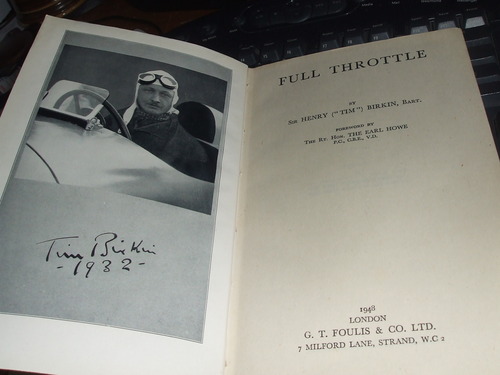
Twice winner of the Le Mans 24 Hours endurance race, first in 1929 and again in 1931, Birkin's name has remained inexorably linked to Bentley Motors.  His racing escapades are the stuff of legend and if you can track down his autobiography Full Throttle I heartily recommend you read it.

A 1948 edition, the spread otherwise identical to my '34 edition
(I was fortunate enough about 10 years ago to obtain a 1950s reprint through an inter-library loan from Maidstone, Kent, after first reading about Birkin in an article from Autocar.  So enthralled was I that I wrote to the journalist asking if he would point me in the direction of a bookshop that might have a copy to buy - it being rare and out of print for many years.  Imagine my surprise when the very next week he used his Autocar column to plead for a copy for me!  A splendid old boy who lived literally around the corner from me responded saying that I could have his 1934 fourth edition for free and I spent a lovely hour chatting with him about the early years of motorsport and his hobby of marshalling at GPs in the '50s where he saw the likes of Fangio and Moss race.  I will always fondly remember the wonderful concatenation of events that led to my coming in to possession of that book!).  Full Throttle was also made into a 60-minute drama for the B.B.C. in 1995, with Rowan Atkinson as Birkin.  To the best of my knowledge it has never been repeated and although available on DVD is, like the book, almost impossible to track down.  I was extremely fortunate to record the original broadcast and then later transfer it to disc.  

Birkin raced extensively for Bentley at such tracks as Le Mans, Ulster and Brooklands, which is where in 1932 he set a lap record of 137mph in Monoposto - the very car that will be auctioned later this year.  Fiercely patriotic (a fact that readily comes across in his autobiography) Birkin was always keen to push to the limit of his cars and beyond.  W.O. Bentley himself noted that there was "nobody before or since who could tear up a piece of machinery so swiftly and completely as Tim."  However Bentley would go on to say that "he [Tim] was a magnificent driver, absolutely without fear and with an iron determination who - while there was anything left of his car - continued to drive it flat out and with only one end in view."

Birkin (left) with Woolf Barnato
source


Outside of racing Birkin was every inch the playboy, living in a Mayfair flat in an area that became known as "Bentley Corner" due to the high density of Bentley drivers living locally.  W.O. Bentley recalled that "he [Tim] lived equally furiously off the track, his fondness for the dramatic and unexpected having surprising and often excruciatingly funny results.  Life was never dull with Tim around, if only because of the abundance and wide variety of his girlfriends."  (Birkin was married once between 1921 and 1927, and had two daughters).  Birkin himself was very self-deprecating and wrote little about himself in his autobiography, stating that "I have very seldom spoken in public; it bores me as much as my audience, I cannot remember what I was going to say, and when I can, forget how to say it; nor is my confusion aided by a stammer.  If this information disappoints my younger readers, if they had pictured me as tall and broad and clear-cut, barking out instructions in a voice like a knife, I am heartily sorry; I am quite small, and I do stammer."  As befitted a man of his social stature, though, he dressed well as can be seen in the few contemporary photographs that exist of him out of overalls.

His characteristic polka dot tie has become known as the "Birkin Spot" and Bentley, keen to cash in on its heritage, continues to offer accessories in this style.  The silk cravat and bow tie, not to mention flying helmet and goggles, are still available from the Bentley Collection but at prices only the likes of Tim could afford.  Of course, if you can stretch to a Bentley and want the authentic Winged B emblem on your clothing then you're probably not going to baulk at the cost but if your steed is more lawnmower than Bentley Blower I can point you to some more affordable equivalents that would still allow you to satisfy the inner Bentley Boy (or Girl).

Spotted silk bow tie, £16 from Darcy Clothing (Navy/White currently unavailable)
The Bentley bow may boast a Petersham adjuster and foulard silk but for my money the examples at Darcy Clothing are the equal of it, and for almost half the price!

John Comfort Classic Polka Dot silk cravat, £20 from Country Clothing
Likewise the official Bentley cravat may have top-quality folded silk and the exclusive Birkin Spot, but this John Comfort Classic from Country Clothing is a decent alternative.

Spotted silk scarf, £24 from Darcy Clothing
In one of his few notes about clothing, Birkin states "I cling to idiosyncrasies of dress, and should not like to drive without my blue and white scarf, or the crash helmet with my old St. Christopher in it, that I have had since 1927."  So it's surprising to see that the Bentley Collection [currently] doesn't include a polka dot scarf.  Luckily, Darcy Clothing does.

Leather flying/driving helmet £56, goggles £54 from Darcy Clothing
Finally, no racing driver would be complete without helmet and goggles.  While you are undoubtedly paying for the brand provenance with those in the Bentley Collection, the ones available at Darcy Clothing look to be no poor relation even at less than half the price.

Will 1929 ‘Birkin’ Bentley Fetch $6 Million at Auction?

Tim Birkin in the single-seat Blower Bentley, Brooklands 1932

As it happens it was the 4½-litre Supercharged Bentley that created something of a rift between Bentley and Birkin.  W.O. was entirely against supercharging his engines, being of the opinion that "to supercharge a Bentley engine was to pervert its design and corrupt its performance" and that it "was against all my engineering principles."  Birkin remained convinced that it was the better way to obtain more power from an engine (as opposed to Bentley's preference which was to increase the displacement).  Birkin struck out on his own and, with racehorse owner and philanthropist Dorothy Paget, co-financed the building of five "Blower" Bentleys before convincing Woolf Barnato (who was by that time Chairman and de facto owner of Bentley Motors) to build a run of 50 in order for the model to be eligible for Le Mans.  Going up against German driver Rudolf Carraciola in the supercharged 7-litre Mercedes SSK the 1930 event has gone down in the annals of racing history as an epic race, with Birkin in one of two Blowers harrying the Mercedes until it retired - at the cost of both his cars - allowing the remaining Speed Six Bentleys to win.

1929-'32 Bentley Poised To Become Most Expensive Bentley Sold at Auction

Image courtesy of Supercars.net
Despite W.O. Bentley's scathing opinion and the fact that it never won a race due to its mechanical fragility, the racing pedigree surrounding this model has led to it becoming the most sought-after and valuable Bentley in the history of the company, of which this particular example may soon become the most expensive ever sold.

Months Before Auction, a 1929 Bentley Strikes an Aristocratic Pose in Midtown

Image couresy of Supercars.net

Like many of his contemporaries, 'Tim' Birkin lived fast and died young.  By 1933 Bentley had been taken over by Rolls-Royce and no longer raced.  Birkin, already practically bankrupt from funding the Blower, was forced to race for Alfa Romeo and later Maserati.  It was while driving the latter at the Tripoli Grand Prix in 1933 that, in a moment of absentmindedness he reached for his cigarette lighter and burnt his arm on the open side exhaust of his car, thinking that he was still in his beloved Bentley.  He played the injury down, to such an extent that it turned septic.  This combined with a flare-up of malaria, which he had first contracted during the First World War when he served with the RFC (RAF) in the Middle East, left him seriously ill and he died in London on the 22nd June 1933 aged thirty-seven.

The Legacy of Sir Tim Birkin.  Taken at Brooklands in 2007 by yours truly

Thankfully the exploits and achievements of Tim and his colleagues are still remembered to this day, thanks in no small part to the continued existence of the cars they drove.  It will be worth every penny of whatever this Bentley ends up going for if it helps to propagate the thrilling escapades of Sir Henry 'Tim' Birkin.
Monday, 31 October 2011

1894 Roper Motorbike Aims at World Auction Record

1894 Roper Motorbike Aims at World Auction Record

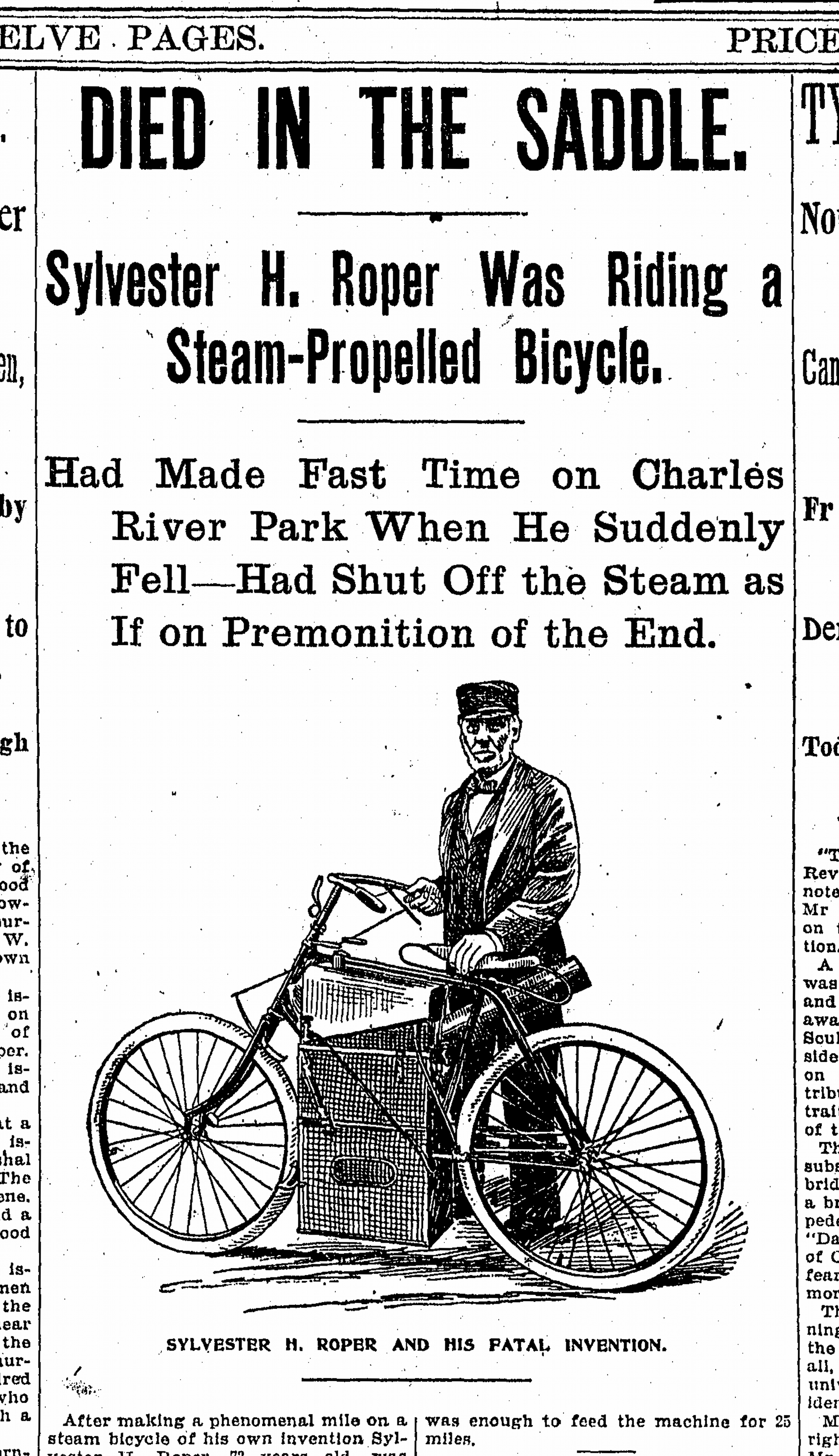
I wrote almost two years ago about the auction of a rare example of what is generally considered to be the world's first motorcycle - the 1894 Hildebrand & Wolfmüller.  Now one of the few remaining examples of its main competitor at the time is about to be auctioned off; a similar machine which used a different propulsion system that would eventually bow to the superior internal combustion engine - the Roper Steam-Propelled Bicycle.

If contemporary accounts are anything to go by it would seem that the Roper was more than a match for any petrol-powered motorised bicycle of the time.  Forty miles an hour in 1894 was not to be sniffed at, and it must have been quite a thrill puffing along at such a speed atop such a contraption.  Too much of a thrill for its elderly inventor, it would seem, considering what eventually happened to him(!).  One wonders if the technology could ever have been refined enough to make it practicable.  As it turned out, though, in the end internal combustion won the day and steam power ceased to be used in such small configurations.

So rare is this early pseudo-motorbike that the auction house involved can't seem to agree on a reserve price, referencing a contemporaneous steam-powered car that recently sold for $4.2million (£2.6m) and the current holder of the record for the world's most expensive motorcycle - a 1915 petrol-powered Cyclone that went for $502,000 (£313k) three years ago.  It may well be, therefore, that we are about to witness the world's first $1,000,000+ motorcycle (if it can be argued that a steam-powered bicycle comes under the definition of a motorcycle).  Either way, an interesting piece of motoring history is about to change hands.

Monday, 4 April 2011

Oldest working television set expected to sell for £5,000

Image courtesy of The Daily Telegraph
Oldest working television set expected to sell for £5,000

On the same day that my TV aerial is upgraded ready for the digital switchover next year I stumble across this story about the sale of the antecedent of all modern televisions.

After 10 or so years of development the very first commercially-available television sets went on sale in the mid-1930s and now Bonhams auction house has one of the very first - the seventh production model, if the article is to be believed - in full working order and ready to be sold to some lucky collector.

It joins the (still rare) ranks of functioning, almost antique television sets alongside the example featured in this B.B.C. report some months ago (below)


Despite the intervening 75 years these Marconiphone 702s are still recognisably televisions and you could watch programmes on them today, if you wanted to (I know I do!) - which in fact the chap in the second article has actually done!  It's appearance is (to these eyes) a welcome antidote to today's flat-screen black boxes (why isn't wood and Bakelite used in TVs these days, I ask you?!) but at the same time it is also a reminder about how far household technology has progressed, not to mention highlighting how commonplace the television has become over the last few decades (and not always for the best, it has to be said!).

Sadly I can't stretch to the £5,000 this particular example is expected to fetch, so I'll just have to add it to my dream 1930s home and trust that whoever it ends up with will appreciate it and preserve it for future generations.  Now I'm off to see what other delights are included in Bonhams' enticingly-named Mechanical Music and Scientific Instruments sale...

Friday, 4 February 2011

Excitement in Paris as classic cars go on show


Vintage Cars Go to Auction in Paris

Excitement indeed; if the cars don't get you going the location surely must! What a gorgeous building, and what machinery! How fitting that some of these cars should return to the same place they were shown 110 years ago (and again 60 years later). One can almost image the super-rich of 1901 wandering amongst them and marvelling at the then-new technology. A great showing of the history of the motor car too, I'll warrant. Another reason to hop on the Eurostar to Paris (I wish!).

Lord Raglan's 1930s vintage cars in Paris auction

A splendid selection of motor cars, a slideshow of which can be found here courtesy of Reuters, making up one of the best collections to be sold by Bonhams in quite a while. Too bad about John Lennon's Ferrari, although I can well believe the current owner's reluctance to sell!

A Bonhams automobilia sale is usually something to drool over at the best of times, but for it to take place in the beautiful surroundings of the Grand Palais is likely to make it even more special. The perfect marriage of motoring and architectural history, one might say.

Thursday, 25 November 2010

Lady Mairi Bury's stamp collection to fetch £2.6m at auction / Half a stamp sells for £221,000

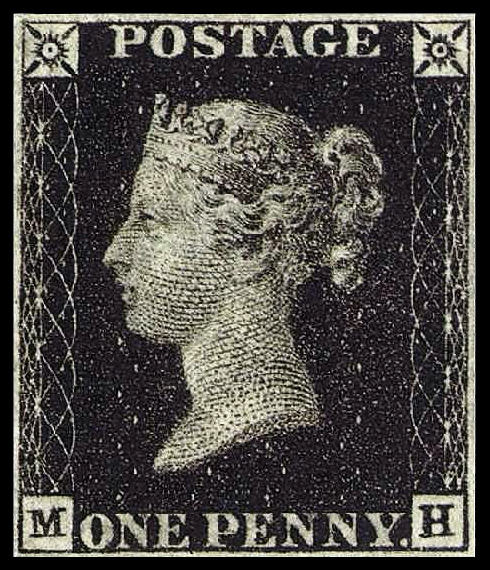
Two postage stamp stories in one day is a pleasant surprise for us philatelists but to avoid overwhelming you, dear readers, with two consecutive posts on the same subject I shall condense them down into one.

Lady Mairi Bury's stamp collection to fetch £2.6m at auction

This main story is fascinating, and not just from a collectors point of view. Granted, her collection sounds fantastic and is certainly one of the best I have come across in my time; the cultural value of the letters, as well as the stamps themselves, must be immense. However it also seems that, by all accounts, Lady Mairi was an incredible character and I'm surprised not to have heard of her before this either in philatelic circles or elsewhere. She certainly lead an eventful life and sounds like the most positive definition of an eccentric.

It seems almost a pity to see such a remarkable collection - literally of a lifetime - broken up but the sheer variety, condition and rarity of so many of the items means this was always likely to happen. At least they will go towards enhancing the collections of others and be assured of a safe future

Half a stamp sells for £221,000

Not the Royal Mail's new postage pricing strategy, but a bizarre stamp (or should that be sta...?) from 19th Century Germany, which got round a supply problem by being cut in half before being issued(!). Such an oddity was bound to be of some value in itself, but a short production period (and likely little used because of the actual shortage of stamps) has led to a great amount of money changing hands for this example. This is yet another intriguing historical facet of postage stamps that keeps me interested in the pasttime and once again we see rarity value and a bidding war between collectors push the price up. I would not be in the least bit surprised if the new owner hails from the same area where this stamp was first issued. I hope he enjoys it!

Friday, 19 November 2010

Barn-find Bugatti Type 38 makes seven times its estimate at auction


Barn-find Bugatti Type 38 makes seven times its estimate at auction

I do love these barn-find stories, but even so this one looks like it's going to take one helluva job to get it looking like it should (above) again! One can only assume that the winning bidder knows what he/she is doing and that they feel pretty sure of themselves in getting this Bugatti rebuilt cost-effectively. I suppose it's entirely possible to get it looking as good as new for £132,000 - at least there are some parts present (including the all-important chassis) and there are doubtless many Bugatti specialists out there who might be tempted to take on the restoration of it. New parts can be fabricated using old designs and the rarity value of this model (only 385 made between 1926 and 1927) means that it should be a worthwhile undertaking.

Of course it may be that the new owner wants to keep it as is, like the Type 22 from a few months ago - a sort of automotive artwork. Although by all accounts the Type 22 is not as valuable a model as the Type 38, so I expect in this case something more will be done. It may take a while, but with any luck this motley collection of parts will one day be a beautifully complete example of a rare pre-war Bugatti.

Monday, 15 November 2010

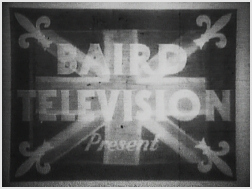
Signed Logie Baird book donated to Edinburgh shop

Signed Logie Baird book donated to Edinburgh shop

This is one of those stories that when you read it you wish it had happened to you (and wonder how the previous owner could have come to part with it!). A book about arguably the most influential invention of the 20th Century, signed by the inventor himself, ending up in a branch of Oxfam!

Of course it is really splendid news that it will end up benefiting the charity by being auctioned, maybe for as much as £1,000, and from a philanthropic point of view it's a far better outcome than it languishing undiscovered on the shop's bookshelves. Worse still it could have been snaffled by some unscrupulous dealer type who then sells it on and pockets the money for himself. Or is that fair game? I know I said at the beginning that I'd have loved to have found it myself but I'd like to think that had I done so and then realised it's value - both in monetary and cultural terms - I'd have done just as the shop owner did.

I know it's a thrill when we charity shoppers find a valuable item for an absolute steal, but I think this is such a special occurrence which goes far beyond normal considerations. If you found something on this scale, what would you do?

Thursday, 28 October 2010

Original rules of basketball expected to sell for millions

Original rules of basketball expected to sell for millions

Basketball is a sport that I've never followed, nor did I enjoy it at school (although to be fair I've never been a really sporty person and disliked all school sports apart from badminton and cricket...).

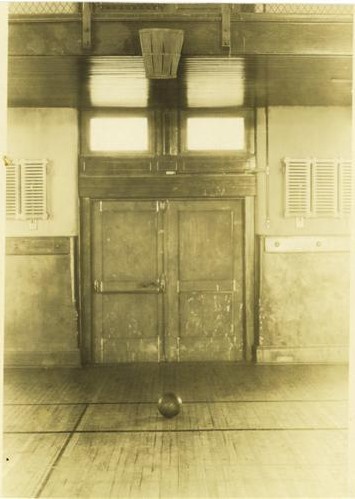
Nevertheless it has become part of American sporting culture and also enjoys a level of popularity here in the British Isles. I was interested, then, to read about the upcoming sale of an historic item which set the ball rolling (groan) - the original rules of basketball as drawn up by the game's creator, Canadian professor and sports instructor James Naismith, in 1891.

Regardless of your attitude towards the sport of basketball it is difficult not to marvel at the beginnings of the game (above). The fact that the original "basket", was just that, and what's more still had its base so players were forced to climb up and retrieve the ball (originally just an ordinary [soccer] football), may seem silly to us now but one has to remember that this was a new game and it is quite interesting to see the layout and rules as they were first created. As with all areas of history this glimpse into the early days of a still-popular, modern pasttime helps add to our appreciation and understanding of it in today's world while at the same time enlightening us as to how it came to be played and the way it was played in the years following its inception.

The sale of these original rules will no doubt generate a great deal of international interest and, wherever or whoever it ends up with, an important sporting document will have been preserved plus, what is more, helped to have raised funds for a children's sports charity, which is good news all round.

Sunday, 17 October 2010

Rare Audrey Hepburn stamps sold at Berlin auction

Rare Audrey Hepburn stamps sold at Berlin auction

Some more rare stamp news now, this time featuring the enduring film star Audrey Hepburn.

Once again this shows how good can come out of an unfortunate circumstance. I can readily understand why the son of Miss Hepburn was uneasy about the doctoring of the image used on the stamps and the subsequent destruction of all but a few sheets has quite naturally meant that the price for such items remains high. That Mr Ferrer has allowed the one set in his ownership to be auctioned for children's charities shows generosity of spirit and means that this small mistake and subsequent disagreement has ended up benefiting children the world over.

Of course the philatelic world is better off too, as interest in such rare stamps continues to prove. The auction of this one-time contentious stamp design must surely mean that there is no more ill-will regarding the original oversight by the Deutsche Post and it will also mean that if any further examples come up for sale a better knowledge of the existence and number of the stamps should prove useful.

As it is in this case a collector acquires a rare piece, a charity benefits and everyone gets to feel good about themselves, which is all one can ask, really.

Friday, 24 September 2010

Oscar Wilde letters are sold at auction

Oscar Wilde letters are sold at auction

A fantastic insight into the private life of Oscar Wilde here, with the sale of some of his letters to a publisher friend.

Looking back at some of the content from our modern perspective it is interesting and yet somehow poignant to read Wilde's plaintive requests to arrange meetings with his colleague. Of course on the other hand, knowing what we do now about Wilde's private life, it is just possible that too much is being read into the correspondence. It may well be that he simply wished to discuss some business matter pertaining to the Society Magazine. It is difficult to judge from just the excerpts in the article and it would seem that little is known about the extent of the relationship between the two men.

Either way the letters remain as an interesting snap-shot of a period of Oscar Wilde's life and his social circle in 19th Century London and they now no doubt form part of a valued collection for a particular Oscar Wilde aficionado, which can only be a good thing.

Monday, 13 September 2010

Rare 1897 Chinese stamp sells for £300,000

Rare 1897 Chinese stamp sells for £300,000

Further proof here of the increasing "commercial collecting" of stamps and the sudden explosion of serious prices being paid in emerging markets such as China.

One can understand such a high price being paid for a very rare, 113-year-old stamp but it is strange to see such large amounts of money changing hands for more recent issues. I suppose "speculate to accumulate" about sums it up; today's stamps will be tomorrow's valuable collectibles, I imagine.

The 1897 stamp is a nice-looking piece, however, and once again we see that a printing error and the subsequent rarity value attached to a production run of just 32 commands a high price. I'd love to have it in my collection but again, I can't afford £300k! It will most likely have sold to a wealthy Chinese collector, who I am sure will appreciate it and continue to patronize the growing Chinese philatelic market, which in the wider stamp-collecting world is a welcome addition to the top-end collecting boom.

Monday, 6 September 2010

Rare photographs of comedian Stan Laurel are auctioned

Rare photographs of comedian Stan Laurel are auctioned

I make no secret of my love for the films of Laurel & Hardy, so it was with great interest that I read about this discovery of some very early photographs of Stan Laurel (some of which can be seen here).

A few are very much in the vein of private family photographs, with some even showing him as a young boy playing and acting with his siblings, when he was still just little Arthur Stanley Jefferson. (He would later go on to be billed as "Stan Jefferson" when touring with Fred Karno's outfit in 1910s America but, a very superstitious man, he disliked the fact that it was 13 letters in length. It was his first wife, Mae Dahlberg, who suggested the name "Laurel", having seen a picture of Caesar wearing a laurel wreath).

Stan's parents were well known in local showbiz circles, with his father running a number of theatres and his mother performing in variety acts, so it should come as no surprise to see him catch the acting bug so early. And generations of comedy fans worldwide are glad he did!

Other photos in this collection include impromptu photos of Stan and Oliver Hardy clowning about on set and in publicity shots, many of which have never been seen before. This fact and the continued appreciation of their work by people the world over should ensure that these photographs fetch a tidy sum and end up in the hands of an appreciative collector who will preserve them for years to come.

Followers

Popular Posts