
Saturday, 4 July 2020

Sanitiser maker's links back to Victorian cough cure

source - BBC News

Sanitiser maker's links back to Victorian cough cure

Perhaps unsurprisingly there has been very little in the way of interesting vintage-inspired news to come directly out of the coronavirus crisis so this article about an historic company making hand sanitiser for the NHS is a rare and welcome example.  There are many facets of this story that make it worthy of inclusion here, not least the historical interest surrounding the Victorian "cough cure" that started the company in question on the road to where it finds itself today, taking inspiration from its founder and helping to provide much-needed equipment for those dealing with Covid-19 in hospitals up and down the country.

source - Flickr

As with so many all-purpose medicines that began to appear in the 19th century, Brown's Cough Bottle included among its ingredients several classic Victorian standbys such as laudanum (opium + alcohol), cannabis and chloroform.  The result, as was to expected, was a rather addictive drug as the accompanying article explains.  The classic style of advertisement from the time (above) using its alternative and more accurate name of Chlorodyne, shows just what wide-ranging a treatment it was marketed as - able to treat anything from a simple cough right up to gout and rheumatism (probably would have shined the furniture up a treat, too).
source

Nevertheless it was obviously doing something right (beyond getting the user hooked on opioids!) as despite changes to the content causing an initial downturn in its popularity the medicine still lives on today - albeit under the control of a different company - as J. Collis Browne's Mixture for coughs and stomach complaints (and with a slightly less addictive 1mg of morphine).

BCB International, which can still trace its origins back to Collis Browne and his cough medicine (BCB originally standing for Brown's Cough Bottle), now owes more to his other major interest - yachting and open air pastimes - by manufacturing adventure equipment and emergency supplies, with the cough mixture now produced by a separate but still family-owned branch of the business.

source - BBC News

Now BCB has stepped up to the crease during the pandemic and used its facilities and experience in producing emergency equipment to swiftly start production of hand sanitiser and PPE for use in hospitals and by key workers.  In a fine tribute to the man who started it all for them 172 years ago - and who I'm sure would be proud and astounded were he around today - they have branded the hand gel Dr Browne's Hand Sanitiser.  All in all then a splendid piece of good news for these trying times, with a vintage twist; I take my hat off to BCB International for taking inspiration from their past in helping to produce equipment that will help ensure many people's future.


To finish on a somewhat humorous note the name J. Collis Browne was not unknown to me before this news item appeared on my radar, although from a rather different source quite unrelated to its actual origin.  Without doubt one of the more bizarre CDs in my music collection, Collis Browne's Jamboree contains an eccentric selection of songs and performances by the creator of The Chap magazine Mr Gustav Temple and some of his chums.  Produced back in 2003, when The Chap movement was but a mere 4 years old, it was originally only available to order through the magazine but I was able to pick up a used copy online a few years ago.  It truly is an eclectic mix of ukelele covers (Champagne Charlie and The Kinks' Dedicated Follower of Fashion among others) and weird recitals such as Collis Browne's Recipe, above.  Quite where Mr Temple and his cohorts got their inspiration for this frankly weird record from I don't know but clearly they must have come across the name J. Collis Browne somewhere along the way (I sometimes wonder if they found a stash of Dr Browne's original mixture, necked the lot and came up with the CD in an opium-fuelled stupor one afternoon...).  The result is this strangely appealing disc, which is a valued part of my chappist musical collection and my first introduction to the name of Collis Browne.

Wednesday, 1 July 2020

Lockdown look back #3: July 2017 - Thurrock Thameside Nature Reserve, Mucking, Essex

As most of us continue to slowly - and hopefully permanently - emerge from lock-down (although with those like myself still having to shield until the 1st August) it's occurred to me that it's been a couple of months since the last in my series of "Lockdown Look Back" posts featuring some of my escapades in the 3½ years I was absent from this blog.  So without further ado (or further adon't) let me take you back three years to the day to the 1st July 2017, where we find ourselves in the somewhat different but no less interesting surroundings of Thurrock Thameside Nature Reserve on the banks of the Thames Estuary and just outside the hamlet of Mucking in Essex.

source - Essex Wildlife Trust

The history of this nature reserve is a fascinating and convoluted one.  Like so much of this area bordering east London and the river it started life as a gravel quarry (although its ancient history can be traced all the way back to a Stone Age settlement) before becoming a landfill site for 50 years.  In 2012 it was finally closed as a tip and work began to return it to nature under the auspices of The Cory Environmental Trust, DP World Port and the Essex Wildlife Trust.  The 100ft-high piles of waste - half a century's worth of household rubbish from six London boroughs - was first covered over by a layer of thick clay (fortunately also found in abundance in this part of the world) before fresh soil and suitable plants were added.  A varied landscape of grassland, woodland, ponds and reedbeds has been created, with the seawall at the east end of the site being deliberately breached to allow the area to revert to marshland.

source - Essex Wildlife Trust

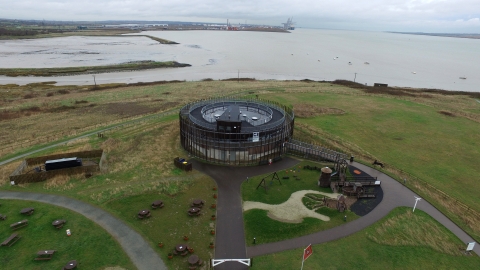
An ingenuously-designed visitor centre was also built in 2013 - wood-clad and circular in shape it has wonderful views of the entire reserve as well as the estuary, not least from the 360º viewing platform on its roof, and sits on hydraulic jacks that allow for the movement of the rubbish beneath as it continues to settle.

I can certainly attest to the excellence of the visitor centre, which as well as the aforementioned views contains a wealth of informative displays plus the obligatory EWT shop and a decent cafe.  I first visited the place with my parents shortly after it first opened, which was how I knew of its existence and thought of it as a worthwhile place to take my then-new lady friend.

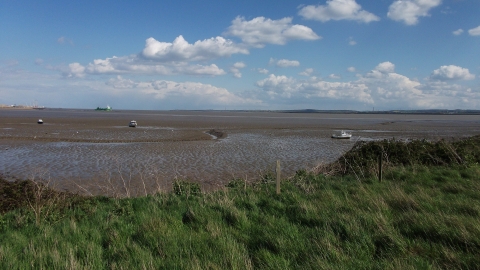
Looking east out into the estuary
source - Essex Wildlife Trust

As I recall it was a mild if slightly blustery day - not unusual on that exposed part of the estuary - as we parked up and commenced walking around one of the myriad pathways that reach out in all directions from the visitor centre.  The entire reserve is currently about 120 acres in size (although the aim is for that to increase to a massive 845 acres - twice the size of Regent's Park) and forms part of the Thames Estuary Path which runs along the coast practically uninterrupted for 27 miles from Tilbury all the way to Leigh-on-sea.  Needless to say we contented ourselves with staying to within a mile or so of the centre but there was still plenty to see.

Looking towards Stanford-le-Hope/ Horndon-on-the-Hill on the Essex coast

Sailing boats over on the Kent (Cliffe) side of the river took advantage of the breeze

Unfortunately I am never going to win the Wildlife Photographer of The Year and as we were busy walking around, taking in the sights and enjoying each other's company I had little time or opportunity to take much in the way of photos.  The two above and three below therefore constitute the best of a poor bunch, but I hope they give a little idea of the splendid variety of wildlife and the fantastic effort that has gone in to turning a once barren and industrial wasteland into a beautiful and thriving nature reserve.

Thistles amidst the grassland
A close-up of a cardinal beetle taking a break atop a thistle 
More thistles and some unidentified purple flowers (I'm afraid I'm no horticulturist
either so if any green-fingered readers want to enlighten me I'll happily update this
caption!)

After our circuit of some of the shorter routes we repaired to the visitor centre for a light snack in the cafe (quite passable) and an enjoyable wander around inside and out (access to the rooftop viewing platform is via a circular ramp that runs around the outside of the building, which allows for good views as you make your way to the top).  One other thing the visitor centre had, which appealed to us more as bibliophiles than naturalists it has to be said, was a small selection of second-hand books tucked away in the corner of the cafe.  While unsurprisingly most are of an environmental or horticultural bent there are often quite a number of other genres both fiction and non-fiction so to finish off this post here are two acquisitions from that stall (although neither of them came from this particular visit).


The Friendless Sky was actually my most recent find from a return visit and is exactly what it says on the cover; it joins my already-burgeoning collection of World War One literature but was a jolly good read and complements my library well.  Likewise Captain Starlight by Percy F. Westerman, a contemporary of Biggles author W. E. Johns and while maybe not quite as well-rounded still a ripping adventure yarn.  This came out of my very first visit with my parents and served as an introduction to Westerman's work, further examples of which I have since added to my collection.

I have no doubt that we will return to Thurrock Thameside Nature Reserve again (and not just for the books!) and can wholly recommend this - still sadly somewhat hidden - gem should you ever be in the area.

Monday, 29 June 2020

Demolition firm puts vintage steam engine back to work

source - theconstructionindex

Demolition firm puts vintage steam engine back to work

More steam-powered goodness now, from a time before lock-down (remember those days?  No, me neither), featuring one of this blogger's favourite type of stories - one of the sort that has also been long missing from Eclectic Ephemera's pages: the "vintage-machinery-triumphs-over-modern-equivalent" exploit.

source - theconstructionindex

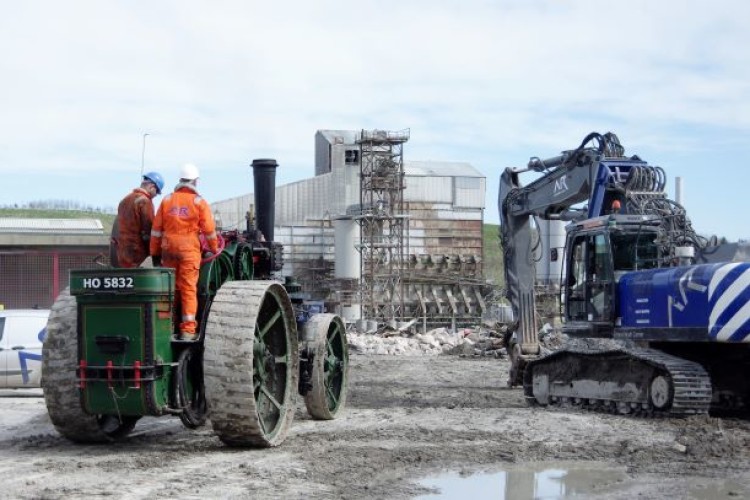
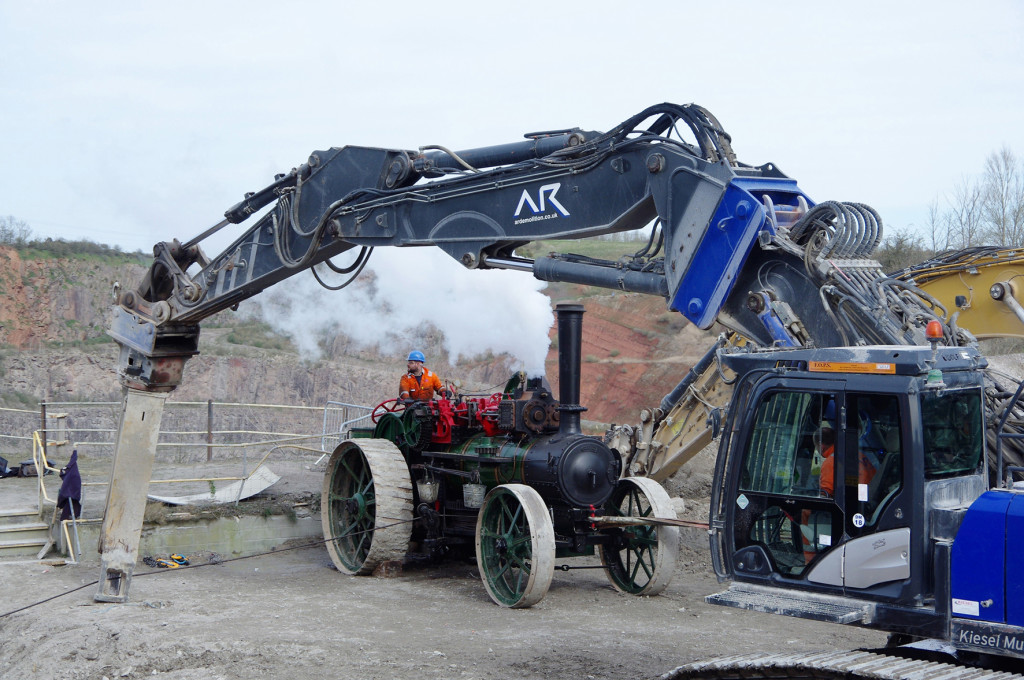
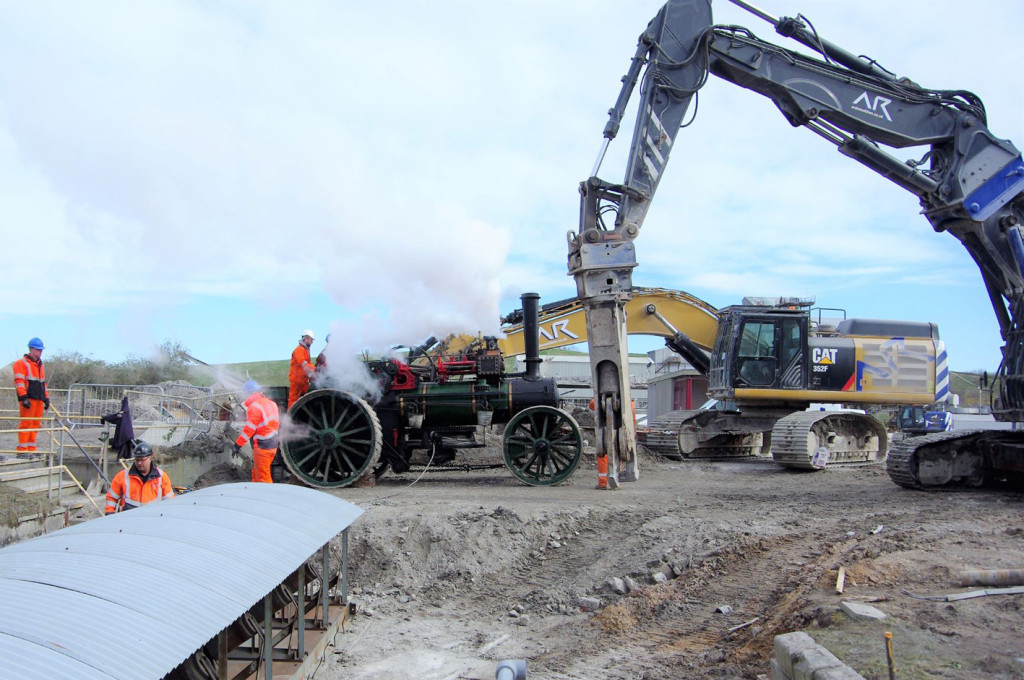
The vintage machinery in this instance is Avis, a 102-year-old steam traction engine owned by Leicestershire father and son enthusiasts Robert and Richard Holt.  As the accompanying article explains, in a wonderful example of serendipity the son happens to work for a local demolition firm that was in the process of dismantling some disused quarry equipment and which was having difficulty in removing parts of the old conveyor belt using its modern excavators.  Having exhausted all other alternatives and knowing of Avis's existence, the M.D. of the company, clearly a sensible and open-minded fellow, approached the Holts to see if they and their beautifully-restored traction engine could lend a hand.

source - theconstructionindex

The result was a clear demonstration of the lasting power of a steam traction engine, a resounding success for Avis and her owners and proof that these sturdily-built machines are still more than capable of doing jobs they were originally designed for over a century ago.  That once she got up a good head of steam Avis made the pulling of several tonnes of metal up a steep incline "look easy" is a wonderful testament to Edwardian engineering and just a sheer delight to see.


Kudos should also go to the management and owners of AR Demolition for their appreciation of traditional machinery, their attitude towards using it in conjunction with more modern methods and the "out-of-the-box" thinking to get the Holts and Avis involved in the first place - something not many firms, particularly those in the construction industry, would consider doing these days I'll wager.  That they would happily use Avis again if circumstances called for it speaks volumes for both the machine's ability and the company's ethos. 

source - theconstructionindex

A hearty "well done" to all concerned then, but especially to Avis for showing that century-old technology doesn't just belong in a museum and can still be a viable alternative to more modern equipment.  Here's hoping she has many more jobs ahead of her with AR Demolition.

Saturday, 27 June 2020

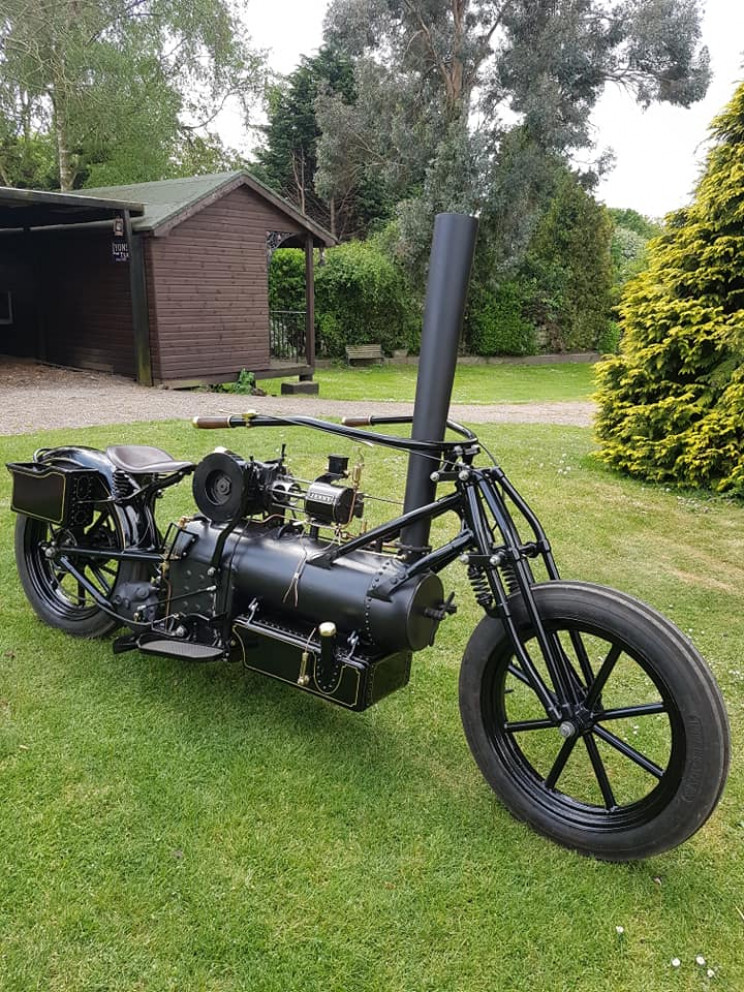
Coal-fired steam motorbike built by technician is a Steampunk dream

source - Interesting Engineering

This Coal-Fired Steam Motorbike Built by Technician Is a Steampunk Dream

There hasn't been much in the way of Steampunk-themed articles featured on this blog of late (mind you I've only been back for three months) but this one about a beautiful home-built, steam-powered motorcycle more than makes up for it.

The creation of a steam engine enthusiast from Carlton in North Yorkshire, this fantastic machine is all the more remarkable for having been built from scratch over the course of four years - including the engine which was pieced together from various sources!  It's a testament to the skill and the vision of Mr Sanderson that the end result is such a professional example of Victorian engineering in a wonderful Steampunk design and he should be justly proud of his achievement.


It does look quite a brute of a machine, though, doesn't it - and I can't get over (and no doubt wouldn't be able to see over) the size of that chimney!  I imagine that it must interfere with forward visibility just a tad...  What it must be like to sit astride a high-pressurised boiler full of steam and hot water I wouldn't like to guess, either; I only know I would be a little nervous - although not above giving it a go I suppose.

source - Interesting Engineering

Still I can only express again my admiration for the thought and workmanship that has obviously gone into this incredible machine over such a long period of time.  The world is a fuller place for its existence and that of skilled enthusiasts like Mr Sanderson and it can rightly take its place alongside any of the one-off and custom-made Steampunk motorbikes that are out there and mentioned in the accompanying article.

Finally, to prove it's a real runner and not just a stationary engine (ha-ha, did you see what I did there...?), here to finish with is footage of the happy owner taking his fantastic steam-powered motorcycle for its first test drive:


Toot-toot!  Full steam ahead, sir!

Thursday, 25 June 2020

Coventry man brings to life old photos to 'give them a home'


Coventry man brings to life old photos to 'give them a home'

Lost photographs and discarded picture albums have been a recurring theme on this blog over the years - from photos of a still under construction Tower Bridge being found in a skip, 5,000 First World War photos rescued from rubbish dumps, to rare images of the British Raj from over one hundred years ago turning up in a shoe box.  On each occasion we have marvelled at the wonderful glimpse into the past these eleventh-hour rediscoveries have afforded us while at the same time lamenting the fact that they have been so undervalued as to have been left forgotten for decades or more, often to the point of their near-destruction.

This latest article is no exception and once again it is thanks to the efforts of one collector that a number of old photographs - primarily picture postcards of his home town of Coventry and studio portraits of its inhabitants - have been saved for posterity.  Peter Knight's attitude towards preserving these "forgotten faces" is one that we can well appreciate - the thought that they might represent all that is left of a person's life, that they are the last surviving visual documentation of their existence and the travesty that would result if they were just left to gather dust (or worse).


What gives this story added inspiration is that Mr Knight has been able to use modern technology to restore the images to a startling degree of freshness, colourising them and in some cases even employing the much talked-of computer trickery that is "deep fake" to slightly animate the photos.  While I am not convinced about the latter technique, the colourisation does go some way to adding to the immediacy of the pictures, to reinvigorating the subject and, indeed, bringing them back to life.  Mr Knight's idea of incorporating these photographs into a virtual online world of an historical Coventry is also an intriguing project and one that I hope succeeds.


There has been some degree of backlash from certain quarters recently regarding how far "restoration" of old photographs and cine-footage should go following the colourisation, addition of sound effects and 4K HD & frame rate upscaling applied to the famous Lumière brothers' 1896 film L'Arrivée d'un train à La Ciotat and other late 19th-/ early 20th-century footage on YouTube.  As a student of history I can well understand the disquiet that is felt at the perhaps unnecessary meddling with things that were products of their time and should be understood and appreciated as such but equally I can appreciate the thinking behind it and in particular the benefits to the originals and their history that may result.  For example, is Peter Jackson's recent excellent WW1 film They Shall Not Grow Old just "showmanship" or a legitimate attempt to modernise important historical footage for a new, 21st century audience?  As I have said we as lovers of times gone by can appreciate black & white pictures and films as windows to the past but to many [young] people it is as alien and as relevant as another planet - noiseless, colourless, oddly-dressed people long since dead.  If adding colour, realistic movement and other modern technological features can help get new generations more interested and perhaps lead them back to the unadulterated original, with a better understanding and appreciation of what it represents, it might well help to avoid further examples of photographic abandonment like those mentioned and ensure the endurance of classic early cinema and historic photographs such as those saved from oblivion by the likes of Peter Knight and others.

***What do you think?  Can film or photographs ever be over-restored?  Let me know your thoughts in the comments below.***

Tuesday, 23 June 2020

Letter from Dunkirk soldier arrives 80 years later


Letter from Dunkirk soldier arrives 80 years later

A poignant yet remarkable story this - an incident one can scarcely imagining still happening but which I suppose we will keep seeing as more historical material from the period is unearthed, despite the lengthening passage of time since the end of the war.

An intriguing concatenation of circumstances looks to have led to this wartime letter and several others turning up after a prolonged period of time - first in the attic of a German ex-officer almost 30 years after first being written and now over 50 years later finally finding their way back (at least in part) to the families or villages of the senders, thanks to the work of the Suffolk Regiment Museum and later the Suffolk County Council's Archives.

source - Suffolk Archives

In the instance of Private Harry Cole the archivists at Suffolk County Council also managed to locate surviving relatives in the persons of his two younger brothers, a quite incredible achievement after all these years made even more so by the fact that one of the brothers and an SCC archivist both live in the same village. 

The fact that the siblings are still alive and remain in the same part of the country from which their brother would have left to join up brings a whole new level of immediacy to this particular story and serves as a welcome reminder that for all the time that has passed since the end of the Second World War 75 years ago it remains a relatively recent event in our history with people still alive today who were directly affected by it.  All the more reason then to applaud Suffolk Archives for its work in trying to return these letters to their rightful owners and, where that has not been possible, to produce an excellent online exhibition featuring some of them.  It is a fine example of local history within the context of a global war, which I look forward to delving into in detail and which hopefully might reunite a few more families with these long-lost reminders of relatives and their sacrifices during the Second World War.

Saturday, 20 June 2020

Spanish film made by mystery female director discovered during lockdown

source

Spanish film made by mystery female director discovered during lock-down

This article from last month once again serves as a reminder that there are still many lost or misattributed films from the early years of cinema just waiting to be discovered - and in this particular case not only examples from the usual English-speaking sources of Hollywood or British productions.

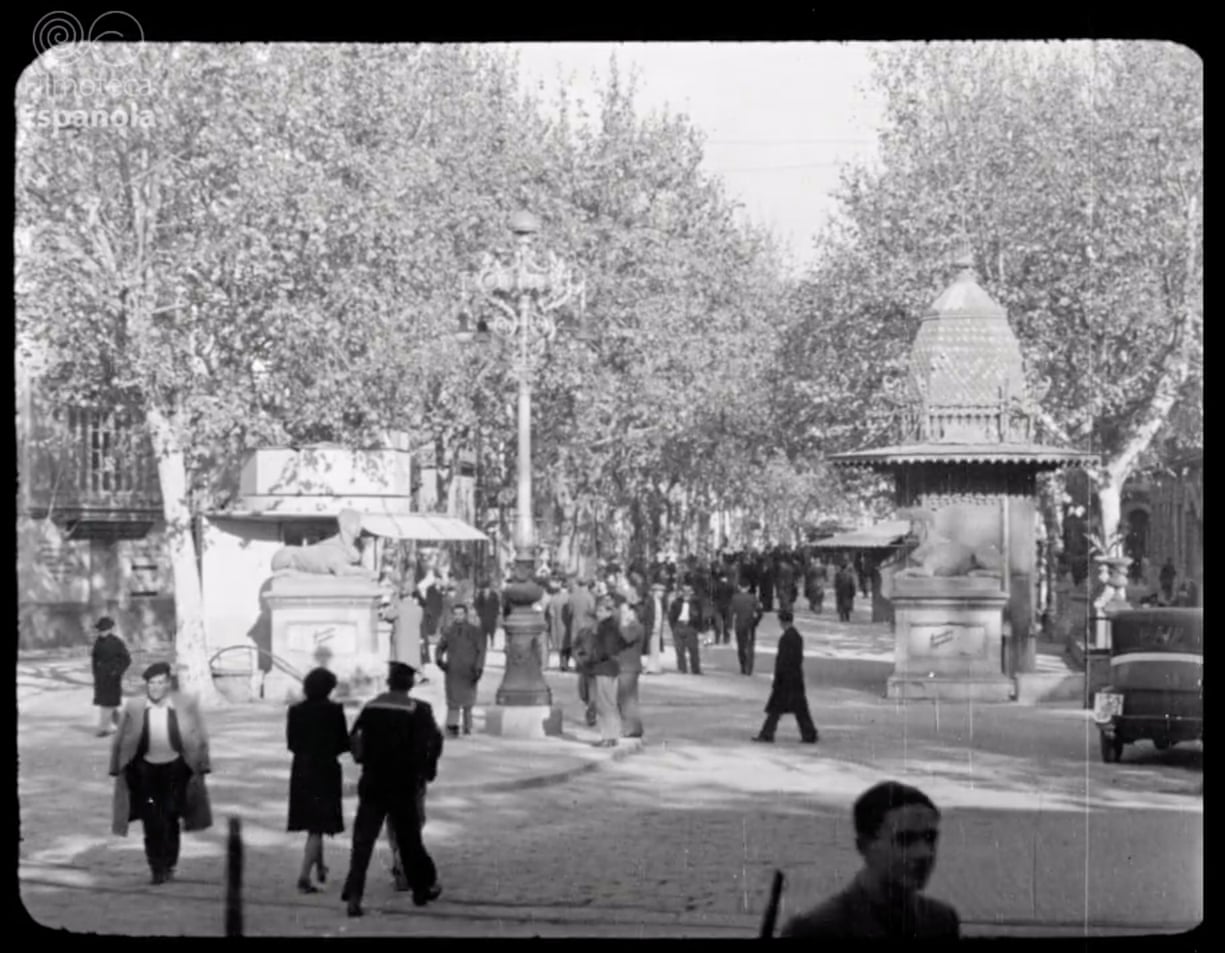
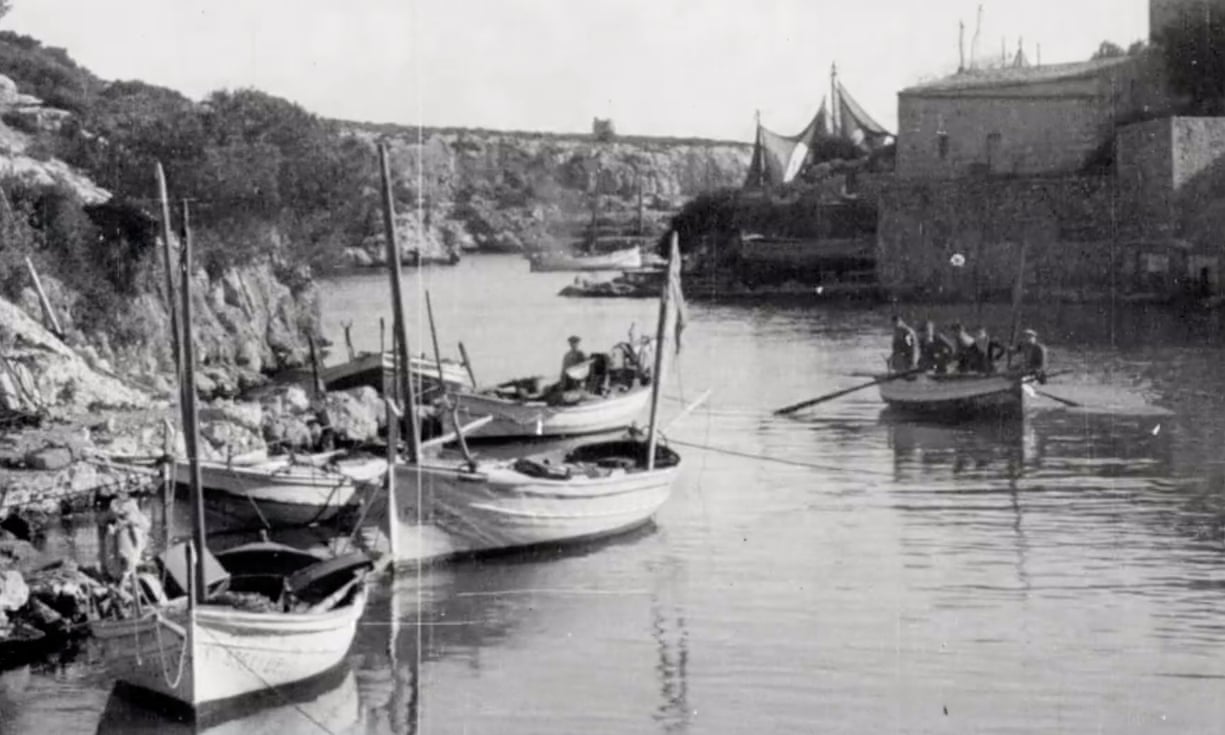
The film in this instance is an early example of a tourism documentary featuring as it does fascinating footage of the Spanish Balearic island of Mallorca, still famous today as a holiday hot-spot.  Originally assumed to be a 1926 silent film directed by a man, this 8-minute "æsthetic documentary" - simply titled Mallorca - had been gathering dust on the shelves of the Filmoteca Española's archives for the best part of 40 years until lock-down gave archivists the opportunity to review and re-evaluate it.

source

The result is one of those remarkable rediscoveries that often come with the fresh re-examining of a film that has been left in storage, often wrongly-labelled, for a prolonged period of time.  Far from being a minor piece of 1920s local tourism footage by a male director it has now more or less been identified as an early 1930s example complete with soundtrack and by female director Maria Forteza (although how they came to miss that on the credits is anyone's guess) - making it possibly the first sound picture directed by a woman in Spain.

source

Although it sounds like there is still some work to be done to definitively date and ascribe this short film it is nevertheless a welcome find and I am pleased to see the specialists at the Filmoteca Española finally taking a proper interest in it - thanks in part to lock-down of all things!  It's importance to the history of Spanish cinema and women in film generally is obvious and I'm glad to see its rediscovery is prompting discussion about the importance of keeping - and more importantly regularly checking - a film archive.  Unfortunately the entire film is no longer available to view on their website but there are snippets on YouTube as part of Spanish news coverage (habla Español?) here and here.  Once again this find gives hope for the future of other early films presumed lost and with luck this won't be the last one to be rediscovered as a result of the coronavirus lock-down.

Followers

Popular Posts