Showing posts with label Edwardian. Show all posts

Tuesday, 29 September 2020

For he's a brolly good fellow

With the arrival of some seriously autumnal weather (finally - this is my favourite time of year, after all!) in the form of lower temperatures, strong winds and much-refreshing rain I thought I would take the opportunity to do an article about that most important wet weather accessory, the umbrella.  Rather than do a long-winded blog about the history of the brolly, though, I intend over a couple of posts to take a somewhat sideways (but still probably long-winded) look at this humble accoutrement and in particular its use by some great British eccentrics as well as a device for protecting you from more than just cloudbursts.

My own preference for the good old bumbershoot is of course the traditional full-size, crook-handled type so often associated with the archetypal English gent.  Telescopic umbrellas are all very well if you're pushed for space (and ladies in particular may be forgiven for having to carry one around in their handbags, although with the wonderful array of different [parasol] designs you're afforded I struggle to see why you would...) but they are rightly considered somewhat infra dig in the face of the time-honoured gent's brolly.  And don't even get me started on the monstrosity that is the golfing umbrella - talk about going from one extreme to the other.  The number of times I've been forced into the road and nearly had my eye poked out by someone wielding one of those tents-on-a-stick - plus how those cylindrical "handles" are supposed to be comfortable I don't know!

source - Farlows
No, give me a crook-handled job any old time and a bamboo or whangee one at that.  My own example is a a splendid bamboo-handled example from Classic Canes, which can be had for a very reasonable price from the likes of Walkingsticks.co.uk.  I'm actually on my third one of these - the first being left on a bus, the second having withstood a day's worth of heavy rain and strong wind in Rochester before being laid low by a freak gust barely 200 yards from home.  I've been very happy with mine - lightweight but sturdy it feels perfect to hold in the hand, with a wonderfully smooth mechanism.  Of course if money is no object then the nonpareil of umbrellas are generally regarded as coming from either Fox or Briggs - awfully good they may be; I'll leave you to judge whether they're worth the price or not (personally as much as I'd love one I'd hesitate to take a £500 umbrella outside never mind put it up in a rainstorm).  At the other end of the spectrum an honourable mention must go to the second of my full-size brollies, a solid wood-handled number I got from budget supermarket Aldi a few years ago for the bargaineous sum of £9.  Even sturdier than the bamboo one (I have no qualms about putting my full weight on it) it is very much a proper walking umbrella in the mould of solid-shaft types many times the price - I can even forgive it its automated mechanism.  Alas it was one of their Special Buys (from 4 years ago to boot) so is no longer available but who knows, it may return again one day so keep your eyes peeled.


via GIPHY

Someone else we associate with the bamboo-handled umbrella is of course everyone's favourite fictional (alas!) English gentleman spy - John Steed of The Avengers (no, not the Marvel lot - although he could certainly add to the team!).  Every inch the dapper chap with his glorious [three-piece] suits and bowler hat, his ensemble is always topped off with his trusty whangee umbrella.  Exceptionally tightly furled (to this day I've never managed to get mine to that level of perfection) and often wonderfully matching the colour of his suits (one presumes the same in the early b&w episodes) at least one of them contains a hidden swordstick (viz. the opening credits, above) should some miscreant attempt to perform any physical violence on our hero - or if Steed just wants a carnation for his buttonhole.  While the idea of a swordstick umbrella may be appealing one in this day and age - and examples can be found online, mainly in America - it should be remembered that in the UK at least they are regarded as a [concealed] offensive weapon and so cannot be bought, sold (unless they're antique, i.e. over 100 years old) or carried in public.  Doing so is punishable by a fine of £5,000 and up to four years in quod, so I wouldn't recommend it.


Of course Steed doesn't always need a hidden blade to overcome any ne-er-do-well - in fact his umbrella on its own is usually more than equal to incapacitating violent ruffians as we see on many occasions throughout the series.  (Serious Avengers fans will I hope forgive me for including a clip from that film - it was the only one I could find and is at least one of the few good bits of the whole movie.  Plus if you still like the idea of a besuited and bowler-hatted Ralph Fiennes wielding a handy brolly then hold that thought for part two of this post...)  This use of an umbrella as an impromptu weapon is very much a based in fact and can actually be traced back to the turn of the last century and a fascinating martial art that emerged in London at that time.

Edward Barton-Wright and
the variety of skills that
make up Bartitsu.
source - Wikipædia
Called "Bartitsu" (a portmanteau of its progenitor's name and jujitsu) it was the creation of railway engineer Edward Barton-Wright, who had been working in Japan in the mid-1890s and who became one of the first Westerners to learn the art of jujitsu.  Already a keen student of self defence, upon his return to London in 1898 he set about combining this mysterious Eastern martial art with the better-known fighting styles of boxing, wrestling, and fencing with a view to teaching these skills to the gentlemen of London who might otherwise be helpless in the face of the many thieves and footpads who prowled the streets of the city at that time.

For a short while, between 1898 and 1902, the Bartitsu craze took off in London with a well-equipped club on Shaftesbury Avenue proving popular and several similar techniques - aimed for use by both men and women - appearing around the same time.  Some of these variations made allowance for the use of an umbrella (or, especially for women, a parasol) in place of a cane, as can be seen in the series of images on the right.  In all respects the idea behind Bartitsu and its imitators was to provide the average man (or woman) on the street with the skills and knowledge to use whatever they had at their disposal to keep themselves safe and repel any surprise mugging, as well as being an efficacious form of exercise.  It was advertised as "the gentlemanly art of self-defence", not because it was in and of itself "gentlemanly" but rather that it was designed for the gentleman who might otherwise find himself at a disadvantage when faced with a gang of street-toughs.

However for various [largely unknown] reasons interest in Bartitsu declined rapidly after about 1903 and it would likely have been entirely forgotten had it not been obliquely referenced in the Sherlock Holmes story The Empty House as "baritsu" (whether deliberately or accidentally mis-spelt is still a subject of discussion among Sherlockians and Bartitsu historians) - the "Japanese system of wrestling" that Holmes uses to overpower Professor Moriarty atop the Reichenbach Falls.  This brief immortalisation in one of fiction's greatest stories and the mystery surrounding its inclusion saved Baritsu from oblivion and since the early 2000s it has enjoyed something of a minor renaissance as one of the earliest examples of mixed martial arts (MMA), with clubs popping up all over the world and a society dedicated to propagating its memory and furthering its practise.  Fans of the Great Detective will recognise its inclusion in both Sherlock Holmes (2009) and its 2011 sequel A Game of Shadows (with both director Guy Ritchie and star Robert Downey Jr. being keen MMA practitioners) - prominent appearances that have rightly delighted Bartitsu aficionados.


More on the subject of umbrella self-defence (umbrellajitsu perhaps?) in film (and two real-life arch-chaps who wielded their brollies in remarkable circumstances) will appear in part two of this article but in the meantime I think I've gone on quite long enough.  For now the rainclouds are gathering here at Partington-Plans Towers so I may take the opportunity to use one of my brollies in anger - or at least practise some Steed-like umbrella jousting.

Monday, 29 June 2020

Demolition firm puts vintage steam engine back to work

source - theconstructionindex

Demolition firm puts vintage steam engine back to work

More steam-powered goodness now, from a time before lock-down (remember those days?  No, me neither), featuring one of this blogger's favourite type of stories - one of the sort that has also been long missing from Eclectic Ephemera's pages: the "vintage-machinery-triumphs-over-modern-equivalent" exploit.

source - theconstructionindex

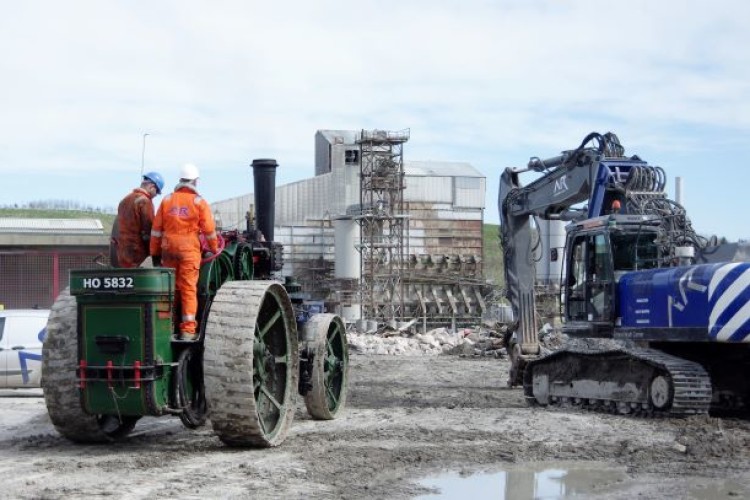
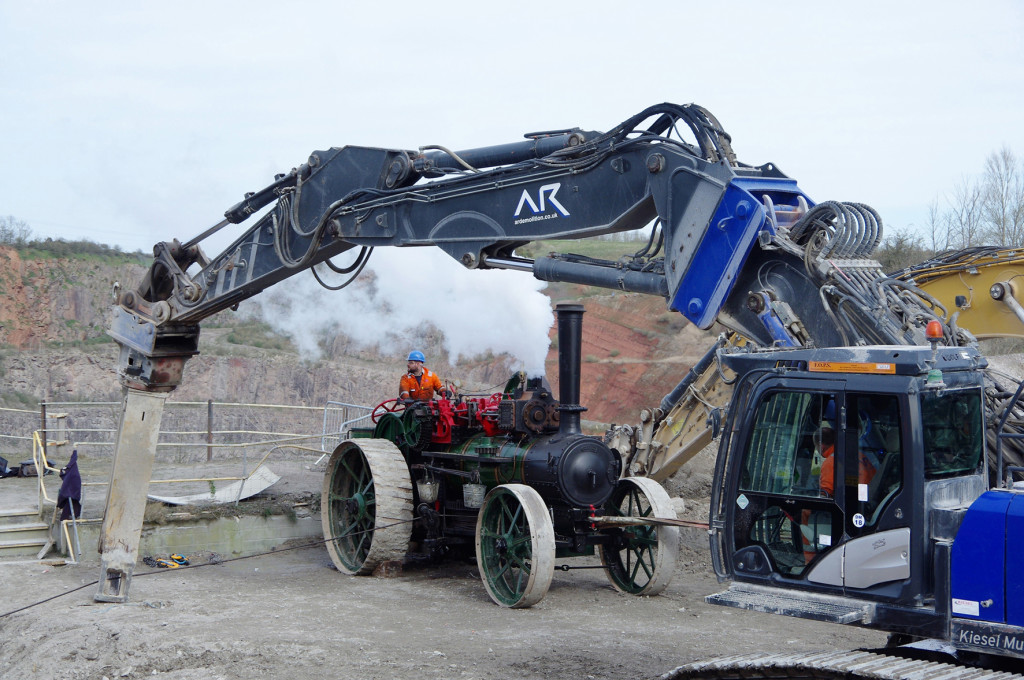
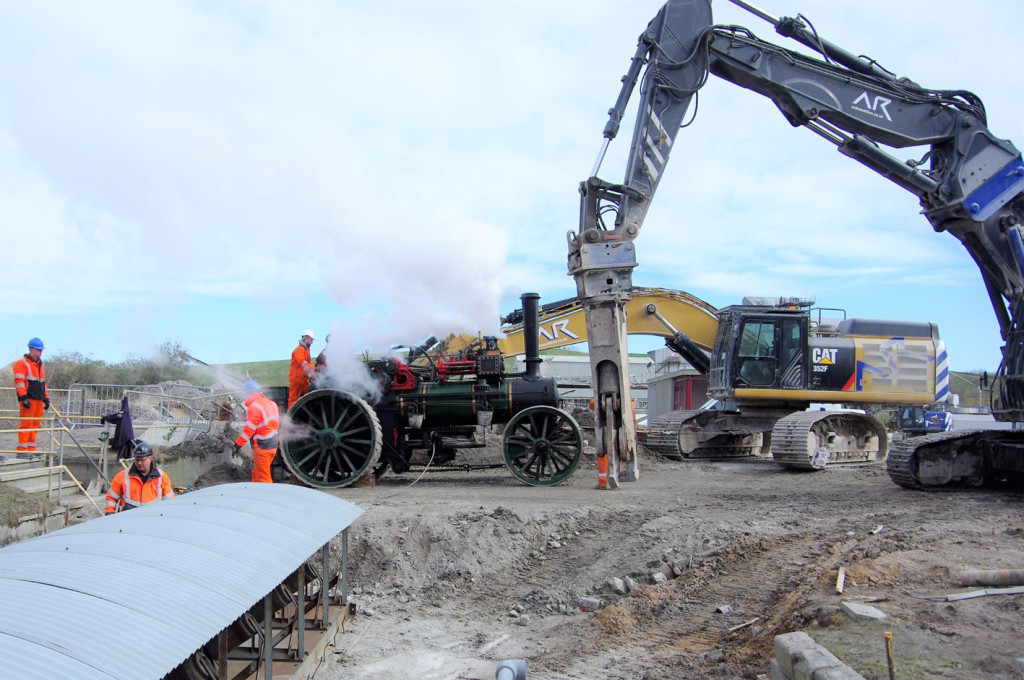
The vintage machinery in this instance is Avis, a 102-year-old steam traction engine owned by Leicestershire father and son enthusiasts Robert and Richard Holt.  As the accompanying article explains, in a wonderful example of serendipity the son happens to work for a local demolition firm that was in the process of dismantling some disused quarry equipment and which was having difficulty in removing parts of the old conveyor belt using its modern excavators.  Having exhausted all other alternatives and knowing of Avis's existence, the M.D. of the company, clearly a sensible and open-minded fellow, approached the Holts to see if they and their beautifully-restored traction engine could lend a hand.

source - theconstructionindex

The result was a clear demonstration of the lasting power of a steam traction engine, a resounding success for Avis and her owners and proof that these sturdily-built machines are still more than capable of doing jobs they were originally designed for over a century ago.  That once she got up a good head of steam Avis made the pulling of several tonnes of metal up a steep incline "look easy" is a wonderful testament to Edwardian engineering and just a sheer delight to see.


Kudos should also go to the management and owners of AR Demolition for their appreciation of traditional machinery, their attitude towards using it in conjunction with more modern methods and the "out-of-the-box" thinking to get the Holts and Avis involved in the first place - something not many firms, particularly those in the construction industry, would consider doing these days I'll wager.  That they would happily use Avis again if circumstances called for it speaks volumes for both the machine's ability and the company's ethos. 

source - theconstructionindex

A hearty "well done" to all concerned then, but especially to Avis for showing that century-old technology doesn't just belong in a museum and can still be a viable alternative to more modern equipment.  Here's hoping she has many more jobs ahead of her with AR Demolition.

Friday, 29 November 2013

Timewarp fashion treasure trove discovered in Houghton-le-Spring house

Timewarp fashion treasure trove discovered in Houghton-le-Spring house

Ladies!  Get thee to Tyne & Wear next Saturday!!

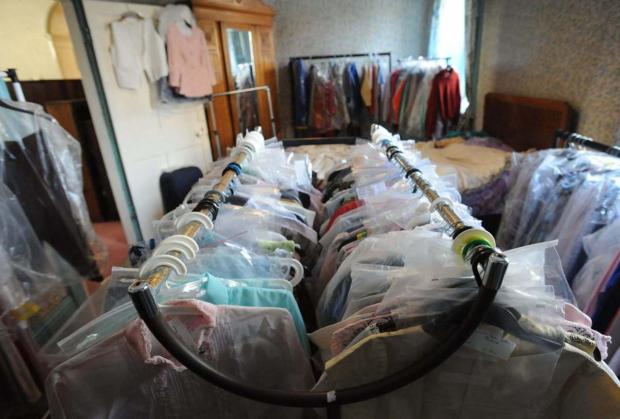
You know how I sometimes half-jestingly, half-wistfully wish - along with most of you I imagine - that there was a warehouse or boarded-up mansion somewhere complete with sealed rooms full of vintage clothing from our preferred time period?  Well, here is an example of it come true!

A bittersweet example in many ways, as the story behind this "treasure trove" is a particularly poignant one.  Although the "widowed-at-a-young-age-never-remarried-lived-alone-hoarded-things-died-in-their-nineties-nobody-knew" story is not necessarily an uncommon one (but maybe its unusual nature attracts comment and makes it appear more commonplace, if you take my meaning?) there is always something particularly touching about it and this one is no exception.   Perhaps it is the thought of the lady's routine of travelling and returning home with new suitcases to be filled with the best dresses - stashed away and destined never to be worn - over a period spanning 70 years.  Yet if she was happy (although I do wonder about that - was this the sign of a life that felt unfulfilled from the early death of a husband?), taking annual holidays and living to a grand old age, then fair do's to her say I.

source

Now her collection can be someone else's gain (yours, perhaps?) as this immeasurable amount of vintage clothing - valued collectively at £100,000 - is set to be sold off next month by the lady's friends with the help of a local vintage shop owner.  If you want to make a note of the date, girls, it's the 7th December and the sale will be held, suitably - and no doubt interestingly - enough at the lady's house in Houghton-le-Spring (no address given, but doubtless contacting the shop - the oddly-named "Dregs of Society"(!) - would provide it).  Some of the really valuable pieces like the Victorian and Edwardian wedding gowns of the lady's mother and grandmother are earmarked for the local Beamish Museum, however, which seems only fair.

A remarkable discovery, then, of a life's legacy - a fantastic fashion timeline.  I'm sure you'll join me in echoing the thoughts of the best friend and her hope that all these items will find new owners to use and appreciate them - a positive aspect of wearing vintage that many of us have commented on in the past.  It all makes you wonder what else might be out there...

Saturday, 22 September 2012

Parade's End: a review


My goodness, the last week has just flown by - and I wasn't even doing much to make it seem so!  I must apologise again for the silence that has emanated from this blog for the last 8 days - terribly remiss of me I'm sure.

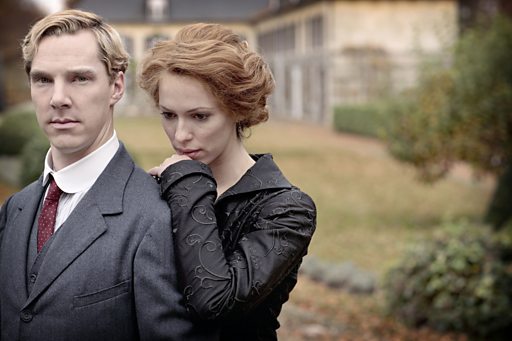
While there seems to be another lull in the proceedings I thought I would take this opportunity to post about a television drama that has just finished ("good timing, Bruce", I can hear you say, but read on...) here in the UK and which should be of great interest to you, my readers.  Of such great interest, in fact, that I'm more than a little surprised that someone else hasn't mentioned it before now.  I am referring, of course, to the recent five-part B.B.C. Two Edwardian drama Parade's End starring Benedict Cumberbatch, based on the book by Ford Madox Ford and adapted for the screen by Tom Stoppard.

source

I first became aware of this production a few weeks before the first episode aired when a "preview" article appeared in The Daily Telegraph and an interview with Cumberbatch was published - I can't quite remember where, it may have been the same newspaper - focussing on his role in the upcoming series.  I recall that both articles seemed to be at pains to compare it - in a highly superior manner - with ITV's Downton Abbey, the third series of which was then due to begin shortly (16th September), but ended up omitting any precis of what it was actually about beyond the barest details.  As such I watched the first episode with no knowledge of what to expect (having never read the novel) and was promptly blown away by this beguiling adaptation.

To compare it to Downton is like comparing a supermarket's "basic" range with its "connoisseur" line.  That's not to do Downton a disservice - so far the episodes of this run have been some of the best since the first series - but there's no denying that even through all the trials and tribulations of that household it is still recognisably Sunday evening entertainment of the lighter variety.  I still like it, though, and Julian Fellowes has done a splendid job with it.  But Parade's End is just... in a different league.  Despite there being fewer characters they are all so complex and their lives so intertwined that one is transfixed, and almost obliged to follow each episode closely in order to really appreciate what's going on.  Each individual is so fascinating - helped in no small part by an excellent cast of actors.

source
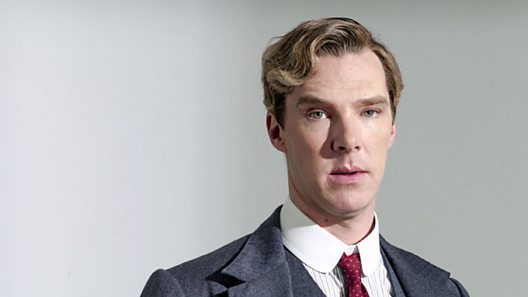
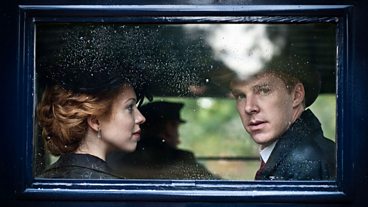
Benedict Cumberbatch we know and love from Sherlock and here he gives another virtuoso performance as civil servant Christopher Tietjens - albeit a strikingly different one from his turn as the Great Detective.  Here he is a highly principled man, locked in a loveless marriage and struggling to reconcile the fast-changing world around him with his own strict values - values that are tested to the limit when he meets and falls in love with a young suffragette.  In some ways I could empathise with Christopher Tietjens - a man with strong principles, having difficulty finding his way in the modern world.  Stoppard has done a wonderful job in making Christopher's dilemma appear allegorical to troubles faced by people in the world today, it seems to me.

source
Rebecca Hall, as Sylvia Tietjens, I have personally not seen before although she has appeared in some acclaimed films of recent years (for example Vicky Cristina Barcelona, The Prestige and Frost/Nixon).  Here she gives a remarkable performance as Tietjen's unfaithful wife, amazingly subtle in her cruelty.  Her character is of a type that is equal parts attractive and repugnant, sometimes both together, and that is an incredible feat for an actress to pull off.  I hope we shall see more of Miss Hall in the future.

source
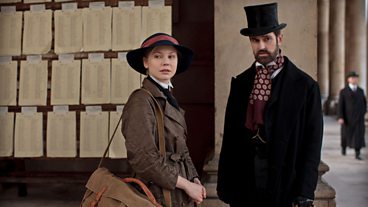
Adelaide Clemens plays young suffragette Valentine Wannop, the lady Christopher Tietjens meets by chance and ends up falling in love with (and she with him).  I may struggle to write anything constructive here, for I admit that I fell in love with the character too.  Also highly principled, but a much more forward-looking way, she is possibly the only woman to help bring Christopher Tietjens into the 20th century and is not afraid to tell him what she thinks.  She is complementary and encouraging where Sylvia is destructive and stifling.  A relative newcomer, Adelaide Clemens has appeared in such un-vintage fare as X-Men Origins: Wolverine and Silent Hill: Revelation 3D but watch out for her next year in Baz Luhrmann's The Great Gatsby in which she will play Catherine.

A superb supporting cast including Rupert Everett, Miranda Richardson and Rufus Sewell helps this series to maintain its high level of drama, with each character having a part to play in the overall story arc.

Parade's End had for me a unique quality about it.  It is a series that screams for its episodes to be watched in one sitting - I have tried looking at clips after having watched the entire programme and snippets simply cannot provide the same intensity of feeling one gets from the whole hour.  At the end of that hour one feels somehow culturally enriched, a feeling a TV drama programme hasn't given me for goodness knows how long.  Then it suddenly occurs to you that you're actually still thinking about things that have gone on in the episode, continuing to put things together and appreciating the results long after the credits have finished rolling.  Some critics have decried the somewhat "jumpy" nature of events in some episodes, the fact that you have to follow the dialogue and the action closely throughout, but this is what sets Parade's End apart from other existing costume dramas and, as I hope I have suggested above, makes it a far more engrossing and stimulating experience.

source

All the deep, intellectual stuff aside Parade's End is at the end of the day still a costume drama and there is lots of sartorial goodness for both chaps and chappettes.  Cumberbatch's wardrobe is typical of the Edwardian gentleman with hats, three-piece suits, separate collars and overcoats galore, although Rupert Everett also gets some choice outfits.  Ladies, there is something for every taste whether it be Rebecca Hall's flamboyant dresses, robes and coats or Adelaide Clemens' prim, tomboyish blouses, ties and suits.

source

Now, Parade's End did indeed finish yesterday evening (boo!) but for those of you in the UK I am pleased to say that all five parts are on iPlayer for the next week.  Doubtless the DVD will be out shortly too.  American readers will be pleased to know that the series was produced in conjunction with HBO, so its appearance on U.S. television is only a matter of time, I'd say.  I understand that you are only just beginning season two of both Downton Abbey and Sherlock whereas in the British Isles season three has/is about to start[ed], so it might take a bit of time.  In the interim, clips are available on Youtube.  Alas, being based on a period novel means no more than the five existing episodes of Parade's End, either.

Be that as it may, I thoroughly recommend seeking out this series, if you have not already seen it (and if you have I'd be pleased to hear your opinions).
Thursday, 5 January 2012

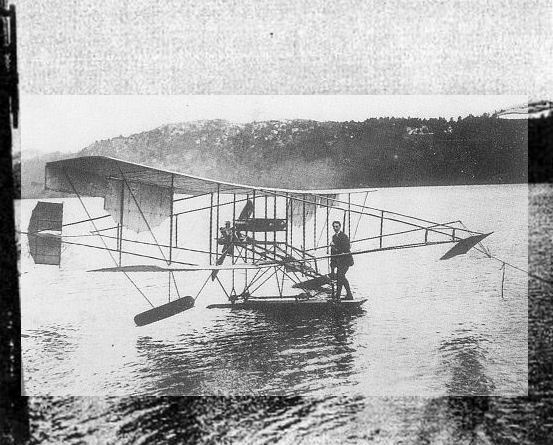
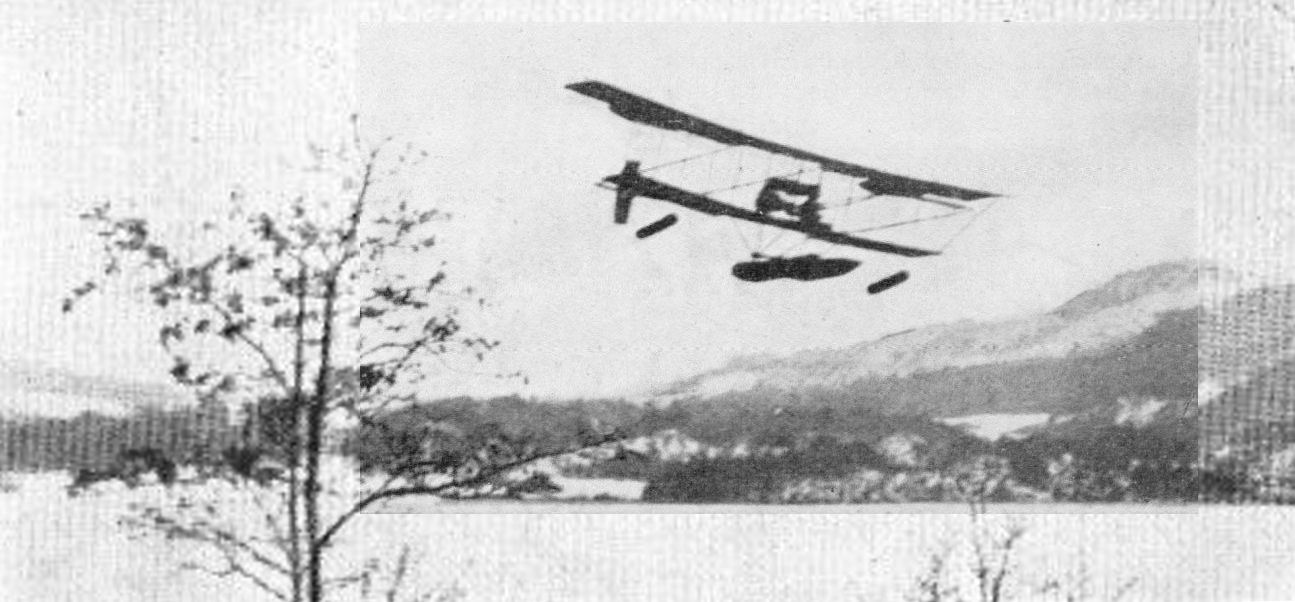
Britain's first seaplane to fly again as enthusiasts make replica of Waterbird

Images courtesy of flyingmachines.ru
Britain's first seaplane to fly again as enthusiasts make replica of Waterbird

I have "Richard Hannay" of the excellent blog Electric Edwardians to thank for making me aware of this fantastic article.  His site is a wonderful resource of pictures and information about the buildings, machines and related occurrences during the 1910s.

One hundred years ago, less than a decade after the Wright Brothers' first flight at Kitty Hawk, British aviation pioneers A. V. Roe (later to become Avro, creator of the Lancaster and Vulcan bombers amongst others) became the first company in the United Kingdom to successfully build and fly a seaplane - the A. V. Roe Curtiss-type "Waterbird".


Now I'm very pleased to see that local aviation enthusiasts have not only marked the centenary of the first flight at Lake Windermere on the 25th November 1911, but also intend to build a replica of the Waterbird and actually fly it!  To see such an important landmark in British aviation remembered in this fashion is splendid and everyone involved is to be congratulated - I hope the necessary funds to finish the aircraft are forthcoming.  It is indeed a good thing that this early trailblazing flight is not forgotten and is appreciated by a new generation and what better way to ensure that than with a working, flying example of the machine.  It would be a wonderful sight to see the Waterbird take to the skies - and the water - again, a century after its first foray across Windermere.  Best of luck, chaps!

Thursday, 8 December 2011

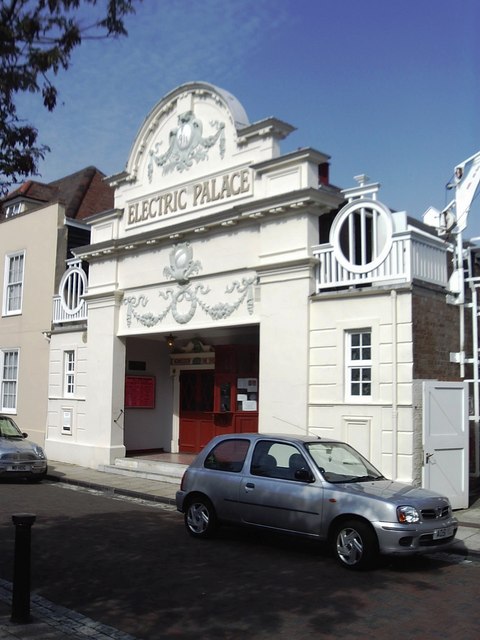
Electric Palace cinema in Harwich celebrates centenary

Electric Palace cinema in Harwich celebrates centenary

An Edwardian cinema in an Essex port town celebrates its 100th birthday now in this article from the B.B.C.  

The Electric Palace also has a remarkable history and its very existence is testament to the care and knowledge of local film enthusiasts and the goodwill and understanding of the current Town Council.  Once again we see good old-fashioned civic pride making it possible for this beautiful building to still be here a century after it first opened.

Designed by architect Harold Ridley Hooper (who went on to help create several buildings for Butlins Holiday Camps in the 1930s) the Electric Palace was built to show the "Bioscope" moving pictures of former travelling fairground showman Charles Thurston.  This soon expanded into showing films of the period and the Palace did a roaring trade throughout much of the Great War years.  It did less well from the 1920s on, despite the addition of mains electricity in 1924 and sound in the 1930s (the original pre-1924 Crossley gas engine and 100V DC generator can still be seen, unrestored, inside the building) and remained virtually unaltered from its original form.  Then in 1953 it was the victim of the infamous East Coast floods when seawater got inside the cinema.  By 1956 it had closed completely and it was to remain derelict for almost twenty years before being "rediscovered" by a local university lecturer.  Along with the Harwich Society he managed to get the Palace listed as "a building of sociological interest", much to the annoyance of Harwich Town Council who had intended to demolish it(!).  Even some of the townspeople were in favour of it being pulled down, citing its then run-down appearance, and the whole thing apparently made the national news!  Thankfully historical merit prevailed and the Electric Palace Trust was formed in 1975, staffed entirely by volunteers.  The reluctant council granted a "repairing lease" and it took 5 years to restore the cinema to its former glory; the grand reopening taking place on its 70th anniversary in 1981 with the Blue Peter team (and the original accompanist on the piano!) in attendance.

Today the cinema is still almost completely run by volunteers, with the freehold now in possession of the Trust.  Due to the way in which the Palace is run it only shows films on Wednesdays and at the weekend, supplemented with regular jazz concerts.  It also retains two original 60 year-old 35mm projectors which it still uses to show modern films in that format as well as historic films from the British Film Institute.  A new digital projector will ensure that the Electric Palace continues to show new films for many years to come.

It is heartwarming to see how a community has come together with the local council over a period of many years to preserve such an important historical landmark and get it to its centenary.  It must be quite an experience to watch a film - particularly an old one - in so stunning a building.

Followers

Popular Posts