A web log, an æthereal scrap-book if you will, with a somewhat vintage flavour. News items, occurrences, experiences, thoughts and opinions related to Victoriana through to Fifties Americana can all be found here.
Hello. Yes, it's me again, begging forgiveness once more for allowing six months to elapse between posts! I have been a bad blogger and there is no excuse. I could blame my new forum for taking up more of my time than I anticipated, or just life getting in the way, but I shan't because we all have different calls upon our time and I dare say I could have made more space for this dear old blog. Anyway, we'll cast a veil over all that, I think, and get back to the fun business of writing about interesting vintage-themed news (and goodness knows we need that more than ever, I should think). Something that should be even easier for me now having recently splashed out on a new PC (the laptop was all very well and has provided sterling service for the last seven years, but there is still something to be said for a desktop setup especially when writing like this) - there can really be no excuse for not posting more often now (he says)!
Without further ado, then, I'll take us back to the beginning of 2023 for this first story about a machine close to my heart - the autogiro.
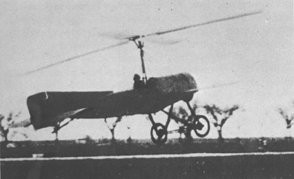
Last year marked the centenary of the first flight of the autogiro, the brainchild of Spanish engineer Juan de la Cierva and the precursor to all modern helicopters. After several abortive designs his C.4 autogiro made a controlled ascent at the Getafe aerodrome near Madrid on the 17th January 1923 in the hands of experienced test pilot Captain Alejandro Gómez Spencer.
Cierva autogiros would go on to be developed throughout the '20s and '30s, regularly being touted as the next big advance in aviation before reaching something of a technological dead-end by the start of the Second World War, after which advancements in vertical take-off heralded the beginning of the helicopter and relegated the autogiro to that of a light, leisure aircraft (now known as the gyrocopter). You can read more about the history of Cierva autogiros in this article I wrote for In Retrospect magazine a few years back.
Now, however, I'm delighted to see that a group of Spanish aviation enthusiasts have put the finishing touches to a full-scale flying replica of that first C.4, the maiden flight of which took place once again at Getafe aerodrome (where it will be operated by the Club de Ultraligeros Getafe) back in April 2023 - a fitting tribute to Juan de la Cierva, Captain Gomez and the history not only of the autogiro but of early Spanish aviation in general. What a wonderful sight it is to see one of these fantastic machines take to the air once more!
Staying with the 1930s aviation theme in this post we move from one end of the aeronautical speed spectrum to the other as we return to one of my most favourite aircraft of the period - the Supermarine Schneider Trophy racing aeroplanes.
I wrote about the Schneider Trophy in previous posts on the anniversaries of the final 1931 race and the Spitfire's 1936 maiden flight, as well as a detailed article for In Retrospect magazine. I had intended to save this post specially for when I was to be at the mercy of the quacks again but that is still up in the air and as the original articles below date back to the beginning of the year I felt that, with the advent of this latest welcome news, it was about time I got down to blogging about this excellent project.
As these articles explain, something else that hopefully will soon be up in the air (and which I am looking far more forward to!) is a full-size replica of the 1927 Schneider Trophy-winning British entry, the Supermarine S.5, thanks to the efforts of a team of aeronautical engineers and Schneider Trophy enthusiasts. Leading the project is professional pilot Will Hosie, whose interest in the famous speed contest and the S.5 in particular is obviously a personal one seeing as his late father Bill once owned an earlier replica of that aircraft in the 1980s (and in which Bill Hosie sadly lost his life following a catastrophic crash off the coast of Falmouth, Cornwall, in May 1987). This first replica - also full-size - first flew in 1975 and was badly damaged in a take-off crash seven years later in 1982, at which point it passed into the ownership of the Hosie family.
Now the son Will Hosie and his team look well on the way to creating a new S.5 replica, with enough funding having come in for work to have begun on building the floats and drawings in place for the rest. While there is still a long way to go, both in terms of construction and financing, the proposed timescale - first flight in 2023 - seems eminently achievable whilst the call for investors and sponsors is a sensible one and with any luck will inspire a good many well-placed individuals and organisations to get on board. One hopes that certain museums, historical trusts et cetera will take an interest which could in turn filter down into schools and local workshops as has been seen with other similar projects. The aim of displaying the finished aircraft at a total of 20 events (10 airshows and 10 static displays) around the world in time for the 100th anniversary of the 1927 Schneider Trophy is again an entirely laudable and realistic goal. It is moreover extremely important that the story of the Schneider Trophy and the S.5's place within it is kept alive and propagated for future generations, both for the thrilling contest it was and its place in the history of the development of the Spitfire. To be able to see once again an example of these incredible pieces of engineering in the air will be an amazing treat, especially since so few of the original Supermarine S-series seaplanes survived (and none in flying condition).
The S.4 of 1925 was the first of Mitchell's revolutionary, streamlined monoplane designs to see the light of day. Being such a radical departure from previous efforts only one example was produced, taking its place alongside a pair of less advanced Gloster III biplanes for the 1925 race in Baltimore, U.S.A. (having first raised the British and world seaplane speed records to 226 miles per hour during a test run at Southampton in September 1925). Unfortunately during a subsequent test run at Baltimore's Bay Shore Park the pilot, Henri Biard, lost control at 200 feet after encountering heavy wing vibration and sideslipped into the water, wrecking the all-wood S.4 but managing to walk away with only two broken ribs.
Two years later and Mitchell and his team had taken what they'd learnt from the S.4 and created the S.5, three examples of which - serial numbers N219, N220 and N221 - were produced for the 1927 contest, which was to take place in Venice, Italy. Only two - N219 and N220 - would take part in the race, with N220 flown by Flt. Lt. Sidney Webster winning at an average speed of 281.65mph and N219 piloted by Flt. Lt. O. E. Worsley coming second at an average of 273.07mph. The two S.5's had wrested the Schneider Trophy from Italy and the next contest would take place at Calshot, Southampton, in 1929.
A year later in 1928, as part of the preparations for the 1929 race, Flt. Lt. Samuel 'Kink' Kinkead was selected to make an attempt on the world air speed record that had been set by the Italians during the '27 race. On the 12th March 1928, flying the reserve N221, Kinkead was suddenly seen to nosedive at high speed straight into the Solent. The aircraft was totally destroyed and 'Kink' was killed instantly. Although the wreckage and the body were both recovered the cause of the crash has never been satisfactorily explained.
Distraught but undaunted the remaining members of the RAF High Speed Flight pushed ahead in readiness for the 1929 contest. Mitchell and Supermarine produced the S.6, an advancement over the S.5 with its all-metal construction and new Rolls-Royce R engine, and two of these - N247 and N248 - were built for the race.
S.6 N247, piloted by Flt. Lt. Richard Waghorn, went on to win the 1929 event at an average speed of 328.63mph, with S.5 N219 finishing a creditable third in the hands of Flt. Lt. d'Arcy Greig (whose autobiography My Flying Years I can heartily recommend) and Britain was only one contest away from claiming the Schneider Trophy in perpetuity.
For the 1931 event, due to time constraints as a result of financial difficulties and a lack of political will, the two S.6s from the 1929 contest were redesigned with new floats, extra radiators and revised control surfaces and designated S.6A, while Mitchell worked on shoehorning in a more powerful version of the Rolls-Royce R engine into the existing airframe design which resulted in the building of two further examples, to be called the S.6B.
Despite there being no competition for the 1931 race (all other nations having withdrawn for various reasons) the High Speed Flight were determined to put on a show for the capacity crowd lining the banks of the Solent and ensure that the world speed record - and thus the Schneider Trophy - would be held by Britain. As such they threw everything they had into the contest - the two new S.6Bs S1595 and S1596, the S.6As N247 and N248, plus the surviving S.5s N219 and N220. The S.5s by this time were used only for practice runs, with the plan being that S.6B S1595 would be the aircraft to fly the race and make the record attempt while the two older S.6As would be kept in reserve. While training for the race was still underway S.6A N247 crashed on takeoff, killing the pilot Lt. G. L. Brinton, RN, leaving only N248 as the sole surviving S.6A. Despite this setback the race went off as planned, Flt. Lt. John Boothman taking S.6B S1595 to a record-breaking 340.08mph on the 13th September as part of the final 1931 contest. The other S.6B S1596 capsized and sank with Flt. Lt. George Stainforth at the controls during practice for the world speed record but both pilot and aircraft survived and two weeks later Stainforth, in S.6B S1595, raised the WSR yet again to 407.5mph.
Thus of the eight S-series seaplanes designed and built by R. J. Mitchell and Supermarine over the course of 6 years, by the end of 1931 three had been lost to accidents leaving only two S.5s, a single S.6A and both the S.6Bs extant. Designed from the outset as high-performance racing aeroplanes intended for a specific, continually evolving contest their long-term survival was always going to be in question. The highly-stressed Napier Lion and Rolls-Royce R engines required a complete strip-down and overhaul after every single run (literally a matter of hours) and the strains put on the airframe by the incredible speeds and high-g turns of the courses meant that keeping any of them in an airworthy condition beyond the absolute limit of their use would have been an extreme engineering and economic challenge.
As such only two Supermarine aircraft from that fantastic era of seaplane racing survive to this day, the fate of the others (including both the S.5s) being lost to the mists of time. The winning S.6B S1595 was retired immediately after the 1931 race and donated to the London Science Museum, where it remains today in unrestored condition. S.6A N248 was displayed at Southampton Royal Pier well into the 1960s (where it was actually misidentified as S.6B S1596) before being moved to the Solent Sky museum (previously the Southampton Hall of Aviation) in Southampton, where it has since been restored and now sits proudly among the exhibits - often being wheeled out for special events such as the Goodwood Revival.
While normally one would be sad to see these two survivors hanging in museums rather than soaring through the sky as their maker intended, for the reasons mentioned above - not to mention their incredible rarity value - this is one instance where I am happy to just see them on static display. It is for this reason as much as any that Mr Hosie's project is so important and, while it may not be able to create quite the same thrill of speed and excitement of the original 12-cylinder-engined thoroughbreds, it will be wonderful to see a representation of these marvellous aircraft take to the skies after almost 100 years and hopefully introduce a whole new generation to this exciting chapter in British aviation history. I will be following the progress of this project extremely closely and very much look forward to seeing it come to fruition, when we will once again see an S.5 in the air and on the water.
With the the centenary of the First World War now well underway and the first Remembrance Sunday of the four-year long commemorations today, events and projects marking this momentous milestone and remembering all those involved in the conflict are coming thick and fast.
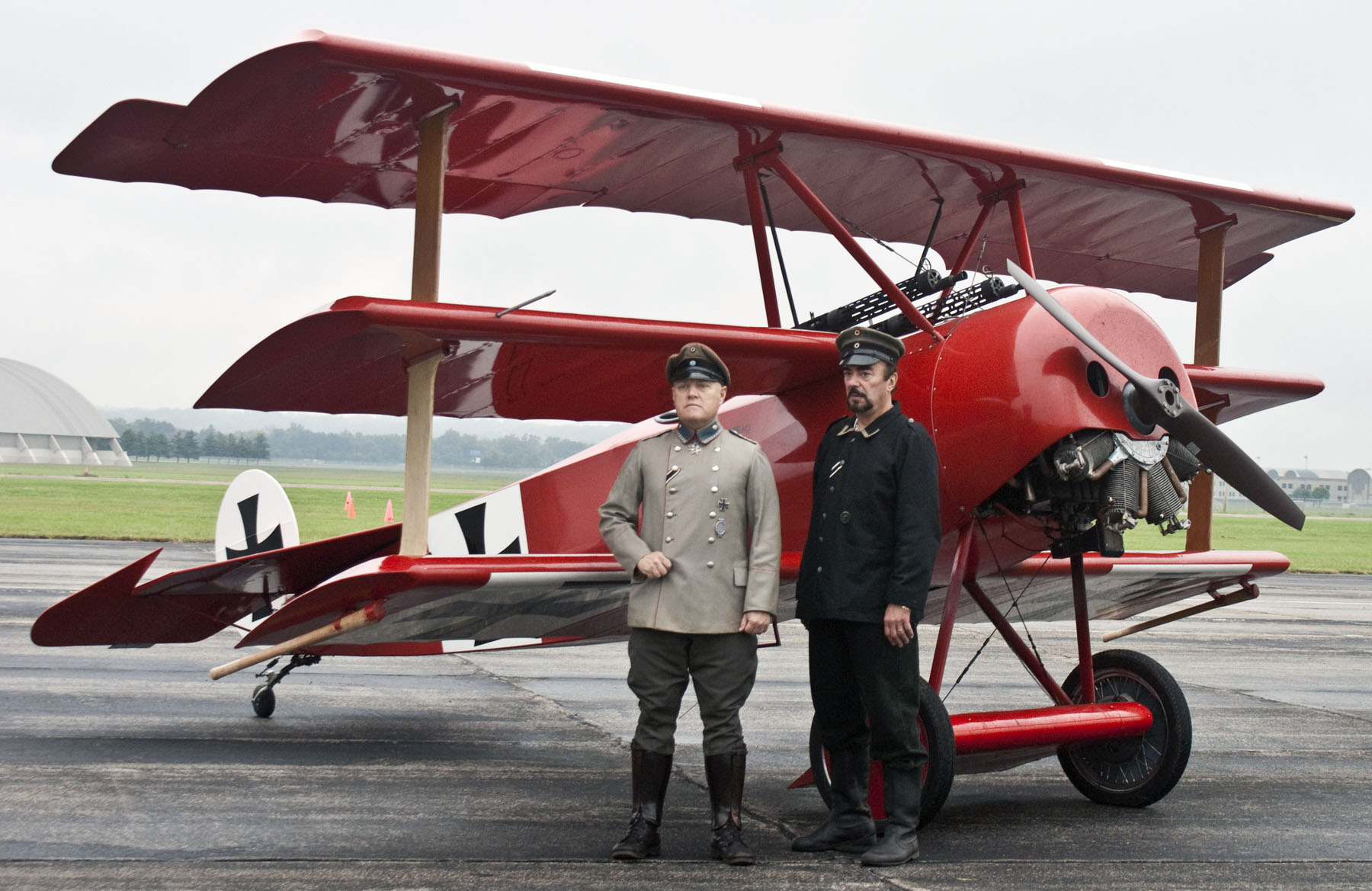
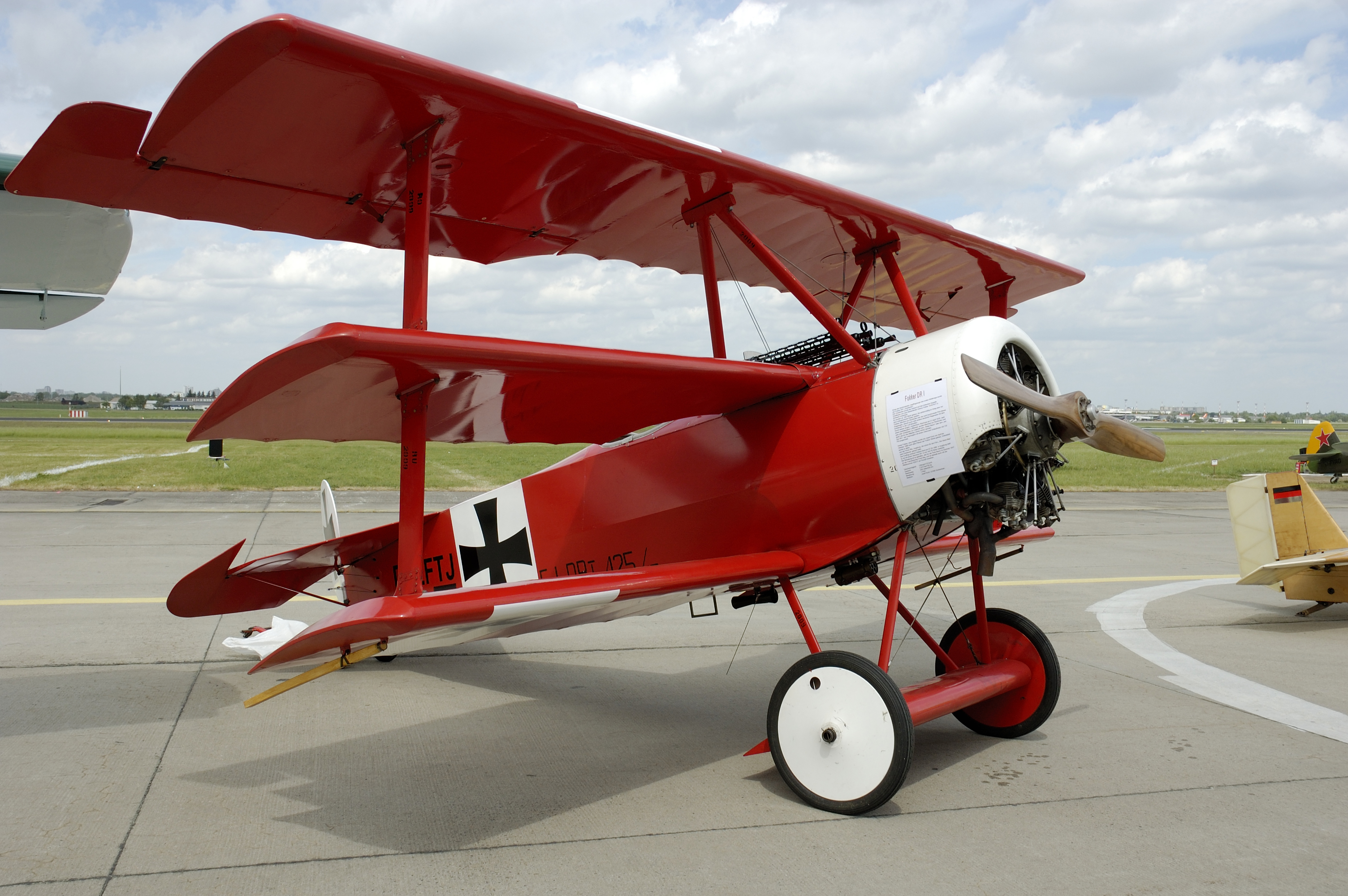
The subject of this post is one of the smaller projects in the grand scheme of things, but no less important for that - the latest replica of Baron Manfred von Richtohofen's infamous red Fokker Triplane. I say "latest" as the Fokker Dr.1, to give it its proper designation, is one of the most popular World War One aircraft on the reproduction circuit thanks to its distinctive design and association with the greatest fighter ace of the time. Indeed in many respects the red triplane has almost become synonymous with the Great War in the air, especially in the United States where many of them reside and where companies exist to manufacture kits.
The Dawn Patrol Rendezvous reenactors' Dr.1 at the National Museum of the U.S Air Force, Dayton, Ohio, 2009 (source)
This new addition to the ranks resides and was built in Britain, however, by two enthusiasts at the Derby Aero Club. Unlike some other replicas, which are often ¾ or 2/3 scale, this one is also full-size and remarkably accurate to the original design - a testament to the owners' knowledge and attention to detail. Hopefully we will see it at events around the country over the next four years (and beyond) - having experienced first-hand the Great War Display Team any further airworthy replicas are always welcome - perhaps they will all fly together one day!
With several high-profile examples of flyable aircraft surviving from the Second World War it is easy to overlook the machines from the earlier conflict - original and airworthy types of which are few and far between. Thus it falls to these modern replicas, built where possible to the highest detail, to remind us what flying and aerial fighting was like during the First World War and to honour the young men who flew them. This Derby-built example is a worthy inclusion, and may there be many more!
As volunteers and enthusiasts at the Lincolnshire Aviation Heritage Centre here in Britain continue to work towards getting a third Avro Lancaster bomber restored to airworthy condition, so their counterparts at the Champaign Aviation Museum in Urbana, Ohio U.S.A., are undertaking an even more mammoth task - to rebuild an example of the United States' primary Second World War heavy bomber, the Boeing B-17 Flying Fortress.
Of the forty-six surviving B-17 airframes known to exist around the world, thirteen are currently in airworthy condition - including Sally B, the only flying example in Britain, based at the Imperial War Museum Duxford. The majority are of course located in museums across America and in a few years' time, if all goes well, they will be joined by this fourteenth - Champaign Lady.
The volunteers at the Champaign Aviation Museum - many of them U.S. Air Force veterans themselves - must be commended for taking on this project, for it is so much more than a simple restoration. With no more complete or intact airframes forthcoming, these enthusiasts have taken to scavenging parts piecemeal and - where they no longer exist - making them themselves from Boeing's own original blueprints. In effect, then, this is more a completely new-build aircraft than a restoration, with the promise of a machine better than a Boeing production model from the 1940s at the end of it.
With the famous Memphis Belle currently undergoing restoration at the nearby National Museum of the U.S.A.F. and destined never to fly again following designation as a national treasure, it is more important than ever that airworthy examples of this aircraft continue flying in the future. The prospect of one built to modern tolerances with largely new parts is an exciting one, as it will no doubt ensure that at least one B-17 Flying Fortress will be flying and thrilling new generations for decades to come. Good luck to them, say I, and I can't wait to see it!
I could barely contain myself at this news, coming the same day as the announcement of another new steam locomotive from the A1 Steam Trust (see yesterday's post), but have managed to wait until today to share it with you.
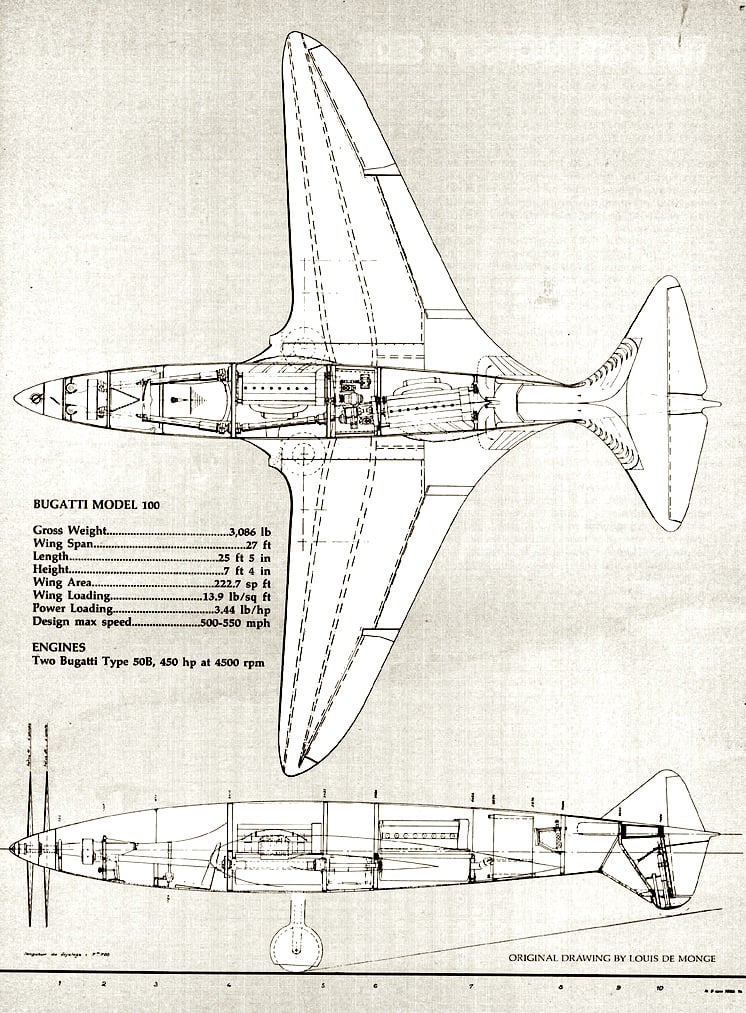
While the name of Bugatti is most readily associated with luxury cars of the 1920s and '30s, or extreme sports cars of the present, the company's foray into aviation is less well known. It's sole product, the Model 100, has - as the accompanying media says - been largely forgotten for 70 years; a great shame, considering the beauty, futuristic lines and design of the aircraft (not to mention its story!).
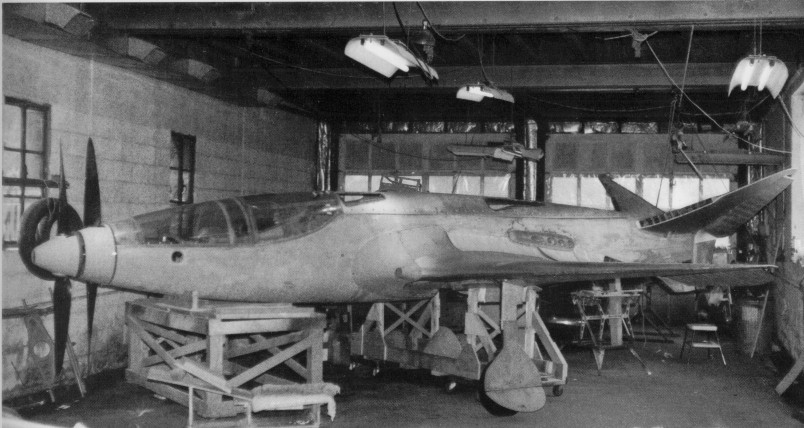
It should come as little surprise that the designer of some of the most magnificent and luxurious cars of the 20th century successfully transferred his skills to create one of the most beautiful aircraft of the 20th century. Working with brilliant engineer Louis de Monge Ettore Bugatti designed the 100P as a racing aeroplane, similar to the Schneider Cup Supermarines and Macchis of the early 1930s, to win the 1939 Deutsch de la Meurthe Cup air race. Between them the two men came up with a fantastically advanced design, with swept-forward wings, a V-tail (a design feature not seen on production aircraft for another decade) and two 450hp Bugatti in-line motor-racing engines driving prop shafts that ran past the pilot's seat to two contra-rotating propellors at the front. Many of these features resulted in patents being filed by Bugatti, five of which endure on modern aircraft. As a racing aeroplane it was designed to be streamlined and lightweight - the body made of wood composite, the large cockpit fully integrated into the fuselage with the pilot sitting in a semi-recumbent position.
Sadly the original 100P never flew in the Deutsch de la Meurthe, nor at any other time, thanks to the start of World War II. Despite a French Government request for Bugatti to adapt the design for a fighter aircraft, the German Army's swift advance on Paris curtailed any such attempt and in June 1940, with the fall of France imminent, the single extant airframe was dismantled and spirited away. It would remain in storage for the duration of the war. It then passed through several hands, sadly losing its original engines along the way, before being restored in the early 1970s and passing through several museums before finally ending up at the EAA Airventure Museum in Oshkosh, Wisconsin. It can be seen there today as a static display; it is no longer airworthy.
For the last few years a group of enthusiasts (including, I'm happy to note, the great-nephew of Louis de Monge) have been attempting to rectify this tragic tale, however, by undertaking to build a full-scale replica of the 100P - to almost the same standard as the 1938 original (bar a few modern upgrades/alterations) - that will actually fly! Now I'm delighted to see that, after a few setbacks, this new Model 100 is close to completion with the final unveiling now scheduled for the 25th March at the Mullin Automotive Museum in Oxnard, California. Readers may remember that that institute featured previously on this blog, being instrumental in the building of a "new" 1939 Type 64 Coupé. Quite a suitable venue, then, for the reveal of Bugatti's only aeroplane!
Following its March appearance the new 100P is tipped to fly some time later this year and with luck may appear at European events shortly thereafter. Whether or not it will ever reach the dizzying [projected] 550mph of its predecessor is immaterial - just seeing this wonderful design in the air where it belongs will doubtless be thrilling enough. I wish continued good luck to the Bugatti100P Project; I can't wait to see more!
Here now is one of the first of many posts that are destined to appear on this blog in the next 12-48 months as the commemorations for the centenary of the First World War start to get underway. In this instance the story is of a long-forgotten World War One aircraft prototype and one museum's attempt to construct a working replica in time for this year's events.
The Eastchurch Kitten - or to give it its full designation, the Port Victoria P.V.8 Eastchurch Kitten - was borne out of an Admiralty specification created in 1916 for a small, light single-seat fighter designed to fly at high altitude and intercept the Zeppelin airships that were then terrorising the south-east of England. Two front-runners soon emerged from Royal Naval Air Service stations based in Kent. One was the brainchild of designer W. H. Sayers, based at the Port Victoria Marine Experimental Aircraft Depot on the Isle of Grain. The other was the Kitten, designed by the pen of G. H. Millar, located further along the north Kent coast at the RNAS Experimental Flight in Eastchurch. When the commanding officer of the Experimental Flight then took over at the Port Victoria station it was decided that the competing aeroplanes should both be further refined together at Port Victoria, therefore the Eastchurch design was called the P.V.8 Eastchurch Kitten while the other was renamed the P.V.7 Grain Kitten. Both were of a similar layout to meet the Admiralty requirement for a compact, lightweight interceptor that could be launched from the cramped confines of a Navy destroyer's fo'c'sle.
The P.V.7 was in fact the first to fly, on the 22nd June 1917, but it was found to be tough to handle and tail-heavy in flight. The P.V.8 finally took to the air on the 7th September 1917 and although like the Grain Kitten it was hampered with the temperamental 35hp ABC Gnat engine it soon became apparent that - despite being larger and heavier than the P.V.7 - the Eastchurch machine was the more advanced. In the end, however, the Admiralty chose not to pursue the P.V.8 design. By the time both aircraft were at the test-flight stage the sturdier and better-performing Sopwith Pup and Sopwith Camel had been adapted for higher-altitude work, aircraft carriers were developing apace and the threat of Zeppelin raids had receded. Neither the P.V.7 or P.V.8 ever flew again; the original Eastchurch Kitten airframe was due to be sent to America for further evaluation but what became of it from that point remains a mystery.
Obviously some plans of the P.V.8's design survived, though, as an attempt to create a replica of the aircraft was made as far back as the 1980s. Now thanks to the sterling efforts of the volunteers at the Yorkshire Air Museum a remarkably accurate copy of the Eastchurch Kitten is finally nearing completion, with appearances (albeit sadly static) scheduled at both the museum's own displays and also in Leeds town centre later this year.
I'm happy to see so much going on at the museum's preservation hangar and it's splendid to see a project such as this come to successful fruition, with volunteers and aviation design students keeping alive the skills needed to help ensure that an interesting part of First World War aviation history is not forgotten, hopefully inspiring and engaging all those who come to see it at York in the next four years and beyond.
Back in March 2012 I did a post about a proposed new supersonic airliner that was essentially a biplane, the design having two sets of wings set one above the other. Other than this link to an historic aircraft design the article mentioned was more along the lines of the type I used to include in the early days of this blog when I posted about anything and everything that interested me. To give it the more vintage bent that this blog is now known for, I added a little bit of history regarding the fast biplanes and biplane airliners of the 1930s. One of these was the Handley Page H.P.42.
The H.P.42 was born out of an Imperial Airways (the ancestor of British Airways) specification of 1928, intended to supplement their existing fleet of 3-engined Armstrong Whitworth Argosy airliners (also mentioned in my earlier post). Handley Page's winning design was for a giant all-metal biplane with four Brisol Jupiter engines - two on the upper wings and two mounted on the lower wings next to the fuselage. Two variants were produced - the H.P.42E (for the eastern routes to India and Australia) and the H.P.42W (for western routes to Europe). The former seated up to 24 with extra baggage room for air mail, the latter 38. Unlike the Argosy the cockpit was also enclosed - a first for a large airliner. Imperial Airways felt its passengers valued comfort over speed so despite having around 500bhp per engine, the H.P.42's maximum speed was a sedate 120mph and its cruising speed a mere 100mph. This led to commentators of the time noting that it was "as steady as the Rock of Gibraltar - and about as fast" and had "built-in headwinds"! Indeed any substantial headwind encountered by an H.P.42 would invariably lower its cruising speed to 90mph, requiring extra refuelling stops particularly on the long-distance routes.
Handley
Page H.P.42 G-AAUD Hanno at Semakh,
Palestine, October 1931. source
The aircraft's first flight was just over 83 years ago, on the 14th November 1930. Clearance for commercial operation was given in May 1931 and the first passenger flight was undertaken on the 11th June 1931, from Croydon to Paris. Eight H.P.42s were ultimately built and each was given a name, beginning with 'H', from ancient British and Roman history or Greek mythology (can't see BA doing that today, can you?). Hence there was Hannibal, Hanno, Hadrian, Horsa, Heracles, Horatius, Helena and Hengist. For the next nine years they would ply the airways between London, Europe and the furthest reaches of the British Empire - suffering absolutely no serious accidents, an unheard of feat for aircraft of the time. They were involved in only 4 incidents in their civilian lifetimes. Hannibal had to force land in a field in Kent when its port lower engine failed, sending debris into the port upper engine. Landing on two engines only, a tree trunk ripped off the tail and one wing and another engine were also damaged, but there were miraculously no serious injuries. Horatius was struck by lightning in 1937 resulting in minor damage to one wing and also force-landed in Kent in 1938 causing damage to the undercarriage and one wing. Hengist was destroyed in a hanger fire in Karachi in 1938 but the aircraft was empty and no lives were lost.
Refuelling
Hanno at Samakh, Tiberias, Palestine, October 1931 source
The remaining aircraft were all pressed into RAF service on the outbreak of the Second World War. Sadly none of them survived the conflict (although not for the reasons you might think), all of them apart from Helena being lost within one year. Hannibal disappeared in mysterious circumstances over the Gulf of Oman on the 1st March 1940 - no sign of the aircraft or its passengers/contents has ever been found. Horsa was burned beyond repair after a forced landing in Cumberland on the 7th August 1940. Hanno and Heracles were both destroyed in one fell swoop when they were blown together during a gale at Bristol Airport on the 19th March 1940. Hadrian was similarly wrecked in a gale at Doncaster Airport on the 6th December 1940. Horatius had already been written off in another forced landing in Devon on the 7th November 1939. Helena managed to survive until the end of 1940 but after a particularly hard landing an inspection showed irreparable corrosion had set in and it was scrapped in 1941.
Why am I telling you all this, apart from the fact that it is interesting (at least, I think it is and hope you do to)? Well, last weekend I received a welcome surprise in the form of a comment on that earlier post from a member of Team Merlin, who it seems are actively undertaking to not only create a museum about Imperial Airways but also to build a full-size replica of the massive H.P.42 airliner! (They're also based in a beautiful aviation-themed pub in deepest Wiltshire, I note). I couldn't let such an interesting comment get lost in the archives, so here we are. Wouldn't it be amazing to see one of these behemoths in the air again? What a remarkable homage it would be to Imperial Airways' H.P42s and those early days of civil aviation. Can such a (literally) huge undertaking be accomplished? Your guess is as good as mine, but if a replica can be built of the Vickers Vimy bomber that flew non-stop across the Atlantic in 1919 then anything's possible. I shall keep an eye out for their PR campaign next year with interest and - who knows? - maybe another eye out for a flying H.P.42 not long after that.
This article from a couple of weeks ago, which I had originally intended to post at the time(!), details the tantalising prospect of a once-major London landmark making a reappearance in its old location. That landmark? The Crystal Palace!
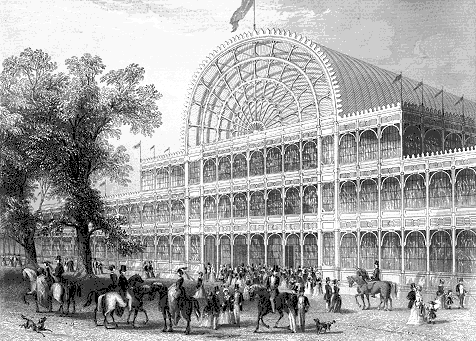
The original façade; The Great Exhibition 1851
Built in Hyde Park in 1851 to house the Great Exhibition (a sort of Victorian World's Fair), The Crystal Palace was a symbolically massive 1,851ft long and 128ft high and made out of the then new cast plate glass. Although originally intended to be a temporary structure, the architect Joseph Paxton's use of innovative materials and modular design - not to mention the vast size of the building - meant that at the end of the 6 month Exhibition it was decided that The Crystal Palace would be dismantled and rebuilt on Penge Common at Sydenham Hill in Bromley, south-east London (eventually lending its name to the park and the surrounding area). In the event it was not only rebuilt but also substantially extended and redesigned, to become the building we remember today.
Over the next 82 years The Crystal Palace would play host to many hundreds of expositions, shows, concerts, exhibitions, festivals and meetings; it moonlighted as a Royal Navy training base during the First World War and played host to the original Imperial War Museum from 1920 to 1924.
Having been saved from potential destruction in 1913 when the original owners declared bankruptcy and restored to its 19th century glory in the 1920s, disaster struck on the night of the 30th November 1936 when an explosion in a ladies' cloakroom caused an initially small fire in one of the offices. A combination of high winds, wooden flooring that ran throughout the building and the many flammable objects - including fireworks - stored within meant that very quickly the whole place was ablaze and despite the best efforts of 400 fireman and 89 fire engines the entire structure burned to the ground in a matter of hours. Contemporary reports show that the glow from the flames could be seen in eight counties; 100,000 people - including Winston Churchill (who later said "This is the end of an age") - turned up to watch the battling firemen trying to save it. Unfortunately the building's insurance cover was not enough to meet the proposed cost of rebuilding, which was put at £2,000,000 (£111,000,000 in today's money). Only the north water tower escaped destruction (the south tower also survived the fire but was dismantled shortly thereafter when it was discovered fire damage had made it structurally unsafe) - at least until 1941 when it was demolished for reasons unknown, although it was thought to possibly offer a handy landmark to German bombers. The grounds were also used to house radar manufacturing facilities.
Now, in 2013, there seems to be a chance (albeit slight) that an exact copy of The Crystal Palace may rise Phoënix-like, as it were, on the original site thanks to a Chinese developer. Quite what their angle is in all this (beyond the money) I'm not sure - I'm usually slightly dubious about Far East-backed concepts like this (hence the reason, apart from the somewhat questionable taste of it, that I haven't featured the proposed "Titanic II" replica stories that have been doing the rounds on the Internet in recent months). Still it would seem that Crystal Palace Park is in need of redevelopment and the glass-and-iron wonder that gave it its name, glinting in the sunlight atop Sydenham Hill once again (I can just imagine it!) might be just the ticket (although it's early days yet, still something to keep an eye on)!
From New York subways to Welsh mountain railways now, in what is fast becoming a rail-themed weekend here at Eclectic Ephemera.
While Lily the Heritage Carriage may look several decades older than the New York Transit Authority's 1930s stock, its main body is in fact brand new - only recently completed by a group of highly-skilled workers who have pulled out all the stops to ensure a truly accurate replica of a carriage that would have travelled along the picturesque Snowdon Mountain Railway back in the 1890s. That it is mounted on an original 1920s chassis is, as the accompanying report says, a splendid amalgamation of old and new.
Looking every inch the true Victorian carriage, with details to die for all beautifully crafted by expert engineers, Lily is now ready to take passengers on the equally beautiful journey to the top of Wales' highest mountain. It certainly looks absolutely glorious and one can just imagine the same trip being undertaken 120 years ago, although the idea of there originally being no windows is less appealing!
Congratulations to Snowdon Mountain Railway and their associates in getting this wonderful carriage designed, built and running on the line. The beauty of the Welsh mountains, which I can certainly attest to having been there myself, has only been enhanced with the introduction of this 19th century replica and I hope one day to return to Snowdonia and experience a trip up the mountain in it myself.
To east Texas, United States, now where a splendid old local character has recently been putting the finishing touches to an obvious labour of love - a replica of his town's first petrol station that opened in the 1920s.
A fine-looking building it is too, very reminiscent of those early gas stations that popped up in rural communities across the land during the pioneer years of the motor car - as well it should be considering the time taken and detail gone into by Mr Rogers. The world needs people like him and it is lovely to see the community appreciating his interest in its history, not to mention his penchant for collecting fascinating historical objects. His comment about the perceived difference between a collector and a hoarder is funny, and quite true. I have no doubt that his home is a treasure trove of antique items with a story to tell and that he will continue to add to his collection for as long as he can - good luck to him.
I am sure Mr Rogers will continue to get many years of enjoyment out of his wonderful Gulf station (although from the sound of things he is already looking ahead to his next project, I shouldn't wonder!), and I would hope that the people of New Harmony, TX will also take the place to heart as an important part of the town - both now and for what it represents of the past. These small rural American towns have very often hardly changed in generations, as is evidenced here by the fact that some residents grandparents and great-grandparents lived in the neighbourhood and the son of the original station's owner was on hand to cut the opening ribbon.
In these days of bright, impersonal forecourts and splash'n'dash refuelling it is nice to, as Mr Rogers puts it, "step back and forget the traffic" - to step back in time, quite literally, and see how the early petrol stations of America looked, thanks to the dedication of one man. You may not be able to get petrol at New Harmony Gulf Station No. 2, but I'll bet you can get a good feel for the past.
With men like those in the article making sure that an aircraft linked to the Biggles mythos can continue to fly, surely the answer must be yes.
Although it is a shame that a 1960s feature film was never made, at least part of it still survives in the form of this replica built to star in the proposed production. Now thanks to years of painstaking work by two generations of the same family this reproduction BE2c biplane can and will fly again. It may not have been able to take to the air for the B.B.C but as the above footage shows, it certainly can fly.
The wider question posed by the article is perhaps of even greater interest. Should there be a new Biggles movie? I say yes (well I would, wouldn't I?)! An attempt was made in 1986 with the somewhat lamentable Biggles: Adventures in Time(almost a "so bad it's good" film, it is rarely spoken about - and even then in hushed tones - by Biggles fans) and a planned big-budget trilogy was in the early planning stages before being canned back in 2001. But with the recent success of the Harry Potter and Sherlock Holmes films amongst others, perhaps the time is right for a new big screen Biggles adventure. Imagine what a Biggles film could look like with today's special effects!
In the meantime the 98-odd Biggles books still exist to provide many a film in one's mind, and minor triumphs such as that of "Biggles' Biplane" can help to ensure that this dashing British airman is not forgotten, until hopefully there comes a time when he gets his own film(s) worthy of his exploits. Chocks away chaps!
With all this talk nowadays of global warming and environmentalism the word on the street (pardon the pun!) is "hybrid", used to describe a car that has a secondary power unit (usually electric) to supplement its internal combustion engine (usually petrol). For many this is seen as the future of motoring, but look, it is also the past!
Yes, like so many things that are in vogue at the moment, hybrid cars can trace their beginnings back to the past - in this case over 100 years to the very dawn of motoring. One such example was the Lohner-Porsche Semper Vivus (Latin for "always alive" - what a great moniker!) which as the name suggests was partly engineered by Dr Ferdinand Porsche, who famously later went on to design the original VW Beetle and create the sports car company that still bears his name today. Back in 1900 the goal was not so much eco-friendliness but rather mechanical simplicity, as this accompanying article explains. Nevertheless it was a remarkable attempt on a variation of what was then still a very new powerplant and the fact that it, in many ways, essentially operated in a similar fashion to today's hybrids says a lot for Dr Porsche's technical savvy.
Now, in order to celebrate the forward-thinking of its founder and draw a comparison with its newest hybrid models, Porsche has spent the last 4 years building an exact replica of the 1900 car and has just unveiled it at the Geneva Motor Show. Behind all the corporate tub-thumping there is a very real and commendable appreciation of the company's (not to mention wider automotive) heritage and the drive (sorry, again!) to create and show an extraordinary ancestor of the latest hybrids. If nothing else it goes to prove yet again the truth of one of my favourite sayings - "there's nothing new under the sun"!






.jpg)