A web log, an æthereal scrap-book if you will, with a somewhat vintage flavour. News items, occurrences, experiences, thoughts and opinions related to Victoriana through to Fifties Americana can all be found here.
Another podcast to add to the list of those I posted about a month ago and again one of particular historical interest, celebrating as it does the 90th anniversary of aviatrix Amy Johnson's amazing solo flight from England to Australia over the course of nineteen days from the 5th to the 24th May 1930.
Amazing is just the word to describe her achievement considering she had only learned to fly less than a year previously, in July 1929, and by all accounts had barely 75 hours' solo flying experience when she took off from Croydon Aerodrome on the 5th May 1930 with the aim of beating the 15 days' record flight time to Australia that at the time was held by the pioneer Australian aviator Bert Hinkler.
Amy Johnson and her aeroplane Jason in India, May 1930
As it turned out events conspired against Amy and she missed out on the record by only 4 days, however she was still rewarded with a CBE in the 1930 Birthday Honours and is rightly remembered as the first Englishwoman to fly solo to Australia (and later, in 1932, breaking the record for a solo flight from England to South Africa).
The enormity of her accomplishment(s) and the manner in which they captured the public's imagination at the time can best be appreciated through the sheer number of people both in England and Australia who turned out to greet her on her arrival/ return, as well as her having a popular song written and recorded in June 1930:
Her diary and notes from the Australian flight forms the basis of this series of podcasts created by the Amy Johnson Arts Trust, a charity based in Amy's home town of Hull, and which recreates day-by-day her remarkable journey in what is a very immediate and vivid performance. They are, as the Trust's director suggests, an excellent and very timely way to mark Amy Johnson's remarkable feat and her important role as a pioneer of women's aviation. I look forward to listening to them over the coming weeks and hope they will prove popular.
While researching for this post I also came across a recently uploaded amateur production from 2010 by Cambridge theatre company BAWDS, which looks worth watching, and of course the 1942 film They Flew Alone starring Anna Neagle as Amy is also highly recommended by this blogger.
"Time flies like an arrow; fruit flies like a banana" (as the late, great Sir Terry Wogan once said) and once again time has indeed flown by - like an arrow, if not like a banana - since my last post on here. You can't keep a good blogger down, though, so here I am again with a news item from last month featuring a wonderful lady adventurer who this blogger greatly admires.
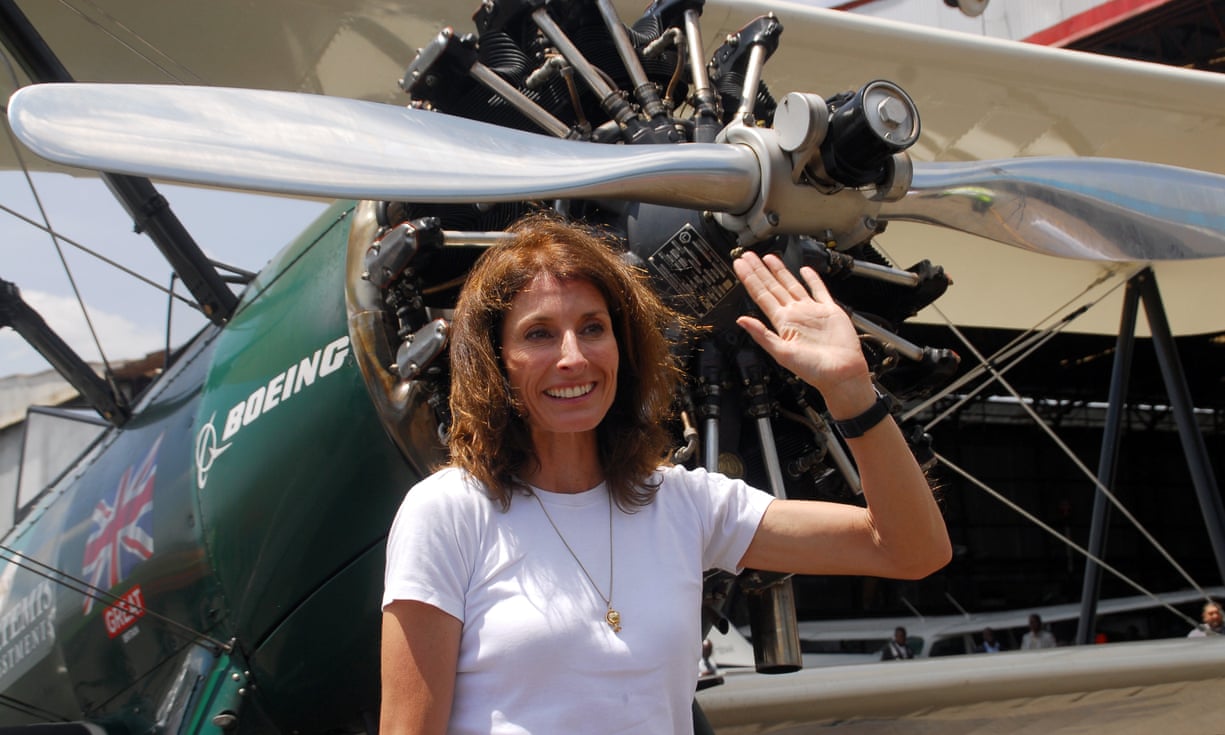
I've featured the adventures of modern-day aviatrix Tracey Curtis-Taylor on this blog before, specifically when she set out a couple of years ago in her 1942 Boeing Stearman biplane to retrace the route taken by the pioneer female pilot Lady Mary Heath from England to Cape Town, South Africa in 1928. That journey was subsequently made into a B.B.C. documentary and jolly fascinating it was too.
Towards the end of last year Ms Curtis-Taylor undertook a new challenge - to follow the same route Amy Johnson took on her famous England-Australia flight of 1930. In the same Stearman biplane as before Ms Curtis-Taylor took off from Farnborough in Hampshire in October to make the 14,000-mile journey across Europe, the Middle East, India, South-East Asia and Australia, just as Amy Johnson had done more than 80 years previously.
As the above article explains, Ms Curtis-Taylor landed at Sydney airport on the 9th January, thereby completing this massive trek and following in the slipstream of one of her inspirations and a proper heroine. Tracey Curtis-Taylor is both of these as well, not only for her remarkable recreations of historic endurance flights but also for helping to keep the memory of these early aviatrices alive today, not to mention her involvement in encouraging more young women into the field of mechanical engineering.
Tracey Curtis-Taylor mentions "not wanting to stop [flying]" in the above clip and the good news is she that she isn't intending to any time soon. That report briefly mentions the shipping of her aeroplane to Seattle for Boeing's centenary celebrations next year, but before that Ms Curtis-Taylor has stated her intention to fly her biplane across the breadth of the United States as her next adventure and I for one can't wait to follow her progress on this new feat of endurance, continuing to emulate the pioneer women pilots of the early 20th century. Congratulations, Ms Curtis-Taylor, and the best of luck on your next endeavour!
**Further good news in relation to this story is that the B.B.C. will be broadcasting another documentary later this year following Tracey Curtis-Taylor's England-Australia flight. No details have been released as yet but expect it to be shown on one of the main B.B.C. channels some time in the Spring.**
This month's post focuses on the the fascinating B.B.C. article (linked above) regarding one of Britain's most obscure and long-forgotten aviatrices - Constance Leathart.
The Beeb has gone into some detail about this remarkable lady in their article for the regional Inside Out programme, so I do not intend to repeat all of it again here. Suffice to say it appears that Miss Leathart was every inch a most indomitable woman, at a time when women needed such spiritedness in order to break into the male-dominated world of early aviation.
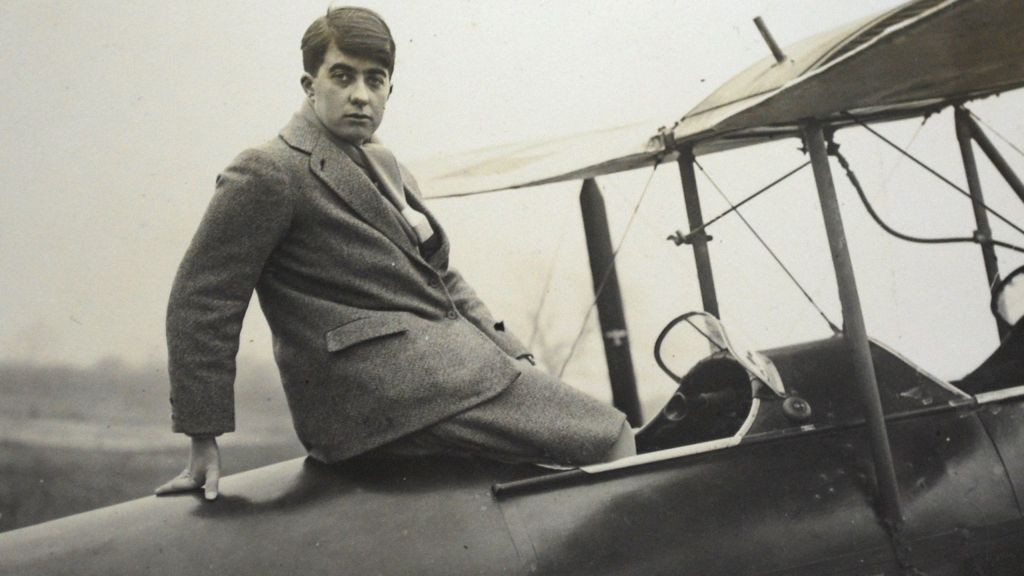
Her appearance in the majority of the surviving photographs of her shows this plainly; usually sporting a short side-parted haircut and often wearing shirt, tie and tweeds she could easily pass for a man. This allowed her to embark on many fantastic-sounding aviation adventures, from air races to long distance flights (not to mention repairing aeroplanes on the side!), culminating in being one of the first women to sign up for the Air Transport Auxiliary during World War Two. Even then her adventurousness continued unabated - as it would if you were able to fly myriad military aircraft, particularly the Spitfire!
Behind the exciting lifestyle and the overturning of gender stereotypes, though, seems to me to be a very sad portrait of a lonely outsider. Leathart herself admits to dressing in the masculine style in order to try to please her father, who had wanted a boy child. To see her self-deprecating notes on her own photographs is heartrending; her exclusion from most ATA publicity shots on the grounds of her not being of the "pin-up" style is equally saddening (and in the photo featured in the accompanying article of Miss Leathart standing with the rest of the ATA women one can even sense there a difference and an element of exclusion - whether on Leathart's part or not we may never know).
Her spirit of adventure still not sated, following her war service she became a UN Special Representative to the Greek island of Icaria - helping to provide food and medical supplies by air. She eventually had to give up flying in 1958 and retired to a farmhouse in her native North-East, where she spent her time caring for rescued donkeys. She never married and, when she passed away in 1993, in a final display of tragic seclusiveness requested to be buried in an unmarked grave (thankfully her friends disregarded this and marked her resting place with a stone from her outside swimming pool).
Although it's splendid to see Constance Leathart's life be recognised, I do feel she (and the other aviatrices of her time) are worthy of whole programmes to themselves. Hopefully one day we shall see even greater recognition of these pioneering female pilots.
On a related note I'm thrilled and delighted to see that modern-day aviatrix Tracey Curtis-Taylor, who presented the B.B.C. report on Miss Leathart (and whose recreation of Lady Mary Heath's 1928 Cape Town-Goodwood flight I blogged about two years ago) is currently recreating Amy Johnson's epic 1930 flight from England to Australia. By now somewhere over the Middle East and on her way to India, Ms Curtis-Taylor aims to land her vintage 1942 Boeing Stearman biplane in Sydney some time early in 2016, before shipping the aircraft to the west coast of the USA to continue across that continent and so make it a genuine round-the-world trip!
I heartily commend Ms Curtis-Taylor for striving to keep the memory of these early aviatrices alive through her own flying adventures and I admire her greatly for both this and the courage and drive it must take to undertake such expeditions. Those of you in the U.K. (or with access to B.B.C. output) may remember that a documentary of Ms Curtis-Taylor's South African flight was broadcast shortly after its completion and I'm pleased to see that discussions are underway to produce a further series of programmes covering the Australian and American flights (and beyond!) for airing in the first half of 2016. Until then I'm sure you will join me in wishing Ms Curtis-Taylor continuing good luck as she makes her way to Australia. Soft landings and no dud engines!