Showing posts with label Rolls-Royce. Show all posts

Sunday, 1 February 2015

Views looking back - the Eclectic Ephemera Top 10

Here I am again, then, saying "What ho!" after another long dry spell at Eclectic Ephemera.  I seem to spend half my (few) posts lately apologising for my absence, and can only do so again.  I dislike constantly using work as an excuse, since I know so many bloggers who successfully juggle a good working/writing balance - it just seems I'm not one of them!  Having said that, it seems that a few of my favourite bloggers have gone quiet as the new year got underway, or have just emerged from the woodwork after months of silence, so perhaps I am not alone after all.

Anyway, enough navel-gazing, for a quite remarkable milestone was reached by this blog at the start of 2015 and it is this that I intend to celebrate in this post (for lack of anything really newsworthy!).  Quite appropriately, the start of my sixth year as a vintage blogger saw Eclectic Ephemera pass 400,000 pageviews.  Now of course that doesn't mean that 400,000 individual people have viewed this blog - some of those will have been me looking at the thing to see how it's doing (and forgetting to select "Don't track my own pageviews"!) and many, many more were probably spammers, bots, bits and other assorted members of the æthereal interweb - but the majority would have been fellow bloggers, followers and interested parties.  You, in other words.  And that deserves celebrating.  What I thought I'd do to mark the occasion, therefore, is to "run down" (to use the modern parlance) the Top 10 posts from Eclectic Ephemera's 6-year history - a sort of "best of", as it were, chosen by you the readers.

So, in ascending order they are:

10. Home linked to P G Wodehouse's Blandings Castle up for sale


From November 2010, the news that Apley House in Shropshire had been completely restored and was up for sale for the princely sum of £1¾ million.  I found it to be of particular interest because it is generally agreed among scholars to be the inspiration behind P.G. Wodehouse's Blandings Castle, which was the setting for one of his other book series.  With Plum being one of my favourite authors and creator of that arch-chap Bertie Wooster, even though it was not directly related to the Jeeves stories I fancied including it here.  Eclectic Ephemera was barely a year old at this point and still evolving into the blog we know today, so at this point the stories I featured were sometimes more wide-ranging than they are today.  Still this one had a vintage bent about it and has obviously proved popular, for whatever reason (perhaps the Wodehouse connexion, or just its magnificence as an English stately home).

9. Liebster Blog Award #2


Jumping forward two years to November 2012, this blog received its second Liebster Blog Award.  Having largely given way to other blog awards (probably due to the demise of Google Friends) the Liebster nevertheless contained most of the things we recognise in today's examples.  Given to me by Lil of the now defunct Little Lil of London blog, it contained the usual x number of questions about myself to answer and I obviously made a decent fist of it since it is the most popular award-based post on the blog!

8. Historic wooden car floated at auction


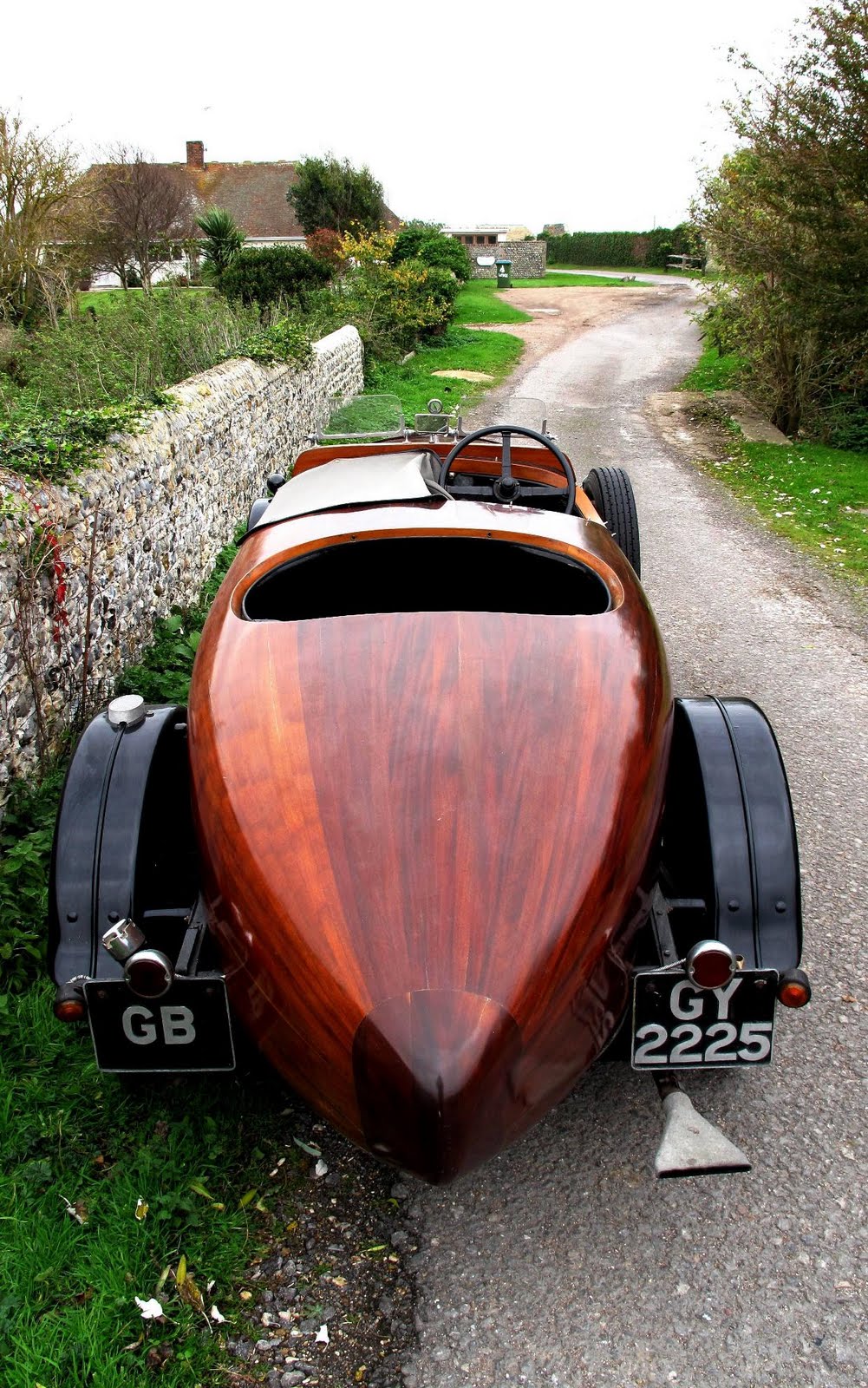
November 2010 again and one of my many vintage motoring posts - this time featuring a one-off wood-bodied 1932 Talbot.  This car had an interesting history, which is why the story appealed to me (and everybody else too, it seems!), having started out in 1932 as just an ordinary 14/65 saloon before some time in the 1960s acquiring a fantastic roadster body fashioned entirely from boat-grade mahogany!  Despite this it was only valued at £20,000 to £30,000, eventually being sold for almost smack dab in the middle at £25,300.  As I said at the time, I hope the new owner enjoys varnishing!

7. Cary Grant - Style Icon
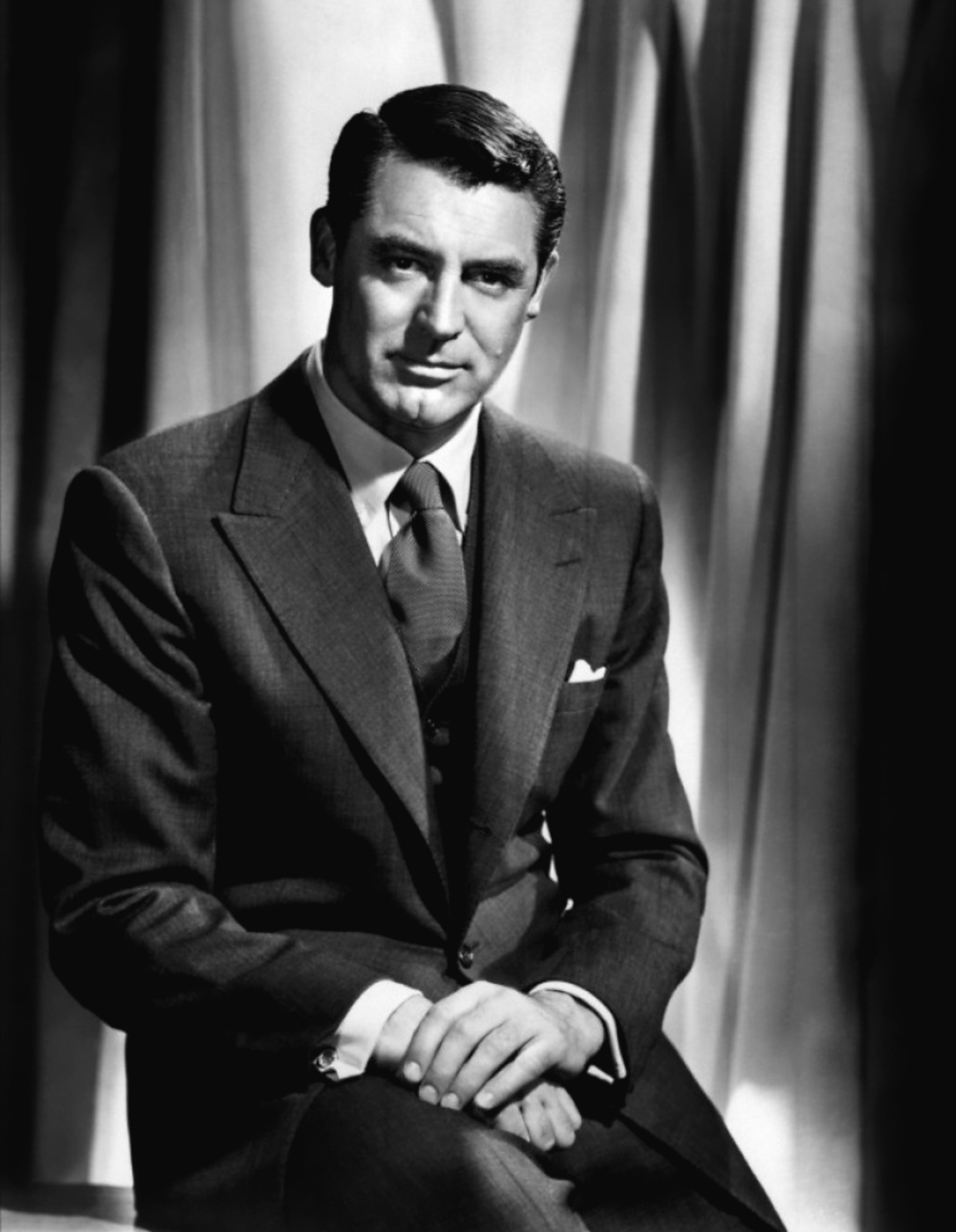
 

source

February 2012 and number 2 in my personal Style Icon series is obviously number 1 in your books - Mr Cary Grant.  Proof of the man's popularity even today, my thoughts on his impeccable dress sense - and more importantly the pictures that illustrate this - have gone towards making this everyone's favourite Style Icon post from a list that included David Niven and Fred Astaire!

6. Model of new Routemaster bus unveiled


source

The classic [red] AEC Routemaster bus has come to symbolise the city of London, not just for those of us in Britain but more especially for people living around the world for whom this simple, long-lived vehicle is part of their own external view of our capital.  Therefore it should perhaps come as little surprise, given the international nature of the internet (and thus, this blog), that the unveiling of its spiritual successor should prove to be so popular.  The idea of modern technology meeting classic, tried-and-tested design was much in evidence throughout the story of the NB4L (or New Routemaster, as it has become known) and this has always been the most appealing aspect of things to me, as I hope it has been to all who have followed the journey of the NB4L from drawing board to now, five years later, actually carrying passengers around the streets of London.  Having since seen one or two up close I can confirm it more than lives up to the hype and it's been fascinating to see its progress all the way from inception to now.

5. Vintage Rolls-Royces honour Spirit of Ecstasy


source

As if to reinforce its position as "Best Car in the World" this 2011 post about the centenary of Rolls-Royce's mascot, the famous Spirit of Ecstasy, makes it into the top 5.  As well the story about the anniversary celebrations featuring myriad Royce models from down the years, I took the opportunity to throw in a bit about some of my favourite examples and it has obviously struck a chord with many people for whom the Rolls-Royce is still the very epitome of luxury motoring.

4. Film Friday - Scarface (1932)


The third of the Film Friday: Gangsters series that I began back in 2010 with Little Caesar (and which sadly I've rather let slide since) this post focussed on the plot - and, more importantly the fashions - of Howard Hughes' and Howard Hawk's classic 1932 gangster drama Scarface, starring Paul Muni, Ann Dvorak and George Raft.  This post has proven to be popular with both vintage film and fashion fans alike, which are who I hoped would be the target audience and which has made me think that maybe it's about time I brought this series back!

3. All aboard the song train


This is the most recently-written post to make the top 10, containing a selection of railway-related tunes to celebrate (if that's the word I want!) my first foray back into the world of full-time work and commuting by train.  While that job didn't last and I now commute to the latest office by bus, this post really seemed to build up a good head of steam(!) and powered its way into the "most popular" list.  I suspect this is just through people searching for the phrase "song train", but then I live in hopes that there are several thousand visitors with a liking for the music of Glenn Miller, Paul Whiteman and Bob Crosby among others!

2. Rare photographs of comedian Stan Laurel are auctioned


Proof of the enduring popularity of two of the funniest comic actors to have ever lived, this story regarding the auction of rare photographs of (mainly) Stan Laurel and Oliver Hardy proved inordinately popular (again probably just through people Googling "photos of Stan Laurel", I reckon).  Including some very rare images dating back to 1897 and showing a young Arthur Stanley Jefferson playing with his siblings these photographs came from a family collection owned by a great-niece of Stan's living in Sunderland, near to North Shields where he grew up.  The 54 lots eventually sold for a total of £8,000.

1. Classic car firm Morgan building new three-wheeler after gap of 60 years


This would certainly be in my top 10 favourite vintage news items that this blog has covered since 2009, so I'm delighted to see it make the number one slot with my readers too.  And why should it not?  Here is an almost perfect example of traditional, vintage design being married to modern technology and - even better - one that has been an unqualified success for the Morgan Motor Company.  For it is now the company's best-selling model, having sold more than 600 in the first few months after it went on sale and over 1,000 in the four years it has been on sale.  While that may not sound like much, for a niche manufacturer like Morgan - who still use the same construction methods and work out of the same factory in Malvern, Worcestershire that they have done since the company's inception in 1909 - it is a very big deal.  In 2014 a whole raft of updates were applied to the car in response to customer feedback and I see no reason why the 3-wheeler, having taken its rightful place back in the very heart of the Morgan range, should not endure for decades just as the other models have done.

There we have it, then - the 10 most popular Eclectic Ephemera posts from the past 6 years and 400,000 pageviews.  I hope you've all enjoyed this little reminiscence as much as I have writing it and I look forward to seeing what the future brings for this blog amid the hope of many more readers and followers to come.

Thursday, 24 November 2011

Flying on four wheels - the best of the classic aero-engined monsters

Bespoke Bentley that rewrites the rules of giant cars

Image from The Daily Telegraph
Inspired by the above article and with the feeling that I ought to blog about something really masculine to counterbalance recent posts featuring women's fashion I thought I'd gather together some of my favourite examples of "giant cars" - vehicles old (and new) that are powered by aeroplane engines.

1909 "Blitzen Benz"

The 1909 Blitzen Benz was not actually powered by an aeroplane engine, but rather a development of Mercedes' grand prix engine at the time.  The aim was to build a car that could exceed 200km/h (124mph), for no other reason than to see if it could be done, one supposes.  The standard in-line 4-cylinder 150hp racing engine (and remember, this is 1909, over 100 years ago!) was found to be unequal to the task, however, so Mercedes did the usual thing when an engine was not powerful enough for the job - they increased the displacement.  To 21½-litres.  That's right - twenty-one point five litres.  Power jumped to 200hp at 1,600rpm  (a modern Ford Focus 1.6 develops its full 180bhp at 5,700rpm) and on the 9th November 1909 at the Brooklands race circuit, a Blitzen Benz set a new record of 202km/h (126mph) over 1km.  Then two years later at Daytona Beach another one was clocked at 228km/h (141mph) over 1 mile, a record that stood for 8 years.  A total of six Blitzen Benzes were built with many of them surviving to this day and one can be seen at the Mercedes Benz World museum at Brooklands in Surrey. 


1924 Fiat Mefistofele

Another monster that began life as a grand prix car, this time a 1908 Fiat with an original displacement of 18 litres, which you'd think would be big enough as it is.  When that engine exploded in 1922 (quite spectacularly, according to contemporary reports) the car passed into the ownership of one Ernest Eldridge.  He promptly replaced the shattered 18-litre engine with an in-line 6-cylinder Fiat aeroplane engine of 21.7-litres capacity, more normally found in airships and heavy bombers.  This was then modified further, resulting in power increasing from an already heady 260hp to a scarcely believable 320hp, again at the ridiculously low rpm of 1,800.  Despite weighing 2 tons and with no front brakes, Mefistofele hit 146mph on the 12th July 1926 taking the world speed record at the time.  Fiat bought Mefistofele from the descendants of Eldridge in the late 1980s and it is now in their Turin museum, with occasional guest appearances elsewhere.


1921-1927 Chitty Bang Bang

A series of four cars that inspired the well-known story of Chitty Chitty Bang Bang, all owned by a Count Louis ZborowskiThe exact source of the car's name is unknown, it was either an onomatopoeic appellation taken from the noise of the car's engine or it was based on a bawdy First World War song.

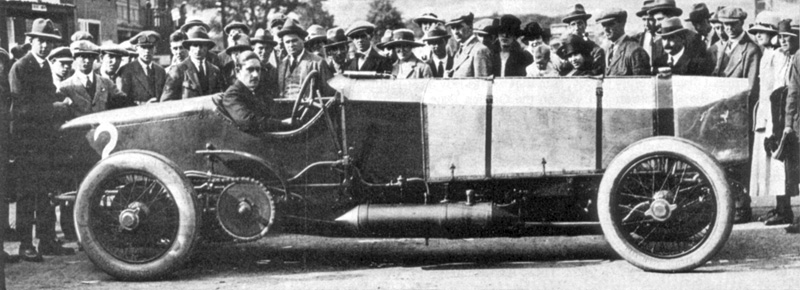
Regardless of how the name came about, Chitty Bang Bang began life in 1921 as a Mercedes-based race car fitted with a 23-litre Maybach in-line 6-cylinder aeroplane engine.  In this configuration it eventually achieved a top speed of 120mph (190km/h).  The second Chitty was slightly smaller both in length and engine size, making do with an 18.8-litre Benz aero engine; the third incarnation was similarly equipped and lapped Brooklands at 112mph.

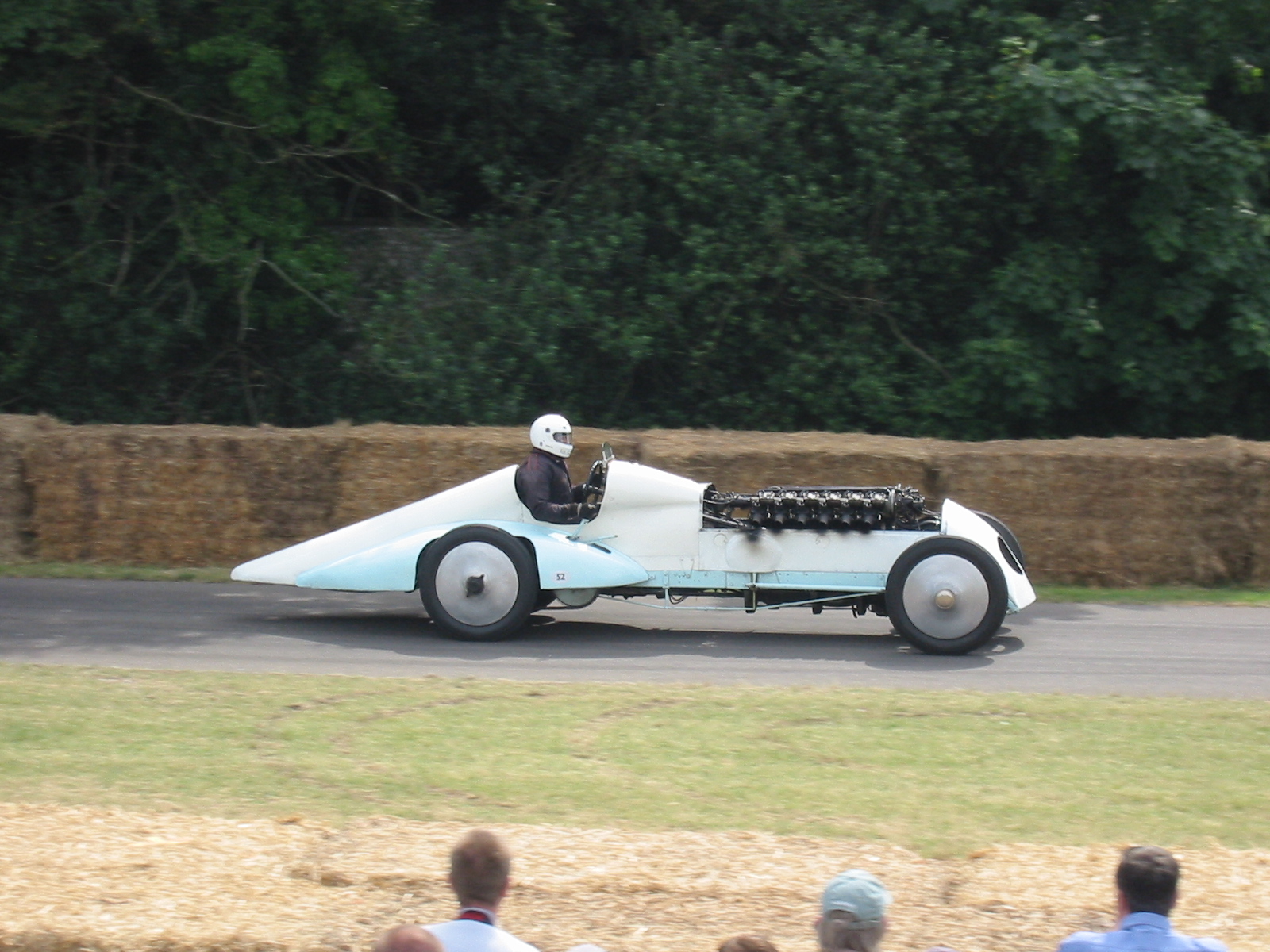
The fourth car to bear the name went all-out with a 27-litre V12 Liberty aero engine of 450hp and a gearbox and chain-drive taken from one of the Blitzen Benzes.  After Zborowski's death this car was bought by Welsh racing driver and land speed record holder John Godfrey "J.G." Parry-Thomas who renamed it "Babs" and on the 28th April 1926 used it to take the world land speed record at Pendine Sands in Wales with a speed of over 170mph (270km/h).  A year later on the 3rd March 1927, after the record was broken again by Malcolm Campbell, Parry-Thomas attempted to reclaim the title but was killed in the attempt.  The car was wrecked and later buried in the sand.  It remained there for almost 40 years before eventually being recovered and restored (not without difficulty considering the terrible condition it was in) during the 1960s/70s; it is now shared between the Pendine Museum of Speed and Brooklands.


1931 Rolls-Royce Phantom II Merlin

Starting out as a standard 1931 Phantom II this particular example was modified to accept a 27-litre V12 Rolls-Royce Merlin engine (of Spitfire fame) some time in the 1970s.  Restored in the 2000s it recently sold at auction for $410,000 (£263,500).  With an estimated 1,100hp on tap performance was described as "unbelievable" and on one occasion this 1931 Rolls-Royce was able to out-accelerate a 1958 grand prix car!

1933 Napier-Railton and 1968 Napier-Bentley

The 1933 Napier-Railton was built especially for racing driver John Cobb by renowned automotive engineer Reid Railton (what a name!); both men would later work together on the land-speed record-beating Railton Special.

The Napier-Railton had a 23.9-litre W12 Napier Lion aeroplane engine and put out more than 500hp.  At the Brooklands track in 1935 Cobb set a lap record of 143mph (231km/h), a mark that stands to this day.  Theoretically capable of a maximum speed of 168mph, the Napier-Railton has been in the possession of the Brooklands Museum since 1997.

The Napier-Bentley was built as an homage to the Napier-Railton in 1968, originally based on a Sunbeam but later rebuilt using a Bentley chassis.  It uses the same engine as the Railton and so has practically the same performance but is in private hands, although it makes frequent appearances at Brooklands and elsewhere.  (I have been lucky enough to see both in action at the Brooklands Centenary celebrations back in 2007 - or was it 1937?).


1953 Swandean Special

Built by a man called Michael Wilcock of Worthing in Surrey out of two army Daimler scout cars and a 27-litre V12 Merlin engine bought from a scrapheap for £50, this took part in several time trials up and down the country, once being clocked at 150mph - in third gear!  Fitted with a supercharger it reputedly made 1,600hp at 3,000rpm.  Later made its way through several American collectors before being restored to pristine condition in time for the 2008 Pebble Beach Concours d'Elegance.

2010 Packard-Bentley "Mavis"

Obviously not satisfied with owning the aforementioned 24-litre Napier-Bentley, automotive enthusiast Chris Williams has since built a successor to that car and one that fully deserves the title of "monster".  Again, not really an aeroplane engine, but rather a variant of a Packard V12 42-litre engine in marine form taken from a Second World War PT boat.  With fifteen hundred brake horsepower and 2,000lb ft (2,700Nm) of torque, nothing can come close to this imposing beast.  It's a wonder the 1930 Bentley 8-litre chassis can handle it, even with all the modifications it has had to have.  You might want to turn the volume down (or up, if you're so inclined) a bit for this one, it's LOUD! 


1925 BMW "Brutus" Experimentalfahrzeug

Well, perhaps almost nothing can touch "Mavis" (oo-er missus!).  Meet Brutus.  Wouldn't they make a lovely couple?(!).

After its defeat in 1918 and the signing of the Versailles Treaty a year later Germany was not allowed to produce armed aircraft, which meant a lot of surplus aero engines lying about.  Nothing was mentioned in the treaty about cars (except of the armoured variety) however, so BMW took one of its redundant V12s and plonked it on to a 1908 American-LaFrance racing chassis.  With 46-litres and 12-cylinders the result is 740hp and the ability to do 60mph at 800rpm (about where your car idles).


I was going to include the bespoke aero-engined land speed record cars like the Railton Special, the Golden Arrow and Malcolm Campbell's various Blue Birds but I think I've gone on for far too long, so I'll save them for another time.  As it is I've got an urge to don some white overalls, leather hat and goggles and tinker about with some big-engined cars.  Vroom-vroom!

Monday, 7 February 2011

Vintage Rolls-Royces honour Spirit of Ecstasy


Vintage Rolls-Royces honour Spirit of Ecstasy by itnnews

Another car manufacturer, another anniversary. This time it is the renowned luxury car maker Rolls-Royce who are celebrating 100 years of their famous Spirit of Ecstasy, or Flying Lady, bonnet mascot.

Although Royces have been built since 1904 it was from 1911 that the Spirit of Ecstasy began to appear on that imposing Grecian grille. Like many great designs it was modelled after a beautiful woman, in this case the mistress of a Tory politician(!). It is rather fitting that the MP in question was Lord Montagu of Beaulieu (an avid motorist who is said to have introduced King Edward VII to the joys of motoring and who became the first person to drive a car to the Houses of Parliament), whose home later became the site of the National Motor Museum.

In pictures: Spirit of Ecstasy Centenary Drive

Since 1911 the Flying Lady has become one of the most well-known symbols in motoring throughout the world and synonymous with one of the most opulent brands available. It is impossible to think of Rolls-Royce without thinking of the Spirit of Ecstasy and what started out as a one-off commission for a single customer has since become a cornerstone of the whole company. A Royce just wouldn't look the same gliding to a halt outside the Savoy without the Flying Lady adorning its nose (although that is now technically possible as all modern Royces have the ability to retract the mascot into the grille to stop it from being stolen!). I think it's safe to say that for as long as there will be a Rolls-Royce there will be a Spirit of Ecstasy atop its prow. Here's to the next 100 years!

I have to admit that I've always been more of a Bentley man myself (ha! to listen to me you'd think I'd been swapping between Bentleys and Royces all my life - I wish!). However there have been a few Royces down the years that I really like, so to help celebrate here are a some of my favourite examples of cars sporting this famous Lady:

(All images courtesy of Supercars.net)

The 1914 Silver Ghost Labourdette Skiff I have already blogged about in my post about wooden-bodied cars, but it deserves another mention here.

In my opinion some of the best Royces of the 20s and 30s were from Rolls-Royce of America Inc. with coachwork by Brewster of Springfield, Massachusetts. The epitome of Art Deco, roaring Twenties glamour!

How about a 27-litre V12 Rolls-Royce Merlin aero engine, later used in the Spitfire fighter, underneath that Spirit of Ecstasy? Then she really would be a Flying Lady! Amazingly in the 1970s a 1931 Phantom II was re-engineered to accept a Merlin engine and later restored in 2007. One can scarcely imagine what it must be like to drive a car that has 1,100 horsepower and was able to out-accelerate a 1958 Vanwall F1 racer! And what must it sound like?! Glorious, in every sense of the word.

Royces quickly became popular with the super-rich Maharajahs of India, who decorated their cars in their own inimitable fashion. Words can't do justice to this Silver Ghost, so I won't even try. I love the whole thing, but the snakes on the wings are a great touch(!).

This 1935 Phantom I Jonckheere Coupe is simply gorgeous. Its streamlined shape just screams 30s Art Deco decadence. Check out the circular door!

The body for this 1947 Phantom III Labourdette Vutotal Cabriolet cost $44,000 alone, which equates to about $325,000 in today's money! Those inserts are actually brass, not gold, in case you're wondering. My taste's not that vulgar(!).

Tuesday, 30 November 2010

Historic wooden car floated at auction

Historic wooden car floated at auction

Wood has long been used as part of automobile manufacturing, although these days it tends to be reserved for the dashboards of higher-end luxury cars. The exceptions to this rule are the likes of Morgan, who still use ash wood as part of the frame in their cars, Rolls-Royce - whose Phantom Drophead Coupe has teak decking as part of the roof-covering mechanism - and the bizarre Splinter concept from a couple of years ago. It's all a long way from the old Morris Minor Traveller of the 1960s, isn't it?


Long before that, though, wood was being used in abundance in car design. Wood was plentiful, surprisingly strong yet able to be made into various shapes and in any number of sizes. The nautical look was also popular in the first three decades of the twentieth century as car makers tried to create a link between the then-luxuries of motoring and sailing. Sea-faring terms like "boat-tail" and "skiff" were applied to vehicular offerings, such as this ultra-rare (only 5 made) 1914 Rolls-Royce Silver Ghost Labourdette.


The car that features in this article, a 1932 Talbot, was originally just another normal saloon of standard Thirties design and didn't actually acquire its magnificently-built wooden body until the 1960s. Happily the chap who owned it obviously appreciated the Art Deco design of the period and found himself an immensely talented boat-builder to perform the actual transformation. What resulted is a unique piece of automotive design - even the likes of that Rolls skiff still used metal forward of the windscreen, whereas this Talbot's body is wood from the grille to the tail-light.

I find it hard to believe that such a beautifully skilled piece of construction is only estimated to make between £20,000 and £30,000 at auction (says the man who would struggle to afford a tenth of that right now!) and I wouldn't be at all surprised to see it easily exceed the higher figure. Whoever ends up buying it, I hope he enjoys varnishing!


Followers

Popular Posts