Showing posts with label recreation. Show all posts

Friday, 10 July 2020

Lego Ideas announces typewriter set

source - LEGO IDEAS

LEGO Ideas announces LEGO Typewriter set

One imagines that typewriter aficionados like myself were - and probably still are - fans of Lego as well (indeed aren't most of us?), since it no doubt appeals to the mechanically-minded and the imaginative in much the same way as typewriters do.  Certainly I remember fondly the massive box of assorted Lego bricks I had growing up, the myriad different designs I built up out of them and especially the Lego Pirates sets that I spent many a happy hour building and playing with.  While all of that is now long gone I still find myself marvelling and coveting many of the more mature "Creations" series that Lego occasionally put out between the more traditionally child-friendly sets.  Their Sopwith Camel, for instance, now sadly discontinued and very hard to come by (and subsequently very expensive) is one I'd especially like to own!

source - Lego.com

Now comes the excellent news that one of the forthcoming sets to be produced in the Lego range - having garnered over 10,000 votes in Lego's fan-based Ideas community - is a typewriter and on initial viewing I can safely say that it joins the Camel on my bricklist (see what I did there...?).  Certainly its creator Steve Guinness, who I am pleased to see hails from the UK, is to be applauded for building such an accurate-looking machine out of largely standard Lego bricks.  Alas he does not mention in the accompanying interview which model of typewriter inspired his design so I will leave it to my fellow typosphereans to hazard a guess!  Regardless of what exact model it is meant to represent I have to say it is a splendid facsimile in spite of the limitations imposed and the attention to detail is mightily impressive.  One could almost be forgiven for thinking it a working example.

source - LEGO IDEAS

Mr Guinness's wider enthusiasm for his medium is obvious and his desire to use Lego creatively as a means of educating and inspiring youngsters through workshops in association with local schools and museums is entirely laudable.  I find myself in complete agreement with him when he speaks of his wonderful set "bringing nostalgia to adult fans[...], and wonder and curiosity to younger fans who might not have ever seen a real typewriter!".  He definitely sounds like a kindred spirit judging by that comment and if his Lego typewriter can engender the feelings he describes in the younger generation - particularly to the point of getting them interested in real typers - then so much the better.  In the meantime I shall keep a look out for this set in the shops (where hopefully it will not be as wallet-crippling as the Camel) with a view obtaining an example for myself!

Saturday, 27 August 2016

Back In The Cockpit - With Robots, Czechs & Secret Codes

Well, hullo there!

Dear me, has it really been three months since my last post?  I suppose there's no getting away from the fact that I've had something of an impromptu blogging break, but here I am - like the proverbial bad penny - turning up again and I must say it's already beginning to feel like I've never been away.  Let's hope I can sustain that feeling, get back to a post every once in a while and not become stuck in another rut!


So, what has caught my vintage eye (I actually have two you know) in the last few weeks?  Read on to find out!

Secret German WW2 code machine found on eBay


In my local seaside town, no less, came the discovery at the end of May of a part of the hugely important and super-rare coding machine used by the Germans in the Second World War - the Lorenz encryptor, bigger and even more complex brother of the famous Enigma machines.  Discovered, in of all places, eBay!  Misidentified as a telegraph keyboard, and up for auction at a mere £9.50, it was only sheer luck that the National Museum of Computing at Bletchley Park came across it - sitting in the seller's garage under a pile of junk!  Surely this must rank as one of the ultimate eBay "finds"?!  Well done to those eagle-eyed museum chaps for spotting this important part of computing and Second World War history, even if it is incomplete.  Proof, if proof were needed, that there are still treasures to be found on that site - and on that note, while we're all searching around for that next bargain, keep an eye out for the Lorenz's motor, which is still yet to be found.

Secret WW2 wireless station in Norwich gets heritage protection

In related news a Second World War messaging post, one of 30 set up at the behest of Churchill in the face of the expected invasion of Britain in 1940, has been given listed status following its rediscovery in a disused Norfolk country house in 2012.  One of only twelve so far discovered, it was sadly damaged by fire in 2014 but with this latest news and the encouraging noises being made by Historic England (previously English Heritage) one hopes that it can be restored and opened to the public as a museum detailing that pivotal point in our nations history and the important part these "In Stations" and there civilian operators would have played had the worst happened.

Czech World War Two pilot flies Spitfire once again


One man doing his best among hundreds to ensure the worst did not happen was Czech fighter pilot Emil Bocek, who trained as a teenage ground mechanic in 1940 before going on to earn his wings and fly Spitfires in combat from 1944.  Later rising to the rank of General and now aged 93, he returned to Biggin Hill last month to fly a dual-control Spitfire over the skies of South London - the first time he's taken the controls of that wonderful aircraft in 70 years.  Dobré pro vás, General Bocek!

Work begins on Eric robot resurrection

Work continues apace on the reconstruction of Eric, the world's first functioning robot (as previously reported here).  It sounds as though both the Science Museum and the chap building the replica are unsure of just how things will turn out, so it sounds like the plans that have been found are either incomplete or not detailed enough.  Nevertheless I look forward to hearing of Eric's reawakening, in what will no doubt be the closest form to the original that the existing information will allow.

source

War hero's plane to fly at RNAS Culdrose Air Day after being restored by his grandsons 

This last article is an absolute pip, just the kind of feel-good vintage news story I enjoy featuring on the blog.  In this four-year centenary of the First World War there have been - and no doubt will continue to be - many such stories of descendants of Great War combatants uncovering fascinating accounts or honouring their relatives in some way (and rightly so!).  This story of two brothers recreating the very aeroplane their grandfather flew in the Royal Naval Air Service during the Gallipoli campaign is a particularly stirring example and I'm delighted to see them make a success of it in time for a local air display.  A more perfect way of honouring their grandfather's memory and providing an important glimpse into his life and exploits in the RNAS I couldn't imagine.  Well done chaps!

That's me done for this post, then, but I sincerely hope and intend it not to be my last for another three months!  I'm looking forward immensely to getting back into this blogging racket and with stories like these to choose from I certainly shouldn't be short of inspiration.  Until next time folks, tinkerty-tonk!

Saturday, 22 February 2014

Rhapsody in Blue by George Gershwin is celebrated


Rhapsody in Blue by George Gershwin is celebrated

A bit later than planned thanks to the two previous exciting news items, this event had in any case already taken place by the time it came to my attention but I still think it deserves mention here as another splendid example of 1920s jazz performed for a new generation.

Pre-eminent modern bandleader and jazz music revivalist (what a great term!) Vince Giordano - who has previously featured a couple of times on this blog - and his Nighthawks band recently took the opportunity to mark the 90th anniversary of the first performance of George Gershwin's composition Rhapsody in Blue.  Originally debuted by Paul Whiteman and His Orchestra, with Gershwin himself at the piano, on the 12th February 1924 the piece was performed once again by Mr Giordano and the Nighthawks (doubled from the band's usual 11 musicians to 22 - just as Paul Whiteman did - plus a special guest conductor) at the Manhattan Town Hall - 90 years later to the day.  


Brooklyn 'Jazz Age’ revivalist Giordano to recreate 'Rhapsody in Blue’ concert

As well as this recreated version of Rhapsody in Blue Giordano and his band also played some of their standard set pieces and the whole event sounds like it was an absolute hoot - the perfect way to mark such a musical milestone.  It is always splendid to see that this early jazz music is still appreciated and enjoyed - hopefully sparking the enthusiasm of a new generation.  With this performance and others in films like The Great Gatsby and Manhattan, plus a possible biopic in the works, the Jazz Age as epitomised by George Gershwin seems to show no signs of being forgotten - and a jolly good thing too!

Thursday, 9 August 2012

Jean Bugatti's final car completed 73 years after his death

source

Jean Bugatti's final car completed 73 years after his death

Bugattis seem to feature rather a lot on this blog (as well they should, being amongst the finest of classic - and modern - motor cars as well of one of my favourite marques) usually, it has to be said, in various states of disrepair.  The one in this story is no different, in fact it never even made it to completion - until now.

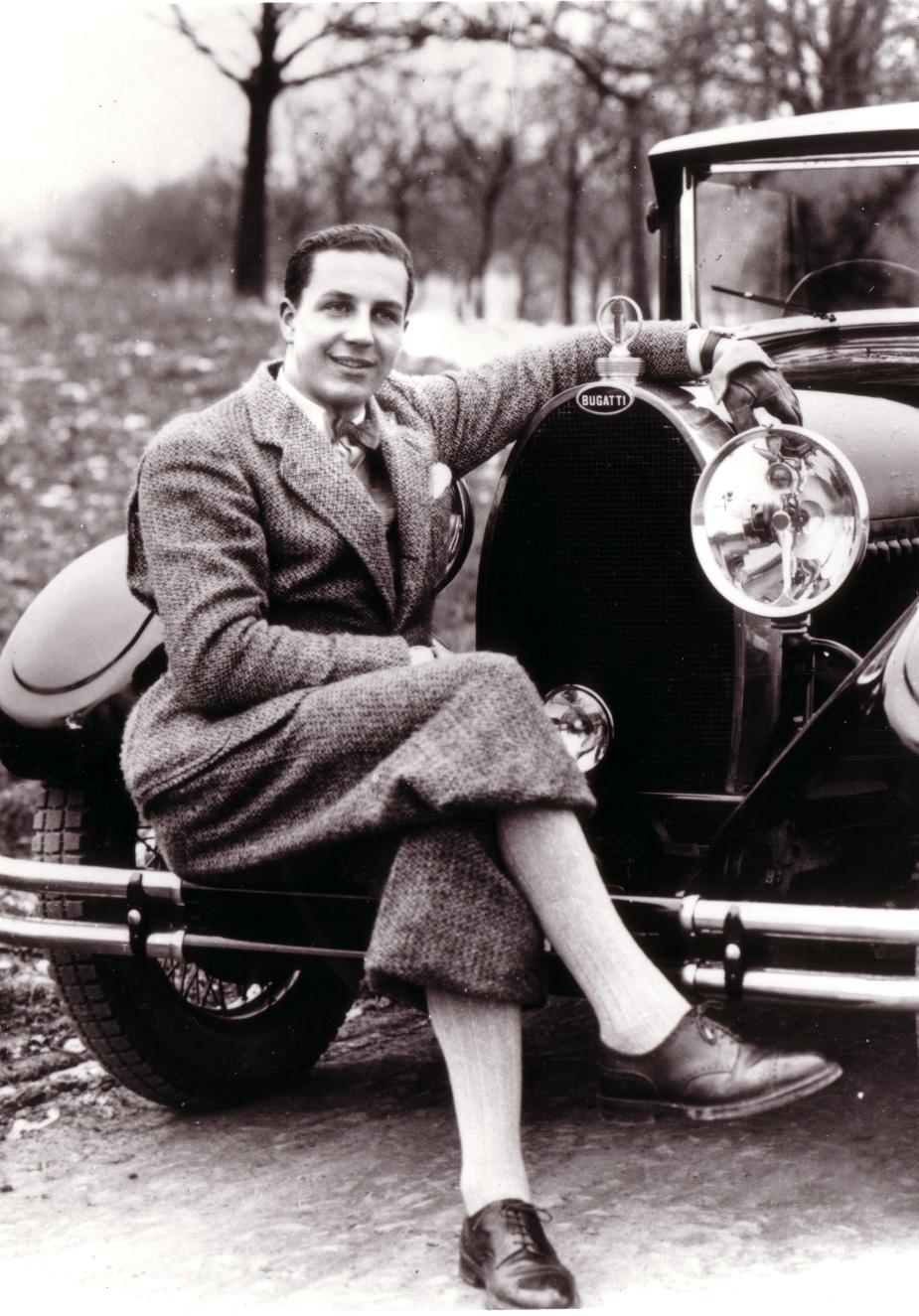
Jean Bugatti with his own personal 1932 Type 41 Royale

The design was the brainchild of Jean Bugatti, eldest son of company founder Ettore Bugatti and with whom he worked as de facto designer throughout the 1930s.  One of the company's most famous models, the gargantuan 1932 Type 41 Royale, was largely the work of young 23-year old Jean.

source
1936 Bugatti Type 57S Atalante

By 1939 Jean was completely established in the design department and had produced what are arguably still some of Bugatti's best - and the world's most beautiful - cars, including the 1936 Type 57S Atalante (one of which was found in original condition, unseen for 50 years, in a garage in Newcastle back in 2008).

source
1936 Type 57G 'Tank'

Again in 1936 Bugatti produced the remarkable Type 57G 'Tank' racer, which went on to have great success in various Grands Prix (including winning that year's French GP at Montlhéry) and later at the 24 Hours of Le Mans, which it comprehensively won in 1937.  Come 1939 and Jean Bugatti had started on a redesign of the 57G for the Le Mans race of that year, dubbed the Type 57C 'Tank'.  It once again came first in what was the final Le Mans before the Second World War and Bugatti were riding high and looking to the future with the Type 64 Coupé prototype and some more advanced drawings by Jean Bugatti based on that design.

Jean Bugatti 1909-1939
Sadly Jean Bugatti would never see these new designs realised.  On the 11th of August 1939 he took the Type 57C 'Tank' on a post-race test (following its Le Mans win) on the supposedly closed factory test route that ran close to the French village of Duppigheim.  Unfortunately a drunk cyclist had managed to find his way through a gap in some fencing and so on to the road.  In his effort to avoid hitting the man Jean Bugatti's car left the road and struck a tree, killing him instantly.  He was 30 years old.

Following this tragedy and with war only weeks away, what was left of Bugatti's design department closed down and attention was directed elsewhere.  Now, 73 years later, the Mullin Automotive Museum in Oxnard, California has used the last design drawings left by Jean Bugatti shortly before he died to create a one-off, brand-new bodyshell.  Made using the same techniques Bugatti would have used to hand-build bodywork in the Thirties, this evolution of the Type 64 is on the verge of becoming a unique vehicle - a "new", never-before-seen 1939 Bugatti.

source
One of only two 1939 Bugatti Type 64 chassis, of a total of 3 produced

The Mullin Museum have been able to use one of only three original Type 64 chassis on which to mount the new bodyshell and the "virtually complete" car will be shown at a local event on the 17th August.  As a truly one-of-a-kind car it is, as its creators have said, a perfectly fitting tribute to Jean Bugatti and a valuable addition to the historic Bugatti catalogue.  It is an incredible and totally laudable undertaking and I for one can't wait to see the pictures of it on the 17th - I'm sure it will be worth the 73-year wait.

source
The single example of a bodied 1939 Type 64 Coupé

Tuesday, 19 June 2012

East Texas man recreates 1920s-era Gulf station

source

East Texas man recreates 1920s-era Gulf station

To east Texas, United States, now where a splendid old local character has recently been putting the finishing touches to an obvious labour of love - a replica of his town's first petrol station that opened in the 1920s.

A fine-looking building it is too, very reminiscent of those early gas stations that popped up in rural communities across the land during the pioneer years of the motor car - as well it should be considering the time taken and detail gone into by Mr Rogers.  The world needs people like him and it is lovely to see the community appreciating his interest in its history, not to mention his penchant for collecting fascinating historical objects.  His comment about the perceived difference between a collector and a hoarder is funny, and quite true.  I have no doubt that his home is a treasure trove of antique items with a story to tell and that he will continue to add to his collection for as long as he can - good luck to him.

I am sure Mr Rogers will continue to get many years of enjoyment out of his wonderful Gulf station (although from the sound of things he is already looking ahead to his next project, I shouldn't wonder!), and I would hope that the people of New Harmony, TX will also take the place to heart as an important part of the town - both now and for what it represents of the past.  These small rural American towns have very often hardly changed in generations, as is evidenced here by the fact that some residents grandparents and great-grandparents lived in the neighbourhood and the son of the original station's owner was on hand to cut the opening ribbon.

In these days of bright, impersonal forecourts and splash'n'dash refuelling it is nice to, as Mr Rogers puts it, "step back and forget the traffic" - to step back in time, quite literally, and see how the early petrol stations of America looked, thanks to the dedication of one man.  You may not be able to get petrol at New Harmony Gulf Station No. 2, but I'll bet you can get a good feel for the past.

Thursday, 3 March 2011

Autocar 1928-2011: Austin 7 'Gordon England' Sunshine Saloon


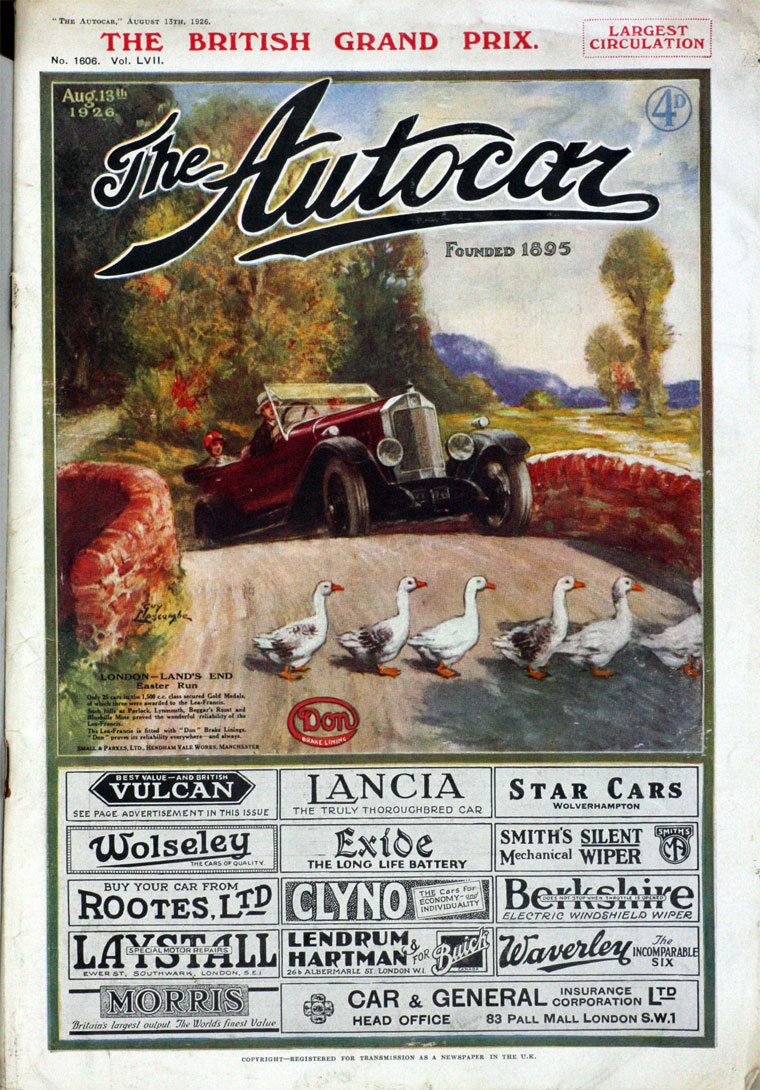
One of the few periodicals I read on a regular basis is the Autocar magazine.  It satisfies my interest in all things related to modern motoring (despite my not actually having a driving licence or owning a car!) and I've been a subscriber since long before I would legally have been allowed to drive(!).  When I was last employed it was very useful for my work too (in fact, my last two jobs were found through its pages) and I hope it will be again some time soon.

Anyway, this week's copy sees the Autocar reach a very remarkable milestone.  Already laying claim to the record of the oldest motoring magazine in the world, having first been published on the 2nd of November 1895 "in the interests of the mechanically-propelled road carriage", on the 13th of April 1928 it undertook the first ever "road test" - a detailed study of a particular motor car encompassing equipment, performance and driving characteristics which has become the universal standard since then.


The very first car to undergo this examination was the Austin Seven and since then a staggering 5,000 cars have been subjected to the same test (with some improvements over the years, of course).  To celebrate this achievement the latest issue has reprinted 50 of the best road tests of the last 83 years - including, of course, the original 1928 #1 - and sportingly "re-tested" an Austin Seven to see how it might fare today.  It makes for interesting and, I'm pleased to say, not entirely ignominious viewing.  Well done to the little Austin for putting in an impressive performance and congratulations to Autocar - here's to the next 80 years/ 5,000 road tests!

Followers

Popular Posts