Cumbrian volunteers revamp historic 1930s carriage
The heritage railways of the Kirkby Stephen Stainmore Railway Company and the Kent & East Sussex Railway form the backdrop for these two news items relating to the recent restoration of vintage rolling stock.
The first article is the standard story of a worn out railway carriage being returned to its original 1930s glory by a group of dedicated volunteers, but no less worthy for that. The coach in this particular case is not quite finished - more funds are needed apparently - but I have little doubt that it soon will be and that it will be a welcome addition to the Stainmore Railway Company's stock. The group should also be commended for its attempts to restore and reopen the Kirkby Stephen East railway station and so become part of the larger neighbouring Eden Valley Railway, itself aiming to become one of the country's newest heritage lines - I wish them both success.
I came across this second item quite by accident but it more than deserves its inclusion here, dealing as it does with a vintage vehicle reworked for modern - and noble - use.
Disabled access has long been something of a problem for older transportation systems, which in some cases have not and cannot be updated (witness the withdrawal of the tradition London Routemaster bus, due in part to its inability to meet the Disability Discrimination Act). While it is only right and proper that less able-bodied people should be able to fully enjoy museum exhibits, heritage railways and the like the difficulty of providing full accessibility often still remains simply by dint of the historic construction of buildings and/or machinery (and in some cases, the impossibility of successfully converting them).
This is not the case on the Kent & East Sussex Railway though, I'm pleased to see. 9254 Petros was the first railway carriage to be fully converted for disabled use, following its decommissioning from mainline service in 1981 after twenty-five years of use. A year later it was updated and delivered to the KESR and two years ago it began undergoing a complete refurbishment, the results of which you can see in the above news report that I stumbled across.
Now Petros is back in service on the Kent & East Sussex line, offering remarkably simple but effective access (and with it, greater enjoyment) for disabled passengers. Approbation is in order for the railway, for having such a splendid carriage as part of their stock and for providing a valuable and much-appreciated service. A service that should be the envy of many a heritage - and indeed many a modern - railway and another sterling example of traditional transport updated for the 21st century.
Friday, 17 August 2012
Cumbrian volunteers revamp historic 1930s carriage
Labels:
1930s,
1950s,
carriage,
Cumbria,
East Sussex,
Kent,
Petros,
railway,
restoration,
Stainmore,
train
Tuesday, 14 August 2012
Plenty of books but not much service
![]() |
| Tea-th |
| Nice noir-ish cover art too! |
It was at the library that I really hit the jackpot, however. But before that... I'd gone in to return some books and pick up a reserved copy of R. J. Mitchell: Schooldays to Spitfire, a biography of the great aircraft designer written by his son Gordon Mitchell. (After yet another viewing of The First of the Few starring Leslie Howard I felt moved to read more about the man, and at a cursory glance I can tell I shan't be disappointed with this book!). It was at this point however that I encountered what I consider to be one of the banes of modern living. The automated service.
![]() |
| No. |
![]() |
| Yes. |
![]() |
| Is this too much to ask? |
Librarian: "Can I show you how to use our automated check-in system?"
I remembered my previous responses to this question, drew myself up and said as politely but as firmly as possible:
Me: "I'd really rather you didn't, if it's all the same to you."
I have to admit that after that the atmosphere dropped by several degrees but really! what is it with this blasted self-service culture? What annoys me even more is the fast-increasing view that by having these machines installed the library/supermarket/hospital is somehow doing us all a favour and that we should all be queueing up in excitement and appreciation, eager to use them and wondering how we ever got by just talking to another person. Well they aren't and I'm not. Honestly, they'll be expecting us to stack the shelves next. Machines were envisioned to help (and maybe even replace) us in unpleasant and difficult tasks but instead they have been hijacked by penny-pinching corporations and used in unnecessary situations, forcing people into using them and putting customer relations (not to mention jobs) in jeopardy. How soon before there is a whole generation who will never have experienced person-to-person interactions outside of their own home?
Anyway, rant over (and apologies, but this is something I feel very strongly about - I know that my readership includes one or two librarians so perhaps we shall also hear a contrasting view); let me show you all the books I got! The same two tables and one shelf unit from my previous visit were still there but they had been replenished and joined by two boxes full of some really quite good (and in good condition) titles. I ended up with an armful of five books. Five! For £2.20! None older than ten years (and some again hardly withdrawn). They are: Mr Bojangles: The Biography of Bill Robinson, A Land Girl's War by Joan Snelling (I must admit in my head I had Charly 'LandGirl's' voice - not that I've ever even heard it! - shouting "buy that!"), Elizabeth The Queen Mother by Hugo Vickers, Empire of Sand (a fictional story but using the character of T. E. Lawrence ["of Arabia"] and set in the Middle Eastern theatre of the First World War) and the biographical Joan Crawford: Not the Girl Next Door.
I'm really going to have to limit my book intake for the next few months now, I think. Certainly I've got enough to keep me busy for a long time. At the rate things are going my local library will soon be out of books and I'll have to open up my own library. And I can assure you there wouldn't be a self-service machine in sight.
Labels:
book,
charity shop,
library,
opinion,
Perry Mason,
personal
Saturday, 11 August 2012
It's not cricket, it's Captain Hastings!
It's been a while since anyone's done a post on Poirot's Miss Lemon and subsequently a while since I've done a Captain Hastings riposte. I needn't have worried though; just when I was beginning to think that the infamous red-and-white bow cardigan had run its course, up it pops over on Porcelina's blog (along with some more loveliness from the early episode The Dream). What more incentive does a chap need? {rubs hands gleefully}
I could have used The Dream in my own post but I had decided from the outset to go through the series on a chronological basis, which means the next episode to get the Eclectic Ephemera treatment is Four and Twenty Blackbirds. I'm afraid you'll have to wait a little longer (4 episodes, to be exact) for The Dream!
In Four and Twenty Blackbirds Poirot and Hastings (plus Japp) investigate the deaths of two estranged artist brothers. I hadn't seen this episode for a while and my recollection of it was of another one-outfit show for the good Captain, namely a traditional - and hardly worth commenting on - funeral dress (there being two deaths in this mystery). How wrong I was, and what a pleasant rediscovery it was viewing this episode!
Like a true Englishman, Hastings is obsessed with the cricket - in this case probably the 1934 Ashes Test between England and Australia. England aren't faring too well (in reality Australia would win the '34 Ashes 2-1), much to Hastings' consternation and Poirot's apparently bewildered indifference.
Poor Hastings is very upset that his beloved England have already lost the first Test but Poirot doesn't care - he's off to lunch with his dentist. Miss Lemon's not bothered either - and just so you can never say I don't give you anything, ladies, here she is:
Soon enough, though, there are more important things to worry about than the cricket. A man is found dead at the foot of his stairs. Poirot and Hastings swing into action!
Off the two of them go, interviewing neighbours, housekeepers and models along the way.
If it is a regimental crest and cravat that Hastings wears, that is of course his prerogative having served in the trenches during the First World War. I'm sure it's possible to get a cravat in the same or similar colours (personally I get mine from Tom Sawyer Waistcoats, where there are some very nice patterns - some not dissimilar to Hastings') but I'm not sure about crested blazers myself. All right if you were a member of a regiment, club, university or something, I suppose but always a bit too "specific" for me. Nothing wrong with a plain blazer and a cravat, though!
Later that evening, Poirot serves Hastings dinner - rabbit in the style of Liège (yum!) - and then proceeds to watch him eat it, citing a painful tooth as the reason he's not having any. Personally I'd be a little worried about Poirot's motives!
The next day and Poirot is still caught up in the idea of a possible murder. Hastings is still caught up in the cricket.
The model, Dulcy Lane, is a bit stand-offish and it doesn't help Hastings' gentlemanly nature to know that she also poses nude(!).
Back at the office and Miss Lemon is listening to the wireless while doing some filing. Surely she hasn't taken to the cricket? No, it's Raffles!
Then it's off to the coast for the funeral and to question more people connected to the brothers. Does that stop Hastings reading the cricket news? Of course not!
Poirot takes Hastings away before he can bore the mourners with his cricket talk and having got as much information as they can they head back to London.
Hastings makes a bee-line for the radio, while Poirot examines some evidence.
England still aren't doing well so, although hopeful of a recovery, Hastings continues to devote his time to helping Poirot solve the case. Which of course he does.
Following the unmasking of the murderer, Hastings joins Poroit and his dentist at the same café that precipitated the whole mystery. There Hastings is amazed and delighted to read of an England counter-attack and astounded by Poirot's response, which is surely one of the greatest moments in the entire series.
The next episode - The Third Floor Flat - is also a belter of an early Poirot, so watch out for it! In the meantime, we once again take our leave of Captain Hastings (and the cricket!).
I could have used The Dream in my own post but I had decided from the outset to go through the series on a chronological basis, which means the next episode to get the Eclectic Ephemera treatment is Four and Twenty Blackbirds. I'm afraid you'll have to wait a little longer (4 episodes, to be exact) for The Dream!
In Four and Twenty Blackbirds Poirot and Hastings (plus Japp) investigate the deaths of two estranged artist brothers. I hadn't seen this episode for a while and my recollection of it was of another one-outfit show for the good Captain, namely a traditional - and hardly worth commenting on - funeral dress (there being two deaths in this mystery). How wrong I was, and what a pleasant rediscovery it was viewing this episode!
![]() |
| Everything we've come to expect - pin-striped shirt, brown slacks and cable knit pullover. Yes please with knobs on to it all! (Note the cufflinks too - very proper!). |
Like a true Englishman, Hastings is obsessed with the cricket - in this case probably the 1934 Ashes Test between England and Australia. England aren't faring too well (in reality Australia would win the '34 Ashes 2-1), much to Hastings' consternation and Poirot's apparently bewildered indifference.
![]() |
| A closer look at the pullover and its smashing detailing around the neck and arms. Topped off with a splendid matching tie. I love that radio too! |
Poor Hastings is very upset that his beloved England have already lost the first Test but Poirot doesn't care - he's off to lunch with his dentist. Miss Lemon's not bothered either - and just so you can never say I don't give you anything, ladies, here she is:
![]() |
| I never see you mention this lovely outfit. Why not, hmmm? ;-P |
Soon enough, though, there are more important things to worry about than the cricket. A man is found dead at the foot of his stairs. Poirot and Hastings swing into action!
Off the two of them go, interviewing neighbours, housekeepers and models along the way.
![]() |
| A closer look at the blazer/cravat combo, as our man interviews the deceased artist's model |
![]() |
| Another close-up. |
If it is a regimental crest and cravat that Hastings wears, that is of course his prerogative having served in the trenches during the First World War. I'm sure it's possible to get a cravat in the same or similar colours (personally I get mine from Tom Sawyer Waistcoats, where there are some very nice patterns - some not dissimilar to Hastings') but I'm not sure about crested blazers myself. All right if you were a member of a regiment, club, university or something, I suppose but always a bit too "specific" for me. Nothing wrong with a plain blazer and a cravat, though!
![]() |
| "Tastes more um, well, er... more rabbity than any rabbit I've ever tasted!" Never mind the rabbit, check out the cardigan - and matching tie again. What a co-ordinated chap Captain Hastings is! |
Later that evening, Poirot serves Hastings dinner - rabbit in the style of Liège (yum!) - and then proceeds to watch him eat it, citing a painful tooth as the reason he's not having any. Personally I'd be a little worried about Poirot's motives!
![]() |
| A Hastings stable - light grey/brown jacket, suitable tie and a brown trilby. |
The next day and Poirot is still caught up in the idea of a possible murder. Hastings is still caught up in the cricket.
![]() |
| A better view - note the trousers in a slightly different shade of brown, a clever touch that works really well. |
The model, Dulcy Lane, is a bit stand-offish and it doesn't help Hastings' gentlemanly nature to know that she also poses nude(!).
![]() |
| Two Miss Lemon outfits in one post! Spoiling you rotten, aren't I? |
Back at the office and Miss Lemon is listening to the wireless while doing some filing. Surely she hasn't taken to the cricket? No, it's Raffles!
![]() |
| I couldn't resist this shot! |
Then it's off to the coast for the funeral and to question more people connected to the brothers. Does that stop Hastings reading the cricket news? Of course not!
Poirot takes Hastings away before he can bore the mourners with his cricket talk and having got as much information as they can they head back to London.
![]() |
| Another wonderfully mixed-up outfit - grey trousers, a dark brown jacket and... is that a Fair Isle pullover I spy under there? |
Hastings makes a bee-line for the radio, while Poirot examines some evidence.
![]() |
| It is! What a corker! A splendidly puffed-out tie under that collar too! |
England still aren't doing well so, although hopeful of a recovery, Hastings continues to devote his time to helping Poirot solve the case. Which of course he does.
![]() |
| Another classic Hastings expression - and a quite striking tie. |
Following the unmasking of the murderer, Hastings joins Poroit and his dentist at the same café that precipitated the whole mystery. There Hastings is amazed and delighted to read of an England counter-attack and astounded by Poirot's response, which is surely one of the greatest moments in the entire series.
The next episode - The Third Floor Flat - is also a belter of an early Poirot, so watch out for it! In the meantime, we once again take our leave of Captain Hastings (and the cricket!).
Labels:
1930s,
Captain Hastings,
clothing,
fashion,
Hugh Fraser,
Poirot
Thursday, 9 August 2012
Jean Bugatti's final car completed 73 years after his death
| source |
Jean Bugatti's final car completed 73 years after his death
Bugattis seem to feature rather a lot on this blog (as well they should, being amongst the finest of classic - and modern - motor cars as well of one of my favourite marques) usually, it has to be said, in various states of disrepair. The one in this story is no different, in fact it never even made it to completion - until now.
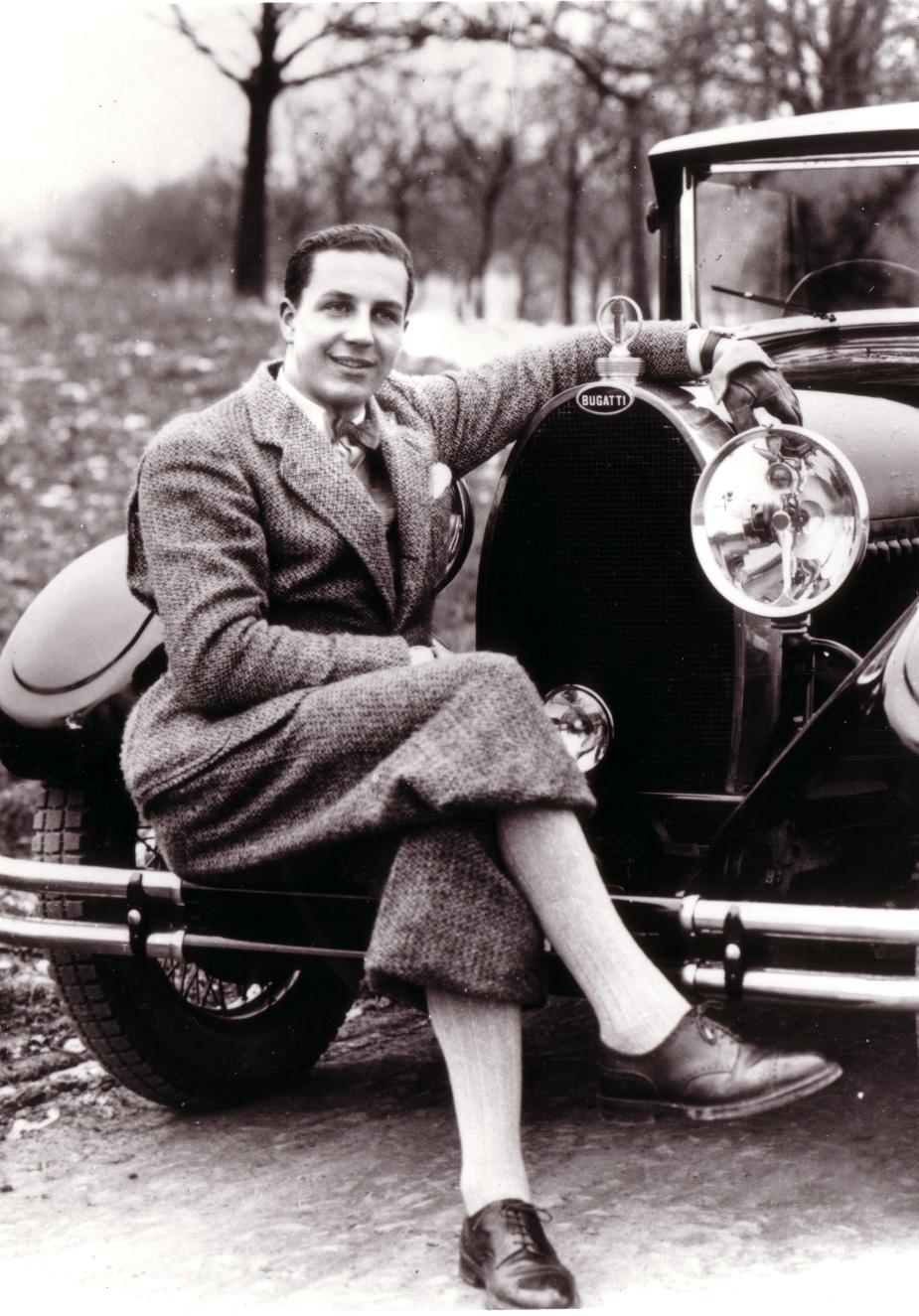
| Jean Bugatti with his own personal 1932 Type 41 Royale |
The design was the brainchild of Jean Bugatti, eldest son of company founder Ettore Bugatti and with whom he worked as de facto designer throughout the 1930s. One of the company's most famous models, the gargantuan 1932 Type 41 Royale, was largely the work of young 23-year old Jean.
![]() |
| source 1936 Bugatti Type 57S Atalante |
By 1939 Jean was completely established in the design department and had produced what are arguably still some of Bugatti's best - and the world's most beautiful - cars, including the 1936 Type 57S Atalante (one of which was found in original condition, unseen for 50 years, in a garage in Newcastle back in 2008).
![]() |
| source 1936 Type 57G 'Tank' |
Again in 1936 Bugatti produced the remarkable Type 57G 'Tank' racer, which went on to have great success in various Grands Prix (including winning that year's French GP at Montlhéry) and later at the 24 Hours of Le Mans, which it comprehensively won in 1937. Come 1939 and Jean Bugatti had started on a redesign of the 57G for the Le Mans race of that year, dubbed the Type 57C 'Tank'. It once again came first in what was the final Le Mans before the Second World War and Bugatti were riding high and looking to the future with the Type 64 Coupé prototype and some more advanced drawings by Jean Bugatti based on that design.
![]() |
| Jean Bugatti 1909-1939 |
Following this tragedy and with war only weeks away, what was left of Bugatti's design department closed down and attention was directed elsewhere. Now, 73 years later, the Mullin Automotive Museum in Oxnard, California has used the last design drawings left by Jean Bugatti shortly before he died to create a one-off, brand-new bodyshell. Made using the same techniques Bugatti would have used to hand-build bodywork in the Thirties, this evolution of the Type 64 is on the verge of becoming a unique vehicle - a "new", never-before-seen 1939 Bugatti.
![]() |
| source One of only two 1939 Bugatti Type 64 chassis, of a total of 3 produced |
The Mullin Museum have been able to use one of only three original Type 64 chassis on which to mount the new bodyshell and the "virtually complete" car will be shown at a local event on the 17th August. As a truly one-of-a-kind car it is, as its creators have said, a perfectly fitting tribute to Jean Bugatti and a valuable addition to the historic Bugatti catalogue. It is an incredible and totally laudable undertaking and I for one can't wait to see the pictures of it on the 17th - I'm sure it will be worth the 73-year wait.
![]() |
| source The single example of a bodied 1939 Type 64 Coupé |
Labels:
1930s,
Bugatti,
California,
car,
classic car,
Jean Bugatti,
Le Mans,
Mullin,
recreation,
restoration
Tuesday, 7 August 2012
Norwich girls bring the history of style to life
![]() |
| source (sauce?) |
Here's some vintage news featuring... can it be... isn't that...? Yes, it's an article all about everyone's favourite vintage bloggers Retrochick, Missy Vintage and the Glamourologist - who together make up The Historical Sauces.
Providing vintage hints and tips to the people of Norwich to help them look as good as they do, The Historical Sauces have made it to the attention of the Norwich Evening News. Well done, girls! Surely national newspaper coverage is but a step away(!).
I'm so glad to see the Sauces having such great success in Norwich, an area which is fast becoming a vintage hotspot. (I wish I could say I've noticed this during my trips to Norwich to visit my dad's family but I seem to have missed it up 'til now - perhaps the result of remaining on the "hippy" outskirts!). It is such an excellent endeavour - one that deserves to do well, as indeed it is. They've had a nicely executed write-up in their local paper where they come over very well, which can only help their cause. Congratulations all!
Labels:
blog,
fashion,
Glamourologist,
Missy Vintage,
Norwich,
Retrochick,
The Historical Sources,
vintage
Sunday, 5 August 2012
Vintage London buses in timetabled Harlow service
| source |
Hooray, hurrah; finally some proper vintage news! Just when I was beginning to worry for this poor little blog too. Everything seems to be about the Olympics at the moment (which is no bad thing and only right). But what a splendid news story to kickstart an otherwise quiet summer.
You may remember a couple of months ago an article about the reopening of the Epping-Ongar heritage railway following several years of restoration. As well as using diesel and electric locomotives - and more recently steam engines too - the Epping-Ongar Railway also runs vintage shuttle buses between the current westernmost terminus of Coopersale and the original terminus of Epping, at least until new track can be laid to allow trains to continue all the way.
Now, however, as well as providing this existing service the AEC Regent R/T's used by the EOR have also started running on an exciting new route for both local residents and visitors alike. Service 396 (the original R/T service in Harlow up until the 1960s) will run thrice-weekly between Harlow bus station and North Weald. Not just another shuttle bus, this route is supported by Harlow District Council which means it is a bona fide service - anyone can buy a standard ticket and travel on a vintage London Transport bus! Even better, a special all-in-one ticket is also available allowing unlimited travel on the 396 (and 339 shuttle) plus the EOR's trains (which also stop at North Weald)! A truly integrated vintage transport system if ever there was one!
| St Andrew's Church, North Weald Bassett |
North Weald itself is a lovely spot, the location of North Weald Airfield (made famous during the Second World War) & Museum amongst other things where there is a huge market and car boot fair held every Saturday as well as frequent air shows and classic car & bus rallies. I haven't been for a while but with this latest development at the EOR I may just have to see about getting over there again. Harlow can be quite pleasant too, I'm told, although I've never been there and being a New Town it has little history to it.
| source |
Only just this weekend I was thinking how it would be a wizard wheeze to run a vintage bus route to subsidise local services and blow me down if somebody hasn't come along and done it! Currently the 396 Harlow-North Weald is only planned to run for one month, 'til the 1st September, on a trial basis. Let us hope it proves such a success that Harlow Council and the EOR make a regular service out of it. In the meantime I'm off to look at decommissioned AECs again - anyone fancy chipping in?
Labels:
AEC,
bus,
Epping,
Essex,
Harlow,
North Weald,
Ongar,
R/T,
railway,
Routemaster
Saturday, 4 August 2012
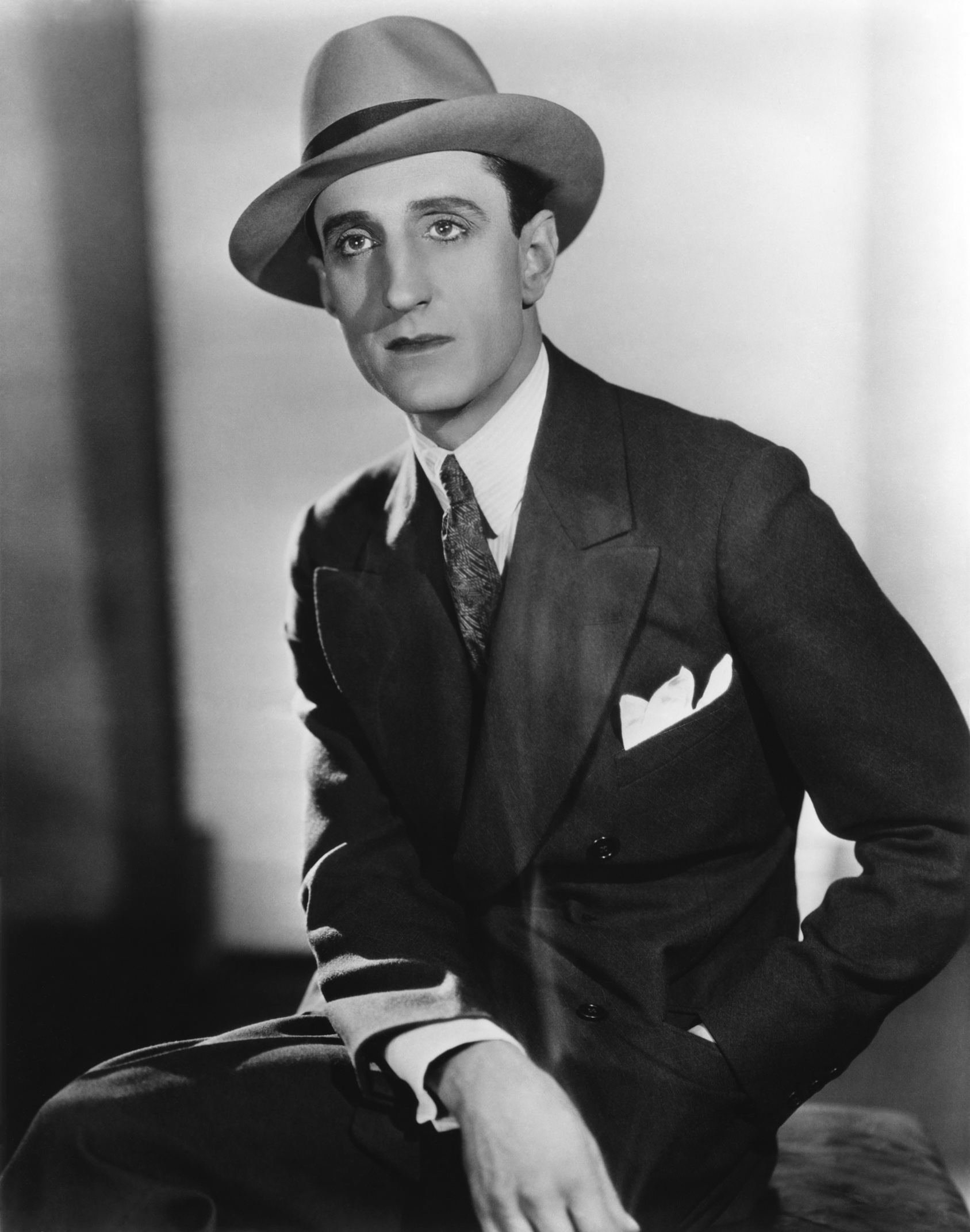
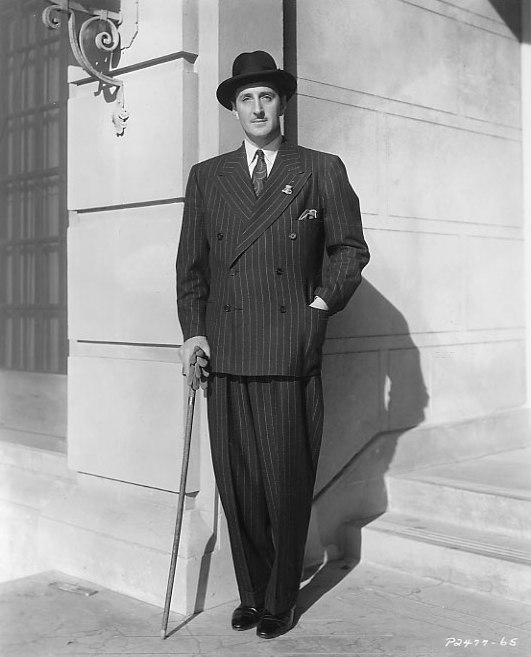
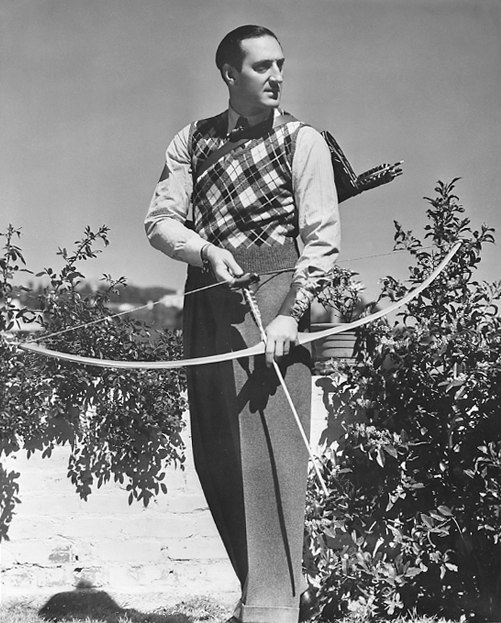
Basil Rathbone, Style Icon
While I wait for vintage news to pick up, and plan one or two other posts for the meantime, now seems ideal for another of my Style Icons from the Golden Era of Hollywood.
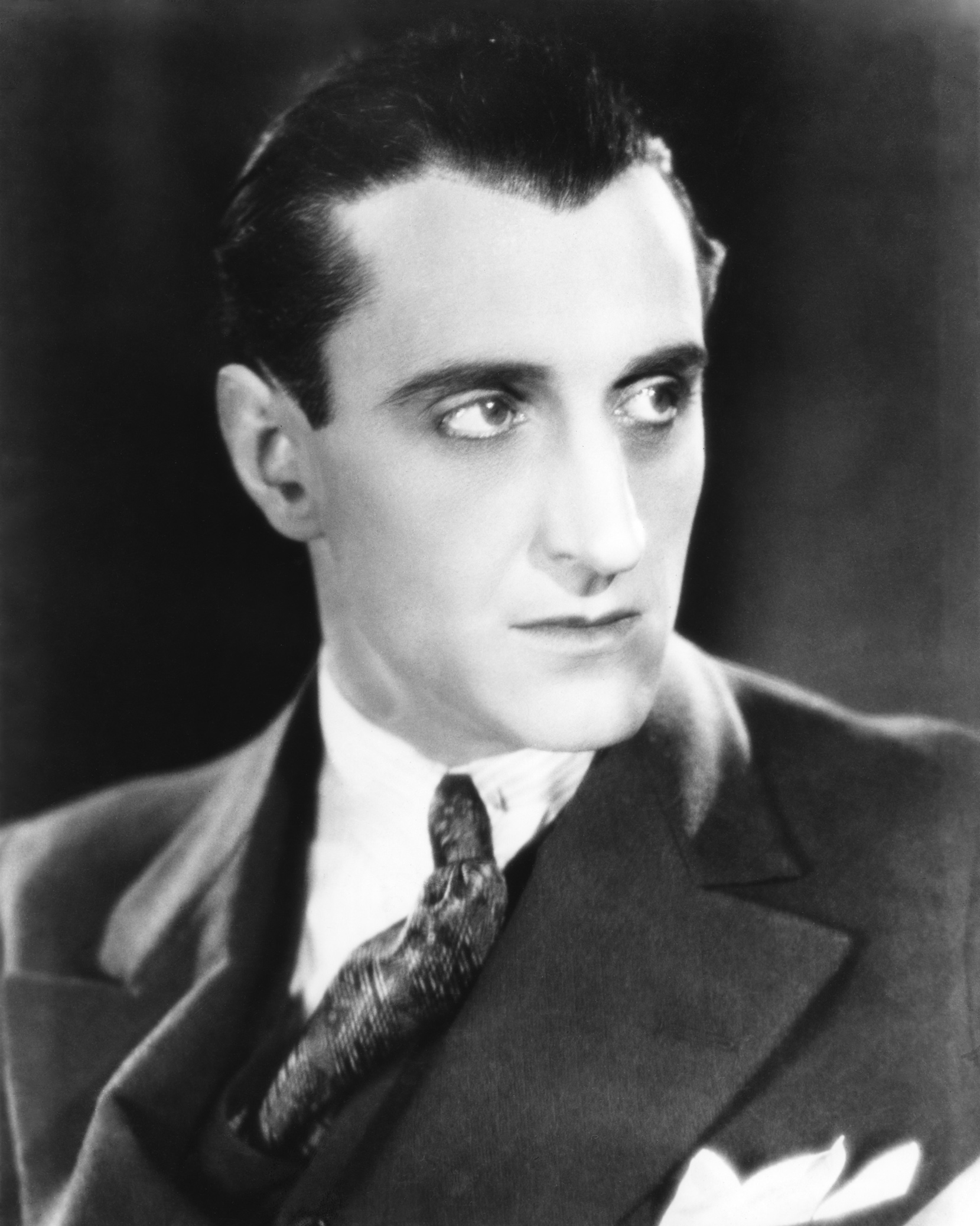
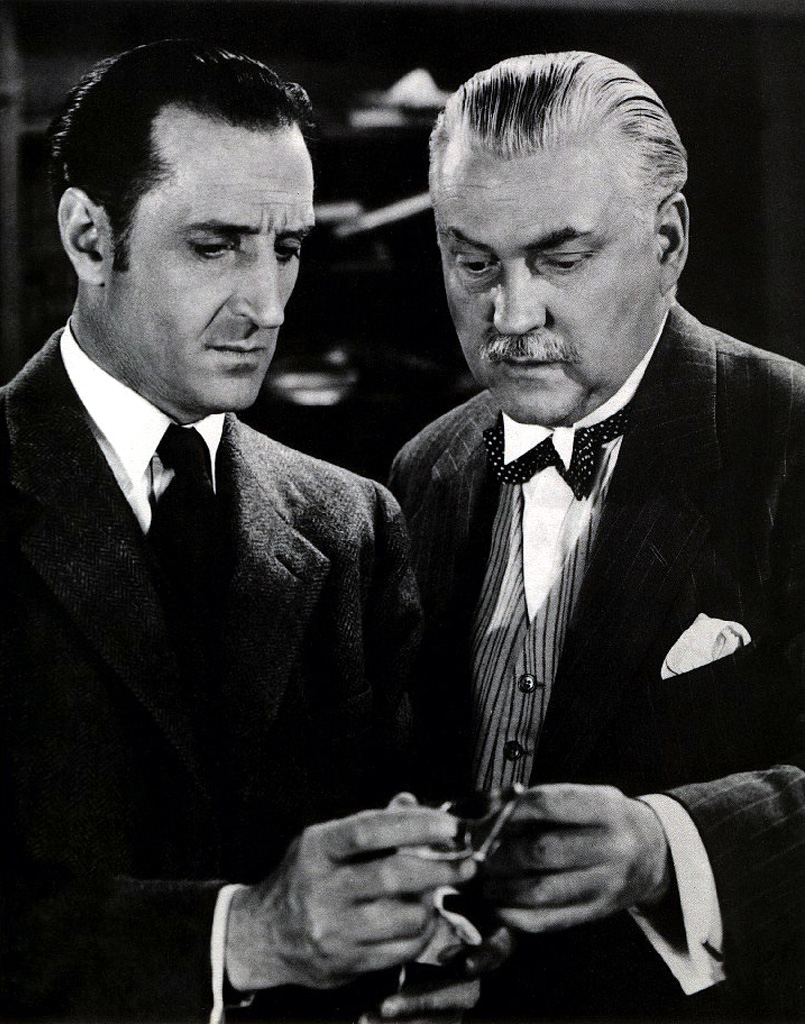
For many, myself included, Basil Rathbone was the best actor to play the great detective Sherlock Holmes (on the big screen at least) and it is that role for which he remains most known. Prior to the Holmes series, however, he had already appeared in dozens of silents and talkies and was frequently the go-to actor for villainous parts (most memorably Sir Guy of Gisborne to Errol Flynn's Robin Hood and Captain Esteban Pasquale to Tyrone Power's Zorro). As he tended to appear in period films he is often pictured in costume but this post will of course feature him in contemporary clothes (helped in no small part by twelve of the fourteen Sherlock Holmes films being set in the then-present 1940s).
Along with his friends and later colleagues, including Claude Rains and Ronald Colman, Basil Rathbone served first as a private in the British Army during the First World War (where his theatrical training - he had first been on stage as early as 1911 - shone through not least when he successfully camouflaged himself and scouted enemy positions in broad daylight) before rising through the ranks to Captain. At war's end he returned the the theatre (his first love) and continued to perform on stage into the '30s and beyond in tandem with his film work.
Off stage (and screen) Basil Rathbone was no doubt a typical British gentleman actor of his time and if you watch interviews with him just as himself he comes across as a delightfully affable and good-humoured chap. His on-screen personas, even the aloof Sherlock Holmes and the evil characters, are imbued with a certain charm - and that voice! I could happily listen to Basil Rathbone reading the telephone directory.
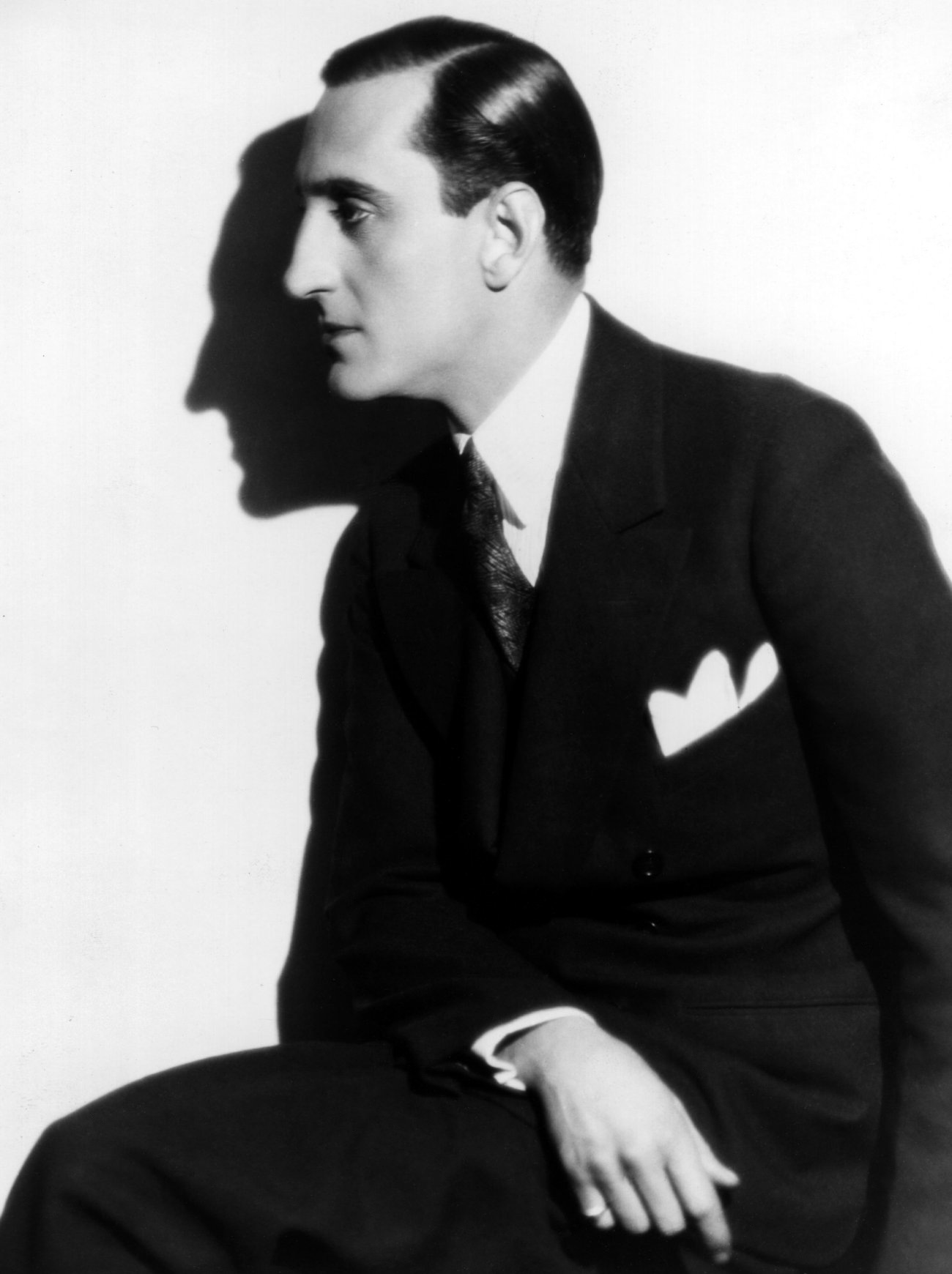
Like most men of his generation Basil Rathbone of course dressed in the way that we like-minded chaps would wish to emulate, with well-cut suits and proper accessories very much in evidence. He was after all one of Hollywood British!
In private life an inveterate party-thrower (allegedly at the request of his second wife Ouida Bergère) Basil Rathbone was also very forward-thinking in many respects. As early as 1926 he was involved in a censorship debate about the play The Captive. Rathbone and every other member of the cast were arrested (but later released without charge) because the production dealt with homosexuality - the wife of Rathbone's character leaves him for another woman. Rathbone was convinced that the subject should be discussed more openly and was incensed by the whole thing.
Whether you want to channel a bit of the sharp mind Sherlock Holmes, the sharp wit of Basil Rathbone (or even the sharp blade of Captain Esteban!) you'll get no argument from me about your choice. Basil Rathbone, like so many of my Icons, embodies the traditional British characteristics of intelligence, charm and gentlemanliness while looking damned stylish as well. The traditional suits, slacks, pullovers and hats are all there to be emulated, a fairly elementary (ha! d'you see what I did there?) look to achieve but the man, Basil Rathbone, will always stand alone.
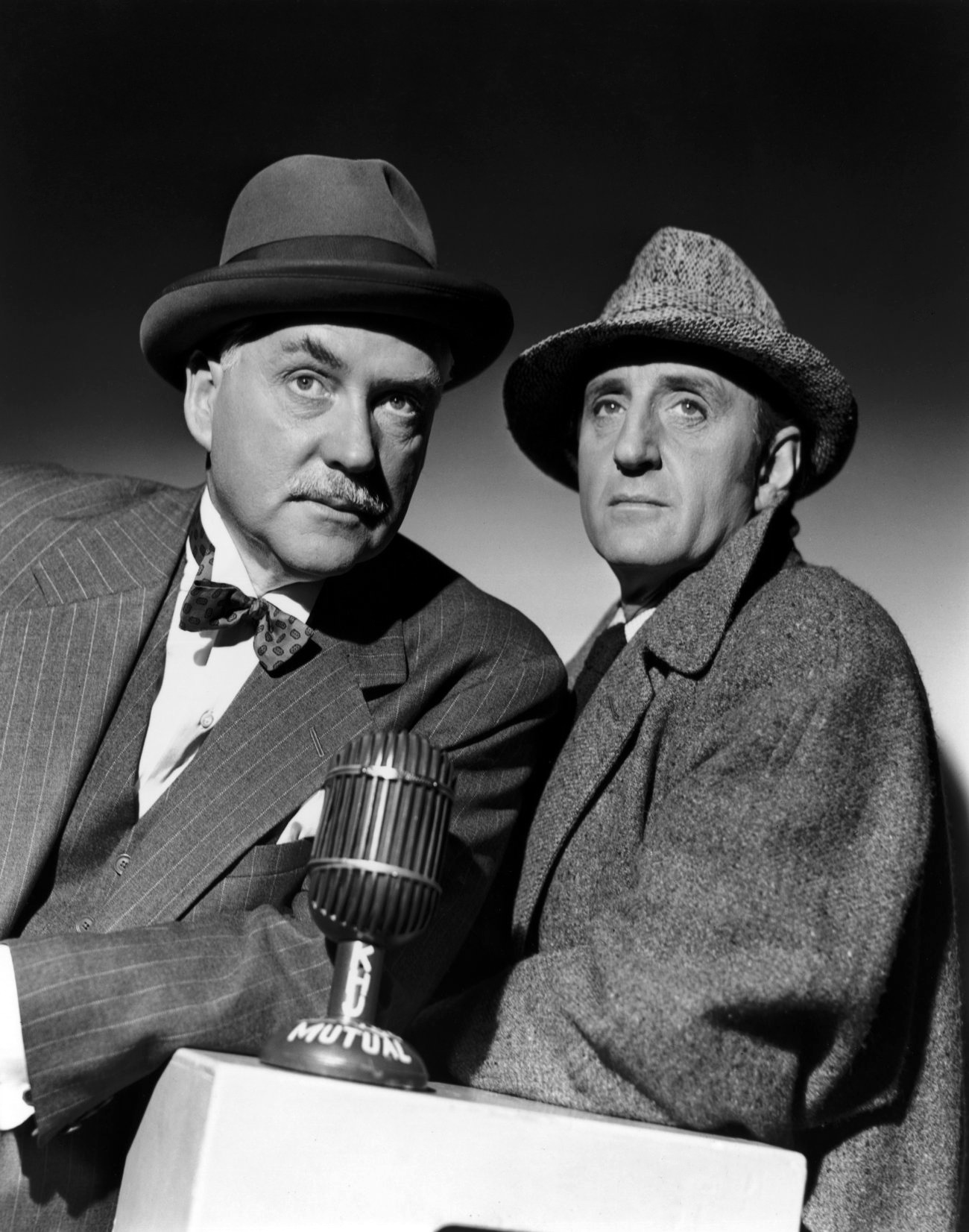
The Basil Rathbone-Nigel Bruce films are easily found on Youtube (as well as being readily available on DVD) and the radio series, which ran concurrently, is also available to listen to here.
| source |
For many, myself included, Basil Rathbone was the best actor to play the great detective Sherlock Holmes (on the big screen at least) and it is that role for which he remains most known. Prior to the Holmes series, however, he had already appeared in dozens of silents and talkies and was frequently the go-to actor for villainous parts (most memorably Sir Guy of Gisborne to Errol Flynn's Robin Hood and Captain Esteban Pasquale to Tyrone Power's Zorro). As he tended to appear in period films he is often pictured in costume but this post will of course feature him in contemporary clothes (helped in no small part by twelve of the fourteen Sherlock Holmes films being set in the then-present 1940s).
| source That's not to say a deerstalker and an Inverness cape is something to be sniffed at! |
| source Although he carries off the heavy overcoat and trilby well too! |
Along with his friends and later colleagues, including Claude Rains and Ronald Colman, Basil Rathbone served first as a private in the British Army during the First World War (where his theatrical training - he had first been on stage as early as 1911 - shone through not least when he successfully camouflaged himself and scouted enemy positions in broad daylight) before rising through the ranks to Captain. At war's end he returned the the theatre (his first love) and continued to perform on stage into the '30s and beyond in tandem with his film work.
| source |
Off stage (and screen) Basil Rathbone was no doubt a typical British gentleman actor of his time and if you watch interviews with him just as himself he comes across as a delightfully affable and good-humoured chap. His on-screen personas, even the aloof Sherlock Holmes and the evil characters, are imbued with a certain charm - and that voice! I could happily listen to Basil Rathbone reading the telephone directory.
| source |
Like most men of his generation Basil Rathbone of course dressed in the way that we like-minded chaps would wish to emulate, with well-cut suits and proper accessories very much in evidence. He was after all one of Hollywood British!
| source |
| source |
In private life an inveterate party-thrower (allegedly at the request of his second wife Ouida Bergère) Basil Rathbone was also very forward-thinking in many respects. As early as 1926 he was involved in a censorship debate about the play The Captive. Rathbone and every other member of the cast were arrested (but later released without charge) because the production dealt with homosexuality - the wife of Rathbone's character leaves him for another woman. Rathbone was convinced that the subject should be discussed more openly and was incensed by the whole thing.
| source "Now where's Errol Flynn?!" Ed: I want that pullover. |
Whether you want to channel a bit of the sharp mind Sherlock Holmes, the sharp wit of Basil Rathbone (or even the sharp blade of Captain Esteban!) you'll get no argument from me about your choice. Basil Rathbone, like so many of my Icons, embodies the traditional British characteristics of intelligence, charm and gentlemanliness while looking damned stylish as well. The traditional suits, slacks, pullovers and hats are all there to be emulated, a fairly elementary (ha! d'you see what I did there?) look to achieve but the man, Basil Rathbone, will always stand alone.
The Basil Rathbone-Nigel Bruce films are easily found on Youtube (as well as being readily available on DVD) and the radio series, which ran concurrently, is also available to listen to here.
| source |
Labels:
1920s,
1930s,
1940s,
Basil Rathbone,
British,
clothing,
fashion,
film,
icon,
movie,
Sherlock Holmes
Subscribe to:
Posts (Atom)
Followers
Popular Posts
-
I rather fancy it's time for another Captain Hastings/Style Icon post, but this time with a twist! I think that, by way of a change, I ...
-
The starting of a new job seems to have coincided with a bit of a downturn in vintage news (not to mention my third cold in as many months!)...
-
Supermarine S5 replica project gets under way Staying with the 1930s aviation theme in this post we move from one end of the aeronautical...
-
Classic car firm Morgan building new three-wheeler after gap of 60 years Morgan is by far and away my favourite motor manufacturer so it was...
-
Second in the style icon stakes after Fred Astaire must surely be Mr Archie Leach - a.k.a Cary Grant. All images courtesy of Doctor Macr...
-
Model of new Routemaster London bus unveiled A few months ago I blogged the news that the winning design for the new London Routemaster b...
-
Rare photographs of comedian Stan Laurel are auctioned I make no secret of my love for the films of Laurel & Hardy, so it was with great...
-
Coming to you a week later than intended (sorry about that!), the third of the Film Friday: Gangsters series - Howard Hughes gritty prod...
-
Vintage Rolls-Royces honour Spirit of Ecstasy by itnnews Another car manufacturer, another anniversary. This time it is the renowned lu...
-
source - Wikimedia Commons / Hurtan-club.de Shop Makes Modern Jeep Wranglers Look Like Weird 1930s Off-Roaders Well, as I sit out in the dap...