Saturday, 24 March 2012

Trust launched to preserve historic buses

A 1930 Albion PMA28, now part of FirstGroup's heritage fleet

FirstGroup creates trust for historic buses

FirstGroup happens to be my local bus service provider and they're not in my good books at the moment (although that's a rant for another time and place) so the news that they are going to set up a trust for vintage buses that once served as part of their (or their predecessors') fleet has gone some way towards improving my opinion of them.

It is good to see a bus company taking an interest in its heritage and hopefully this new trust will be able to work in conjunction with local transport museums, possibly providing displays on a rotated basis and maybe even assisting the many volunteers who work tirelessly to keep these old buses on the road. 

Trust launched to preserve historic buses


I'm sure there is much scope for expanding this project and although it is currently confined to First's Aberdeen headquarters it is planned to roll out across the company's network and I could easily see it proving very popular and useful in my neck of the woods (and elsewhere).  Anything that helps to preserve these classic vehicles is welcome and I'm pleased to see First taking such an active part in seeking out and restoring historic buses.

Hopefully we shall all see the fruits of these labours at nearby museums and rallies but in the meantime this is a promising start to a worthy scheme, which I hope meets with much success.

Friday, 23 March 2012

Save Savile Row From Abercrombie & Fitch!

Save Savile Row From Abercrombie & Fitch

I don't normally use this blog as a platform for campaigns but this is a worthy exception that deserves to be spread far and wide and which is of interest to me and, I hope, at least some of my readers.

Some of you may already know about, or have read, the ongoing controversy surrounding the Burlington Arcade in Mayfair (scene of a dozen period film and TV shoots - chances are you've seen it on screen at one time or another, even if you haven't walked through it) which was recently bought by a conglomerate of American and European investment/hedge fund companies.  Some long-standing shops in the arcade have allegedly been forced out, with the very real threat of brands unsuited to the historic and refined nature of the arcade moving in, along with a proposed "redesign" which may or may not be appropriate.

Burlington Arcade

What has happened since November I can't say (I can only hope a suitable compromise has been reached, at best) but now a new threat has appeared on the horizon for another long-standing, traditional area of Westminster - Savile Row.

One of the last shopping streets anywhere in the country to contain purely tailors and justly famous the world over as the home of bespoke gentlemen's clothing, Savile Row's 200-year sartorial history is one of the [many] jewels in London's crown.  Names like Gieves & Hawkes, Huntsman and Henry Poole are synonymous with the Row and with top-quality men's tailoring.  Famous and historic gentlemen from Britain and abroad including Fred Astaire, Winston Churchill, Noël Coward and His Royal Highness The Prince of Wales have all bought their clothes there.

The threat takes the form of American clothiers Abercrombie & Fitch, who already have their flagship store around the corner in Burlington Gardens.  They have put forward an application to open an Abercrombie Kids - yes, that's right, a children's clothes shop - in No. 3 Savile Row.

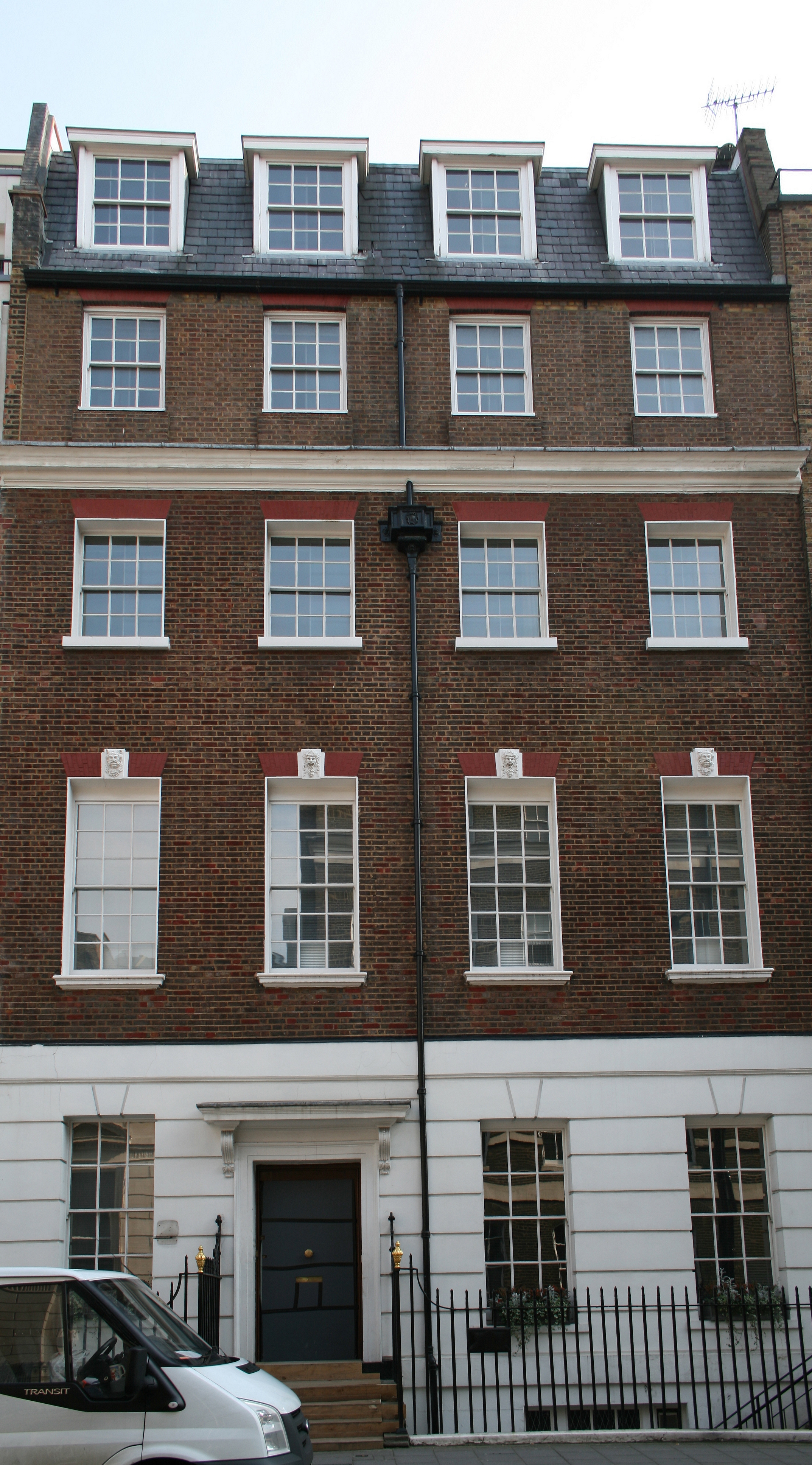
3 Savile Row

There is no place for Abercrombie & Fitch, or any of its offshoots but particularly a youth branch, in Savile Row.  It simply does not suit the area.  Savile Row is legendary for being the provider of top-notch bespoke menswear, refined over two centuries and admired throughout the world.  It's more than just a street full of tailors, it is - like the Burlington Arcade - an historic artery of the City.  It attracts tourists, it attracts well-heeled patrons whose families may have used the same tailor for generations and it is a source of aspiration for chaps like me.  All that could be lost if this application is approved.

From what little I know of Abercrombie & Fitch (having never been in one of their shops and, quite frankly, never likely to) I can think of fewer clothes stores less suited to the hallowed Row.  The thought of hoodies, t-shirts and jeans being sold alongside the best tweed, wool and cotton suits in the country turns my stomach even more than A&F's penchant for pumping their sickly cologne and overly loud pop music into their stores and so out into the street.

Established Savile Row tailors are naturally concerned about the effect this will have on the Row - and they should know!  One has even gone so far as to fear for the safety aspect of the street should an Abercrombie Kids set up shop at Number 3.  They have rightly made a formal complaint to Westminster Council and I urge you to do the same through the medium of this petition, set up by Mr Gustav Temple of The Chap magazine.


It has always been a source of pleasure and pride to see Savile Row spoken of with such admiration by so many of the vintage and sartorial blogs of which I am a follower and I hope you will join me now in opposing this application.
Biplane design could break the sound barrier

Biplane design could break the sound barrier

I've always said biplanes would have their day, but who would have thought they may be the answer to the future of supersonic flight?  A successor to the technological marvel that was Concorde is long overdue, and if it is to have two wings then so much the better!

It may not look like any biplane we are familiar with but the design that is suggested by MIT as mentioned in this article is basically a two-winged aircraft, which owes much of its layout to a 70-year-old concept.  Even back in the early days of aviation when biplanes were prevalent it seems that the theory of faster-than-sound flight was being explored.  At the time, though, technology was limited and the new-fangled monoplane was seen as the future of aircraft design.  The fastest biplane was, and remains, the 1938 Fiat CR.42DB (above) which had a top speed of 323mph.

Despite employing principles from as long ago as the 1930s the MIT design, whilst having shades of retro-futurism about it, is very much grounded in the 21st Century.  Although the idea of a "supersonic biplane" has the right ring to it, this is a particularly modern take on the layout.  So to end with and in keeping with the vintage feel of this blog here are some biplane airliners from the '20s and '30s which, while certainly not capable of exceeding the speed of sound, at least look like the sort of aircraft we would associate with double-winged aeroplanes.


source

The Armstrong Whitworth Argosy was Imperial Airways' (the precursor to British Airways) first multi-engined airliner, entering service in 1926.  Seven examples plied the European (and later the Empire links to South Africa and India) for ten years until 1936.  The luxury Croydon-Paris service was named the "Silver Wing" and boasted a bar with steward.  Seating was for twenty people and the cruising speed was a heady 90mph.


The Handley Page H.P.42 was introduced in 1930 to complement the Argosy and to extend Imperial Airways' long-distance routes.  Eight were built in all, 4 for the European flights and 4 for the Empire routes.  Capable of seating up to 24 passengers the H.P.42 enjoyed an enviable safety record - never losing a single life whilst in [civilian] service - unmatched by any other contemporary aircraft.  Its low cruising speed of 100mph may have had something to do with it; as one commentator of the time put it "it's as steady as the Rock of Gibraltar - and about as fast", adding that it had "built-in headwinds"!


The Short S.17 Kent was one of many early flying boat designs used by Imperial Airways on their Mediterranean routes during the 1920s and early 1930s, before the advent of the more well-known large monoplane Empire flying boats.  The four-engined Kent was a development of the three-engined Calcutta, designed to have a longer range and so eliminate the need to stop at Italy en route to Eygpt.  Only 3 were built (although a couple of land-based versions known as the Short Scylla, were also used on the European routes), capable of carrying 16 passengers at a cruising speed of 105mph.


Sadly none of these amazing aircraft made it through the Second World War (although they were not all lost to enemy action - three of the H.P.42s, for example, were destroyed in incidents where they were blown over or against other aircraft in strong winds).  An attempt to build a replica of an H.P.42 foundered a few years ago, so all that remain of these giants are photographs and cine footage.  But their legacy will live on, perhaps to find a new lease of life in this potential supersonic biplane of the future.

Wednesday, 21 March 2012

Old-time radio and comics heroes burst back onto the scene

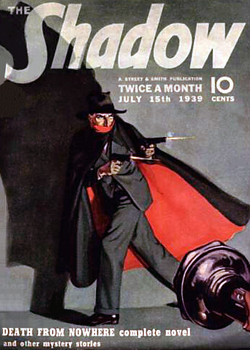
The Shadow Exclusive Preview

Old-time radio and comics heroes burst back onto the scene

Last year I blogged about one of my favourite pulp-fiction heroes, the Rocketeer, and the news that a new series of comics featuring the character had been commissioned.  At the time I was delighted to hear of the new Rocketeer adventures and now it looks as though some more pulp heroes from the golden age of radio and comic-strips are about to get a new lease of life.


An unsuccessful attempt to reintroduce a few of the more famous pulp crimefighters resulted in a series of live-action films being made in the early 1990s, beginning with the Rocketeer in 1991 through The Shadow (starring Alec Baldwin) in 1994 and ending with The Phantom (Billy Zane) in 1996.  All part of my DVD collection, of course!  Alas cinema audiences at the time were just not in the mood for these classic characters, the films performed poorly at the box office and pulp's breakthrough into the mainstream proved abortive.  I've always said they were simply made 20 years too soon(!).

Now, as the accompanying article touches upon, the early radio and comic-strip characters are proving to be more popular again as the fashion for all things vintage continues and public affinity with the tough times of the 1930s grows.  The new Shadow strips aim to take advantage of this renewed interest and hopefully introduce a new generation to the thrills of these early superheroes.

There are some interesting thoughts and ideas put forward by the interviewees in the piece and those held by the writers and artists involved in reviving these well-known characters, as well as the new strip itself, shows that there is a very good chance of fresh success for The Shadow at least, and maybe others too.  Director of the first three Spider-Man films, Sam Raimi, has long been a fan of The Shadow and is rumoured to be working on a new Shadow film having been trying to obtain the rights to the character since the late Eighties (which resulted in him making the 1990 film Darkman, starring Liam Neeson).  The Shadow given the Spider-Man treatment?  Sounds good to me!

Last year's The Green Hornet film, while not a period film and critically unsuccessful, at least shows that Hollywood hasn't lost its appetite for classic pulp fiction.  Next year's The Lone Ranger starring Johnny Depp has, going by available details, received mixed reactions so far but may be one to watch (although I've never really considered The Lone Ranger as a pulp character).  The Phantom continues to appear as a comic strip, was recently adapted for television and is also mooted for a film "reboot".  Likewise a new Doc Savage picture is said to be in the pipeline too.  While only some of these have or will remain rooted in their original time periods they should all remain true to their roots and will hopefully continue the revitalisation of these classic characters.

In the meantime, this all-new Shadow comic-strip looks like a promising start.  Fans of "old-time" radio serials like those of The Shadow, Flash Gordon and the like can also listen and download a wide selection of original broadcasts from this splendid website

Tuesday, 20 March 2012

The world's biggest collection of airship memorabilia goes on sale

source

The world's biggest collection of airship memorabilia goes on sale

Some Zeppelin news now, featuring the largest selection of airship memorabilia valued at potentially £1,000,000 and which is due to be sold off in four auctions over the coming eight months.

Rare Zeppelin items for auction for the first time

The result of 40 years of collecting by a Jersey businessman who had intended to set up an airship museum but who through a combination of old age and other business commitments never managed to, the collection contains many hundreds of photographs, some of which are reproduced here.


These pictures (and the above footage from Youtube, which I make no apology for including every time I blog about airships) give a fantastic idea of the sheer majestic size of the Zeppelins and the wonderful sense of occasion they would have provided.  Not only in seeing them at ground level, from within, in flight and - sadly - at war but also the views they provided to the lucky passengers privileged enough to fly in them.  Never was the advantage of all-round vision as afforded by a gondola more perfectly illustrated than in a number of these photos.

source

Comprised quite literally of tons of Zeppelin-related artefacts the collection would have made a wonderful museum, all the more so considering the seller had even bought one of the massive hangars at Cardington Aerodrome in Bedfordshire (home of the British airship industry and the ill-fated R.101) to store it all in and in which he had intended to base his extensive display.  What a gem it would have been - a real counterpart to the Zeppelin Museum in Friedrichshafen, Germany.  Sadly it was not to be and now this incredible collection is about to be broken up.  At least the profits will be given to charity, which is a good thing.  One can only hope that the pieces find their way to the Zeppelin Museum or to collectors who will equally appreciate it and, who knows, maybe even use it to help open up a British airship museum in the future.

One of the Cardington airship hangers

Monday, 19 March 2012

Telephone tweets and Facebook telegraph

At the end of last year I blogged about Little Printer, a miniature printer that I felt owed much to the tickertape machines of the early 20th Century and which can run off strips containing news items, lists, addresses and tweets.  At the time I wondered to myself why someone had not taken the idea a step further, or a step backwards rather, and rigged up a proper piece of vintage kit to work with the likes of Twitter.  It surely wasn't beyond the wit of the technically-minded vintagista - no doubt we would see something before too long, I thought.

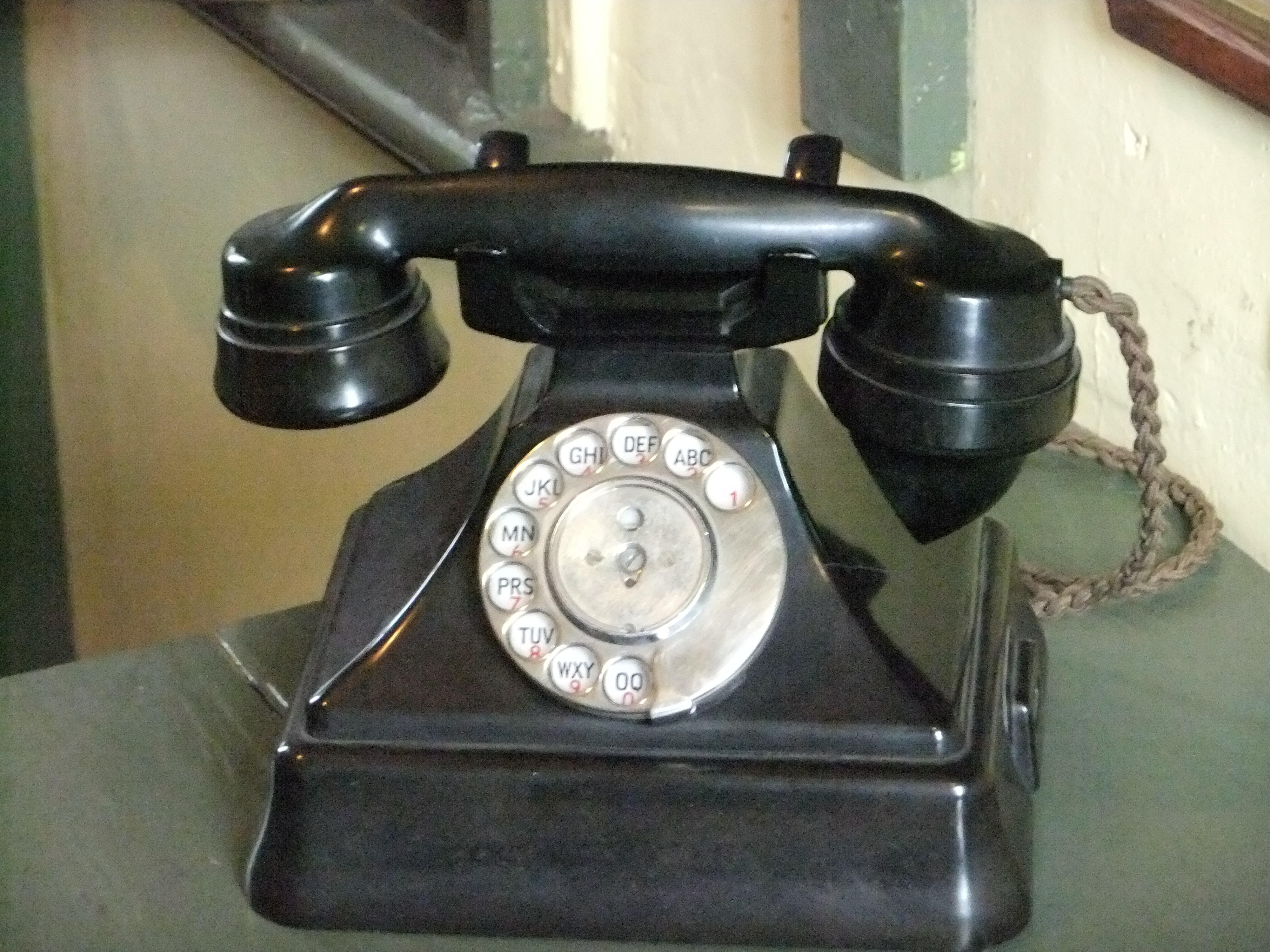
Well, I was right.  Doubly so, as it happens.  Firstly - and just yesterday - I came across the Tweephone, the product of young minds from the Ukraine who have come up with the wizard idea of converting an old rotary-dial telephone to be able to send tweets over the Internet.  Even today telephone keypads still have corresponding letters assigned to each number - now only used for text-messaging (so at least the concept should be familiar) and those funny aide-memoires more popular in the United States, "'phone 1-800 CONTRIVED" - so the principle is exactly the same.  Digital meets analogue!  At the moment merely a one-off design study, but with enough interest - who knows?  Even the oldest rotary-dialler could send tweets!  (I should mention at this point that I don't tweet and to be honest find the whole thing a bit silly, but if you're going to do it best do it properly - and tweeting from an old GPO 200 series would seem about right!).


The unseen chap in this next clip has gone one better, though, and produced almost exactly what I was thinking of when first I saw the Little Printer - an actual tickertape machine wired up to tap out tweets!

The Twittertape Machine is also in the prototype stage but simply uses an old tickertape machine rigged up to the Internet and which will tap out your tweets in much the same way as it would have spewed out important stock movements a century ago.  The Mark II will apparently go one better - wi-fi and Farcebook-compatible (again, if that's your sort of thing - it isn't mine, I don't even have an account - then again this seems like the proper way to go about it: if I got my hands on one even I would reconsider my stance on social networking!).


Nevertheless, these vintage takes on modern communication are most welcome and a wonderful way to indulge in 21st Century correspondence while adding a decidedly 20th Century flavour.  As I said with the Little Printer it even adds more of a personal and tangible touch to messaging.  I also happen to love the way it makes a mockery of Twitter's USPs - speed and compactness.  But as I've said before, anything that gives these old devices a new lease of life is OK in my book and I hope success attends both enterprises as I would really like to see more of the two in the future.

Wednesday, 14 March 2012

Atalanta sports car revived after a gap of 75 years


Atalanta sports car revived after a gap of 75 years

Following the relaunched 1936 Alvis 4.3-litre that featured on this blog back in 2010, my hope that others would take up the idea has been realised with this latest news that little-known pre-war British sports car manufacturer Atalanta is to make a return with an update of one of their original models - the 1937 Sports Tourer.

Like the Alvis the Atalanta appears to be externally exactly the same as its forebear, retaining its period design and high quality hand-built coach lines.  Beneath the skin, however, will sit many modern safety advancements, mechanical efficiencies and up-to-date technology; once again the best of the 1930s meets the best of 2012.


This "new" Atalanta, coming so soon after the revived Alvis, is not only another fine example of British entrepreneurship but also a great testament to classic automotive design.  It is wonderful too to see that others share my (our) wish to see the best of both worlds and more importantly that they are in a position to make it happen.

Although I am sadly not in the position to take advantage of these cars I very much welcome them and while their exclusive nature will not make them a common sight on our roads (the fleets of "modern" 1930s cars I envision will just have to wait, I suppose!) any such car is a good car in my opinion and hopefully they will encourage others to try their luck.  Those roads full of Alvis, Atalantas and others may happen yet!  In the meantime I am pleased to see another marque joining the ranks and wish Atalanta every success with their "new" Sports Tourer.

Followers

Popular Posts