Showing posts with label technology. Show all posts

Monday, 11 March 2024

I couldn't possibly comment...

"What's that - you'd like to leave a comment? 
Let me just get a pen and some paper..."
Hello all.  This is by way of a bit of "housekeeping" between posts (I suppose this is a post in itself, though, but you know what I mean I hope!  Not my usual fare, shall we say).  It's just that I've been informed that some of you may have been experiencing difficulties posting comments recently, with some sort of message along the lines of "An error occurred while trying to publish your comment" stopping one from leaving a friendly remark or somesuch.  If this has been affecting you I am heartily sorry, as I do value all positive and chummy comments that you may wish to send my way on the subject of my (hopefully our) interests and witterings thereon.  Should it be the case, and if you'd care to, perhaps you might drop me a wire at the address on the postcard (right column) and I will see if I can do anything to help.  To be truthful I'm afraid my technical know-how is slim to non-existent though, so I can't guarantee I'll be of any use I'm afraid!  Having had a poke about amongst the cogs and gears below stairs - and although I do have comment moderation switched on - I don't believe it's got anything to do with the Comments settings on Blogger (but who knows with Google these days), however with a bit of a hunt around the æther I can at least suggest the following:

  • Check your anti-virus software settings.  Some anti-virus programs include anti-tracking as standard and this can apparently interfere with third-party cookies that are required by most websites (including Blogger) for comments etc. to be allowed.  I myself experienced something along these lines (stopping me from commenting on my own blog, no less - the cheek of  it!) the other day and it turned out to be my anti-virus software, Bitdefender, being rather overzealous on the blocking front.  It might be worth checking your own provider to see what the settings are for the Anti-tracker, if you have it switched on (with Bitdefender you can choose which browsers it is active on, so I have it switched off for all of them).
  • Likewise you can check the third-party cookie settings on your browser of choice directly to confirm whether or not they are switched on and/or create a custom list of which websites are allowed to use them (in Chrome this is under Settings/Privacy and security/Third-party cookies).
  • It might also help to do the old trick of emptying your cache and/or deleting your browsing history and cookies but for how far back I could not say (again in Chrome this is in Settings/Privacy and security/Clear browsing data).  You will likely lose all your logins across the interweb and have to sign in again, though.  
  • It may be a nuisance but perhaps try a different browser and see if that helps (quite what to do after that I couldn't say though - perhaps check and compare the settings?).
  • Again a bit of a pain, however you could switch to Incognito mode in Chrome or open a Private window in Edge or Firefox (Ctrl+Shift+N in all cases, I believe) and see if that makes a difference. 
  • As a last resort you may want to try uninstalling and reinstalling your browser - that might reset everything, although again you will probably have to sign in to any websites you were previously logged in to.    

"This would be so much easier if we had a working comments section..."

Well apologies for that rather dull, instructional post but as I do enjoy and encourage any and all pleasant comments I would be sad to think that you, my readers, were being stopped from doing so for any reason.  I hope my limited knowledge on the subject has been of some use should you have encountered this issue and I look forward to reading all your lovely comments again in the future!

Monday, 24 August 2020

Footage shows 'forgotten' aerodrome from before WW2


Vintage aircraft footage of 'forgotten' pre-war aerodrome

Here we have another interesting article both in and of itself and also as a further example of modern technology being put to good use in boosting knowledge of the past.

As with the recent story about "Facts Discs" for classic cars the technology is again the ever-present QR code, which allows smartphone users to access information digitally from a website or online database.  In this case, however, the information takes the form of historic and previously lost footage of one of Wales' first aerodromes.

source - B.B.C. News

When Llandrindod Wells had more flights than Cardiff

Only rediscovered three years ago this remarkable piece of film - shot by a local chemist and amateur photographer and donated by his daughter - is the surprising proof that the small mid-Wales town of Llandrindod Wells was at the forefront of British aviation in the years between the wars, with its own airfield based in the town's Rock Park.  As the article explains, the expansion of civil aviation in Britain just before and immediately after the First World War meant that towns and cities up and down the country were queuing up to get municipal airports built in their vicinities, off the back of aerial tours such as Sir Alan Cobham's Flying Circus (coincidentally I recently just finished reading the autobiography of journalist and filmmaker William Courtney (entitled Airman Friday) who served as organiser and press officer for Cobham (as well as for Amy Johnson and Jim Mollison) and who wrote at length about his and Cobham's efforts to encourage local authorities to invest in airports in the '20s and '30s).  Clearly Llandrindod Wells was no exception, thanks to its forward-thinking and air-minded councillors who foresaw the benefits of having an aerial link from an otherwise remote part of the country.  That link quickly blossomed to include daily flights to such national hubs as London, Birmingham and Cardiff, not to mention the provision of local joy-rides and regular air displays.  It must have been a truly exciting and inspiring sight for the people of this little Welsh town to see aeroplanes taking off regularly from their local park to destinations around the country.  The optimism of the idea is almost palpable and who knows where it would have led had not the Second World War intervened?  But intervene it did and, along with advances in aircraft design, it signalled the death knell for many grass strip airports like Rock Park. 

source - B.B.C. News

Now thanks to the fine work of local history site History Points the people of Llandrindod Wells and visitors to Rock Park can learn about this fascinating aspect of the town's history when they take a trip there by scanning QR codes placed at the site of the airstrip, which will allow them to view this incredible footage of a pioneering airport that - if only for a short time during the Golden Age of aerial travel - put this little corner of Wales on the map.  Once again this is a welcome use of "smart" tech to help teach future generations about local history in a relevant, engaging way and is something I hope we continue to see more of.

Wednesday, 10 June 2020

New 'Facts Disc' shares classic car information digitally

source

New 'Facts Disc' shares classic car information digitally

To show that modern technology can work hand-in-hand with vintage, and, as in this case, perhaps even enhance it, comes this clever idea for classic cars that reintroduces a small, forgotten aspect of motoring - the tax disc.

source
Phased out in 2014 with the advent of automatic number-plate recognition and automated databases, the tax disc had existed for over 90 years as legal and tangible proof that car owners in the UK had paid their Road Fund Licence (or more properly Vehicle Excise Duty) for a period of 6 or 12 months.  First introduced in January 1921 as part of the Roads Act 1920, the tax disc evolved over the decades to become ever more sophisticated to combat counterfeiting, but always contained the core information about the vehicle it was displayed on (on the nearside of the front windscreen, or in a special holder in the case of motorcycles) - namely the make and registration number, plus details of the amount paid, expiry date, issuing authority and later a barcode containing all such information and more.

source

source
Since their discontinuation in October 2014, following the introduction of a centralised online database, the windscreens of cars up and down the country have seemed all the barer for the loss of this little circular piece of paper (and the government's coffers upwards of £100m per year emptier with road tax evasion reportedly trebling as a result - proof again that maybe modern technology isn't always the best answer to everything and perhaps reason enough to reintroduce the humble tax disc to all cars again... Sorry, rant over.)

source

Car facts disc – a new take on the tax disc

Nowhere is this loss more marked than in the classic car world, however, where the denuded windscreen looks even more out of place - so much so, in fact, that many classic car owners in my experience have kept back or otherwise recreated period tax discs so that they may display them correctly (and did you know that collecting tax discs is a recognised hobby with its own name - velology).  Now a fellow motoring enthusiast has come up with a wizard idea that kills two birds with one stone, not only providing a suitably vintage-looking tax disc-like device to display in the time-honoured place but one that also incorporates modern technology in the form of the now-ubiquitous QR code (nowadays found on pretty much everything from clothes labels to bus stops, it seems) that allows the owner to upload information on the car to an online portal, which can be accessed by and downloaded to any interested party's smartphone.  This can include everything from the car's history, restoration story, right down to whether the car is for sale or available to hire - with pictures, video, the works.


The claim is that this innovation will benefit classic car owners and fans alike by allowing the former to quickly and easily upload all the vehicle's details to one place, so keeping its provenance centralised, while giving the latter easier access to information on the car's history that might not otherwise be obviously available.  Anything that inspires owners to display their pride and joy more regularly and in greater detail or encourages new generations to take an interest in the history of motor cars is to be applauded, although one hopes that this doesn't spell the end for the still welcome display board and badge bar, nor of interesting and enjoyable chats with the owner.  Knowing classic car buffs as I do, however, I foresee this new app working in collaboration with the more traditional display elements and I certainly expect to see a few of these jolly nice-looking Car Facts Discs in evidence when I next visit a vintage car rally.

Saturday, 6 June 2020

Student repairs vintage radios during lock-down


Student repairs vintage radios during lock-down

Another good news lock-down story now, featuring an A-level Electronics student with an obvious enthusiasm for vintage radios.  Although the article makes much of young Mr Martins' use of lock-down time to maximise his restoration work, clearly this has been a long-term hobby for him and certainly something that he seems intent to continue - and more power to him! 

It is splendid also to encounter such a welcome attitude towards old technology as that displayed by this 19-year-old chap - quite a rare thing amongst his generation in fact, I would venture to suggest.  Where most teenagers would be gushing over the latest piece of black or white "smart" tech this lad is [rightly] lamenting about their "sterile" and overly slick design and enthusing about the "endearing charm" of vintage radios and the style they represent.  It is a view that has long been championed both here on Eclectic Ephemera (and again recently) and elsewhere in the blogosphere and I find myself nodding in agreement with everything young Diogo says.  It's equally wonderful to see him talk with obvious appreciation about the social history and "ritual" of listening to the radio and encouraging to note that he sees the legacy in it all as something to be preserved for future generations. 

source

With traditional analogue radios under threat from the more modern digital platforms (which do have their place, don't get me wrong, but not at the expense of AM and FM) it is good to know that there are young people out there still demonstrably interested in conserving this tried-and-tested technology and ensuring that classic radios from the past are given a new lease of life.  Well done to Diogo, I say, and long may he continue to follow his passion providing sanctuary for discarded wirelesses.

Thursday, 21 May 2020

Boffins chapify Amazonian assistant using Belgian blowers

Antique Alexa telephones by Grain Design

More news featuring items from Belgium, although "news" is perhaps not quite the le mot juste seeing as this article has been languishing in my Drafts for over a year.  I had intended to start a new blog with it but then it occurred to me that I have enough of a job keeping this one going without adding a second one and besides which the idea featured in the article still fits the Eclectic Ephemera ethos, so here it is.  Despite being more than a year old the subject matter is still current and interesting and follows on nicely from my previous Belgian-based Tintin post.

source

Indeed an antique Belgian telephone (like the Regent model, above) with Amazon Alexa built in is something I could just see Tintin using were he around today, although whether he could stretch to the eye-watering asking price is another matter (then again he might if he had Red Rackham's Treasure - get on with it Peter Jackson!!  Ahem, sorry.)

In any event (and to return to the current subject) the re-purposing of vintage - and in this case, non-functional - equipment to include modern technology is something I consistently admire, not only as a means of giving a new lease of life to what would be an otherwise redundant item destined for the scrapheap but also for just the sheer incongruity of the latest tech being hidden within something supposedly obsolete.

source
I have featured similar ideas here before in the shape of the Tweephone - a rotary-dial telephone capable of sending Tweets - and the Twittertape, which went one better and used an antique tickertape machine hooked up to the internet to do the same thing.  Now we have the Alexaphone, a genius idea out of Los Angeles which sees antique telephones being converted to run Amazon's Alexa virtual assistant technology, such as is more commonly found in that company's Echo speakers.

As with most modern technology virtual assistance AI is largely a closed book to me and something I intend to keep that way, as the idea of artificial intelligence in general is not something I am especially keen on.  Nor am particularly enamoured with the glut of so-called "smart" technology now available - not only do we have the likes of Google Assistant, Windows Cortana and the aforementioned Amazon Alexa but also smartphones, smart TVs, smart meters and now even flippin' video doorbells all of which are recording your every word and movement!  Where it will all end I wouldn't like to say, but the whole business doesn't seem very "smart" at all (except for the companies that are harvesting the resultant data) and is something I will vehemently oppose for as long as possible.

source

It is for this reason as well that I like the idea of these devices, for one particular aspect of their original design, the telephone hook, thwarts one of the virtual assistant's most invidious foibles - the fact that it is always "on" and therefore listening to everything that's going on around it.  Not so with the Alexaphone, which is only on when you lift the receiver!  No fear of some faceless, polo-necked eye-tea wallah in a metal and glass office somewhere in California transcribing what you had for breakfast this morning.  Instead just lift the receiver, ask your question and Alexa will respond - then just thank it and hang up.  Brilliant!

Whether this marriage of vintage and modern technology is worth upwards of $1500 I'll leave you to decide but - practical or not, art or no - it is nevertheless a splendid idea and one I am glad to see realised.

Sunday, 23 October 2011

How Victorian engineers almost built an underwater tunnel between Scotland and Ireland

How Victorian engineers almost built an underwater tunnel between Scotland and Ireland

This story has been reported by various news sites, including the B.B.C., but by far the best and most comprehensive description is from science [fiction] blog io9.

As anyone who has crossed the Irish Sea will tell you, a train journey (or, these days, an aeroplane flight) is infinitely more preferable to a ferry crossing and this was obviously very much the case even a hundred years ago.  It should come as no surprise therefore that the industrially-minded Victorians seriously considered a series of railway tunnels beneath the Irish Sea; the idea of a Channel Tunnel had been mooted almost a century earlier so the intent was clearly there.  Regrettably in both cases the huge engineering challenge would prove too great for Victorian science to overcome.  Nevertheless that such a plan was drawn up is a remarkable testament to the technological ambition and farsightedness of 19th Century engineers.

The suggestion of tunnels between mainland Britain, Ireland and the Isle of Man still occasionally appears even today.  But it was the Victorians who first thought of the idea even though they, and subsequent supporters of the scheme, were always stymied by the matter of cost, politics and now a difference in the railway gauge.  It's not to say that the project is unfeasible, however, and I'm sure the vision will still be revisited in the future and - who knows? - maybe even undertaken.

Monday, 26 September 2011

Babbage Analytical Engine designs to be digitised

Babbage Analytical Engine designs to be digitised

The creation of a full-size replica of noted Victorian engineer Charles Babbage's Analytical Engine, as reported in these pages previously, is one step closer to becoming reality now thanks to this latest piece of news.

It may still be early days, and a target date of 2021 seems a long way off, but the London Science Museum is to be commended for agreeing to convert Babbage's handwritten sketches and plans into an easy-to-access digital format.  This will surely be of great use to the team behind the campaign, making their job that little bit easier and ensuring that the project stays alive.

When completed the Analytical Engine will be an enormous machine (we're talking double-decker bus scale here) so it's just as well that Babbage's notes, while not complete, can be easily accessed and analysed before being applied to a computer model and then, finally, a complete and accurate facsimile.

Ten years will be a long time to wait but I'm sure that it will be well worth it, and this blog will continue to report on the progress of this remarkable undertaking.  Carry on, you fellows!

Tuesday, 4 January 2011

The return of the airship

The new vehicle set to revolutionise the skies

The return of the Zeppelin: not just a flight of fancy

I've been following the progress of this machine for a couple of years now and it's actually beginning to sound like it's on track for success. The promise of 1,000ft-long airships sailing through the skies again sounds almost too good to be true.

Never mind all this nonsense about it being a "Hybrid Air Vehicle" and a "revolutionary new vehicle" - they can say what they like ("airship has negative connotations" indeed!) it is an airship. OK, maybe nowadays it's better than the dirigibles of 80 years ago, but that's only thanks to new technologies and designs. The direct antecedents of this machine are still the wondrous Zeppelins of the 1920s and '30s. In a way, this is a good example of the ideal I've been talking about in previous posts - vintage ideas and solutions revived with modern equipment (and British equipment and know-how at that!).


Airships may have ruled the skies during the interwar years (and what I wouldn't give to have been able to see a zeppelin in flight!) but now they look to be on the cusp of a proper renaissance and will be put to uses Count von Zeppelin and Hugo Eckener could only have dreamed. Who knows, if this new airship is successful in a cargo-carrying capacity it may herald the restart of a passenger service (not to take anything away from Zeppelin NT who have been offering sightseeing tours in Germany, and elsewhere, for several years now) and a new Golden Age of airships may well be on the cards!

Monday, 25 October 2010

Why typewriters beat computers


Why typewriters beat computers

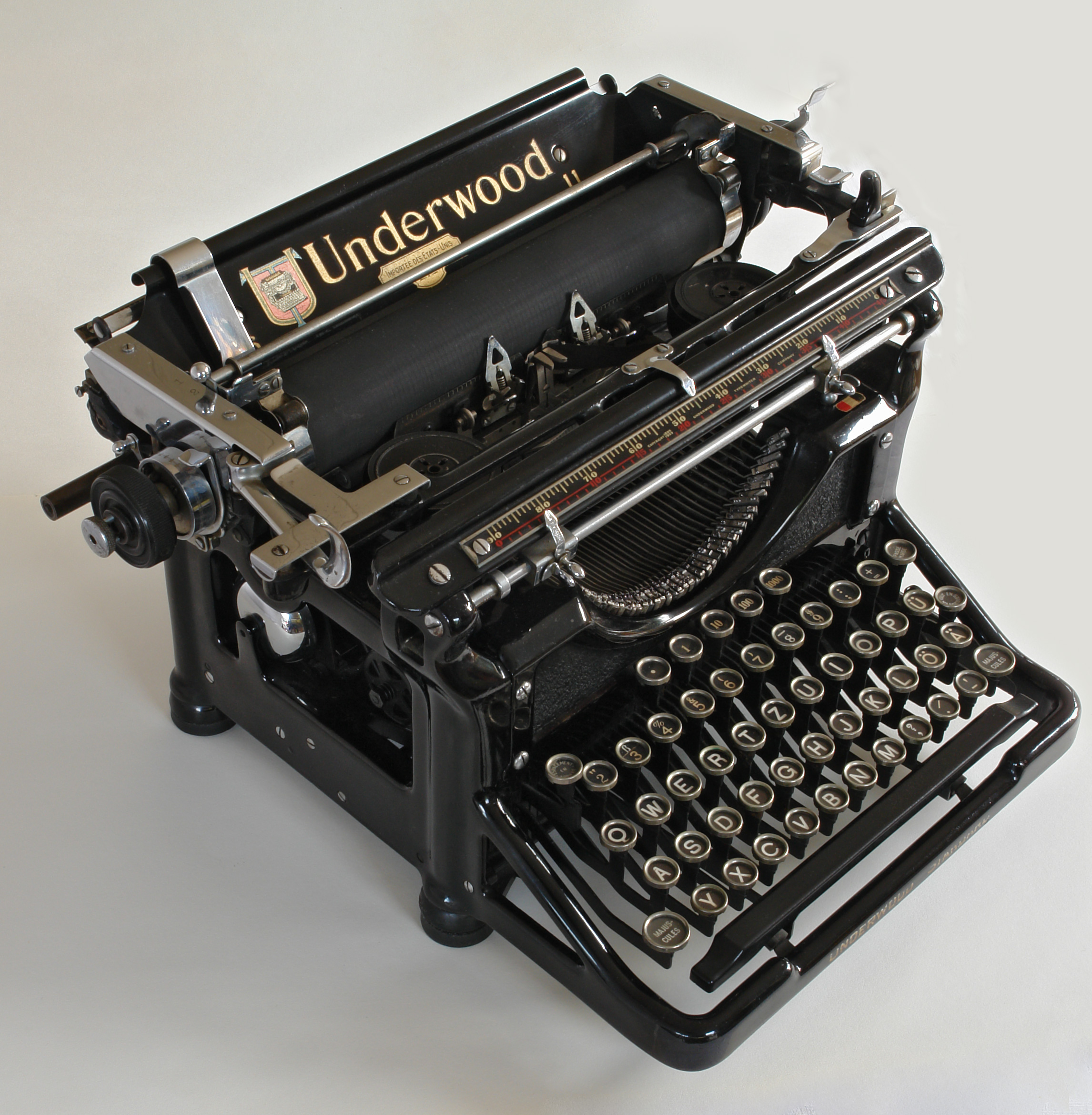
Now this is more the kind of thing! A splendid article from the BBC that highlights the benefits (yes, there are such things!) of a typewriter over a personal computer. And they haven't even touched upon the finer aesthetic qualities of the typewriter compared to the black/beige box that is the PC. "Clunky" and "dirty" indeed! Why, just look at the picture above - how beautiful is that?

As you may have worked out by now, I am somewhat passionate about typewriters, just as I am about most early- to mid-20th Century machinery. I have one myself, an Imperial 66 that I'm ashamed to say is rather battered and has seen better days, as you can see (left). It still works though! If anyone knows the name of a good restorer, however...

I can quite understand why some people prefer typewriters over more modern devices (I would love to use my own more often) and the users featured in the article make quite pertinent yet funny points regarding the shortcomings of newer technology. However it is surprising (but understandable) to see that typewriters still retain some popularity among students. Nevertheless the writer of this piece has, at least in my case, hit the nail fairly firmly on the head in his description of aspiring typists and aficionados of the machine(!). The chap mentioned in the article, Richard Polt, is well-known and highly-regarded in typewriting circles and ironically the Internet has allowed groups and collectors to flourish all over the world. Adventures In Typewriterdom, Fresh Ribbon, Retro Tech Geneva and Strikethru are just a few examples of the blogs I have stumbled across in my travels.

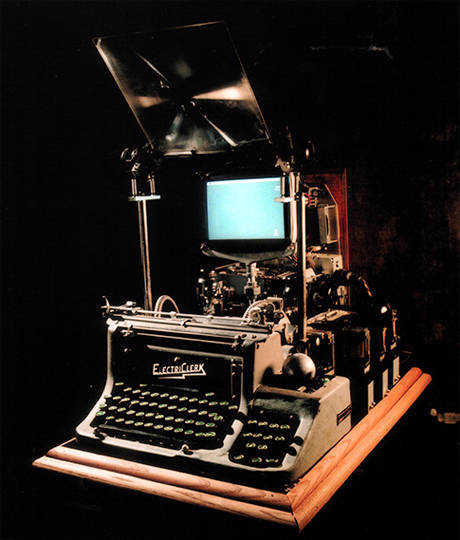
It is a sad inevitability that typewriter sales are declining, probably to a point where they will soon cease to be made new, but so long as there are those out there with a passion for these machines their future is assured. Of course there is another avenue - one that has been explored by the Steampunk movement in particular - and that is the merging of typewriters with computers. This has been done to varying levels of ingenuity and success, from programs such as Virtual Typewriter, through the wonderfully detailed ElectriClerk (above), to the chap who has managed to convert old typers to work with iPads, Macbooks and the like (below).


Finally, one more little thought-of advantage typewriters have over computers is that they make a delightful noise. Which allows me to finish this post with a fantastic typewriter history lesson in sound. Close your eyes and get ready to be taken through... The History of the Typewriter:


Friday, 10 September 2010

Steampunk chip takes the heat

Steampunk chip takes the heat

From the New Scientist magazine comes news which proves that the old ways are sometimes still the best. Who would have thought that 150-year-old technology, which has formed the basis for a whole modern (albeit now mainly aesthetic) movement, should end up having a practical use in something as high-end as US Defence projects?

It just goes to show that sometimes modern electronics have their limits and it falls to good old-fashioned mechanical constructions to take the strains which leave more highly-advanced but often fragile devices broken and burnt out. So to sum up: modern technology (above) = rubbish; Victorian technology (below) = the future! Huzzah!

Seriously though, it's heartening to see today's scientists still looking to the technologies of the past and adapting them for use in the present, rather than simply disregarding them. Progress is sometimes not just about inventing the next new thing but also looking to previous designs and breakthroughs to see if they can be adapted or reused to help further existing advancements. The use of such tried and tested designs in these new developments also allows us to follow a timeline of modern technology, from Charles Babbage's original Difference Engine to today's computer chips, and so appreciate the progress that has been made over the last century-and-a-half while still noting the inherent basic similarities between these old and new mechanisms.

Monday, 31 May 2010

The driving force of British motorsport

The driving force of British motorsport

A wide-ranging article from the B.B.C. which serves as a nice reminder that Britain is still a world-leader in the field of motorsport, having been one of the founders of the sport. If you ever get the chance to visit the old Brooklands track (and this coming weekend's Double Twelve would be the perfect opportunity) I urge you to do so, for it is drenched in history and full of pioneering automobiles and racing memorabilia; well worth the trip.

Britain has a strong presence in every form of motorsport around the world. Not least in Formula 1, where we have produced the two most recent World Champions and have - as the article mentions - ¾ of all current F1 teams based in this country including some of the top runners. We even have competitive drivers in the likes of the American IndyCar formula.

Once again we see the British flair for engineering and innovation put to good use in an industry that is continually advancing and coming up with new ideas and inventions that will one day find their way on to the cars that the general public can buy. It is heartening to see that, even in these times of economic and supposedly environmental crises, the motorsport industry is riding out a rough patch, looking ahead and going from strength to strength.

Thursday, 27 May 2010

Britain can become a world leader in technology, but it will need a cultural change

Britain can become a world leader in technology, but it will need a cultural change

It's not very often I link to an opinion piece but something about this guest column by renowned inventor and industrialist James Dyson (he of vacuum cleaner fame) struck a chord and so I thought I would share it.

There are many out there who are somewhat dismissive of Dyson, not least because of his company having outsourced manufacturing to the Far East at the expense of the British factory, but whatever you may think about Dyson's business practices there is much truth in what he says here. I too have often looked back at the likes of Whittle, Cockerell and Gresley amongst others and marvelled at their various ideas and inventions and then wondered why such innovation is not more actively encouraged today. Certainly we have many great engineers and inventors out there such as Dyson himself, Trevor Bayliss and Richard Noble, but is enough being done to make the country aware of their contribution, to celebrate their achivements and hopefully to inspire the next generation? Mr Dyson makes an interesting point.

Followers

Popular Posts