
Thursday, 12 June 2014

Forties Fashion #8: Sports and Leisure Wear 1942

By Jove, where have the last two weeks gone, eh?!  Flashed by in a blur of work, play and sunshine, that's what.  Have I forgotten how to do this blogging business, then, or forgotten about you all?  Not bally likely!

With interesting news articles thin on ground again I've nevertheless got a few posts planned over the next week to 10 days and to start off with I thought we'd return to an old series that surprisingly hasn't seen the light of day in over a year - for shame!  It's instalment number 8 from my old 1940s Fashion Sourcebook.  With the sun beaming down on much of the country, Queen's in full swing, Wimbledon just around the corner and some sort of international footballing tournament (if that's your kind of thing) about to start in Brazil so I'm told, today's extract couldn't be better timed, either.  Yes, it's sports and leisurewear 1942-style!

The inconvenience of war was not about to put a stop Britain's enjoyment of sport and leisure, although it did of course curtail it somewhat.  I imagine it must have made it all the more special and enjoyable when day-to-day living was blighted by constraints of wartime and the constant threat of attack.  With the anticipation of maybe a small day-trip to the countryside, or a game of village cricket, your average chap and chapette would have made an extra effort to dress well, but casually and within the confines of clothes rationing, to make the most of their leisure time.  One imagines pre-war '30s fashions adapted for the new purposes and circumstances; we can see as much in the following illustrations.  Speaking of which, anyone for:

Tennis.  Top left wears: white linen dress with button fastening, small collar, buttoned belt, short inset sleeves with stitched cuffs.  Piped pockets; two decorative panels, one from padded shoulders and one from waist continuing to hip-level in flared skirt with concealed pockets in outer panels and wide unpressed box pleats.  White leather shoes.  A classic summer tennis ensemble, one could imagine it being rather a strikingly attractive outfit if the decorative panels contrasted to the white of the dress - perhaps a navy or light blue?

Tennis.  Top right wears: white cotton collar-attached shirt with pointed collar, short inset sleeves, stitched cuffs and a patch pocket.  White linen pleated shorts with turn ups and elasticated cotton belt with clasp fastening.  White cotton ankle socks.  White canvas sports shoes.  A very simple, Fred Perry-esque outfit for the girl's tennis-playing gentleman partner.  While not normally a fan of elasticated belts I can see its benefit here as providing ease of movement.  Pleated shorts with turn-ups are only right, of course, although I'd think twice about inflicting my legs on the general public (in fact I don't think I've worn shorts since my early twenties).  White canvas sports shoes are a sin qua non for the casual sporting look and I've long toyed with the idea of getting a pair, on the off-chance I might one day again try my hand at a few of the more gentler sports - cricket, tennis, badminton - to help improve my damaged health.  Needless to say, that day has still to arrive, but I still find myself glancing at the odd plimsoll now and again.  For those of you who, like me, would prefer that their training shoe does not resemble something out of Back To The Future II and comes without the maker's name splashed across every available surface, Converse is very often the name we will see mentioned and indeed they do a nice line in plain canvas shoes in the traditional style - such as their All Star range. 

Converse All Star Low White Mono Canvas - £44.99 from Office

However I also find myself drawn to the traditional training shoe offering from Charles Tyrwhitt.  Albeit in leather rather than canvas (one could argue the superiority of that) they have an equally timeless appeal about them.

Biscuit Marlow trainers - £79 from Charles Tyrwhitt

Returning to 1942 and (still on the first trio above) we're off on our travels in:

Holiday wear.  Bottom centre wears: dark blue cotton flared pinafore skirt, waistband extended to form shaped bib, wide shoulder straps, self-fabric buckled belt and hip-level patch pockets with mock-buttoned flaps.  Red and blue spotted cotton blouse with notched shawl collar, button fastening, elbow-length sleeves, padded shoulders.  Red straw hat.  Red canvas shoes, peep toes, wedge heels.  A very patriotic colour combination (even more so were it to have some white thrown in - say on the shoes or hat.  Evidence of clothes rationing in the mock-buttoned pocket flaps.  Every girl loves a high-waisted pinafore dress, if the vintage blogosphere is anything to go by, and this one's a pip!

On to the next three and staying with the holiday wear.  Top centre wears: pale blue cotton blouse with small collar, threaded ribbon fastening matching trim on cuffs of short puff sleeves and padded shoulders.  Sleeveless single-breasted checked cotton fitted waistcoat, low scooped neckline, pointed hemline.  Knee-length pale blue cotton gathered skirt, bias-cut band above hemline to match waistcoat.  White leather shoes, crossed straps, low wedge heels.  Something almost dirndl-like about this outfit, or perhaps just the more traditional rural/countrified lookCertainly a wonderfully co-ordinated ensemble with the matching bows and banding/waistcoat.

Quite the country wear outfit for our second dashing chap!  Bottom left wears: brown and tan wool-tweed single-breasted jacket with flap pockets and a single ticket pocket.  Light brown wool trousers, straight-cut, turn-ups.  Brown wool sweater.  Patterned silk scarf.  Brown trilby.  Brown leather shoes.  The perfect rural autumnal look here, with some welcome individual touches like the scarf (a cravat would also work just as well) beneath the wool sweater worn beneath the wool-tweed jacket (crikey, I'm sweating just thinking about it - definitely one for the colder months!).  The jacket (gad, the whole outfit) sounds lovely, with quite a modern-sounding cut.  Still surprised to see turn-ups this far into the war.

For the ladies' country wear, bottom left sports: brown and grey tweed dress, small collar, button fastening, padded shoulders, short inset sleeves, stitched cuffs, patch pockets, buttoned belt and flaps, flared skirt, centre-front box-pleat.  Brown felt hat.  Brown suede gloves and matching shoes.  An equally delightful matching seasonal ensemble for the lady.  I imagine a walk through a country estate awaits this perfectly turned-out girl!

Well, that's it for another selection.  Quite an interesting one again, I think, and in many ways adaptable and reproducible for today.  If only more people would dress in this kind of "sports wear", hmmn?!  We can only hope!

Saturday, 31 May 2014

Britain's Greatest Pilot: The Story of Captain Eric "Winkle" Brown


I rarely do posts previewing upcoming interesting programmes or listing classic films on TV these days, partly because I no longer follow TV listings any more (without going into moaning mode, I haven't missed a TV mag because there's precious little of interest on).  Other bloggers cover well the occasional runs of old films (usually, in the UK, on B.B.C. Two at some ungodly hour of the morning); I'm also mindful of the fact that some international readers have limited or no access to British programming.

source
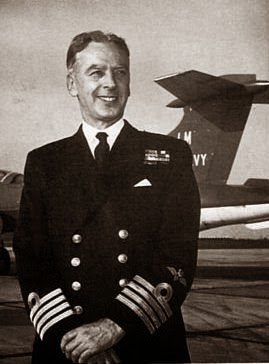
Having said all that, here now is a worthy exception - a programme I had the good fortune to discover will be broadcast tomorrow (Sunday) evening at 9pm (BST) on B.B.C. Two.  It features a hero of the Royal Navy's Fleet Air Arm, the consummate test pilot and a man who has flown more types of of aircraft - a staggering 487 all told - than any other human being in aviation history.  He is Captain Eric "Winkle" Brown RN (Ret'd).

Without giving too much away - you'll have to watch the programme - Captain Brown, now 95 years old(!), joined the Royal Navy's Fleet Air Arm on the outbreak of World War II having actually been on a student exchange holiday in Germany at the start of the conflict in September 1939.  He had visited the country several times previously in the 1930s with his ex-RFC father, including a trip to the 1936 Berlin Olympics where the Browns met and befriended German ace Ernst Udet.  In September '39, in the first amazing incident of a long and action-packed career, the young Eric Brown was arrested by the SS.  After three days of interrogation the 20-year-old Brown, quite incredibly, was simply escorted to the Swiss border - MG Magnette sports car and all - and sent on his way (when he somewhat impetuously asked his would-be captors why they weren't commandeering his car they replied "because we have no spares").

Captain 'Winkle' Brown: Is he the greatest pilot ever?

For the next 30 years Eric Brown would fly with the Fleet Air Arm, fighting German maritime bombers from aircraft carriers, testing captured German aircraft at Farnborough, as well putting new and prototype British and American aeroplanes through their paces - bravely pushing the envelope of flight - both on land and at sea.  He still holds the record for most individual types flown, as well as being the first man to land a jet aeroplane on the deck of an aircraft carrier.

Now aged 95 Captain Brown still comes across as a fantastically knowledgeable and - of course - experienced chap, with the attitude and deportment that so typifies his generation.  I can heartily recommend his autobiography Wings On My Sleeve and if it's even half as good as the book tomorrow's programme will be a real corker (looks like is is too!).

**Britain's Greatest Pilot: The Extraordinary Story of Captain Winkle Brown, B.B.C. Two, Sunday 1st June, 9pm**

(For readers outside the U.K., or without access to B.B.C. TV/iPlayer, here is a selection of extracts from a 100-minute interview with Eric Brown made 3 years ago).


Thursday, 29 May 2014

'30s and '40s film online archive completed


The People's Land (1941) from British Council Film on Vimeo.

'30s and '40s film online archive completed

Some of the news articles that I choose to feature on this blog often concern vintage-orientated projects such as archives, recreations and restorations.  Sometimes these long-term ventures get a flurry of media coverage at the outset and then all goes quiet for a time - the thing gets forgotten about and bubbles along in the background until completion brings press attention again or, less happily, it slips into oblivion.  I always like to revisit the more successful undertakings where possible and this latest post is one such pleasing example.

Nearly four years ago now(!) I wrote about an article detailing the British Council's intention to digitise and upload its entire collection of cultural information films from the 1930s and '40s.  All told as many as 160 ten-minute films were to be archived online for everyone to view.  I'm delighted to see today that this process has finally been completed, with 120 clips - mainly from the 1940s - now available to enjoy on the Council's Vimeo site.   


Country Town (1943) from British Council Film on Vimeo.

Film of Britain preparing for war in 1940 revealed by the British Council

A good few bits of footage feature the British war effort, as is to be expected, yet in amongst the wartime clips are some equally fascinating views of daily life in Britain in the 1940s - some in beautiful Technicolour.  I've included a couple more of my favourites here, plus the three in my original post, but really every one is a gem of Forties detail.  The insight these films give us into British life 70 years ago is nothing short of fantastic, with both familiar sights and long-lost scenes from around the country.   Endlessly captivating, it's wonderful to finally see them all preserved for the future.

Saturday, 24 May 2014

Remembering a Great War hero: Flight Sgt Thomas Mottershead VC

Regular readers of this blog will know that among the many aspects of socio-cultural history that interest me World War I looms large - and in particular the aerial warfare of that period.  I make no secret of my continued enjoyment of the Biggles series of books nor that my Great War library is heavily stacked in the favour of aeronautics.  Posts about this and other aspects of the First World War are therefore naturally littered throughout this blog - and long may that continue!

Thomas Mottershead VC statue appeal website launched

It'll continue right now, in fact, with another tale of selfless heroism in the skies above the trenches and the current attempts to honour one of the airmen involved.  The story of Flight Sergeant Thomas Mottershead was brought to my attention recently by one of the people involved in getting him recognised and I'm glad, since it has made me aware of another brave pilot and a further fascinating and poignant episode in that four-year conflict.


source
Thomas Mottershead hailed from Widnes (then in Lancashire, now part of Cheshire), where he was born on the 11th January 1890 at number 6 Vine Street.  By the beginning of 1914 things were looking very rosy for 24-year-old Tom Mottershead who, like many young men of his generation at the end of the Edwardian era, was a fit and athletic chap who played football for his local league side and was also a Bible reader at his local parish church.  In February he married a young girl from nearby Birkenhead named Lillian Bree, the two of them setting up their own home in Widnes.  A keen engineer, educated at the local technical school and apprenticed at Widnes' main employer the United Alkali Company, Mottershead had begun working at the Birkenhead shipyards in the summer of 1914 before moving to Portsmouth Naval Dockyard in August.   With war declared on the 4th Mottershead enlisted six days later on the 10th, immediately joining the fledgling Royal Flying Corps as an air mechanic.

By June of 1916 Mottershead had been promoted to sergeant, returned to England for pilot training and awarded his "wings".  In July 1916 he was sent to 25 Squadron, based at Auchel in northern France and flying FE2b fighter-bombers, where he took part in the Battle of the Somme.  By October he had been made Acting Flight Sergeant and moved to 20 Squadron, piloting FE2ds.

source
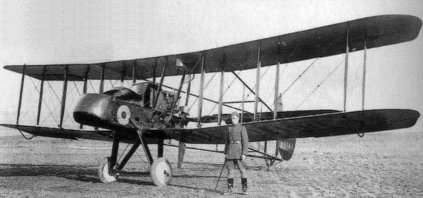
The FE2-series of aircraft were what is known as "pusher" types - that is, the engine was mounted at the back, pushing the aeroplane along.  This was the British answer to the problem of firing a machine-gun forwards without hitting the propellor, a problem which had long ago been solved by the Germans with their Fokker "synchronisation gear" but which took us a little longer to perfect.  With the engine behind the pilot/observer and a "bathtub"-style cockpit, a wide field of fire was possible - except, of course, towards the rear!  Observers and pilots of FEs were able to fire back over the top wing, but it was a very precarious undertaking (and don't forget the pilot would most likely be throwing the machine all over the place at the same time!).  Pilots would take some small crumb of comfort in the thought that any bullets coming from behind would (hopefully!) be stopped by the engine and not them.

source
Although reportedly a somewhat cumbersome and unwieldy aeroplane to fly, the FE's weight was an advantage inasmuch as the airframe could take a fair bit of punishment.  Its layout was put to good use in the event of attack by hostile fighters; pilots would form what was known as a "defensive circle", flying round in an aerial "follow-my-leader" - all the while trying to get closer to the Allied lines and safety.  In this way each aircraft covered the rear blind spot of the next, making attack very difficult.

By the beginning of 1917, when Flt. Sgt. Mottershead - recently awarded the Distinguished Conduct Medal - had returned from Christmas leave, the FE was completely outclassed by German fighters.  Nevertheless the FE2ds that he flew at 25 Squadron continued to see service until the middle of the year, when they were largely replaced by the Bristol F2.b Fighter, with the earlier FE2b variant actually surviving until the end of the war as a night bomber.

source
One of the other flaws of the FE's design was the location of the fuel tank: directly underneath the pilot's seat.  It was this that was to prove fatal for Thomas Mottershead when, on the morning of Sunday 7th January 1917 he took off Clairmarais with his observer Lieutenant William E. Gower on a contact patrol (observing and reporting troop movements).  They were attacked by a Leutnant Walter Göttsch from Jasta 8, flying the far more manoeuvrable Albatros fighter.  Göttsch quickly scored hits on Mottershead's FE2d, including puncturing the fuel tank.  In spite of frantic signals from Gower, Mottershead was not able to turn off the fuel feed quickly enough and the petrol tank burst into flames.  It was every pilot's worst nightmare and despite his observer's best efforts with a fire extinguisher Mottershead was quickly engulfed in flames.  Even in the middle of all this he did his best to try to land the aircraft safely behind Allied lines.  Unfortunately the undercarriage had been damaged and collapsed on landing causing the aeroplane to flip over ("turn turtle"), throwing Gower clear but trapping Mottershead beneath the wreckage of the cockpit.  Nearby British troops were able to save the unconscious Gower and, eventually, Mottershead too - who, amazingly, was still conscious.  Removed to the nearest Casualty Clearing Station he sadly succumbed to his wounds five days later on the 12th.  He was buried the following day at Ballieul Cemetery, "...one of the bravest men who had ever fallen in war..." according to the words of his commanding officer.

source
Exactly one month later, Mottershead was posthumously awarded the highest military honour in the British Armed Forces - the Victoria Cross.  His widow accepted the medal from King George V in Hyde Park on the 7th June 1917, in the company of Lt. Gower.  Flight Sergeant Thomas Mottershead has the distinction of being the only non-commissioned officer (i.e. an enlisted man, a corporal, sergeant etc.) in the Royal Flying Corps to have received a VC during the war.

Now a local committee of interested parties has set up an appeal fund to help properly honour Thomas Mottershead and all those who fought and died in the Great War.  In an admirable display of civic pride they hope to be able to erect a statue of the pilot in Widnes' Victoria Park in time for the centenary of his death, in January 2017.  Local government and business are involved and as the supporters quite rightly point out, it is important that the sacrifices of men like Tom Mottershead are remembered - especially in this centenary year of the war's beginning - and someone with as unique a record as he certainly deserves to be commemorated.  The website contains a wealth of information - I wish them the best of luck with their appeal and feel sure we will be reading of the statue's unveiling in a little less than 3 years' time.

Thursday, 15 May 2014

Vintage bus link at Epping Ongar Railway will boost line

source

Vintage bus link at Epping Ongar Railway will boost line 

A couple of years ago now I blogged about the then-recently restored Epping-Ongar Heritage Railway and its splendid idea to run a vintage bus service, for visitors and public alike, from the West Essex New Town of Harlow to the heritage line's current westernmost terminus at North Weald.

Now I'm delighted to see that they have started doing the same from the east, with another heritage bus service being run from the nearby London-Anglia main line station of Shenfield to all three of the major terminals on the heritage railway - Ongar, North Weald and Epping.  Once again the service is not only open to visitors to the railway but also to anyone wishing to travel on the route in vintage style!  On Sundays it even becomes the only regular bus service between Shenfield and Ongar!  It's wonderful to see these classic buses carrying passengers through the district they used to serve and further proof that they can still have a valuable role to play in the local area.

source
This latest addition to the EOR's transport links is a very welcome one indeed and bodes fantastically well for the future of the line, which is still looking to finish extending the old track from its present ending point just west of Coopersale all the way back to the Epping terminus so it can once again truly be the Epping to Ongar Railway.  It will certainly open the line up to many more visitors from both London and East Anglia, as those as far away as Norwich, Ipswich and Colchester will now be able to travel by train directly to Shenfield and then begin their journey back in time on one of the AEC R/Ts.  It can only be a good thing for the railway and top marks to them for their continued hard work in putting on these extra services.

There's even less reason now for me not to make the trip to the EOR, since I can hop on a train and be at Shenfield in half an hour.  I see next month is their 1940s Weekend - a little plan is forming in my mind...(!)  All that's left now is for the EOR to take over and run their trains on the main line, so that we can enjoy historic locomotive travel right from the start.  With the way they've turned the Epping-Ongar line around in the last twenty years, I wouldn't put it beyond them!

Sunday, 11 May 2014

A good idea In Retrospect

You may remember within my Easter post last month the tempter of a comment I made about an upcoming "exciting project" that I had been working on.  Well, I'm delighted to be in a position now to reveal all!


Yes, I am now a contributor to a wonderful new vintage magazine(!!) called:


Co-created by Mat from Tales of a Southern Retro, In Retrospect quite rightly describes itself as "a modern magazine for old-fashioned people" and is chock-full of fascinating articles written by some of the best, most well-known vintage bloggers in Britain (and me!) including Missy Vintage, Norton Of Morton, Old Fashioned Susie and The Forties Floozy.  I think you'll agree that it's a very welcome and well-presented addition to the vintage scene and I'm thrilled beyond words to be a part of it.


Currently In Retrospect is available online only (and only free until tomorrow so hurry if you want to get a look at it for nowt! - apologies for the short notice but I've been away for most of the weekend) but with any luck the next issue will be on a shelf in a (British, sorry again international readers!) newsagent near you before too long.

Until then, pop over to the site, have a look round (do please spread the word too) and let me know what you think! 

Monday, 5 May 2014

Thirties thrills, tunes and tea

Last week was another busy one for me, culminating in a trip to my local seaside resort of Southend for a job interview followed by lunch and a trawl of the charity shops with mater.  Putting aside my career prospects I shall move right along to the post-interview portion of the day, the results of which will be far more exciting and interesting to you, I feel sure!

We began the afternoon with a late lunch; deciding that the the BHS cafe wasn't up to much ("horrendous", I believe mother described the food as looking) we came upon a hitherto-unknown-to-us bistro just opposite and what good fortune it was that we did, for we have now a new favourite refreshment stop in Southend.  The Remedy Tea Shop turned out to be a charming little tea room that had just recently sprung up in the high street and we both enjoyed some very nice sandwiches, paninis and - of course - tea!  The selection of the latter was impressively extensive (albeit wasted on Mum, who - used to plonking a teabag in a mug of boiling water - requested "plain old English [breakfast] please".  But I mustn't talk deprecatingly about her on here, she doesn't like it!).  I must admit my plan to test one of the less common blends backfired on me, however - the "Russian Caravan" Ceylon/Darjeeling/China mix leaning a little to much towards the Darjeeling for my tastes.  I should have stuck to the Assam I know and love!

source

The place was beautifully decorated and laid out in a manner that perfectly reflected its aim of being "a haven of tranquility" and really was like a traditional English tea room of old.  A well-judged mixture of tables and chairs, armchairs, cabinets and even a fireplace all added to the homely feel of the place.  Highly recommended!

After our enjoyable repast it was ho! for the charity shops.  Sadly for such a large town Southend has surprisingly few such shops - only two on the actual high street.  Fortunately my interview had taken me down one the many side roads that bisect the main thoroughfare and which had two further beneficiary boutiques (not to mention two more restaurants that will require further investigations, Bacchus and Old Hat - the latter of which looked to be just on the verge of opening a vintage shop opposite its main business).  Mother scored a £1 M&S summer shirt for my stepdad in the first store, but the main event was the large Havens Hospice a couple of doors further down.  Occupying fully two shop fronts, one of which was devoted solely to books (like a library, it was!) it was the kind of charity shop one could easily spend half the day in.  The day had almost been and gone by the time we got there, though, so we weren't able to make much of a dent in the place - very unfortunate considering that the other side of the shop had half a wall's worth of CDs, DVDs and... a dozen boxes of 78rpm records at 50p a disc!  As I rifled through the first two baskets I quickly divined that they must have been some old boy's life collection - a mixture of 1930s dance bands and classical compositions from what I could see.  Time was against us, though, so not being able to make a proper selection I went for the alternative - an 8 LP box set The Golden Age of British Dance Bands!


With the hour now well past 4 and both of us needing to get home, I paid the princely sum of £3 for the set and we hot-footed it out into the street - only for me to suddenly realise I'd left my umbrella inside.  Popping back in to grab it I decided to make my way back out through the book department (quicker to the street - honest!) only for something I'd somehow missed the first time to suddenly leap out at me:


How could I have overlooked this - and how would this not be coming home with me when it was priced at a faintly unbelievable £2?!  I fair snatched it off the shelf, dashed to the till (mother was pacing, tight-lipped, outside) and threw the money at the young lad behind the counter.

I didn't get a chance to look at the book more closely nor listen to the LPs until the weekend and I'm pleased to say I'm over the moon with two of the best scores I've had in a long while.  The book in particular is an absolute steal - I think it was wrongly marked by the shop as 1963 when it is quite clearly 1930s (although I do have a habit of mixing up the last two digits of a number when I'm in a hurry, so they may have got it right).  There's no date to be found in it anywhere, but references to "the late King" [George V] and the autogyro pioneer Juan de la Cierva would certainly point to 1936.


Thrills of the Skyways is a real "Boys' Own" affair, published by Dean - the same people who later (re)printed some of the "Biggles" books and although there are none with that name (nor indeed authors' details of any kind) there are several First World War stories in a similar vein and it would not surprise me in the least if W.E. Johns wrote one or two of the articles.

It's a wonderfully evocative book and takes its place as one of the jewels of my collection, up there with my 1933 Modern Boy magazine, 1929 Tit-bits Yearbook and 1938 Power & Speed almanac.  It's written in the positive, effervescent style so typical of one of our favourite decades and provides a fascinating insight into the history of aviation in the 1930s (albeit aimed at young boys - aren't we all young at heart, though?).  There are facts and pictures therein that even I knew nothing about.  I was amazed to see that a Cierva autogyro was fitted with floats and operated successfully from water, for example.  Some of the predictions for the future are grin-inducing too.  Where, I ask, are our floating island landing strips, hmmnn?!


Some predictions were less rosy, though, as the dark clouds of a prospective second war were already looming large judging by the article above.


I will thoroughly enjoy delving into this book while listening to (and converting to mp3!) over 120 of the best toe-tapping Thirties tunes and I can't wait to see (and hear) what further gems both these splendid finds impart.  And I may just have to go back again soon for some of those 78s!

Followers

Popular Posts