Thursday, 17 May 2012

A history of accident prevention posters revealed


A history of accident prevention posters revealed

We tend to bemoan the modern Health & Safety culture, deeming it to be a product of today's risk-averse society where common sense and personal responsibility are going the same way as common courtesy and good manners.  We look at the past as a time when danger was a far greater fact of life and litigation was something reserved for serious crimes.

source

To an extent this outlook is true, but safety at work and play was very much considered even as long ago as the 1930s as this latest display from the Royal Society for the Prevention of Accidents' archives goes to prove.

In pictures: RoSPA posters go on display

source
Far more stylish than today's stark warnings, these old posters still manage to get their point across with ease and directness, while at the same time making the viewer think more clearly and (in some cases) to see how such accidents can occur and the results of them.  It is remarkable to note the difference between the modern "instructive" format and the older "advisory" approach.  Like so many things in those days - film, television programmes, newspapers - people were obviously expected to have a brain and to reason out and make inferences from these signs rather than be spoon-fed ever more comprehensive instructions as they are today.  Whether such a style of warning sign would work now I wouldn't like to say, but I know which I prefer!

source
These images form just a minuscule part of 700 posters dating from between the 1930s and 1970s that were found by RoSPA while they were clearing out one of their warehouses (and obeying Health & Safety regulations, one imagines!).  Now they can be saved for future generations, as indeed they have been with photographic copies being displayed in Birmingham and prints available online from The RoSPA Collection.

These warning posters provide a fascinating insight into a past that was also concerned with safety, but which went about it in a far more wide-ranging, all-encapsulating manner.  I could see my old workplace being spruced up quite nicely with a few of these numbers.  They're great fun to look at, but the message is still clear.  Don't forget to be careful out there!

source

Tuesday, 15 May 2012

Radio-controlled Spitfire achieves cross-Channel flight

source

Radio-controlled Spitfire achieves cross-Channel flight

A Spitfire crossing the Channel is by no means a new thing - after all they were doing it every day 70 years ago - but this is the first one where the "pilot" has been controlling it from another aeroplane!  Of course, the reason for this is that the Spit in question is in fact a ¼-scale model.

A bit of fun on the part of the aircraft's builder - who quite understandably wanted to undertake the ultimate test-flight - the crossing is also a minor testament to those young men who flew the real thing during the war, ending as it did at the Spitfire & Hurricane Museum at Manston in Kent.

Scale model aircraft have obviously come a long way for one to be able to cross the Channel in under an hour at an average speed of 100mph.  It certainly puts my Airfix models, polystyrene & elastic-band wind-up kits and an old petrol-powered wood-and-papier-mâché Spit that was controlled by two metal wires and which could only be flown around in circles(!) into perspective!

A super-realistic model able to fly over long distances (albeit with the controller in attendance!) must surely be the next-best thing to the real article.  I hope Mr Booth continues to enjoy his aeroplane, and maybe even take it on further long-distance flights.

Friday, 11 May 2012

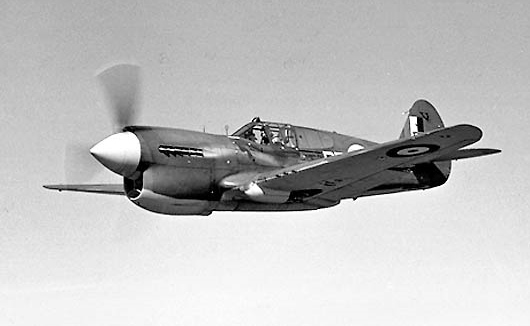
WWII fighter plane found preserved in the Sahara


WWII fighter plane found preserved in the Sahara

Hot on the heels of the twenty Spitfires discovered in Burma comes this equally remarkable, albeit far more bittersweet, story of a lone Curtiss P-40 Kittyhawk that has been found in the Sahara desert.

Despite having crash-landed on the sand 70 years ago the aircraft is apparently in very good condition overall, the result of laying undisturbed in the dry and rarefied atmosphere of the Sahara for the last seven decades.

An important machine to many air forces, particularly with the famous "Flying Tigers" of the Chinese Air Force in 1941-42 and the USAAF in the first months of the Pacific campaign (as well as with the RAAF & RNZAF later in the same theatre), the Kittyhawk (and earlier Tomahawk) was also used in large numbers by the RAF in North Africa as part of the Desert Air Force.  Considered superior to the Hurricane and early marks of Spitfire in the dusty, arid conditions of the desert the Kittyhawk was the main Allied fighter aircraft in the North African theatre for several months of 1941-42.


World War II RAF Kittyhawk fighter plane found in the Sahara Desert in Egypt

It was in one of these RAF Kittyhawks that Flight Sergeant Dennis Copping (a native of my nearby town of Southend) was flying on the 24th June 1942 when he got in to trouble - probably lost - and was forced to belly-land many miles from civilisation.  Now, 70 years after he and his aircraft were last seen, the discovery of his crashed aircraft, discarded parachute and wireless equipment tell the sad story of what happened to him.  It seems fairly certain that having failed to summon help by radio he made a futile attempt to reach the nearest settlement but succumbed to the harshness of the desert.

Now this chance discovery has set the historic aviation world a-twitter and work is already underway to return the Kittyhawk to the UK for it to be put on display at the RAF Museum in Hendon.  A search is also being carried out for the remains of Flt. Sgt. Copping and it is to be hoped that, if he is found, he will be repatriated along with his aircraft or at the very least given a proper military burial.  It would also be nice if his aeroplane - restored or not - were kept as a permanent memorial to the man.  Although I can understand the feelings of some who think it should be left where it is (particularly if F/S Copping isn't found) as a sort of war grave, the ever-present threat of trophy-hunters and scrap merchants makes such a course of action undesirable.

World War II fighter found in Egyptian desert

Whether or not the pilot is found the momentous discovery of this aircraft has at least answered the question of what became of him and his memory can be forever honoured by the display of his Kittyhawk, an important historical find on its own and a fine tribute to the man.

Thursday, 10 May 2012

Museum marks end of the trolleybus era


What Goes Around from David Doré on Vimeo.

Museum marks end of the trolleybus era

Fifty years ago this month the last trolleybus ran its final scheduled service in the capital before the type was withdrawn in favour of more modern buses such as the Routemaster.  Sixty years ago the last few trams disappeared from the City's streets.  To celebrate this double anniversary - and also to remember the trolleybuses that ran in the nearby towns of Ipswich and Southend - the East Anglia Transport Museum held a special two-day gala event to remember these forgotten forms of public transport.


Eight London Transport trolleybuses were on show at the museum - the most all together in one place since they went out of service - and it is fascinating to see how quiet and efficient they still are today.  Eventually undone by [then-cheap] diesel-powered buses that were not constrained by route-defining overhead wires or the risk of those same wires coming adrift, trolleybuses had faded into obscurity - in this country at least - by 1962 and had completely vanished from the country ten years later.  But at their height they were seen as the future of public transport - clean, fast, modern and the natural successor to the open trams that plied the same routes.

Those same trams were evolving too, and new enclosed models allowed them to stay in the capital for only ten years less than the trolleybuses.  In fact, trams could be said to have held on better than trolleybuses, for as well as the world-famous examples in Brighton new tram networks have been reintroduced in Croydon, Manchester, Sheffield, Nottingham, the West Midlands and (eventually) Edinburgh.

However while trolleybuses, like trams, have remained popular in Europe it is only now - in light of so much environmental concern - that they are being brought back to Britain.  A new 21st Century trolleybus is being planned for Leeds.  If it is successful other cities may follow suit.  As the title of the accompanying video so presciently states: what goes around... comes around.  Something we all know well, eh?


Sadly I was not able to attend the East Anglia Transport Museum for this particular celebration but I have been in the past, when I took these pictures.  The great thing about museum exhibits and vintage vehicles like these is - they don't date!  It was a thoroughly enjoyable visit at the time and has stayed in my memory ever since.  I am long due a return visit and I would thoroughly recommend it as a day out if you are ever in the area.  It's simply smashing to see so many people turn out to celebrate the classic tram and trolleybus, and to know there are still enthusiasts around to ensure these wonderful machines keep running.  Long may they continue, and perhaps we shall see these vehicles' spiritual successors in cities up and down the country in the future.

Wednesday, 9 May 2012

Photos of life in the British Raj in India are found in a shoe box

source

Raj pictures found in shoe box at Edinburgh national collection

Another shoe-box full of never-before-seen historic photographs!  Where are they all coming from?  And why aren't we finding them?!

This time the welcome find consists of 178 - yes, one hundred and seventy-eight - negatives untouched for almost 100 years and detailing life in India during the time of the British Raj.  Featuring myriad images of British diplomats and grand occasions such as the visit of King George V and Queen Mary in 1912, the collection also includes many fascinating scenes of local life and people going about their business.  Some of the pictures hardly look a century old.

source

Photos of life in the British Raj in India are found in a shoe box

Surprisingly little is known about a lot of the photos and even less about the photographer so it is hoped that the Royal Commission on the Ancient and Historical Monuments of Scotland can, with the help of photography experts, historians and members of the public, find out a great deal more about these wonderful images and who took them.

source

Described as a "treasure trove", they certainly are that and more.  An amazing set of photographs that provide a remarkable insight into British and Indian way of life in the Raj one hundred years ago, with luck the RCAHMS will put them on display and made available to the public.  Already all 178 images have found their way on to the Commission's digital archive and many are available to view online now.  Another set of rare images to immerse myself in?  Yes please!

Monday, 7 May 2012

Hindenburg 75th anniversary gathers last witnesses to the airship


Hindenburg 75th anniversary gathers last witnesses to the airship

This year marked a particularly famous centenary of an historic transportation disaster - the sinking of the RMS Titanic - but it is also the anniversary of another well-known tragedy.  Seventy-five years ago yesterday, the airship LZ-129 Hindenburg exploded and crashed over Lakehurst, New Jersey, killing 36 people and effectively putting an end to the airship as a means of passenger travel.

The German airship Hindenburg was destroyed by fire in Lakehurst, NJ, 75 years ago

Just as with the Titanic, a memorial ceremony took place at Lakehurst but unlike the great ocean liner's demise there are still witnesses to the Hindenburg disaster alive to recollect the event and offer their own theories as to why the giant hydrogen-filled airship exploded (although we may never know the exact cause for certain). These memories provide a fascinating and oft-forgotten insight into that fateful day in history.


The Hindenburg should, however, be remembered not just for its fiery death - broadcast on newsreel around the world - but as a truly great wonder of the modern age.  Today's airships may have been relegated to observation and transport work for the military or short scenic flights and advertising, but they are by no means an extinct aircraft and one day in the not-so-distant future we may see their like gracing the skies more widely again.  In the meantime we look back and remember this colossus of the air and its untimely end in which 36 people lost their lives.

Followers

Popular Posts