Wednesday, 14 December 2011

A Woolly Christmas!

Out about town on Monday getting some Christmas essentials, I popped into a local charity which has occasionally come up trumps in the [distant] past.

I'm glad I did too, for there waiting for me on one of the racks was this pure wool jacket!  It was one of those things that just stood out amid a sea of nylon shell suits and worn out coats.  So I pounced on it straightaway and with mixed feelings noted it was a 42S, a size above what I usually take.  But it was of such good quality and condition that I thought I'd try it on anyway.  I was delighted to see that it lived up to its Short fitting at least, being just right in sleeve and body length.  Cursed with a short body and long legs - a genetic predisposition inherited from my great-grandfather - it has to be Short or nothing as anything else ends up finishing around my knees!  OK, so there was a little bit of room across the shoulders and around the middle, but not enough to break the deal I felt.  Certainly not for a measly £5, at any rate!  Besides, isn't that what sleeveless pullovers are for?  So home with me it came. 

On closer inspection and investigation it just gets better and better.  I'm not sure how well it shows up in these photos, but it is a lovely chocolate brown colour with a hint of red woven in and a blue check pattern.  Flap pockets etc., all present and correct.  I noticed the makers label on the inside pocket when I bought it, but the name conveyed nothing to me at the time.  Having just done some online digging I couldn't be more bucked.  It was made by Magee, an Irish firm that specialises in tweed but also dabbles in wool and linen.  They've been in business since 1866 and going by the contents of their website this jacket may well qualify as bargain of the year!

Pocket square also courtesy of American Auntie.  Quite popular too!

Now, staying with the woollen theme, you may recall in my post about Fair Isle jumpers a few months ago I mentioned that I'd had a sleeveless pullover knitted for me in the Fair Isle style using a special kind of "pre-treated" wool that creates the pattern as you knit and so avoids the fiddliness inherent in normal Fair Isle construction.  It's by no means up there with the best Scotland has to offer, but it's quite passable nonetheless.  And here it is - not bad, eh?


Finally, it is getting to that time of the year where it becomes necessary to roll out the big sartorial guns as winter really begins to bite.  Scotland has already been hit hard with snow, heavy winds and rain and by all forecasts that weather is due to head south any time soon.  I've got my heavy navy blue overcoats in readiness, but this is a good opportunity to show off the vintage brown wool overcoat that my lovely American aunt with the (shameless plug alert, shameless plug alert!!) eBay shop was kind enough to give me last year.  I thought my CandA International overcoat was heavy, but this is something else again!  This is a real beauty - prepare to be awestruck (I know I was!).

Snow?  BRING IT ON!
This baby was made some time between 1939 and 1949 (Union Made label on the inside pocket confirms this) by Kuppenheimer, a Chicago-based menswear manufacturer in business from 1876 to 1997.  It looks to have been made specially for Kaufmann's main Pittsburgh store.  Kaufmann's, for any non-US readers, was a major department store founded in 1871 and comparable to Gimbels (1887-1987) and Macy's (with whom they eventually merged in 2006).  This single picture doesn't do it justice, so I might do a whole post around it one day soon.

Well, that's it for this fashion post.  I hope you enjoyed it, and don't forget to wrap up warm - there's a storm coming by all accounts!

Sunday, 11 December 2011

Swingin' round the Christmas tree

Inspired by Mim over at Crinoline Robot and Lily at Lil Vintage Me posting up their favourite Christmas songs, and finally feeling a bit festive having put the tree up, I thought now would be the time to add a few more of my own Yuletide tunes.  Last year I did a post around one of my vintage Christmas CDs A Vintage Christmas Cracker: 47 Original Mono Recordings 1915-1949, now sadly out of print (keeps your eyes peeled, charity shoppers!) so this year I intend to include a few that I stumbled across on Youtube that aren't on any of my compilations and may not even be on any CD at all!

The reason why there is not a lot of "modern" Christmas music to be found much before the 1930s is simply because it hadn't been written or recorded yet! (The exception being Jingle Bells which, being written in 1857, was recorded as early as 1898).

Everything changed in 1934, however, when both Santa Claus Is Comin' To Town and Winter Wonderland were written, the former by John Frederick Coots and Haven Gillespie (both of whom also penned You Go To My Head, and Gillespie Breezin' Along With The Breeze) and the latter by Felix Bernard and Richard B. Smith.

Through October and November of 1934 these songs were all cut by several different bands.  Harry Reser and His Orchestra were the first to record Santa Claus Is Comin' To Town on the 24th October 1934 and it featured in my Christmas music post last year; they beat George Hall and the Hotel Taft Orchestra by just under three weeks.  That version was recorded on the 13th November 1934 and sounds like this:


A year later in 1935 it was recorded by Tommy Dorsey and His Orchestra:


In the same year Benny Goodman and His Orchestra also recorded the classic Jingle Bells and for my money it is one of the best arrangements I've ever heard:


As well as that much-loved Christmas standard Goodman also recorded in 1935 a Johnny Mercer composition, Santa Claus Came In The Spring:


Winter Wonderland meanwhile really took off and was promptly recorded by no less than three bands, representing the three big record labels of the time.  RCA was the first with Richard Himber and His Hotel Ritz-Carlton Orchestra on the 23rd October 1934.  It was a happy accident - the vocalist Joey Nash stumbled across the handwritten manuscript and a homemade recording given to him by the brother of Richard B. Smith and convinced Himber to include it in the 23/10/34 recording session.  Unfortunately technical problems meant they ran out of time before Winter Wonderland could be recorded and Himber left the studio.  Nash was so enamoured with the song, however, that he convinced the rest of the band to stay behind and finish the recording.  They agreed on the one condition that if any mistake were made there would be no second chances.  Therefore what you hear now was made in one take, without the bandleader(!):


Ted Weems and His Orchestra recorded Winter Wonderland for Columbia on the 11th November 1934, but it was Guy Lombardo and His Orchestra on the Decca label who had the biggest hit, making the top 10 at the time.  Typically, the most successful version is the one that's not on Youtube, but here is the Ted Weems version:


Moving on a couple of years to 1937, Dick Robertson and His Orchestra recorded another rare seasonal composition on the 19th October - I Want You For Christmas:


Jumping forward a few years again to 1941 we return to Benny Goodman and His Orchestra who on the 27th November 1941 recorded this wintry number with Peggy Lee and Art Lund singing the vocals:


Finally, we find ourselves in 1947 with Frank Carle and His Orchestra who recorded this seldom-heard number, with Marjorie Hughes taking the vocals:


So there we are - enough songs there to make a CD I reckon, but alas few if any are available in that format.  Still, it's nice to think that people were swinging along to Christmas tunes like this in the Thirties and Forties and that they can be found today with a bit of searching.  Maybe there's hope for a CD yet.  In the meantime thank goodness for Youtube is all I can say.  I hope these classic tunes put you in the vintage Christmas mood, as they have me.

Saturday, 10 December 2011

Vince Giordano’s passion for 1920s music serves him well as ‘Boardwalk Empire’ maestro


Vince Giordano’s passion for 1920s music serves him well as ‘Boardwalk Empire’ maestro

A pleasant little article from the New York Daily News here, focusing on the music of the spiffing television series Boardwalk Empire (which still hasn't made it to a terrestrial British channel *shakes fist at Rupert Murdoch*, guess I'll just have to get a hold of the box set when Season 1 is released on the 9th January).

Renowned jazz bandleader Vince Giordano is the man behind all of the live music heard in Boardwalk Empire, as well as having been involved in providing the authentic sound for many a period piece in the past.  As well as helping to provide the score for Boardwalk Empire Giordano and his band, the Nighthawks, play live every week at a local New York restaurant.  In every respect they are one of the most accurate hot jazz bands of the modern age, with a sound so reminiscent of the 1920s and '30s that they are practically indistinguishable from original live bands of the time.  No wonder they are in so much demand for film and television work!

Boardwalk Empire's success can no doubt be put down in part to the attention to detail displayed in each and every episode and this obviously extends to the music as well.  It is another feather in the cap of Mr Giordano and his band that he is involved in this series and it's wonderful to see (and hear) this toe-tapping music in a popular TV show.

Thursday, 8 December 2011

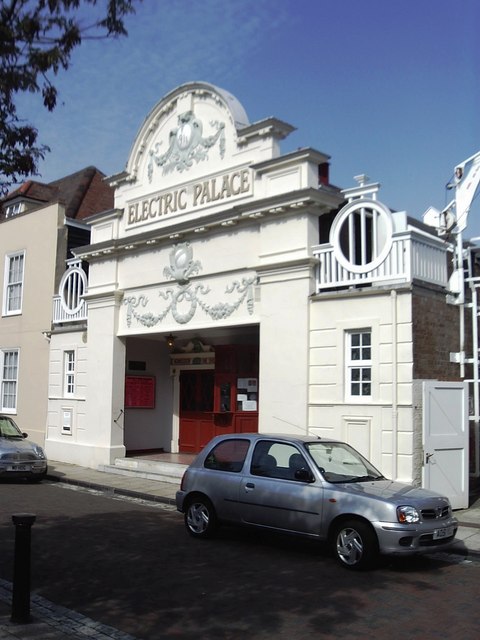
Electric Palace cinema in Harwich celebrates centenary

Electric Palace cinema in Harwich celebrates centenary

An Edwardian cinema in an Essex port town celebrates its 100th birthday now in this article from the B.B.C.  

The Electric Palace also has a remarkable history and its very existence is testament to the care and knowledge of local film enthusiasts and the goodwill and understanding of the current Town Council.  Once again we see good old-fashioned civic pride making it possible for this beautiful building to still be here a century after it first opened.

Designed by architect Harold Ridley Hooper (who went on to help create several buildings for Butlins Holiday Camps in the 1930s) the Electric Palace was built to show the "Bioscope" moving pictures of former travelling fairground showman Charles Thurston.  This soon expanded into showing films of the period and the Palace did a roaring trade throughout much of the Great War years.  It did less well from the 1920s on, despite the addition of mains electricity in 1924 and sound in the 1930s (the original pre-1924 Crossley gas engine and 100V DC generator can still be seen, unrestored, inside the building) and remained virtually unaltered from its original form.  Then in 1953 it was the victim of the infamous East Coast floods when seawater got inside the cinema.  By 1956 it had closed completely and it was to remain derelict for almost twenty years before being "rediscovered" by a local university lecturer.  Along with the Harwich Society he managed to get the Palace listed as "a building of sociological interest", much to the annoyance of Harwich Town Council who had intended to demolish it(!).  Even some of the townspeople were in favour of it being pulled down, citing its then run-down appearance, and the whole thing apparently made the national news!  Thankfully historical merit prevailed and the Electric Palace Trust was formed in 1975, staffed entirely by volunteers.  The reluctant council granted a "repairing lease" and it took 5 years to restore the cinema to its former glory; the grand reopening taking place on its 70th anniversary in 1981 with the Blue Peter team (and the original accompanist on the piano!) in attendance.

Today the cinema is still almost completely run by volunteers, with the freehold now in possession of the Trust.  Due to the way in which the Palace is run it only shows films on Wednesdays and at the weekend, supplemented with regular jazz concerts.  It also retains two original 60 year-old 35mm projectors which it still uses to show modern films in that format as well as historic films from the British Film Institute.  A new digital projector will ensure that the Electric Palace continues to show new films for many years to come.

It is heartwarming to see how a community has come together with the local council over a period of many years to preserve such an important historical landmark and get it to its centenary.  It must be quite an experience to watch a film - particularly an old one - in so stunning a building.

British Library scans 18th and 19th-Century newspapers

British Library scans 18th and 19th-Century newspapers

A bit of old news from last week here, about a lot of old news from 200 years ago. 

Some of you may have read that the British Library now has 4 million pages of newspapers from as far back as the 1700s online, with a further 8,000 pages being scanned every day.  A huge selection of historic British newspapers from all over the country are now available for searching on the Internet.  Of course there is a charge to actually view the papers, but the search function itself is free.  This will at least allow for a speedier discovery of articles of interest for, as the story makes clear, one can type in a search term and find the exact newspaper in which it appears in just a few minutes.  Then, if you're not a subscriber (or simply like to leaf through old newspapers), you have at any rate the reference number which you can use to go straight to the 'paper in question at the British Library.

This is good news in a number of ways, from the increased ease of access for people all over the world to the continued preservation of some ancient and in some cases fragile newspapers.  You can of course still read the hard copy at the British Library site, and I wouldn't blame you if you did.  Like so much history it is all the more evocative if you can hold it in your hands.  But this latest innovation does make it quicker to find first.

Sunday, 4 December 2011

Rewired antique radios undigitize MP3s

source
I couldn't have put it better myself!
Rewired antique radios undigitize MP3s

First a latter-day telegraph ticker and now antique iPod docking stations - what better examples of the ethos I was expounding a month ago; modern technology meets vintage style and classic ideas.

I'm sure many of my readers would love to have just a working vintage wireless, and perhaps some of you do.  It would be great to have an aesthetically pleasing 1930s-, '40s- or '50s-style radio to on which to listen to all your favourite FM/AM stations.  I want one myself!

Ooho, yes please!

Now that'll be all very fine and large for the time being, but there will come a time (confound it) when the analogue AM/FM signal will be switched off (current estimates put this at somewhere between 2015 and 2020 in the UK).  What then will become of our beloved vintage radios - will they all suddenly end up as museum pieces or silent ornaments?  OR they can be converted, as this American company proves is possible, into iPod docking stations!  Not only does this give them a new lease of life but, if it is to be believed, the update is done in such a way as to convert the digital signal of the mp3 format back into the warm sound of analogue - and particularly vintage analogue at that.  Who knows, it could mean that it may even be possible to convert them in such a way that they can pick up and decode the digital signal of DAB radio.

Either way, it proves that tube radios can still have a place in the modern world and that they have very much left to give.  It sounds like an absolutely topping concern, and just the thing for my iPod!

Hello there - a modern day telegraph ticker!

Hello Little Printer, available 2012 from Berg on Vimeo.

Not exactly vintage per se, but to my mind a lovely retro addition to modern technology and the 21st Century equivalent of ticker-tape machines.  I'm sure you'll all agree that it's good to have something tangible to hold and to look at when it comes to information, messages, lists and what-have-you; far better than goggling at a screen for ages at a time.  I believe that things can be easily forgotton that way, far more so than if you have a physical copy - you can refer to it even if you do forget, or just want to be reminded of the content, or the sender, or some other aspect of the message.


With this modern world of the Internet, mobile telephones and whatnot it's all too easy to make communication impersonal, instantly forgettable and almost meaningless.  Hello Little Printer is a wonderfully quaint idea that deserves to do well (and no, this post is not sponsored by them!) and has more than a hint of vintage in its make-up, regardless of its modern-day pretensions.  I can just imagine one sitting next to my computer, spewing out little titbits of data, messages and so forth that I can pore over, just as people did 80-odd years ago with telegraph tickers.

Followers

Popular Posts